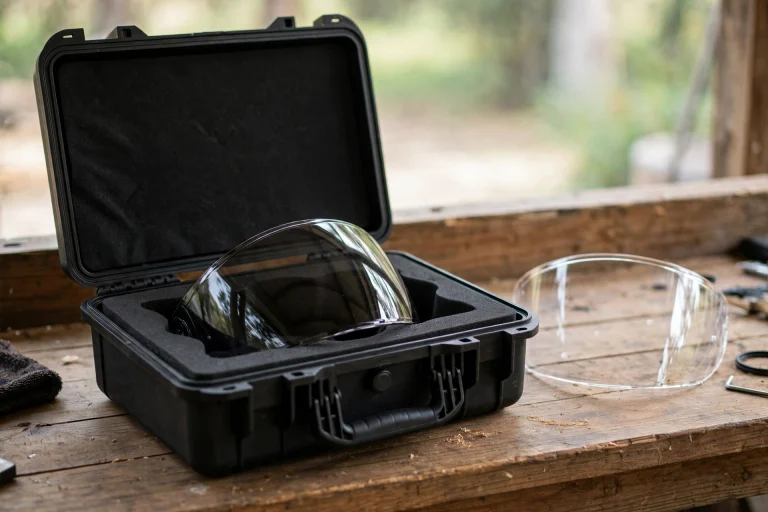
Yes, a helmet breath guard is a small shield fitted inside a motorcycle helmet that directs your breath away from the visor, and in general terms it helps reduce fogging on cold or damp rides. It sits in front of your nose and mouth, usually attached to the chin bar or the inside of the helmet, and it channels warm, moist air downwards instead of letting it rise straight onto the inside of the visor. When that warm air hits a cold visor it can condense into a fine mist, and that mist is what clouds your view. A breath guard does not remove the moisture from your breath, but it changes where that moisture goes, which is often enough to keep the visor clearer for longer.
What Is a Helmet Breath Guard and How Does It Work?
A helmet breath guard is a deflector, usually made from a soft rubber, silicone, or flexible plastic, that sits between your mouth and nose and the visor. It forms a light seal against the inside of the helmet, so the air you breathe out is guided down towards the chin vent or out through the lower part of the helmet instead of rising to the visor. Some guards are shaped like a small scoop or wedge, while others are flatter and wider, covering more of the area in front of the face.
The science is straightforward in general terms. Your breath is warm and damp, and a visor on a cold day is much cooler than the air inside the helmet. When the two meet, the moisture in your breath condenses on the visor surface and forms fog. A breath guard reduces the amount of warm air that reaches the visor, so less condensation forms. It works best when the helmet also has some airflow, because moving air carries moisture away from the inside of the helmet rather than letting it settle.
What Types of Breath Guard Can Motorcycle Riders Choose?
The most common type is the fixed breath guard supplied with the helmet. This is usually a moulded piece that clips or slides into place inside the chin bar, and it can often be removed for cleaning. It is designed for that specific helmet, so the fit tends to be good and it stays in place at speed. If you lose it or it wears out, a replacement from the same helmet maker is usually the simplest option.
A second type is the universal breath guard, made to fit a range of helmets. These are often softer and more flexible, with a shape that can be trimmed or adjusted, and they may attach with small clips, hook and loop fasteners, or a snug press fit. They can be a practical choice if your helmet never came with a guard, or if you want a spare. The trade off is that a universal fit may not seal as neatly as a model specific guard, so it is worth checking the fit carefully before a long ride.
A third option is the breath guard built into a removable chin curtain or wind deflector. A chin curtain sits below the chin bar and reduces the draught coming up from underneath the helmet, and some designs include a breath deflector as part of the same piece. This combination can help with both fogging and wind noise, and it can make a helmet feel warmer in cold weather. It may also reduce airflow a little, so riders who use one in warm weather sometimes remove it when the temperature rises.

Does a Breath Guard Really Stop Visor Fogging?
A breath guard helps a great deal in general terms, but it rarely stops fogging on its own in every condition. On a mild day with a little damp in the air, a well fitted guard may be all you need to keep the visor clear. On a cold, wet morning, when the difference between the warm air inside the helmet and the cold visor is at its greatest, fog can still form, especially when you are stopped at traffic lights and there is little airflow through the helmet.
How Do You Fit and Look After a Breath Guard?
Fitting a breath guard is usually a simple job. Start by reading the instructions that came with your helmet or with the guard itself, because the attachment method varies from one model to another. In most cases you will slide the guard into a slot in the chin bar, press it into small clips, or attach it with hook and loop fasteners. Make sure it sits evenly, with no large gaps at the sides, and that it does not press hard against your nose or lips when the helmet is on.
Looking after a breath guard is mostly about keeping it clean. It sits close to your mouth, so it can collect moisture and residue over time. Remove it from time to time and wash it with warm water and a mild soap, then let it dry fully before refitting it. Avoid harsh cleaners or solvents, which can damage the soft material or the finish of the helmet. If the guard becomes stiff, cracked, or misshapen, it is time for a replacement, because a damaged guard will not seal properly. Learning about what MIPS is for helmets can also help you understand the other safety features built into a modern helmet, so you can judge the whole helmet rather than one accessory alone.
When Should You Use a Breath Guard, and When Can You Leave It Out?
A breath guard is most useful in cold, damp, or changeable weather, when fogging is most likely. Winter commuting, early morning rides, and riding in rain or mist are the situations where it earns its place. If you ride in these conditions often, leaving the guard fitted through the colder months is a sensible habit, and you can take it out when the weather warms up if you prefer more airflow.
In general terms, a breath guard is a low cost, low effort accessory that solves a real problem for many riders. It will not transform a helmet, and it will not replace good ventilation or a clean visor, but it can make the difference between a clear view and a misted one on a cold morning. For riders who commute or tour in all weathers, that small difference is often worth having.
Frequently Asked Questions
Q: Do all motorcycle helmets come with a breath guard?
A: No, not all of them do. Many full face helmets include one in the box, but some do not, and open face helmets usually have no use for one. If your helmet did not come with a guard, a model specific or universal replacement is often available.
Q: Can a breath guard make breathing harder?
A: In general terms, a well fitted breath guard should not make breathing noticeably harder. If it feels restrictive, it may be fitted wrongly or be the wrong size for your helmet, so check the fit and adjust or replace it.
Q: Will a breath guard stop my visor fogging completely?
A: It helps a great deal, but it may not stop fogging completely in very cold or wet conditions. Combining it with open vents and the first visor notch, and keeping the visor clean, gives the best result in general terms.

Olivia
Writer at Helmet Today, covering helmet reviews, fit and riding safety.