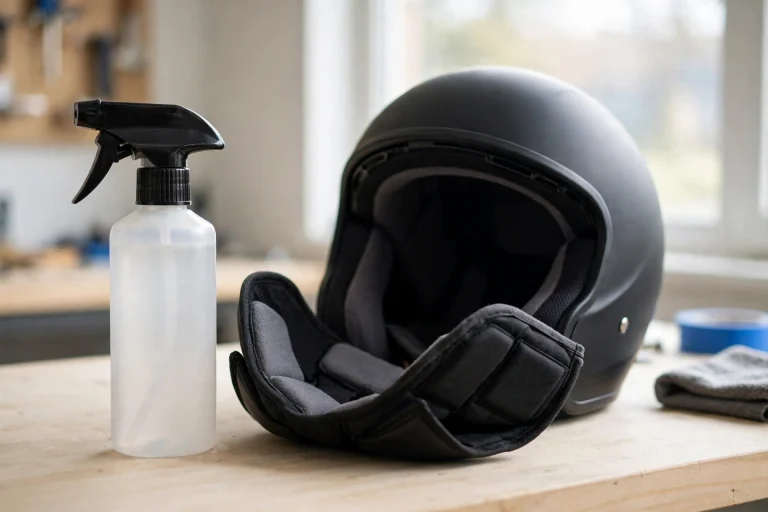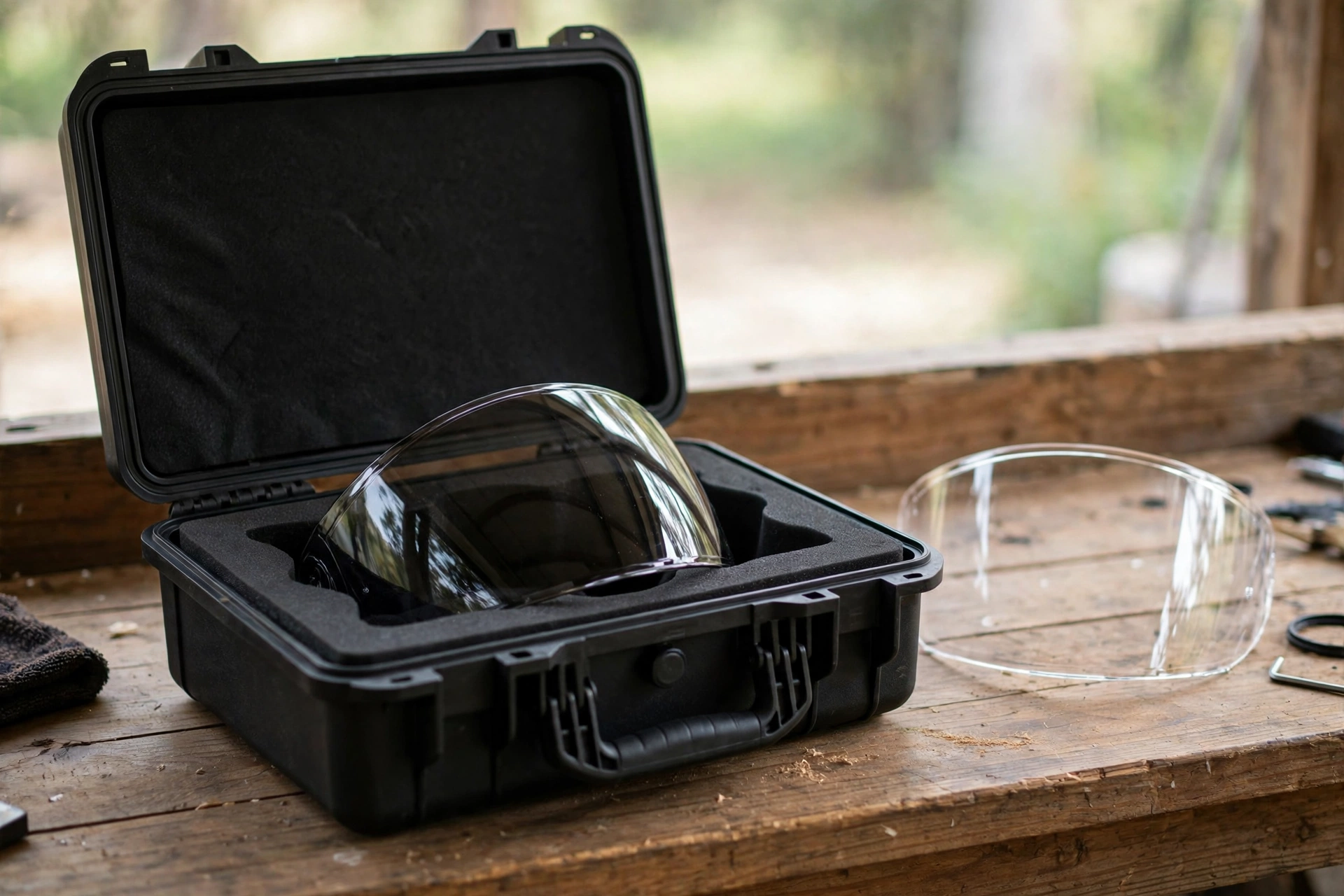
A helmet visor storage case is a padded, hard or semi-hard container designed to hold one or more spare visors so they stay scratch-free, clean, and ready to use. If you ride with a clear visor for night riding and a tinted or smoked visor for bright days, a case keeps the spare safe in a bag, a top box, or a garage shelf instead of rattling around loose. In general terms, it is a simple accessory, but it protects one of the most scratch-prone and expensive parts of a helmet.
Visors are easy to damage. A single scratch across the line of sight can be distracting, and deep scratches can distort vision enough that the visor needs replacing. Loose visors in a backpack can pick up scratches from keys, zips, and buckles in a single journey. A storage case solves this by giving the visor its own protected space, with a soft lining on the inside and a firm shell on the outside. This guide explains what visor storage cases are, the types available, what to look for when choosing one, and how to use and look after yours.
What Is a Helmet Visor Storage Case?
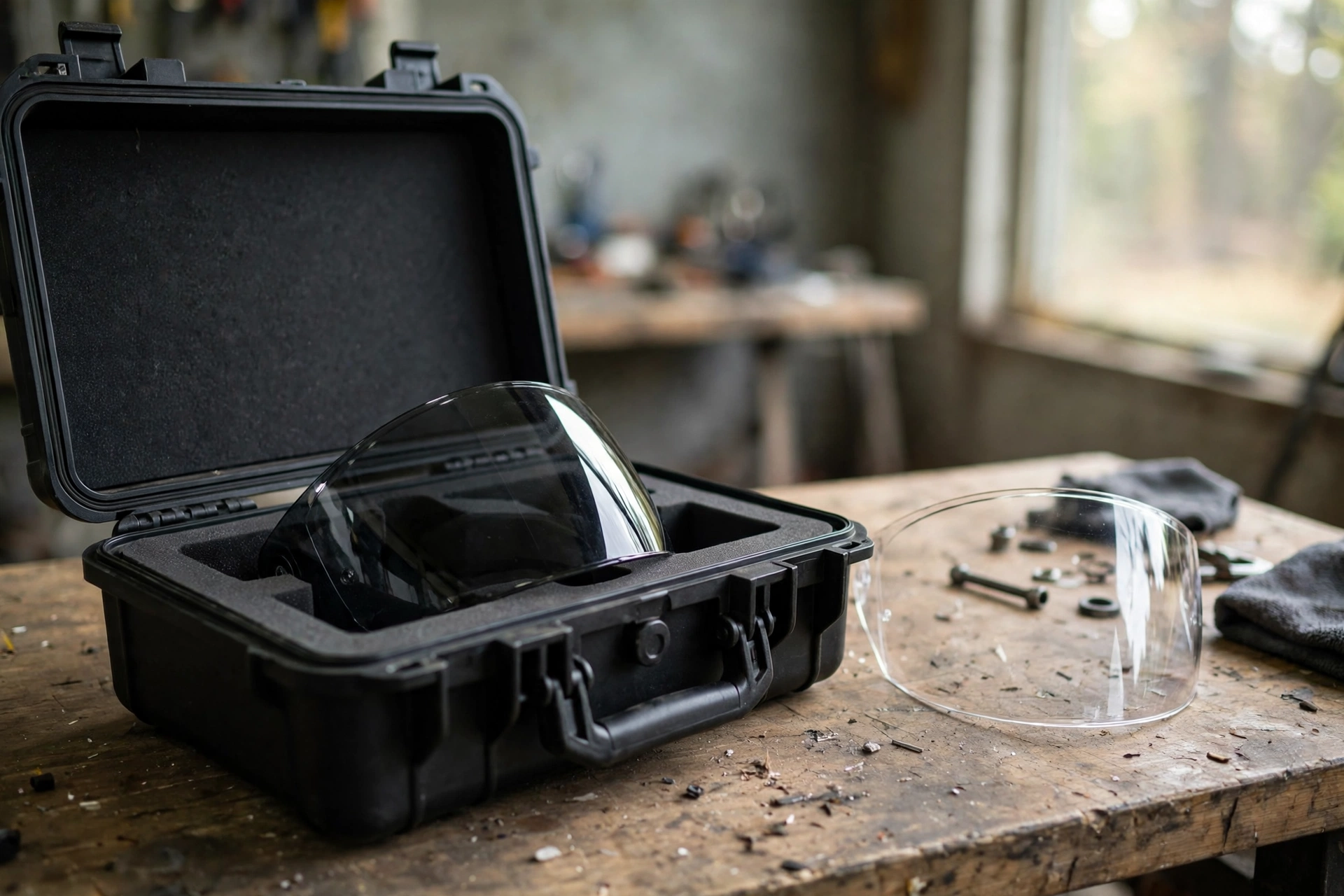
A helmet visor storage case is a purpose-made container shaped to fit the curved shape of a motorcycle or motorsport helmet visor. Most cases are made from a hard outer shell, a semi-rigid padded fabric, or a moulded plastic body, with a soft microfibre-style lining inside. The visor sits in the case in its natural curve, held in place by the shape of the case itself or by a soft strap, so it cannot slide around and rub against anything hard.
Cases come in single-visor and multi-visor versions. A single-visor case is slim and easy to carry, and it suits a rider who keeps one spare visor, such as a clear visor for riding after dark. A multi-visor case has separate sleeves or compartments for two or more visors, which suits riders who swap between clear, tinted, and mirrored visors depending on the weather and the time of day.
What Types of Visor Storage Case Are Available?
The most common type is the hard-shell case. It has a rigid outer body that resists crushing, which makes it a good choice for carrying a visor in a backpack, a pannier, or a top box alongside other gear. Hard-shell cases are often made from moulded plastic or a tough fabric over a rigid frame, and they usually close with a zip. They tend to be slightly bulkier than soft cases, but they offer the best protection against knocks and pressure.
Semi-rigid and soft cases use padded fabric with a firm insert or a stiffened wall. They are lighter and flatter, and they pack more easily into a crowded bag. A soft sleeve is the simplest version of all: a padded pouch that the visor slides into, with a soft lining that protects the surface. Sleeves are light and cheap, and they work well for a visor kept on a shelf at home, but they offer less protection than a hard case if the bag is dropped or squeezed.
There are also cases designed for specific visor shapes, including flat race visors and curved touring visors, and some helmet makers sell cases matched to their own visors. A case made for your visor shape will hold it more snugly, which means less movement and less chance of rubbing. If you are learning about how helmets handle different kinds of impact, reading about what MIPS is for helmets can help you understand one of the technologies used in modern helmet design.
What Should You Look for When Choosing a Case?
Fit is the first thing to check. The case should be long and wide enough for your visor without forcing it flat, because bending a visor the wrong way can stress it. Check the size against your visor before buying, and look for a case that matches the curve of the visor rather than fighting it. A case that is too small is worse than no case at all if it puts pressure on the visor edges.
Next, look at the lining. A soft, smooth lining protects the visor surface, while a rough or gritty lining can scratch it every time the visor goes in and out. A microfibre-style lining is a good sign. Also check the closure: a zip that runs close to the visor can scratch it if the two touch, so look for a case where the zip is covered or set away from the visor surface. A carry handle or a loop for hanging the case in a garage is a useful extra.
- Fit: the case should match your visor’s length, width, and curve.
- Lining: a soft, smooth interior that will not scratch the visor surface.
- Shell: hard enough to resist crushing in a bag or top box.
- Closure: a zip or flap that stays clear of the visor.
- Capacity: one slot for a single spare, or separate sleeves for several visors.
How Do You Store a Visor in a Case Correctly?
Before the visor goes into the case, give it a quick clean. Dust and grit left on the surface can scratch the visor as it slides in, so rinse it gently or wipe it with a soft, clean cloth first. Make sure the visor is dry before closing the case, because trapped moisture can leave marks on the surface and, over time, can affect any anti-fog coating or insert fitted to it.
Place the visor in the case in its natural curve, with the outer surface facing the lining and the edges seated properly. Do not force the visor flat or stack heavy items on top of the closed case. If the case has a strap or a sleeve, use it to keep the visor from sliding around in transit. Store the case somewhere it will not be crushed, such as on top of other gear rather than underneath it, and keep it out of strong heat, which can warp the visor over time.
Do You Really Need a Visor Storage Case?
In general terms, a case is worth having if you carry a spare visor or swap visors regularly. Riders who use only one visor and never take it off the helmet may not need one, since the visor is protected by the helmet itself. But anyone who keeps a clear visor for night riding and a tinted one for sunny days will quickly find that a loose spare gets scratched, and a scratched visor is a visor that needs replacing.
The cost of a case is usually far lower than the cost of a replacement visor, especially for branded helmets where visors are sold as separate parts.
Frequently Asked Questions
Q: Will any visor fit in any storage case?
A: Not always. Visors differ in length, width, and curve, so check the case size against your visor before buying. A case made for your visor shape will hold it more snugly and protect it better.
Q: Can I store a visor with a pinlock insert in a case?
A: Yes, in general terms. Keep the insert fitted to the visor or stored flat in a separate sleeve, and make sure the visor is clean and dry before closing the case so moisture does not mark the insert.
Q: Is a soft sleeve enough, or do I need a hard case?
A: A soft sleeve is fine for a visor kept on a shelf at home. A hard-shell case is better for carrying a visor in a bag or top box, where it may be knocked, squeezed, or dropped.

Olivia
Writer at Helmet Today, covering helmet reviews, fit and riding safety.