The ECE 22.06 P/J label means a modular helmet has been tested and approved for use both with the chin bar closed and with it open. The letter P stands for a protective chin bar, like a full-face helmet, and the letter J stands for an open-face or jet-style configuration, where the chin bar is raised and the face is uncovered. A helmet carrying the P/J marking has passed the standard’s tests in both positions, so the rider can legally and safely use it either way.
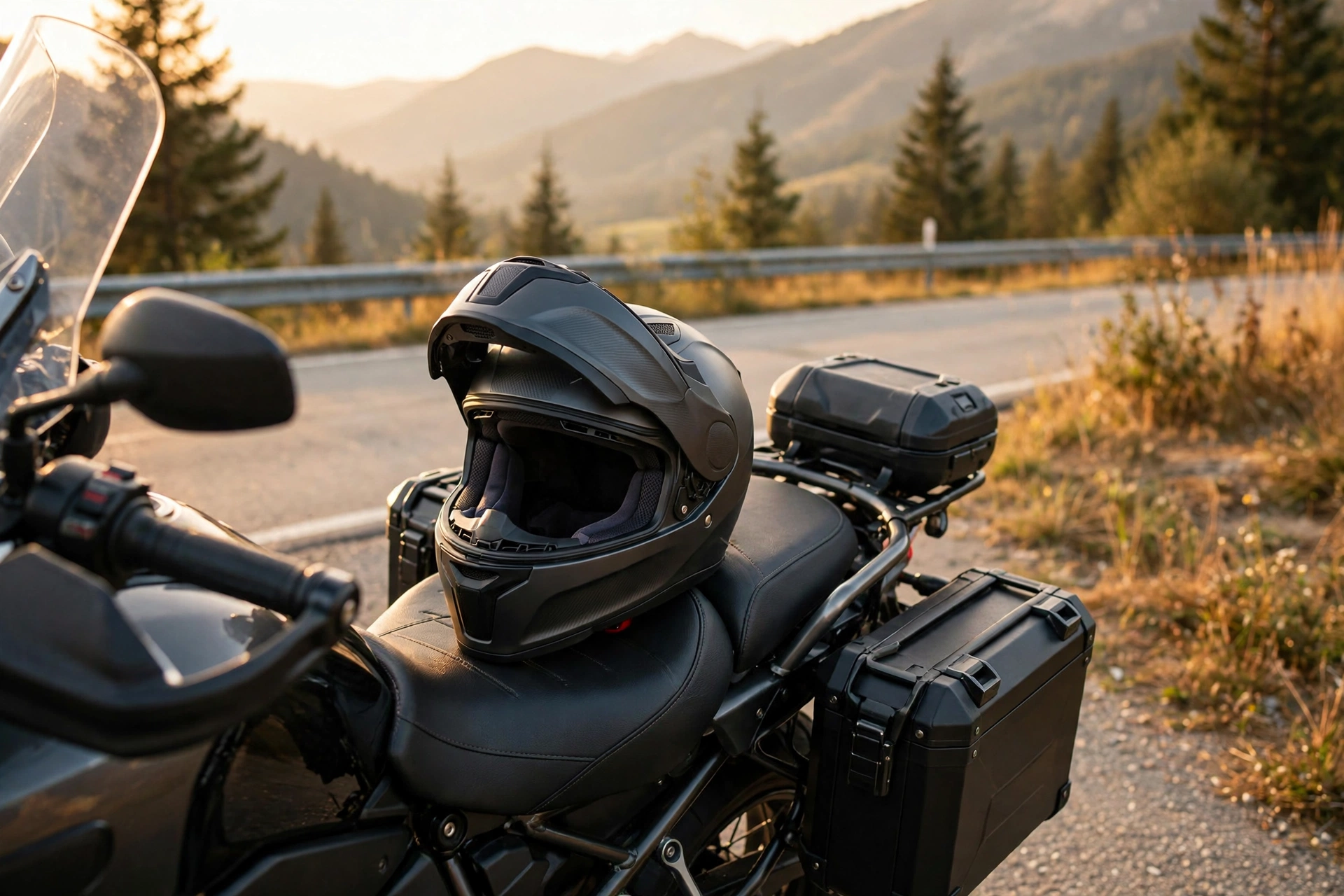
Modular helmets, sometimes called flip-up helmets, are popular with touring riders and commuters because they offer the protection of a full-face helmet with the convenience of an open face at stops. But not every modular helmet is approved for riding with the chin bar up. Some are only approved with the chin bar down, and riding with it raised in those helmets may not be covered by the approval. That is why the P/J label matters, and this guide explains what it means, how it is tested, and what to check before you buy.
What Does the P/J Label Mean?
The ECE 22.06 standard is the helmet approval standard used across Europe and in many other countries that recognise it. Under this standard, modular helmets can carry one of three markings for the chin bar: P, J, or P/J. The P marking means the helmet’s chin bar has been tested as a protective chin bar, so the helmet is approved as a full-face helmet when the chin bar is closed. The J marking means the helmet is approved as an open-face helmet, with no protective chin bar in use. The combined P/J marking means the helmet has been tested and approved in both configurations.
For a rider, the practical meaning is simple. A P/J helmet gives you a choice. You can ride with the chin bar down for full-face protection, or you can ride with it up and still be using the helmet in an approved configuration. A helmet marked only P should be ridden with the chin bar down. Riding with the chin bar up on a P-only helmet means you are using it outside the way it was tested and approved, which could matter for insurance and for the law in some places.
How Is a Modular Helmet Tested for Both Modes?
In general terms, a modular helmet seeking a P/J approval is tested in both of its configurations. With the chin bar closed, it goes through the same kind of impact testing as a full-face helmet, including tests on the chin bar itself. The chin bar must be able to absorb and spread impact energy without breaking apart or pushing dangerously into the wearer’s face. With the chin bar open, the helmet is tested as an open-face helmet, so the shell and lining must protect the top, sides, and back of the head even though the chin area is exposed.
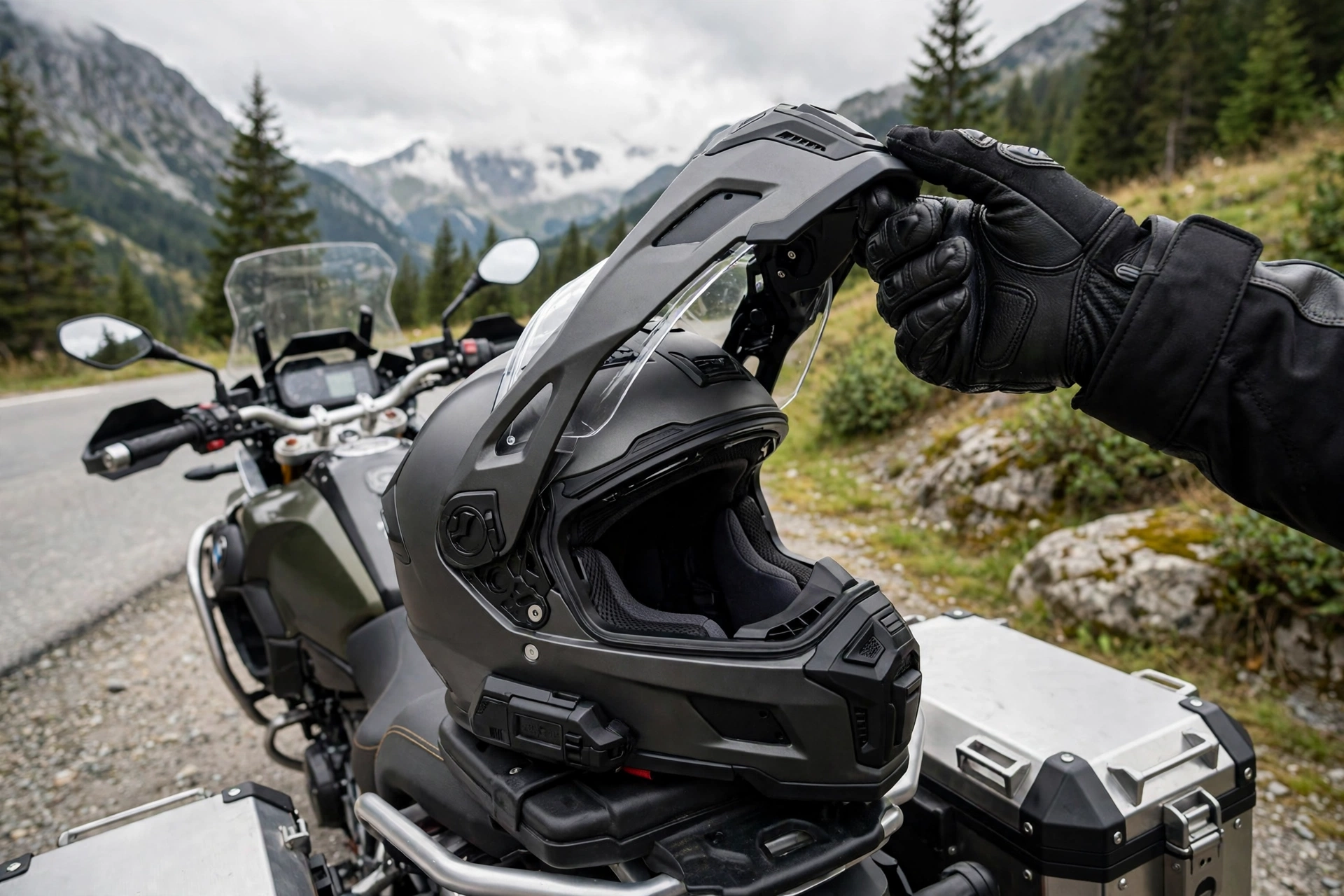
The chin bar mechanism itself also matters. On a P/J helmet, the mechanism that holds the chin bar in place must be strong enough to stay closed during an impact when it is down, and it must hold the chin bar securely in the raised position when it is up. A chin bar that drops down unexpectedly while riding could block your vision or catch the wind, so the latch has to be reliable in both directions. Testers check this by applying force to the chin bar and by looking at how the mechanism behaves under impact.
What Should You Look for on the Label?
The first thing to check is the approval marking itself. A genuine ECE 22.06 label includes the approval number, which starts with the standard number, and the P/J letters for a dual-approved modular helmet. The label is usually sewn into the lining or printed on a tag inside the helmet. If the helmet has no label at all, or the label looks poorly printed or easy to peel off, that is a warning sign. A legitimate helmet from a reputable maker will have a clear, permanent marking.
Next, look at the helmet’s own documentation. The manual or the product description should say clearly whether the helmet is approved for use with the chin bar up. Some makers state this plainly on the box or in the manual, while others leave it to the label alone.
It is also worth checking the chin bar mechanism in person if you can. Lift the chin bar and feel whether it locks firmly into the raised position, then close it and check that it clicks shut with a solid feel. The mechanism should not feel loose or wobbly. If you are learning about the different technologies inside modern helmets, reading about what MIPS is for helmets can help you understand one of the features that may be built into the helmet you choose.
How Does the P/J Label Affect Everyday Riding?
For most riders, the P/J label is about freedom and flexibility. With a P/J helmet, both of those uses are covered by the approval, so you do not have to worry about whether you are using the helmet the way it was intended.
There are limits, though. Riding with the chin bar up leaves your face exposed, so you have less protection in a crash than you would with the chin bar down. The P/J approval means the helmet is safe to use as an open-face helmet, not that an open face protects as well as a closed one. Many experienced riders keep the chin bar down whenever they are moving at speed and only raise it when they are stopped or moving very slowly, which is a sensible way to get the convenience without giving up the protection most of the time.
Can You Ride with the Chin Bar Up?
If your helmet carries the P/J label, then in general terms yes, you can ride with the chin bar up, because that is one of the two configurations the helmet was tested and approved in. The approval covers it, and the helmet’s mechanism is designed to hold the chin bar in the raised position while you ride.
If your helmet is marked P only, you should ride with the chin bar down. That helmet was tested as a full-face helmet, and its approval does not cover riding with the chin bar raised. The chin bar mechanism on a P-only helmet may also be less robust in the raised position, since it was not designed or tested for that use. Riding with it up could mean the chin bar drops down unexpectedly, which is a distraction at best and a hazard at worst.
Frequently Asked Questions
Q: What does P/J mean on a modular helmet?
A: P/J means the helmet has been tested and approved under ECE 22.06 both as a full-face helmet with the chin bar closed (P) and as an open-face helmet with the chin bar open (J), so you can use it in either configuration.
Q: Can I ride with the chin bar up on any modular helmet?
A: No. Only helmets marked P/J are approved for riding with the chin bar up. A helmet marked P only should be ridden with the chin bar down, because its approval does not cover the open position.
Q: Where do I find the P/J marking on my helmet?
A: Look for the approval label sewn into the lining near the chin strap or printed on a tag inside the helmet. It shows the ECE 22.06 approval number together with the P/J letters, and the helmet’s manual should confirm it too.

Olivia
Writer at Helmet Today, covering helmet reviews, fit and riding safety.