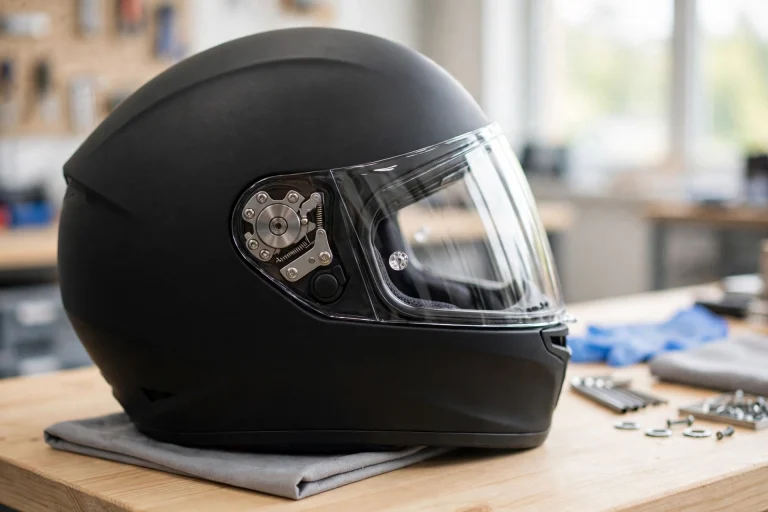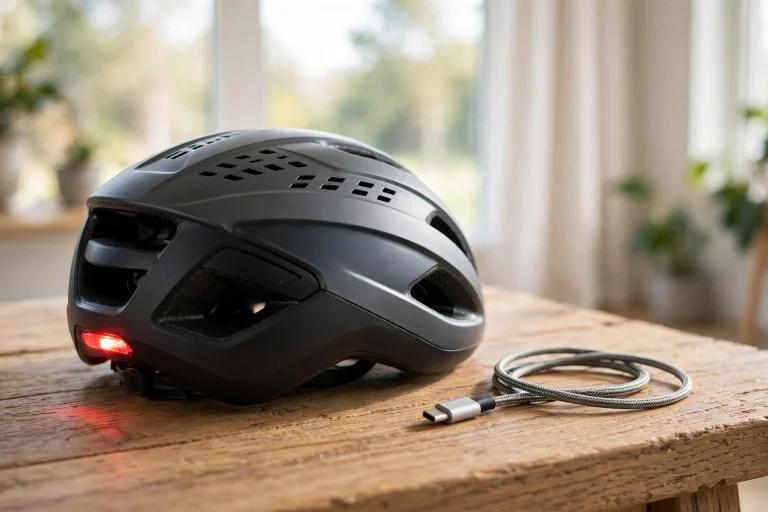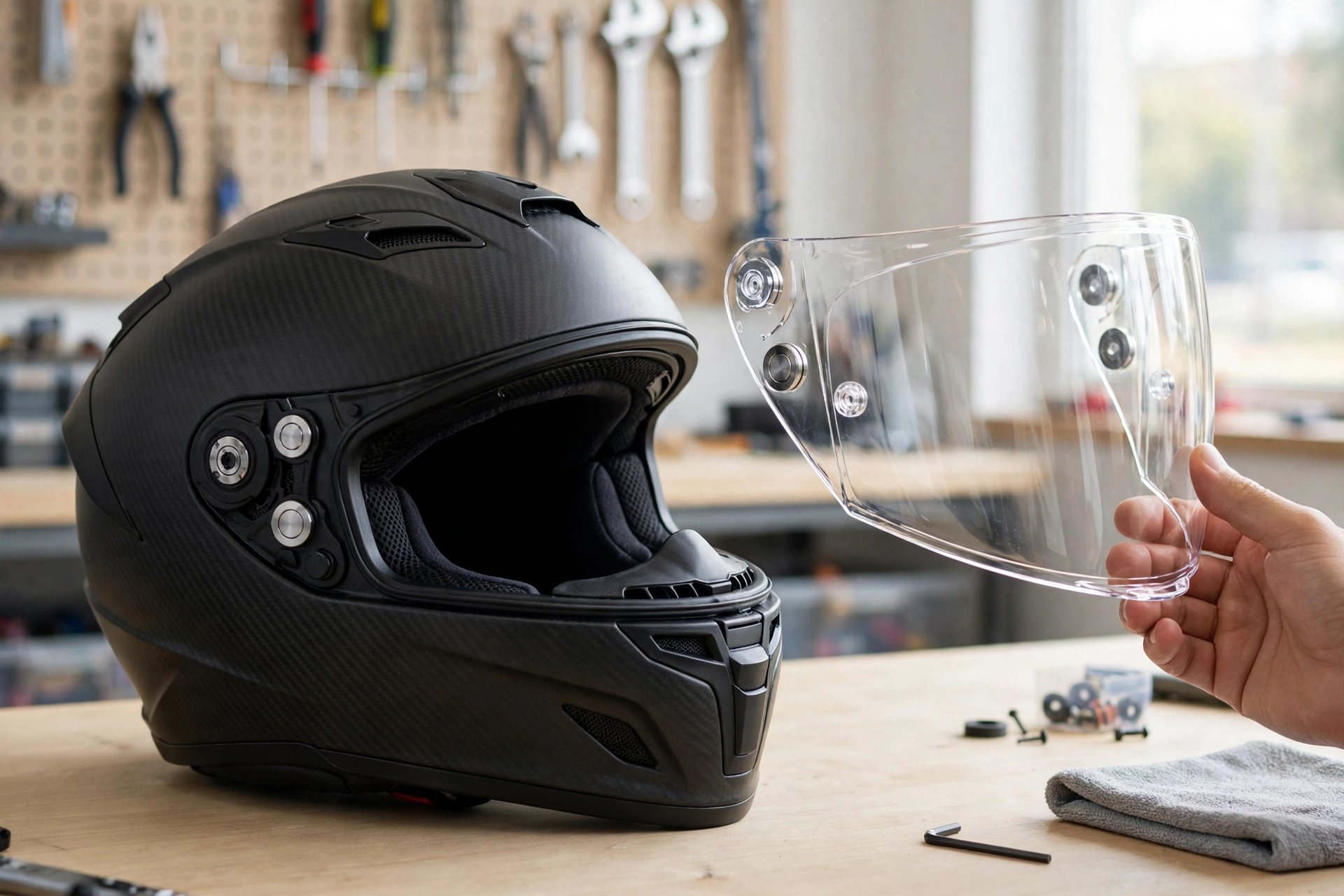
A helmet with a magnetic visor system is a helmet whose visor attaches to the shell with magnets rather than with screws, bolts, or a mechanical hinge, so the visor can be fitted and removed quickly by hand. Small magnets set into the helmet shell and into the edge of the visor hold the visor in place while you ride, and a firm pull separates them when you want to take the visor off. The idea is simple: the magnetic hold is strong enough to keep the visor steady at speed, yet easy enough to release without tools.
Magnetic visor systems are most often found on motorcycle helmets, mountain bike helmets, and some ski and snowboard helmets, where riders may want to swap a visor for a different tint or remove it altogether during a ride. They are less common on helmets that rely on a fixed, sealed visor for weather protection. This guide explains what a magnetic visor system is in general terms, how it works, what its strengths and weaknesses are, and how to choose and look after one.
What Is a Magnetic Visor System?
A magnetic visor system replaces the usual screws or pivots that hold a visor in place with a set of magnets. On a typical design, magnets are embedded in the sides of the helmet shell, near the temples, and matching magnets or metal plates are set into the visor itself. When the visor is offered up to the shell, the magnets pull it into the correct position and hold it there. Some systems also use a small locating pin or a shaped recess to help the visor sit in exactly the right place every time, so the fit does not depend on the magnets alone.
The visor in such a system may be a clear or tinted shield that covers the eyes, a sun peak on an off-road helmet, or a small wind deflector, depending on the type of helmet. On a motorcycle helmet, the magnetic visor is usually the main face shield. On a mountain bike helmet, it is often a peak that shades the eyes from sun and rain. In both cases, the principle is the same: the magnets do the work that screws or clips would otherwise do.
How Does a Magnetic Visor Attach and Release?
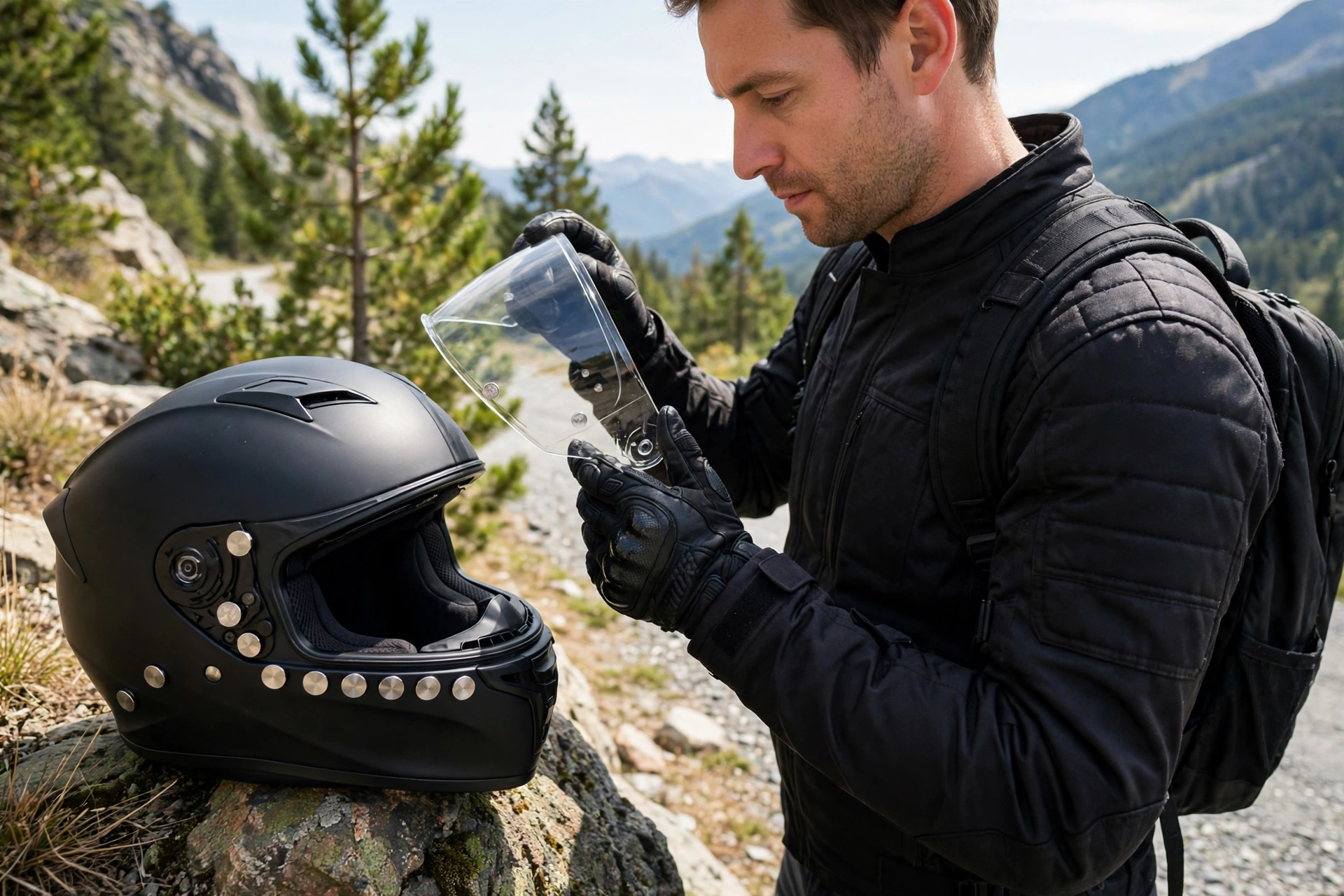
Attaching a magnetic visor is usually a matter of lining it up and letting the magnets pull it home. The rider holds the visor near the shell, the magnets guide it into position, and a light press seats it fully. Because there are no screws to line up and no tools to find, the whole job can take a few seconds, and it can often be done while wearing gloves. That ease is one of the main reasons riders choose this kind of system, especially if they swap visors often.
Removing the visor is the reverse: the rider grips the edge of the visor and pulls it firmly away from the shell. The magnets release with a clean break, and the visor comes away in one piece. Some systems are designed so that the visor can also break away in a crash, which may reduce the chance of the visor catching on something or twisting the helmet. In general terms, this breakaway behaviour is seen as a safety feature, though it also means a visor can be lost if it is knocked off hard enough. If you are learning about how helmets handle different kinds of impact, reading about what MIPS is for helmets can help you understand one of the technologies used in modern helmet design.
What Are the Benefits of a Magnetic Visor System?
The clearest benefit is speed and convenience. Swapping a clear visor for a tinted one, or removing a visor for cleaning, takes seconds rather than minutes, and there is no need to carry a screwdriver or worry about losing a small screw at the roadside. For riders who ride in changing light — starting in bright sunshine and finishing after dark, for example — that quick swap can make a real difference to comfort and visibility.
Another benefit is simplicity. With fewer small mechanical parts, there is less to wear out or break in the usual way. There are no threads to strip and no plastic pivots to crack, and the visor itself can be made a little lighter because it does not need screw holes or heavy mounting hardware. Some riders also find that a magnetic visor sits more neatly against the shell, with fewer gaps where wind or rain can get in, though this depends on the design of the individual helmet.
What Are the Downsides of a Magnetic Visor System?
The main downside is that a magnetic hold is only as good as the magnets and the design behind it. On a cheaper helmet, the magnets may be weaker, or the visor may not line up as precisely, so the visor can feel less secure than a screwed-on one. A strong knock, a heavy gust of wind, or a fall can separate the visor from the shell, and once it is off, it can be damaged or lost. Riders who often ride at high speed or in rough conditions should check that the visor feels firmly seated before setting off.
How Do You Choose and Maintain a Magnetic Visor Helmet?
When choosing a helmet with a magnetic visor system, start by trying the visor on and off a few times. It should click into place easily, sit straight, and feel secure when you tug gently at its edges. Check that there is no obvious gap between the visor and the shell, and that the visor does not rattle when you shake the helmet lightly. If the helmet is for motorcycling, look for a visor that seals well and gives a clear, undistorted view, and ask whether spare visors in other tints are available for that model.
Maintenance is straightforward. Keep the magnets and the matching contact points clean and dry, and wipe them with a soft, dry cloth after riding in rain or dust. Avoid using harsh cleaners on the visor itself, and store a spare visor in a soft bag so it does not get scratched. Check the magnets from time to time for signs of rust or damage, and if the visor ever feels loose or no longer seats cleanly, have the helmet checked before relying on it again.
Frequently Asked Questions
Q: Are magnetic visors secure at high speed?
A: In general terms, a well-designed magnetic visor should stay in place at normal riding speeds, but the hold depends on the strength of the magnets and the fit of the visor. Always check that the visor is fully seated before riding, and be aware that a hard knock can release it.
Q: Can I replace a magnetic visor with a normal screw-on visor?
A: Usually not. Magnetic visors are made for the helmet they were designed for, and a screw-on visor will not fit the same mounting points. If you need a replacement, look for the correct magnetic visor made for your exact helmet model.
Q: Do magnetic visors work in the rain?
A: Yes, in general terms, though the seal around the edges may not be quite as tight as on a bolted-on visor, so a little water or wind noise can get in during heavy rain. Keeping the magnets clean helps the visor seat properly and seal as well as it can.

Olivia
Writer at Helmet Today, covering helmet reviews, fit and riding safety.