Yes, you can often repair a scratched helmet visor, but it depends on how deep the scratches are — light surface scratches can usually be polished out, while deep scratches should not be repaired and mean the visor needs replacing. The visor is your window on the road, and even small scratches can scatter light, cause glare, and make it harder to see clearly, especially at night or in low sun. Before you start any repair, it is worth judging honestly whether the visor is a candidate for polishing or whether it has reached the end of its life.
Many riders are tempted to keep using a scratched visor because a replacement can be costly, and in some cases a careful polish really does restore a clear view. In other cases, though, polishing makes things worse by adding haze or distortion, and the safest choice is a new visor. This guide explains, in general terms, how to tell the difference, how to polish out light scratches safely, what to avoid, and when to stop repairing and replace the visor instead.
How Bad Is the Scratch?
The first step is to judge the depth of the scratch, because this decides whether a repair is even worth trying. Run a clean fingernail very gently across the scratch. If your nail glides over it without catching, the scratch is shallow and sits only in the surface coating, and it may polish out well. If your nail catches in a groove, the scratch is deeper and goes into the visor material itself, and polishing is unlikely to remove it fully.
Also check how the scratch affects your vision. Hold the visor up to a light and look through it from the angle you would use while riding. A scratch that sits in the centre of your line of sight, or one that catches the light and creates a bright line or starburst, is more of a problem than a small mark near the edge. Several scratches spread across the visor can add up to a hazy view even if each one looks minor on its own.
What Should You Use to Polish a Scratched Visor?
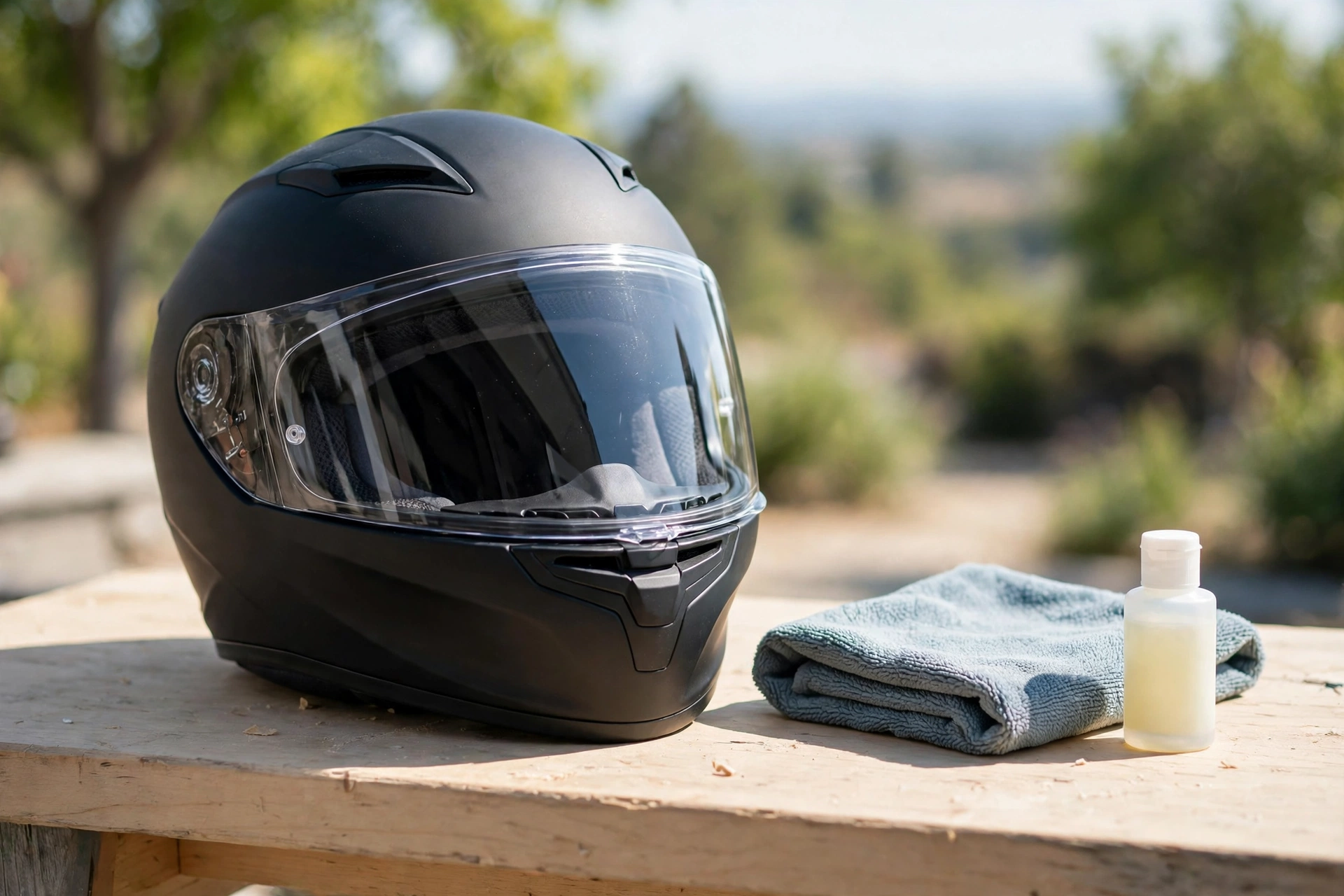
For light scratches, the safest approach is to use a polish made for clear plastic or for helmet visors. These products are designed to remove a very thin layer of the surface evenly, which smooths out shallow scratches without adding haze. They are widely available from motorcycle shops and online, and they usually come with clear instructions. Follow those instructions exactly, and test the polish on a small, out-of-the-way corner of the visor first.
You will also need a clean, soft, lint-free cloth — a microfibre cloth is ideal. Never polish a visor with a paper towel, a rough rag, or a dry cloth full of grit, because these can add new scratches faster than you remove the old ones. Wash the visor first with lukewarm water and a little mild soap, rinse it well, and let it dry before you start polishing, so no dirt is trapped under the cloth.
How Do You Polish Out Light Scratches?
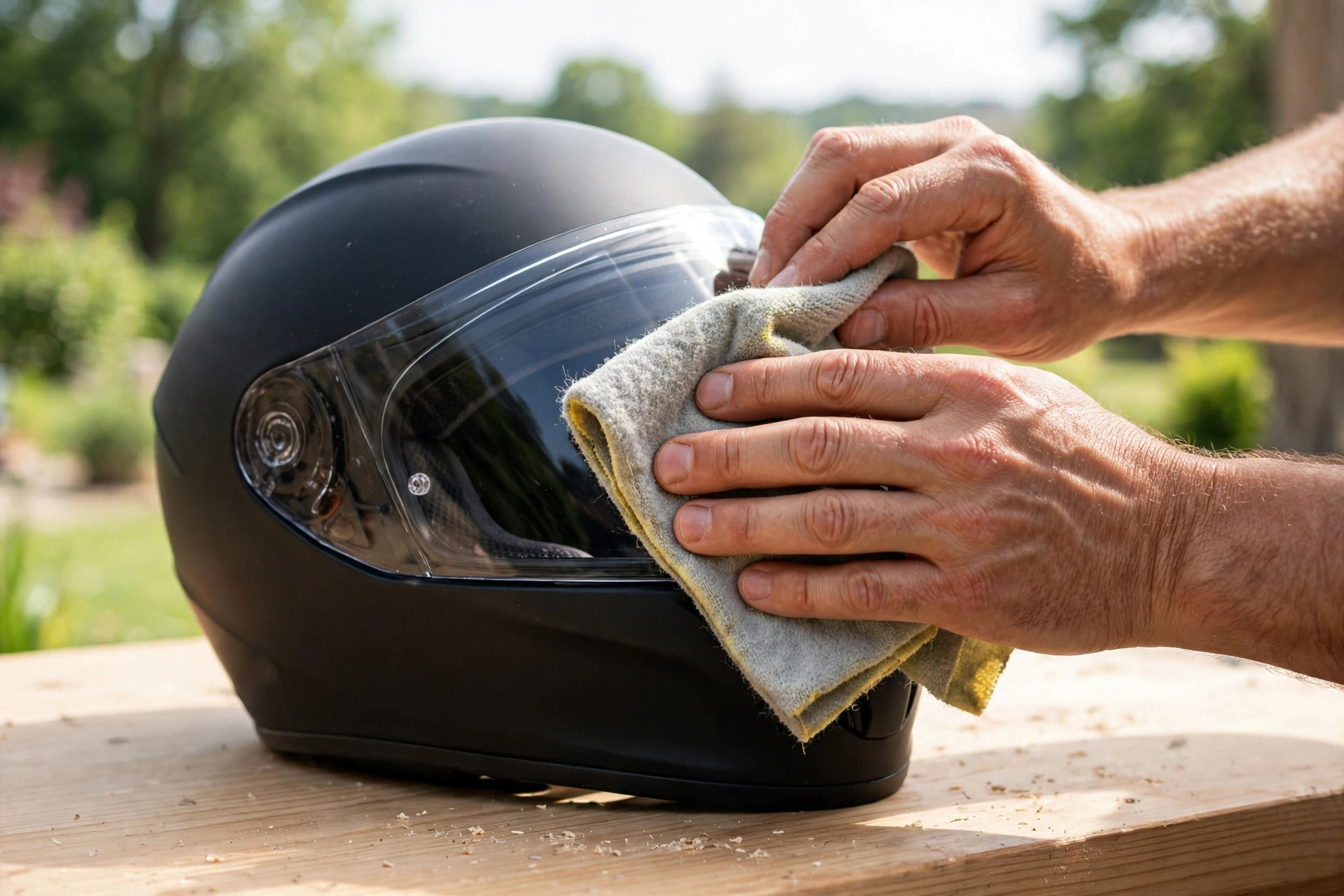
Start with a clean, dry visor on a soft surface, so the outside does not pick up new marks while you work on the inside, or the other way round. Put a small amount of polish on the cloth, not directly on the visor, and rub it gently over the scratched area in small circles. Use light, even pressure and keep the cloth moving; pressing hard in one spot can create a dip or a cloudy patch that distorts your view.
Work on one small area at a time, and check your progress often by holding the visor up to the light. Light scratches should fade gradually over several minutes of gentle polishing. When the scratch has faded, wipe away the polish residue with a clean part of the cloth, then clean the visor again with lukewarm water and mild soap. Let it dry fully and check it once more in daylight and against a bright light before you ride with it.
If the scratch is still visible after a careful attempt, do not keep polishing the same spot aggressively. Over-polishing can thin the visor, remove its coatings, and leave a hazy patch that is worse than the original scratch. In general terms, if one gentle session does not improve the visor noticeably, the scratch is probably too deep for polishing, and a replacement visor is the better option.
What Should You Never Do to a Scratched Visor?
There are several common mistakes that make a scratched visor worse. The biggest one is using the wrong product: abrasive cleaners, scouring pads, toothpaste with grit, and strong solvents can all damage the visor surface and its coatings. Toothpaste is sometimes suggested online as a scratch fix, but most toothpastes contain abrasives that are too coarse for a visor, and the result is often a cloudy patch that is harder to see through than the original scratch.
Another mistake is polishing a dirty visor. If grit or dust is on the surface when you start rubbing, those particles act like sandpaper and add new scratches. Always wash and rinse the visor first, and work in a clean area. It is also a mistake to use a heat source, such as a hair dryer, to try to smooth a scratch; heat can warp a visor and damage its coatings, and it will not remove a scratch.
Finally, do not ignore a visor that is badly scratched just because it still looks usable in daylight. Scratches that seem minor on a bright day can cause serious glare at night or when the sun is low, because the scratch scatters the light into your eyes. If you notice glare, halos around lights, or a smeared view when riding into the sun, the visor is affecting your safety, and it should be repaired properly or replaced. If you are learning about how helmets handle different kinds of impact, reading about what MIPS is for helmets can help you understand one of the technologies used in modern helmet design.
When Should You Replace the Visor Instead?
Replace the visor when the scratches are deep enough to catch a fingernail, when there are many scratches across your line of sight, or when polishing has left the visor hazy or distorted. A visor that is cloudy, warped, or cracked should also be replaced, because none of these problems can be fixed by polishing. Clear vision is a safety issue, not a cosmetic one, and a visor that you cannot see through properly puts you at risk.
Frequently Asked Questions
Q: Can all scratched visors be repaired?
A: No. Light surface scratches can often be polished out with a suitable plastic polish, but deep scratches that catch a fingernail, cracks, and chips cannot be repaired safely, and the visor should be replaced instead.
Q: Is toothpaste a good way to fix a scratched visor?
A: In general terms, no. Most toothpastes contain abrasives that are too coarse for a visor and can leave a cloudy patch. A polish made for clear plastic or helmet visors is a safer choice.
Q: How can I stop my visor getting scratched?
A: Clean it only with lukewarm water, mild soap, and a soft microfibre cloth, and store the helmet with the visor closed or in a helmet bag. Avoid wiping a dry, dusty visor, because grit on the surface causes most scratches.

Olivia
Writer at Helmet Today, covering helmet reviews, fit and riding safety.