Yes, you can often repair a loose helmet liner, because the liner is usually held in place by press studs, clips, or hook-and-loop fasteners that can be reattached, tightened, or replaced. The liner is the soft inner layer that sits between your head and the protective foam, and when it comes loose it can bunch up, shift around, or leave the helmet feeling sloppy and uncomfortable. A loose liner is annoying, but it does not always mean the helmet is finished.
The important thing is to find out why the liner is loose before you try to fix it. Sometimes a fastener has simply come undone, and the fix takes seconds. Sometimes the fastener itself is broken, the liner fabric has stretched, or the foam beneath it has worn down. Each of these has a different fix, and some of them mean the helmet should be replaced rather than repaired. This guide explains, in general terms, how to diagnose a loose liner, how to fix the common causes, and when to stop repairing and buy a new helmet.
Why Has the Liner Come Loose?
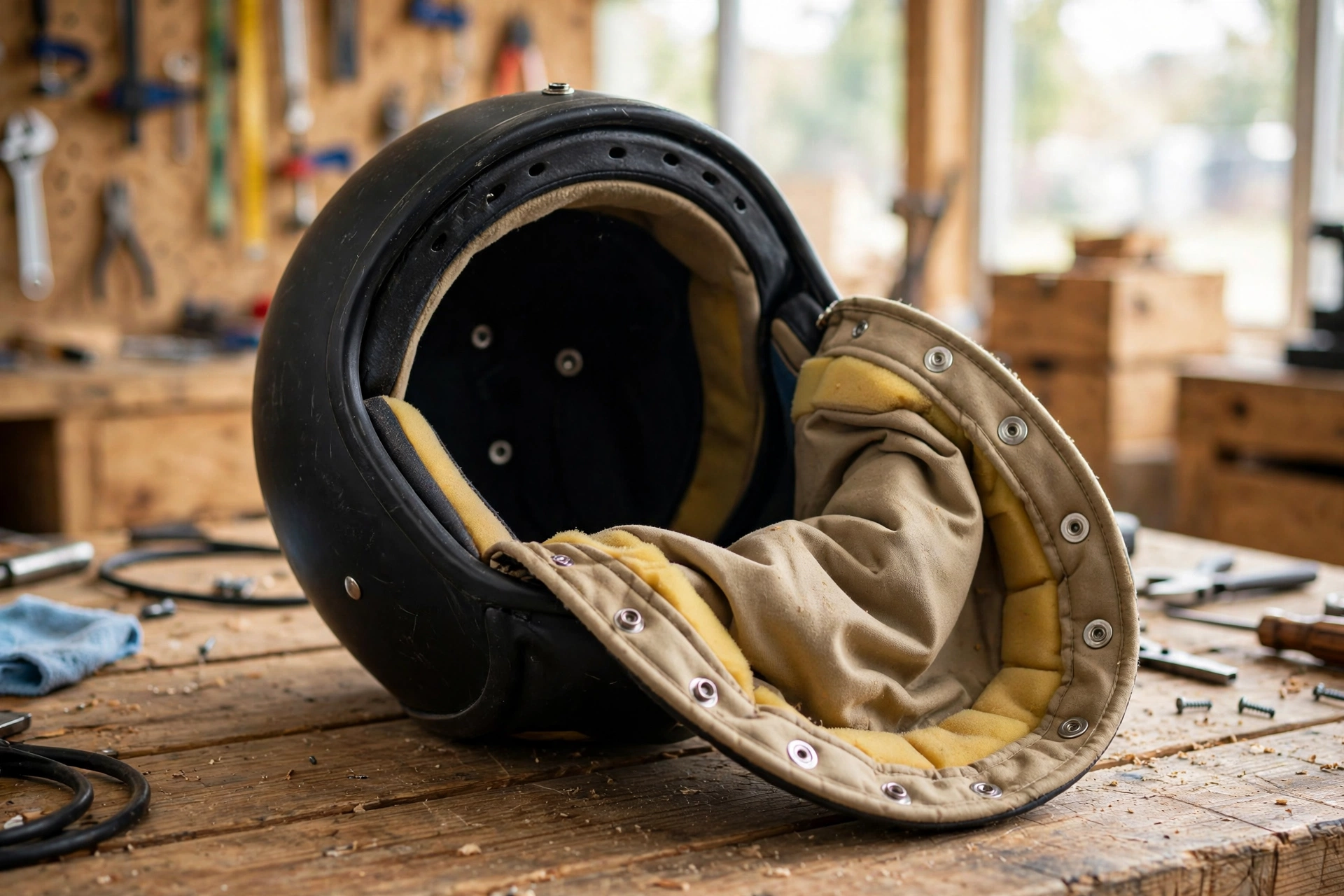
The most common reason a liner comes loose is that one or more of its fasteners has let go. Liners are usually attached with plastic press studs that pop into sockets in the helmet, or with hook-and-loop patches that grip the foam underneath. These fasteners are opened and closed every time the liner is removed for washing, and over time they can weaken, clog with lint, or break. A single loose stud can make a whole section of the liner flap around.
Another common cause is wear in the liner itself. The fabric can stretch with repeated washing, and the thin foam inside the liner can compress and lose its spring. When this happens, the liner no longer fills the space it was made for, and it feels loose even when all the fasteners are attached. Sweat and heat speed this process up, which is why liners in helmets used every day tend to loosen sooner than those in helmets used only occasionally.
How Do You Reattach a Liner That Has Come Undone?
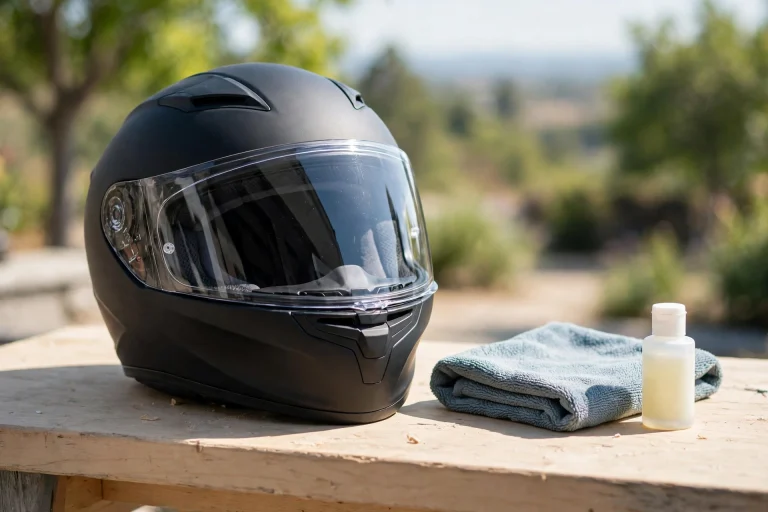
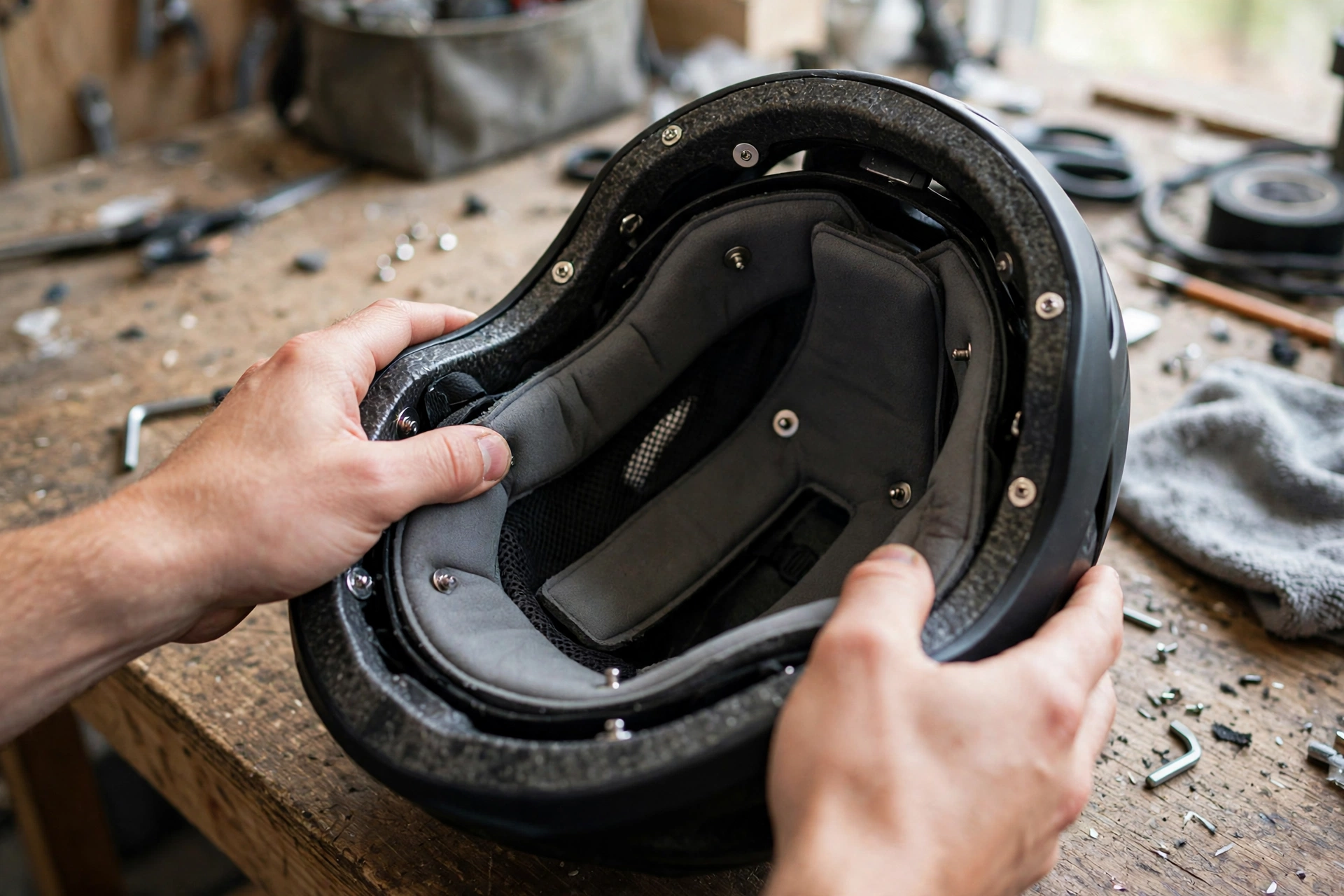
If the liner has simply come undone, the fix is often as simple as lining it up and pressing it back into place. Take the liner out completely, so you can see all of its fasteners and all of the sockets in the helmet. Clean out any lint, dust, or dried sweat from the fasteners with a soft brush or a damp cloth, because a clogged stud or a dusty hook-and-loop patch will not grip properly.
Then refit the liner one section at a time, starting with the crown and working outwards to the sides and the back. Press each stud firmly until you feel it click into its socket, and smooth each hook-and-loop patch flat so the whole patch makes contact. Once the liner is in, run your fingers around the edges to check that nothing is bunched or folded, and put the helmet on to see whether it feels even and snug.
If a stud will not stay clicked in, check whether the stud or the socket is damaged. A stud that is cracked or a socket that is split will not hold, however firmly you press it. In some cases the maker sells spare studs or small repair parts, and a dealer can help you match them. If the hook-and-loop patches have lost their grip, cleaning them may help, but worn hook-and-loop often needs to be replaced, which is a job for a repair shop. If you are learning about how helmets handle different kinds of impact, reading about what MIPS is for helmets can help you understand one of the technologies used in modern helmet design.
Can a Stretched or Worn Liner Be Fixed?
A liner that has stretched or thinned with age is harder to fix than one that has simply come undone. Washing the liner carefully can sometimes help it regain a little of its shape, especially if it has been washed in hot water or dried with heat in the past. Wash it by hand in lukewarm water with a little mild soap, rinse it well, and let it dry naturally in the open air, away from direct heat. Never use a tumble dryer or a radiator, because heat can shrink and stiffen the fabric.
If washing does not help, the liner may need replacing rather than repairing. Many helmet makers sell replacement liner sets for their popular models, and a fresh liner can restore the fit and comfort of the helmet. You will need the exact model name and size of your helmet, because liners are shaped to fit a particular shell. Fitting a new liner is the same process as refitting the old one: clean the sockets, press each stud in firmly, and check the fit by wearing the helmet.
What Should You Check Under the Liner?
Whenever the liner is loose, it is worth checking what is underneath it. Peel the liner back gently and look at the foam liner that forms the protective core of the helmet. It should be smooth, firm, and free of cracks. Press it lightly with your fingers: it should feel even all over, with no soft spots or crumbling areas. If you find cracks, dents, or foam that crumbles when you touch it, the helmet has a safety problem that no liner repair will fix.
If everything underneath looks sound and the liner itself is in reasonable condition, the repair is worth doing. If the foam is damaged, the helmet should be retired. A loose liner is a warning to look more closely, and the few minutes it takes to check the foam can tell you whether the helmet is still safe to use.
When Should You Replace the Helmet Instead?
Replace the helmet when the loose liner is a symptom of a bigger problem. A cracked or crumbling foam liner, a cracked shell, or broken strap anchors all mean the helmet can no longer be trusted, and no liner repair will make it safe. The same applies if the helmet has been in a crash, because the foam may be damaged even when it looks fine from the outside.
Frequently Asked Questions
Q: Why does my helmet liner keep coming loose?
A: The most common causes are fasteners that have come undone or weakened, a liner that has stretched with washing and use, or damage to the foam underneath. Check the studs and sockets first, then the condition of the liner fabric, and finally the foam beneath it.
Q: Can I glue a loose liner back in place?
A: In general terms, no. Glue can damage the protective foam, make the liner impossible to remove for washing, and may not hold under the heat and sweat of riding. Reattaching the proper fasteners, or fitting a replacement liner, is a much better option.
Q: Is a loose liner dangerous?
A: It can be. A liner that shifts around can make the helmet fit badly, distract you while riding, or bunch up over your eyes. A loose fit also means the helmet may move out of place in a crash, so a liner that will not stay put should be fixed or the helmet replaced.

Olivia
Writer at Helmet Today, covering helmet reviews, fit and riding safety.