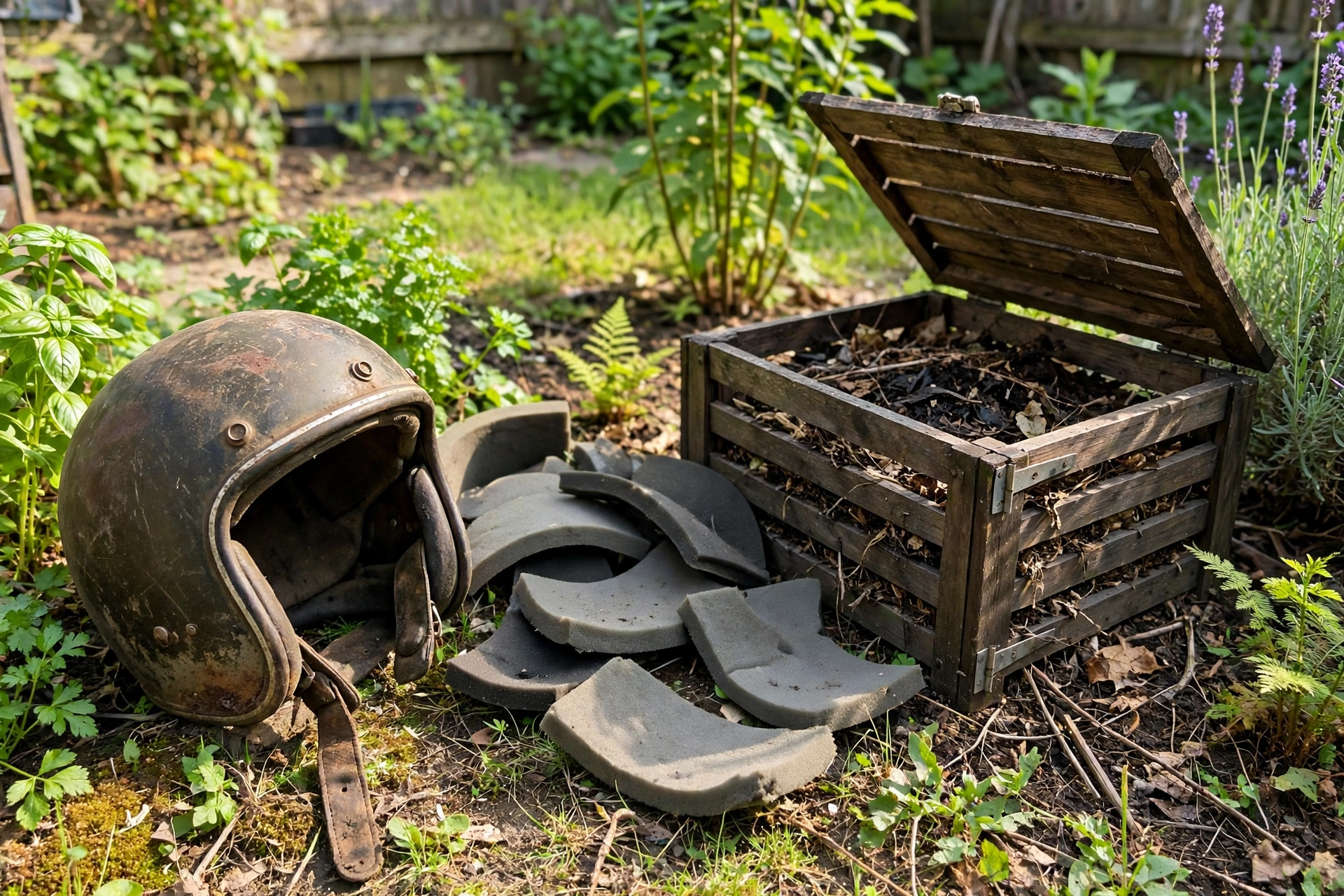
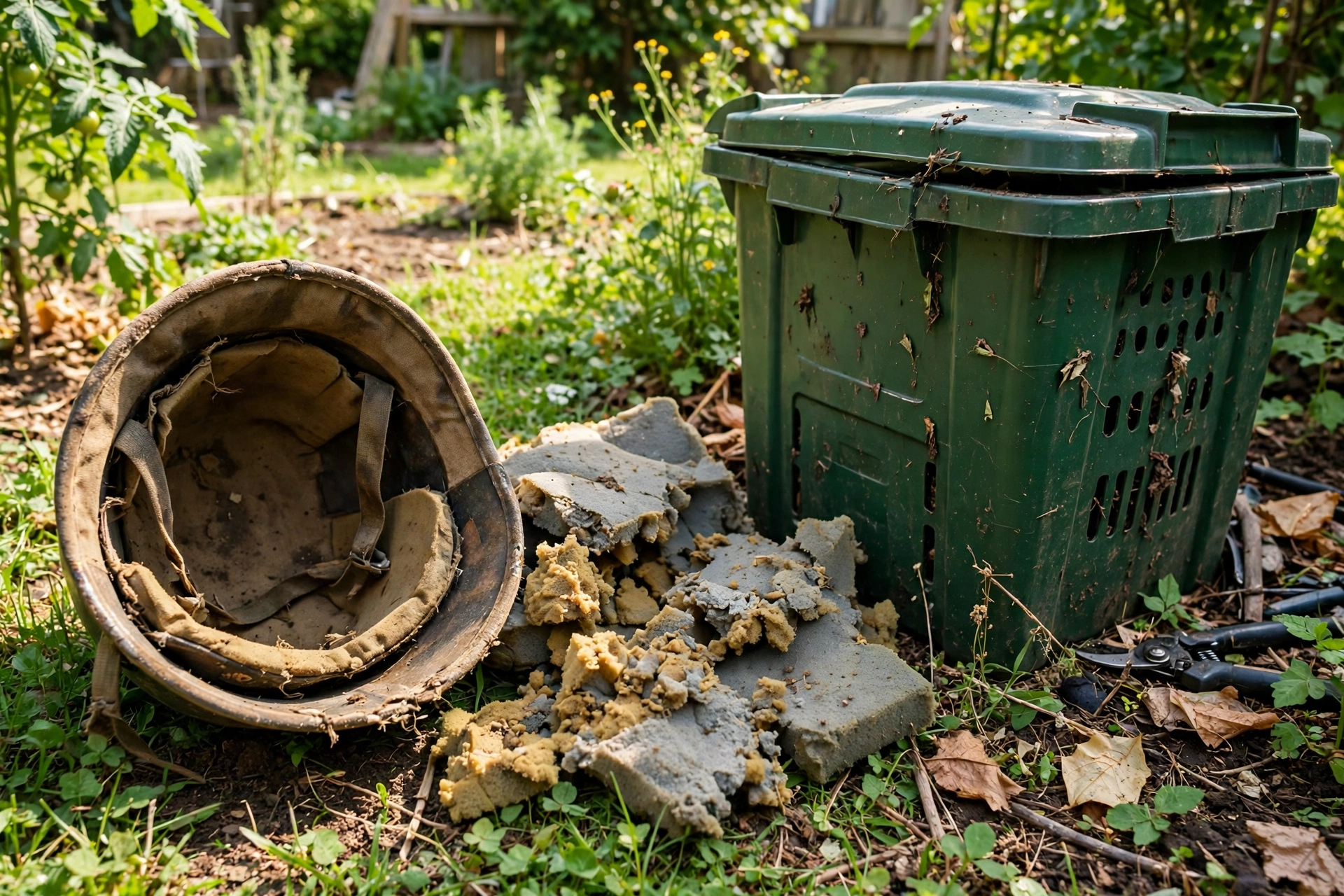
No, most helmet liners cannot be composted, because they are made from synthetic foam and fabrics that do not break down in a compost heap. The comfort liner inside a helmet — the soft padding that touches your head — is usually made from foam and synthetic cloth, and the protective foam layer underneath it is a plastic foam too. Neither of these materials will rot down like food scraps or garden waste, and putting them in a compost bin will leave you with the same piece of foam months later, just dirtier.
This matters because many riders want to dispose of old helmets in the most responsible way, and composting sounds like a natural answer. The honest answer is more complicated: a helmet is made from several different materials joined together, and most of them need a different end-of-life route. This guide explains, in general terms, what helmet liners are made from, why most of them are not compostable, what the exceptions might be, and what to do with an old liner instead.
What Are Helmet Liners Made From?
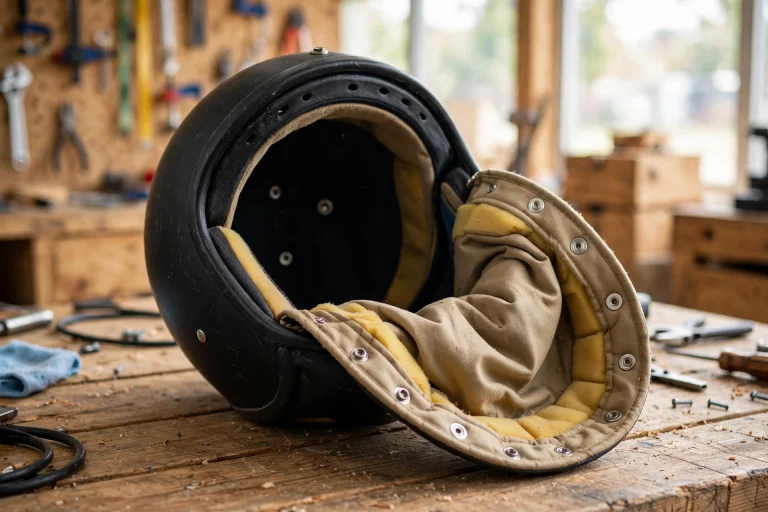
A helmet has two kinds of liner, and it helps to tell them apart. The comfort liner is the soft, washable padding that sits against your head: usually a layer of soft foam covered in fabric, held in place with press studs or hook-and-loop fasteners. The fabric is most often a synthetic material chosen because it wicks sweat, dries quickly, and survives repeated washing. The foam inside it is a soft synthetic foam, chosen for comfort rather than impact protection.
Underneath the comfort liner sits the protective foam liner, which is the thick layer of hard foam that absorbs energy in a crash. This is a rigid plastic foam, and it is the most important safety part of the helmet. It is also the part that makes the helmet hard to recycle, because it is bonded to the shell and covered in glues, paints, and other materials.
Why Is Most Helmet Foam Not Compostable?
Composting works when tiny organisms in a compost heap break a material down into soil-like matter. This happens readily with food scraps, leaves, paper, and natural fibres such as cotton or wool, because these materials are made from substances that those organisms can digest. Synthetic foams are different: they are made from long chains of plastic molecules that the organisms in a compost heap cannot break down in any reasonable time.
The protective foam in a helmet is a good example. It is a rigid plastic foam designed to stay strong for years, to resist heat, sweat, and knocks, and to hold its shape under pressure. Those are exactly the qualities that make it useless in a compost heap: it will sit there unchanged while everything around it rots down. The soft foam in the comfort liner behaves in the same way, even though it feels different to the touch.
Are Any Helmet Liners Compostable?
A small number of liners may be partly compostable, and it is worth checking before you assume. A liner made entirely from natural fibres, with no synthetic foam and no plastic fasteners, could in theory break down in a compost heap. Some makers are experimenting with plant-based foams and natural-fibre liners, and a few specialist helmets use liners designed with end-of-life in mind. These are still uncommon, though, and they are usually clearly labelled by the maker. If you are learning about how helmets handle different kinds of impact, reading about what MIPS is for helmets can help you understand one of the technologies used in modern helmet design.
If your helmet claims to have a compostable or biodegradable liner, read the maker’s guidance carefully. It will usually say whether the liner needs a commercial composting facility, which runs much hotter than a home heap, or whether it can go in a home compost bin. It will also say whether any part of the liner — the fasteners, the stitching, the foam — needs to be removed first. Do not assume that a liner labelled “natural” or “eco” is fully compostable; check what the label actually covers, and follow the maker’s instructions.
What Should You Do With an Old Helmet Liner Instead?
The most responsible option for an old liner is to keep using it for as long as it is safe, and then to dispose of it through the right route for your area. A comfort liner that is still in good shape can often be washed and reused, or kept as a spare. A worn liner can sometimes be reused for another purpose, such as padding for storage or a cleaning cloth, though it should never be reused as safety equipment in another helmet.
When the liner is finally finished, check the local rules in your area for how to dispose of it. Rules vary from place to place, so it is worth checking your local council or waste service rather than guessing. Some areas have schemes that take old helmets for recycling, and some helmet makers run take-back programmes that accept old helmets and separate the materials for you. If no such scheme is available where you live, the liner will usually need to go in your general waste, which is not ideal but is better than contaminating a compost heap or a recycling stream.
How Can You Choose a More Sustainable Helmet Next Time?
If composting matters to you, the best time to think about it is when you buy your next helmet. Look for makers that publish clear information about the materials in their helmets and about what happens at the end of the helmet’s life. A maker that offers a take-back scheme, uses recycled materials, or designs helmets so the parts can be separated is a better choice than one that says nothing at all about disposal.
Also consider how long the helmet will last. A helmet with replaceable padding, a replaceable visor, and spare parts available will stay in use for longer, and that is often the most sustainable choice of all. Keeping a helmet in service for an extra year or two avoids the waste of making a whole new helmet, which matters far more than whether one small part can be composted.
Finally, remember that safety comes first. A helmet is protective equipment, and its job is to protect your head. Choose a helmet that fits well and meets the safety standards in your area, and treat composting as a bonus rather than the deciding factor. In general terms, the greenest helmet is the one that protects you well, lasts a long time, and is repaired rather than replaced whenever that is safe.
Frequently Asked Questions
Q: Can I put my helmet liner in my compost bin?
A: In general terms, no. Most helmet liners are made from synthetic foam and fabric that will not break down in a compost heap. Putting them in compost will contaminate it with pieces of foam and fabric that have to be removed later.
Q: Are there any compostable helmet liners?
A: A few specialist liners made entirely from natural materials may be compostable, often only in a commercial composting facility. Check the maker’s guidance for your exact model, and do not assume a liner is compostable just because it is labelled natural or eco-friendly.
Q: What is the best way to dispose of an old helmet liner?
A: Check the local rules in your area first, and look for a helmet recycling scheme or a maker take-back programme. If none is available, the liner will usually go in general waste. Never put foam liners in a compost bin or a recycling bin unless your local service says they accept them.

Olivia
Writer at Helmet Today, covering helmet reviews, fit and riding safety.