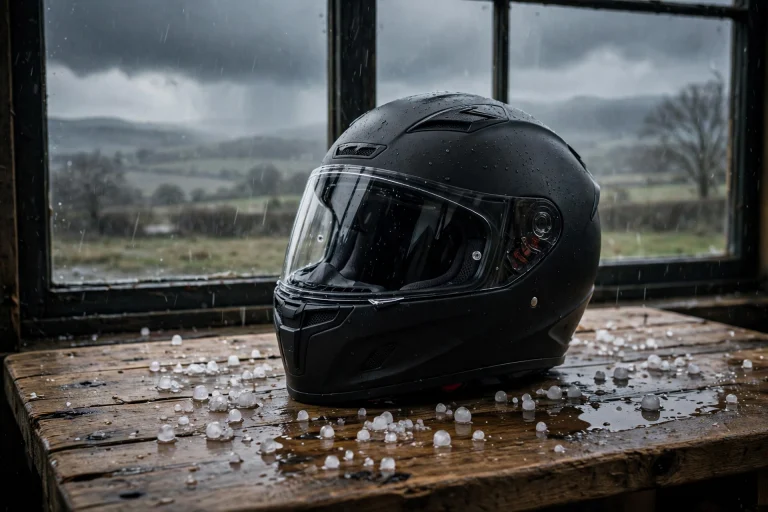
No, helmets do not attract lightning — this is a myth, and wearing a helmet does not make you any more likely to be struck. Lightning is drawn to the tallest object in an area and to the path of least resistance to the ground, not to the material of a helmet. A helmet is far too small, and far too low, to change where lightning strikes.
This myth probably comes from the idea that metal attracts lightning, and some helmets do have small metal parts such as buckles, vents, and screws. But those tiny pieces of metal are nothing compared to the size of a person, a tree, or a building, and they do not create a lightning target. This guide explains how lightning works in general terms, why helmets are not a factor, and what you should actually do in a storm.
How Does Lightning Choose Where to Strike?
Lightning happens when a build-up of electrical charge in a storm cloud discharges to the ground. The strike follows the easiest path it can find, and that usually means the tallest object in the area, because it is the closest point to the cloud. Tall trees, poles, towers, and buildings are the objects most often struck, simply because they stick up higher than everything around them.
Being on high ground also increases the risk, as does standing in open water or near a tall isolated object. What matters is height, position, and the surrounding landscape — not the small items you are wearing or carrying. A person standing in an open field is at risk because they are the tallest thing around, not because of anything on their head.
Metal does conduct electricity, which is where the confusion comes from. But a few small metal fittings on a helmet do not make you taller, and they do not create a better path to the ground than your own body already provides. Lightning is not searching for metal; it is finding the shortest route down.
Why Don’t Helmets Attract Lightning?
First, the materials in a helmet are mostly not metal. The shell is usually made of plastic or composite materials, the liner is foam, and the padding is fabric. These materials do not conduct electricity well, and they do not attract a strike. The metal parts — a buckle, a few screws, a vent grille — are tiny and scattered, and they make no difference to the electrical picture.
Second, the helmet sits on your head, which is already the highest point of your body. Adding a helmet changes your total height by only a couple of centimetres, which is far too little to affect where lightning strikes. If you are standing in an open field, you are at risk because you are standing up in the open, and the helmet changes nothing about that risk.
Finally, the idea that lightning is attracted to metal objects in general is a misunderstanding. Lightning rods on buildings work because they are tall, well-grounded, and deliberately placed to provide a safe path — not simply because they are metal. A small piece of metal on a helmet does none of those things.
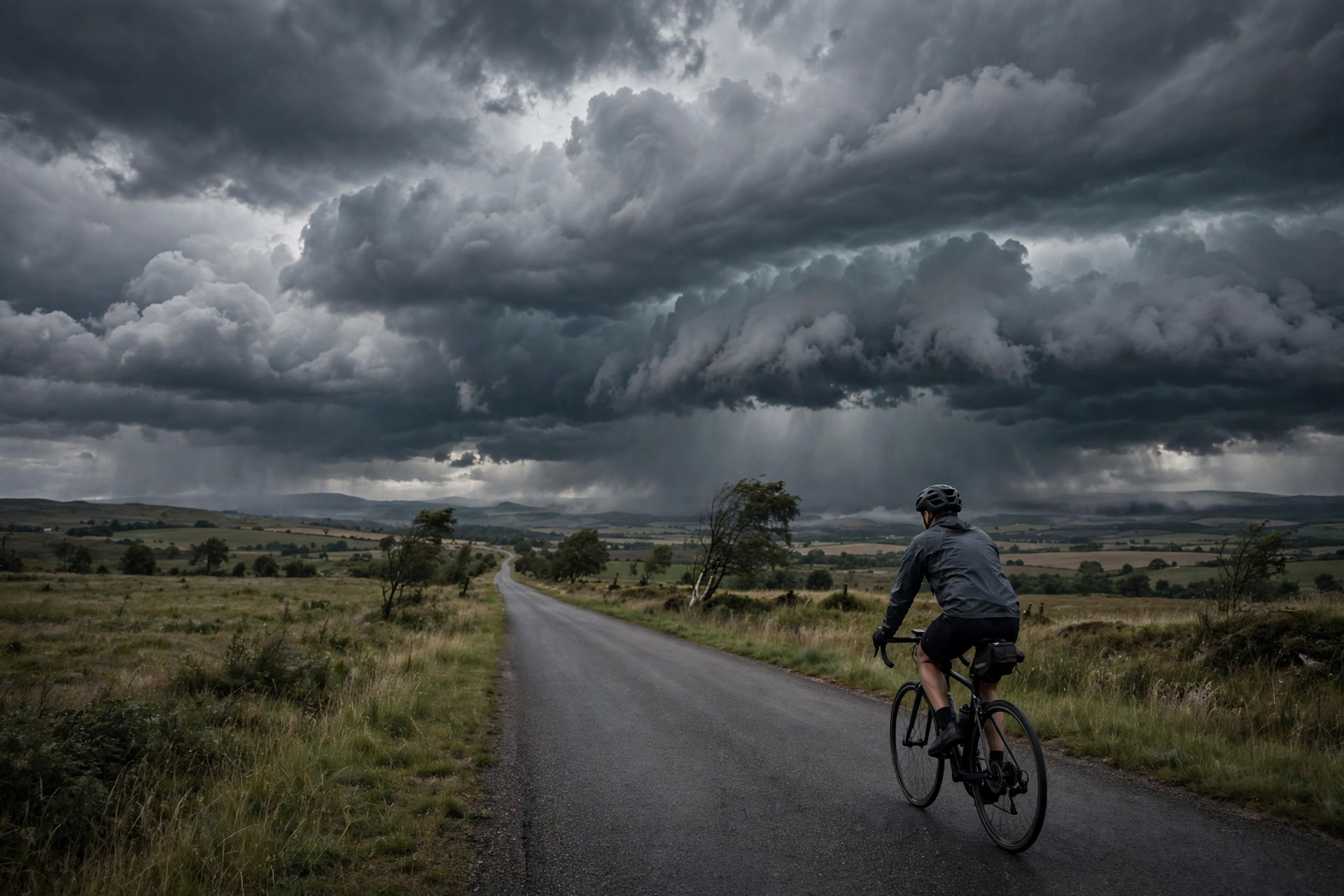
What Should You Do If You Are Caught in a Thunderstorm?
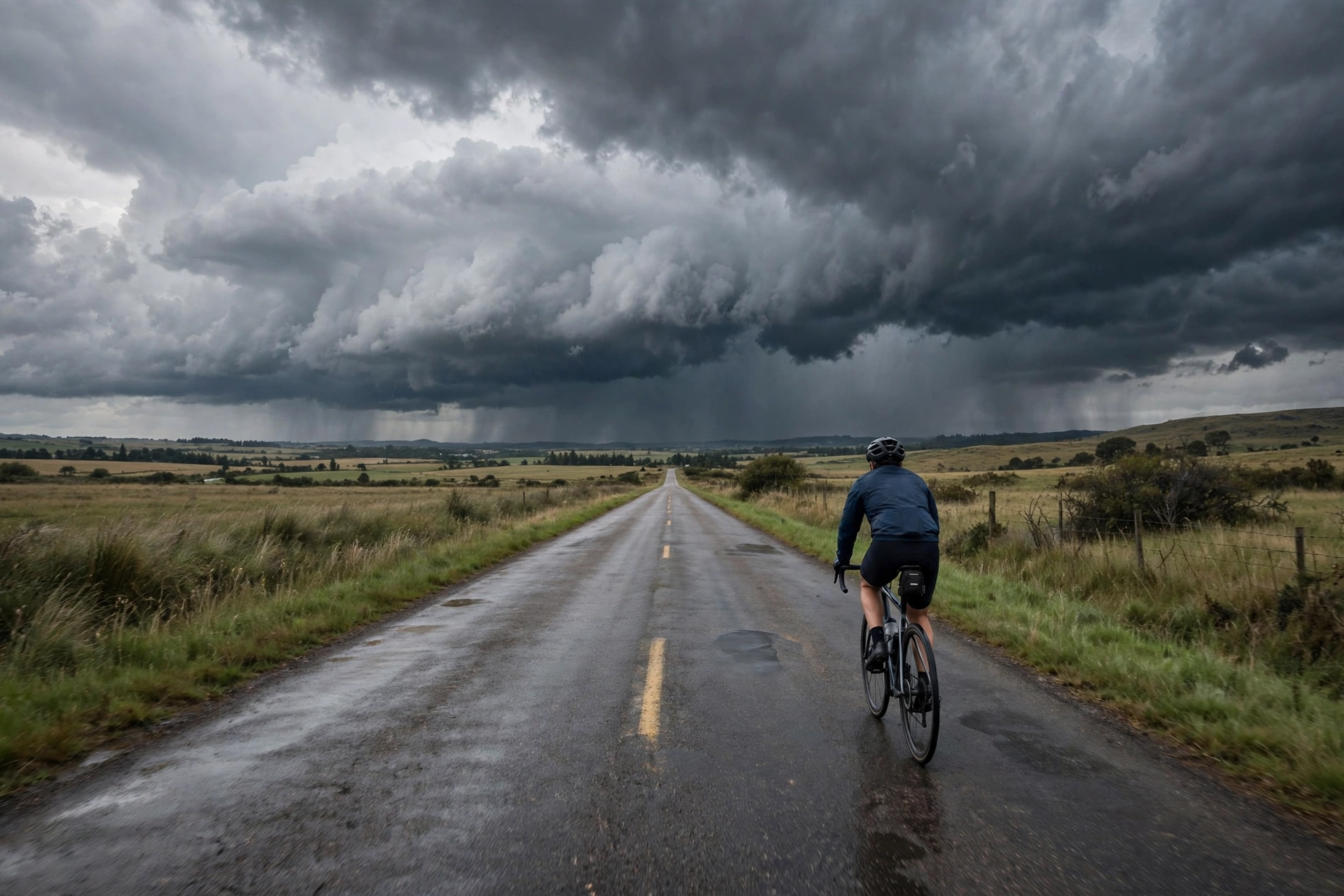
The safest thing is to get indoors or inside a hard-topped vehicle as soon as you hear thunder. Do not wait for the rain to start — lightning can strike well before the rain arrives, and the common advice is that if you can hear thunder, you are close enough to be struck. Stop riding, get off the road, and find proper shelter.
If you cannot reach shelter, get away from tall isolated objects such as single trees, poles, and fences, and avoid open water and high ground. Crouch low with your feet together and your head tucked in if the storm is directly overhead and there is no shelter at all — this is a last resort, not a plan, and it only reduces the risk slightly. Never shelter under a lone tree, because the tree itself is a likely strike point.
Take your helmet off if you need to, but do not worry about it attracting lightning — the decision to remove it should be about comfort and hearing, not lightning. What matters is where you are and how quickly you can get to safety. If you are learning about helmet design and safety, reading about what MIPS is for helmets can help you understand one of the technologies used in modern helmet design.
Are There Any Real Storm Risks for Helmet Wearers?
The real risks in a storm for a rider are the same as for anyone else outdoors: being the tallest object in an open area, being caught on high ground, and being near water. Rain and wind make riding itself more dangerous, because wet roads are slippery and strong gusts can push a rider around. Hail is another hazard, and a helmet does offer some protection against hailstones hitting your head — but it does not protect the rest of your body.
Visibility drops sharply in heavy rain, which makes it harder for other road users to see you and harder for you to see them. If a storm is building, the sensible choice is to stop riding before conditions get bad, rather than trying to push through it. A helmet cannot protect you from the storm itself, only from a blow to the head.
In general terms, the storm is the danger, not the helmet. The best protection is the same advice given to everyone: get indoors, stay there until the storm has passed, and only head out again when you can no longer hear thunder.
Should You Worry About Metal Buckles and Vents?
No. The metal parts on a helmet are small, and they are surrounded by non-conductive materials. They do not stick up above your head, they are not connected to the ground, and they do not form a path that lightning would prefer. Worrying about a helmet buckle in a storm is like worrying about a zip on your jacket — it is not a factor.
If anything, the helmet is a small comfort in a storm, because it protects your head from hail and from debris blown around by the wind. But that is a side benefit, not a reason to stay outside in a thunderstorm. No helmet makes it safe to ride through lightning, and the right move is always to get to shelter.
So wear your helmet without worrying about lightning, and save your attention for the real question in a storm: where is the nearest safe shelter, and how quickly can you reach it?
Frequently Asked Questions
Q: Do helmets attract lightning?
A: No. Lightning strikes the tallest object in an area, and a helmet is far too small to change where a strike lands. The metal parts on a helmet are tiny and make no difference.
Q: Is it safe to ride in a thunderstorm with a helmet on?
A: No — riding in a thunderstorm is unsafe with or without a helmet. Get indoors or inside a hard-topped vehicle as soon as you hear thunder, and wait until the storm has passed.
Q: Should I take my helmet off in a storm?
A: You can if it is more comfortable, but not because of lightning — the helmet does not attract strikes. What matters is getting to shelter quickly, not what is on your head.

Olivia
Writer at Helmet Today, covering helmet reviews, fit and riding safety.