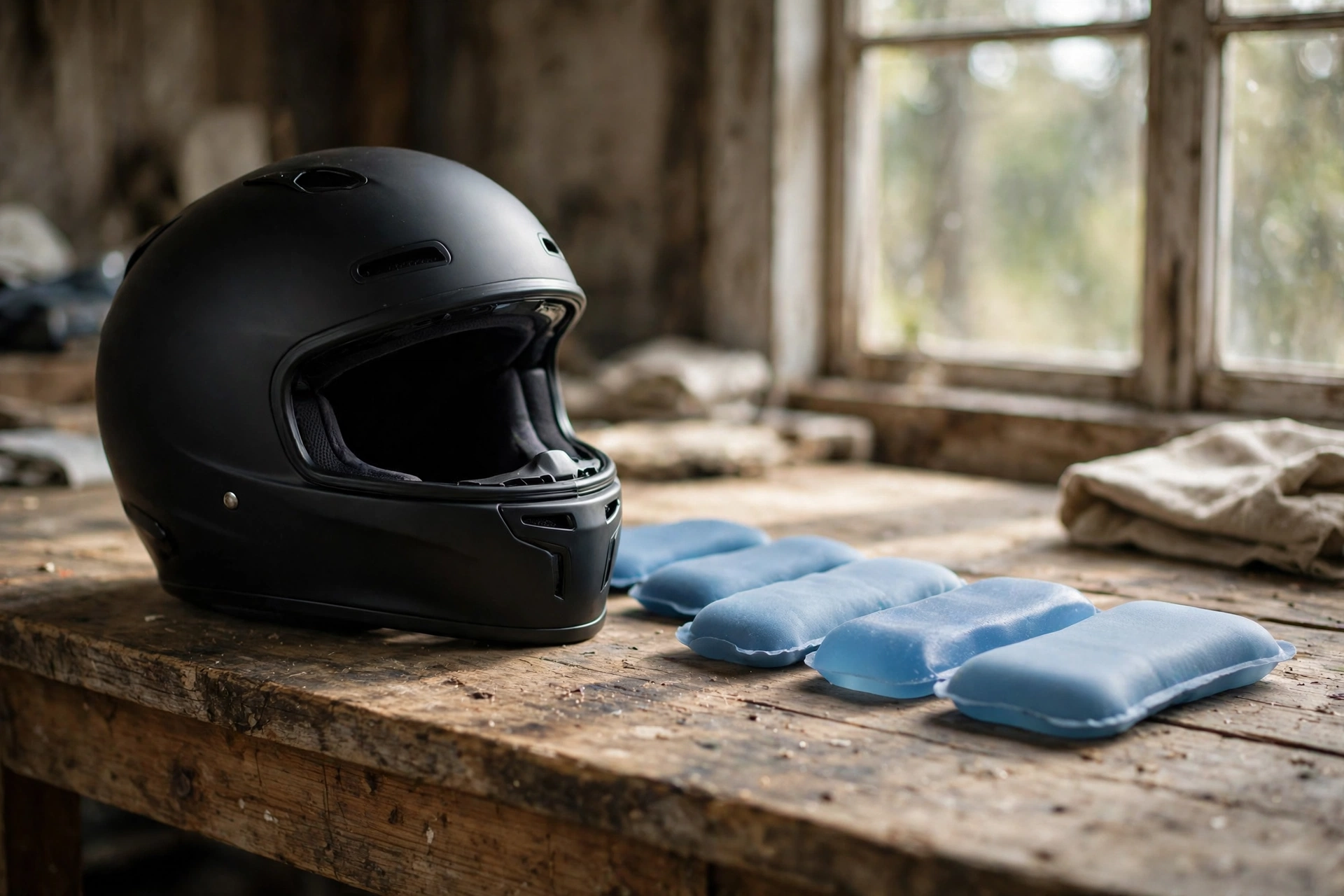
Helmet gel pads are soft, gel-filled inserts that sit inside a helmet to improve comfort and spread pressure more evenly across the head. They are usually placed where a helmet presses hardest — at the forehead, the crown, or the sides — and they work by moulding gently to the shape of the head instead of pushing back against it. For riders who find their helmet uncomfortable after a while, gel pads are one of the simplest upgrades to try.
Most helmets come with foam padding that does the same basic job, but gel pads behave a little differently. The gel inside them moves slowly and spreads the load, so a pressure point that felt sharp with foam alone can feel softer and more even. This guide explains what helmet gel pads are in general terms, how they work, where they fit, and what to think about before buying a set.
What Are Helmet Gel Pads?
Helmet gel pads are thin, flexible pads filled with a soft gel, usually sealed inside a fabric or silicone cover. They come in different shapes and sizes, from small round discs to larger curved pads that follow the inside of a helmet shell. Some are sold as universal pads that can be trimmed or stuck in place, while others are made to fit specific helmet models or brands.
The gel inside is designed to stay soft at normal temperatures and to return to its shape after use. Unlike a simple foam pad, which compresses and stays compressed while it is under load, a gel pad spreads the pressure across a wider area. That is why riders often describe gel pads as feeling cooler and less pinchy, especially on longer rides where the same spots are under pressure for hours.
In general terms, gel pads are a comfort accessory rather than a safety device. They do not change how a helmet performs in a crash, and they should never be used to make a helmet that is the wrong size fit. A helmet should fit correctly on its own, and gel pads should only fine-tune the comfort of a helmet that already fits well.
How Do Gel Pads Improve Comfort?
The main benefit of a gel pad is pressure distribution. When a helmet rests on the head, most of its weight and the pressure from the straps concentrate on a few contact points. A gel pad placed at one of those points spreads that pressure over a larger area, so no single spot has to carry the load alone. The result is usually less soreness and fewer pressure marks after a ride.
Some riders also find that gel pads help with vibration. On a motorcycle or a rough trail, small vibrations travel through the shell and into the padding, and a gel layer can damp some of that buzz before it reaches the head. In general terms, this is a subtle effect rather than a dramatic one, but on a long ride even a small improvement in comfort can make a real difference.
Gel pads can also help in hot weather, since many designs include a breathable cover or a surface that feels cool when you first put the helmet on. That cooling feeling fades as the pad warms up to body temperature, so it is best thought of as a short-term comfort bonus rather than a cooling system. If you want to understand the safety technology inside modern helmets, reading about what MIPS is for helmets is a useful place to start.
Where Do Gel Pads Fit Inside a Helmet?
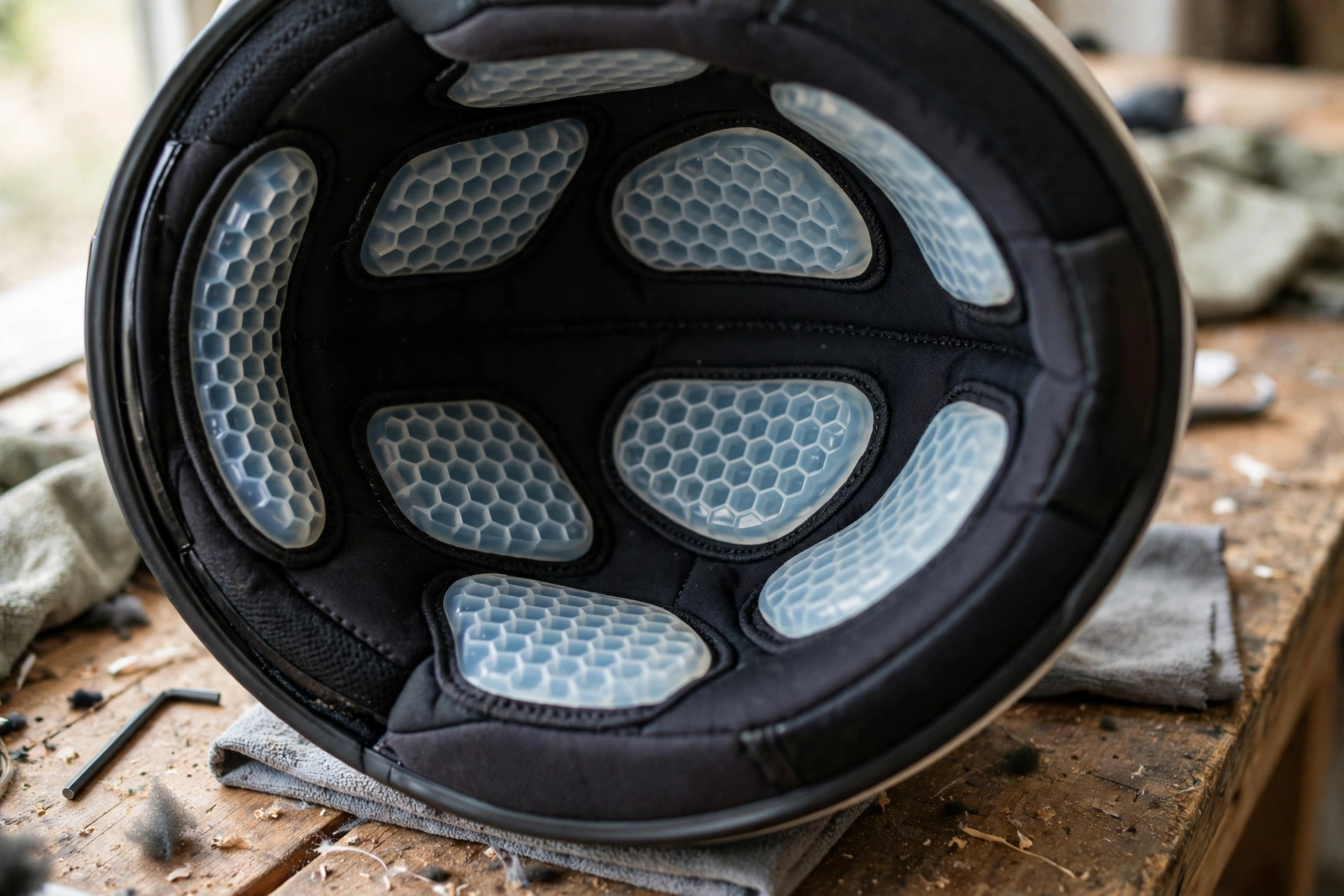
Gel pads are most often fitted at the forehead, the crown, and the temples, because those are the places where riders usually feel pressure first. A pad at the forehead can soften the line where the front of the helmet meets the skin, while pads at the crown help when a helmet feels as though it is pressing down on the top of the head. Smaller pads can be placed at the sides to take up a little slack or to stop a helmet from rocking.
Most gel pads attach with a self-adhesive backing or with hook-and-loop fasteners, so they can be moved or removed without tools. This makes it easy to experiment: try a pad in one spot, ride for a while, and move it if it does not help. It is worth removing the helmet’s existing comfort liner first if you can, so the pad sits flat against the shell rather than on top of loose foam that might shift around.
One thing to watch is thickness. A pad that is too thick can change the fit of the helmet, pushing it up or making it sit too high on the head. That can leave the forehead or the back of the head less covered than it should be, so always check the fit after adding a pad. If the helmet feels noticeably different or unstable, remove the pad and try a thinner one.
Are Gel Pads Suitable for Every Type of Helmet?
In general terms, gel pads work best in helmets with removable comfort liners, such as most motorcycle, cycling, and mountain bike helmets. In these helmets the liner can be taken out, the pad can be placed exactly where it is needed, and the liner can be refitted over it. Ski and snowboard helmets often have a similar setup, so gel pads can work there too.
It is also worth checking whether the helmet maker sells its own comfort pads for that model. Some brands offer replacement liners in different thicknesses, and these are usually a better option than a universal gel pad because they are designed for that exact shell. If your helmet maker offers a thicker or thinner liner, that may solve a comfort problem more neatly than an aftermarket pad.
How Do You Look After Gel Pads?
Gel pads need very little maintenance, but they do benefit from regular cleaning. Sweat and skin oils can build up on the cover over time, so wipe the pads down with a damp cloth and a little mild soap, then let them air-dry before putting them back in the helmet. Avoid harsh cleaners or solvents, which can damage the cover or the gel inside.
Check the pads now and then for signs of wear. If the cover splits or the gel starts to leak, the pad should be replaced, since a damaged pad will not distribute pressure evenly and the gel could stain the liner. In general terms, gel pads last longer than foam pads because the gel does not compress permanently, but they still wear out eventually and should be replaced when they stop feeling supportive.
Frequently Asked Questions
Q: Do helmet gel pads make a helmet safer?
A: No. Gel pads are a comfort accessory, and they do not change how a helmet performs in a crash. They can make a well-fitting helmet more comfortable, but they should never be used to make a helmet that is too big or too small fit.
Q: Can I add gel pads to any helmet?
A: In general terms, yes, as long as there is room for them without changing the fit. They work best in helmets with removable liners. Always check that the helmet still sits correctly on your head after adding a pad, and remove it if the fit changes.
Q: How long do helmet gel pads last?
A: That depends on how often they are used and how they are cared for. With regular cleaning and sensible storage, a set of gel pads can last a long time, but they should be replaced if the cover splits, the gel leaks, or they stop feeling supportive.

Olivia
Writer at Helmet Today, covering helmet reviews, fit and riding safety.