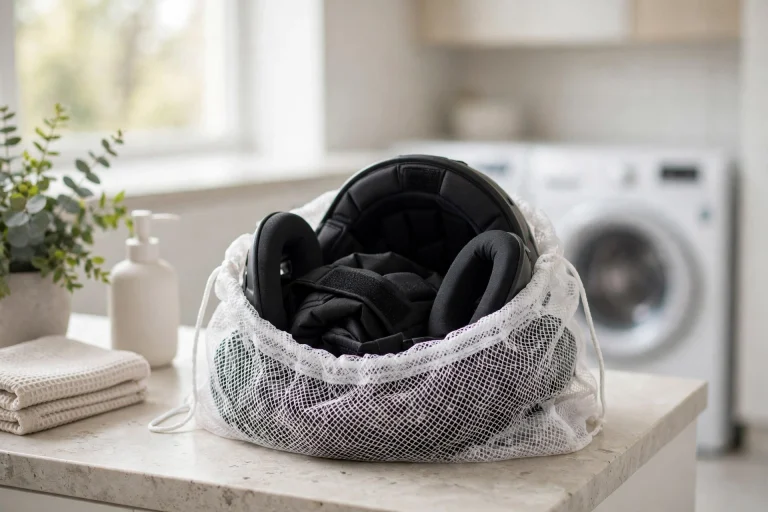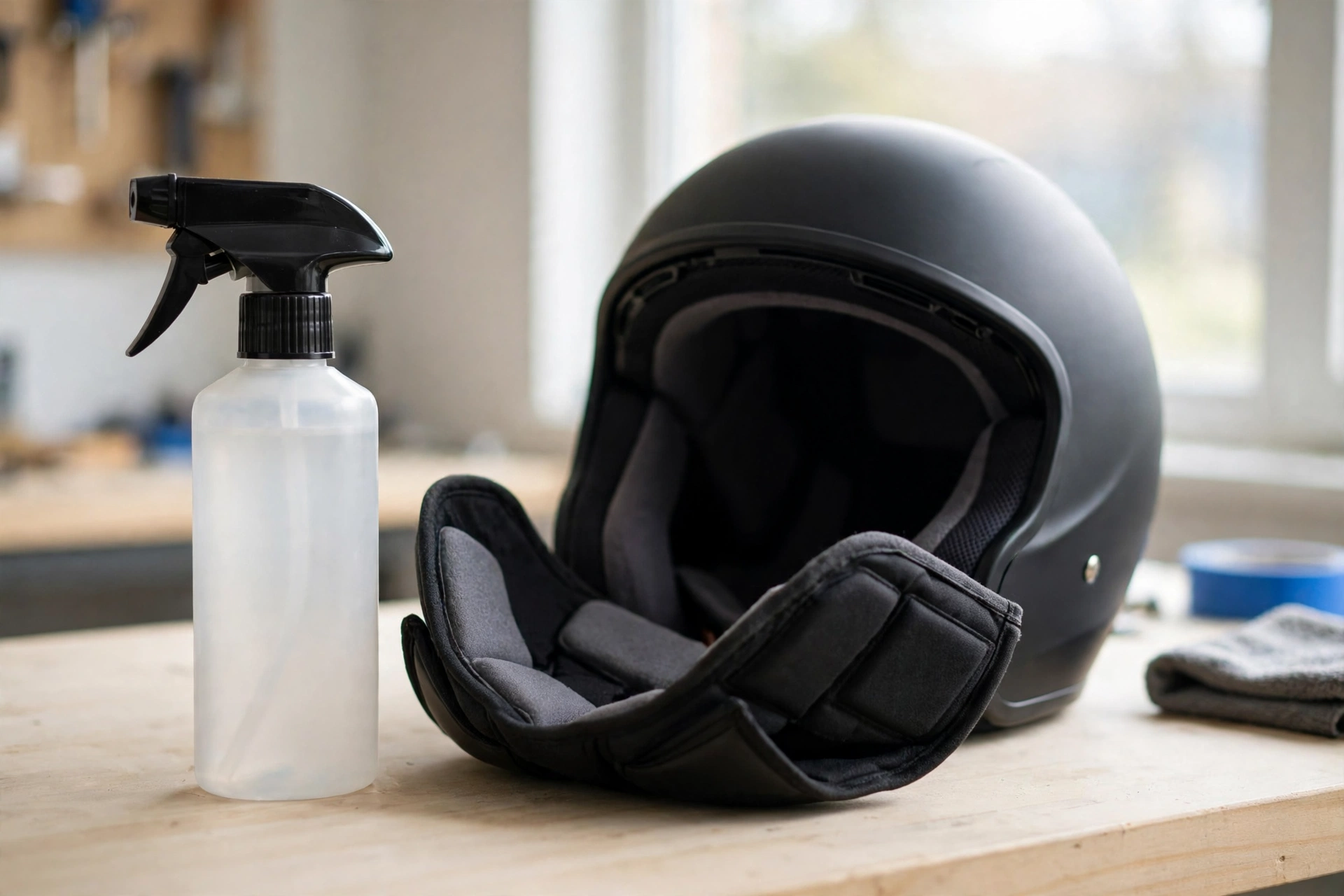
Helmet deodorisers are sprays, inserts, or drying aids that remove or mask the smell that builds up inside a helmet from sweat, and the best ones work by killing the bacteria that cause the smell rather than just covering it up. They are a simple way to keep a helmet fresh between washes, especially in hot weather when sweat builds up quickly. A deodoriser will not fix a liner that needs a proper wash, but it can keep a helmet pleasant to wear day to day.
Every rider knows the smell of a helmet that has been worn on a hot day. Sweat soaks into the liner, bacteria grow in the warm, damp padding, and the result is a smell that gets worse over time. This guide explains what helmet deodorisers are in general terms, how they work, and how to use them without damaging the helmet.
What Are Helmet Deodorisers?
A helmet deodoriser is any product designed to freshen the inside of a helmet. The most common type is a spray that is misted into the liner and left to dry. Others come as small sachets or pods that sit inside the helmet when it is not being worn, slowly releasing a fresh scent. A third type is a drying insert, often filled with a material that absorbs moisture, which helps by keeping the liner dry.
Sprays usually contain an antibacterial agent that targets the bacteria responsible for the smell, along with a light fragrance. Sachets and pods tend to work more slowly, absorbing odours over hours rather than minutes. Drying inserts do not add a scent at all: they work by removing the moisture that bacteria need to grow, which tackles the cause of the smell rather than the smell itself.
In general terms, a deodoriser is a maintenance product, not a cleaning product. It can keep a clean helmet fresh, but it cannot clean a dirty one. If the liner is visibly dirty or the smell is strong even after airing the helmet out, the liner needs a proper wash first, and the deodoriser can then be used to keep it fresh afterwards.
How Do Helmet Deodorisers Work?
Most deodoriser sprays work in two ways. First, the antibacterial ingredient reduces the bacteria living in the liner, which are the main source of the smell. Second, the fragrance masks any smell that remains, leaving the helmet smelling fresh. The spray needs to reach into the padding to work, so it should be applied generously and left to dry fully before the helmet is worn.
Sachets and pods work differently. They usually contain activated charcoal or a similar absorbent material that traps odour molecules as air passes through the helmet. They are left inside the helmet overnight or between rides, and they work slowly and gently. They do not kill bacteria directly, but they can reduce the smell noticeably over time.
Drying inserts, sometimes called helmet dryers or moisture absorbers, work by pulling moisture out of the liner. A dry liner is a less friendly place for bacteria, so the smell builds up more slowly. Some inserts can be dried out and reused, which makes them a practical option for riders who use their helmet every day. If you want to understand the safety parts inside your helmet while you care for it, reading about what MIPS is for helmets is a useful background read.
Are Helmet Deodorisers Safe for the Liner?
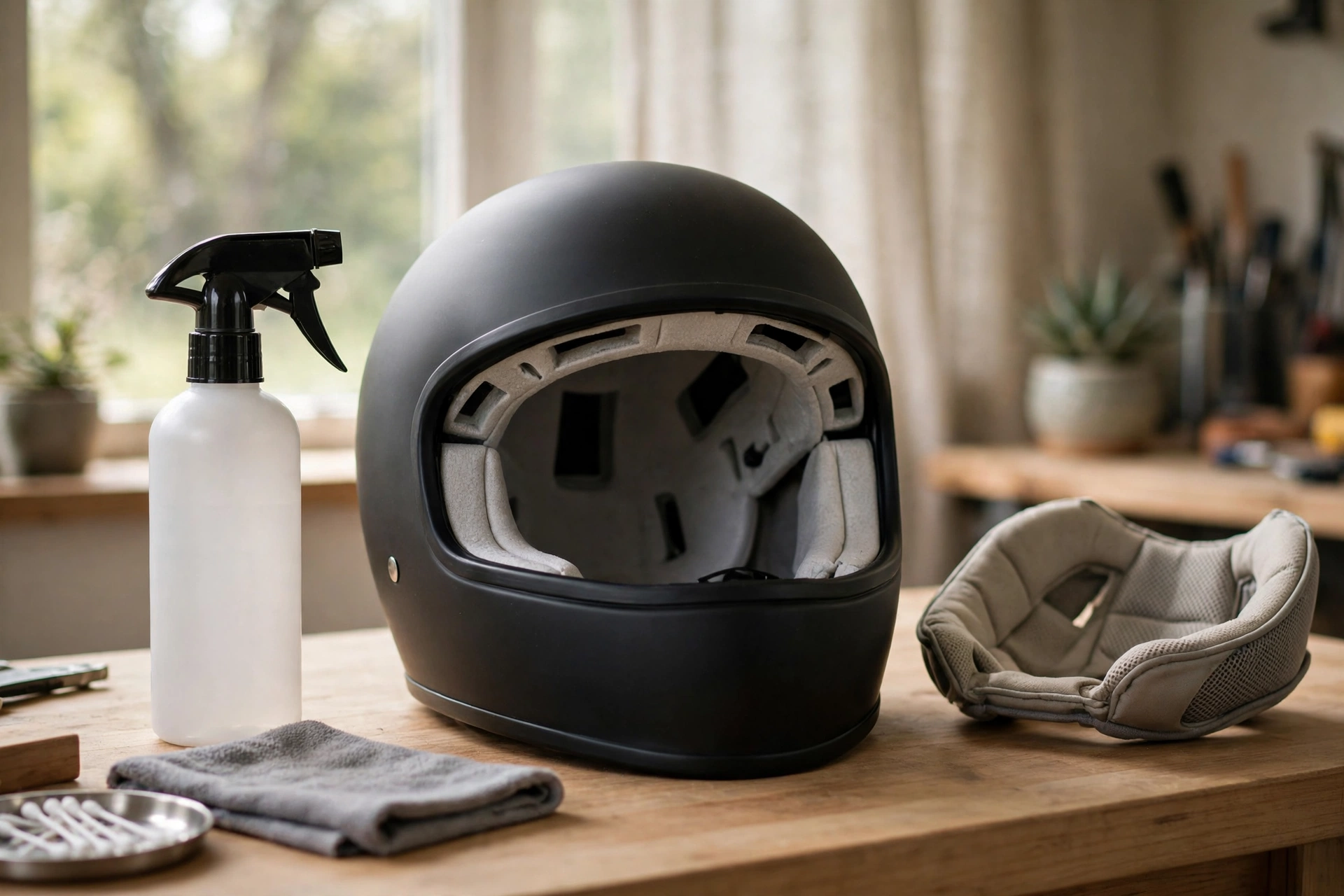
In general terms, a deodoriser made for helmets is safe for the liner, because it is designed to be used on the fabrics and foams inside a helmet. It is still worth checking the label and following the instructions, since some sprays should not be used on certain materials. A product made for shoes or for general household use may contain chemicals that are too harsh for a helmet liner, so it is best to use a product made for helmets.
One thing to watch is skin sensitivity. The inside of a helmet sits against the skin for hours, so any product left in the liner can come into contact with the skin. If you have sensitive skin, choose a fragrance-free deodoriser, or one made for sensitive skin, and let the helmet dry fully before you wear it. If a product causes irritation, stop using it and wash the liner thoroughly.
It is also important not to overuse a spray. Spraying a large amount into the liner and putting the helmet on while it is still damp can leave the padding wet, which encourages the very bacteria you are trying to control. A light, even mist and a good airing afterwards is the right approach. Less is usually more with a deodoriser.
How Do You Use a Helmet Deodoriser Properly?
Start by airing the helmet out. After a ride, leave the helmet in a well-ventilated place with the visor open so the liner can dry. This alone will reduce the smell, since bacteria grow more slowly in a dry helmet. Once the liner is dry, spray the deodoriser evenly over the inside, paying attention to the areas that touch the head most, such as the forehead and the crown.
Leave the helmet open and let the spray dry completely before you put the helmet away or wear it again. This usually takes a little while, so it is best to spray the helmet after a ride rather than just before one. If you use sachets or pods, place them inside the helmet when you take it off and leave them there until your next ride.
For the best results, use a deodoriser as part of a routine. Air the helmet after every ride, use the deodoriser regularly, and wash the liner when it needs it. A deodoriser used on its own will help, but it works best when it is part of looking after the helmet properly, rather than a substitute for cleaning.
What Else Keeps a Helmet Smelling Fresh?
The simplest habit is airing the helmet out after every ride. A helmet left in a closed bag or a hot car will stay damp and the smell will build up quickly, while a helmet left open in fresh air will dry out and stay fresher for longer. A helmet stand or a hook in a ventilated room is a better place to keep a helmet than the bottom of a bag.
Washing the liner regularly is the most effective step of all. A removable liner can be hand-washed or machine-washed on a gentle cycle, and that removes the sweat and bacteria that cause the smell in the first place. If the liner is not removable, wiping it with a damp cloth and a little mild soap will help, followed by a good airing.
Frequently Asked Questions
Q: Do helmet deodorisers really work?
A: In general terms, yes, for keeping a helmet fresh between washes. A good deodoriser reduces the bacteria that cause the smell, but it cannot clean a dirty liner — if the smell is strong, the liner needs a proper wash first.
Q: Can I use a normal air freshener in my helmet?
A: It is best not to. Household air fresheners are not made for prolonged skin contact and may contain chemicals that irritate the skin or damage the liner. Use a deodoriser made for helmets instead.
Q: How often should I use a helmet deodoriser?
A: After most rides in hot weather, and less often in cooler conditions. Air the helmet out after every ride, use the deodoriser regularly, and wash the liner when it starts to smell even after airing.

Olivia
Writer at Helmet Today, covering helmet reviews, fit and riding safety.