Helmet display stands are stands, mounts, or shelves designed to hold a helmet on show when it is not being worn, keeping it safe, visible, and in good shape. They range from simple wall brackets and desktop stands to glass cases and purpose-built shelves, and they are used by collectors, riders who are proud of their helmet, and shops showing off their stock. A good stand keeps the helmet off the floor and out of harm’s way.
A helmet is an expensive and personal piece of kit, and many riders like to display it rather than hide it in a cupboard. A display stand turns a helmet into a feature of a room, while also protecting it from knocks, dust, and sunlight. This guide explains what helmet display stands are in general terms, the types available, and how to choose one.
What Types of Helmet Display Stands Are There?
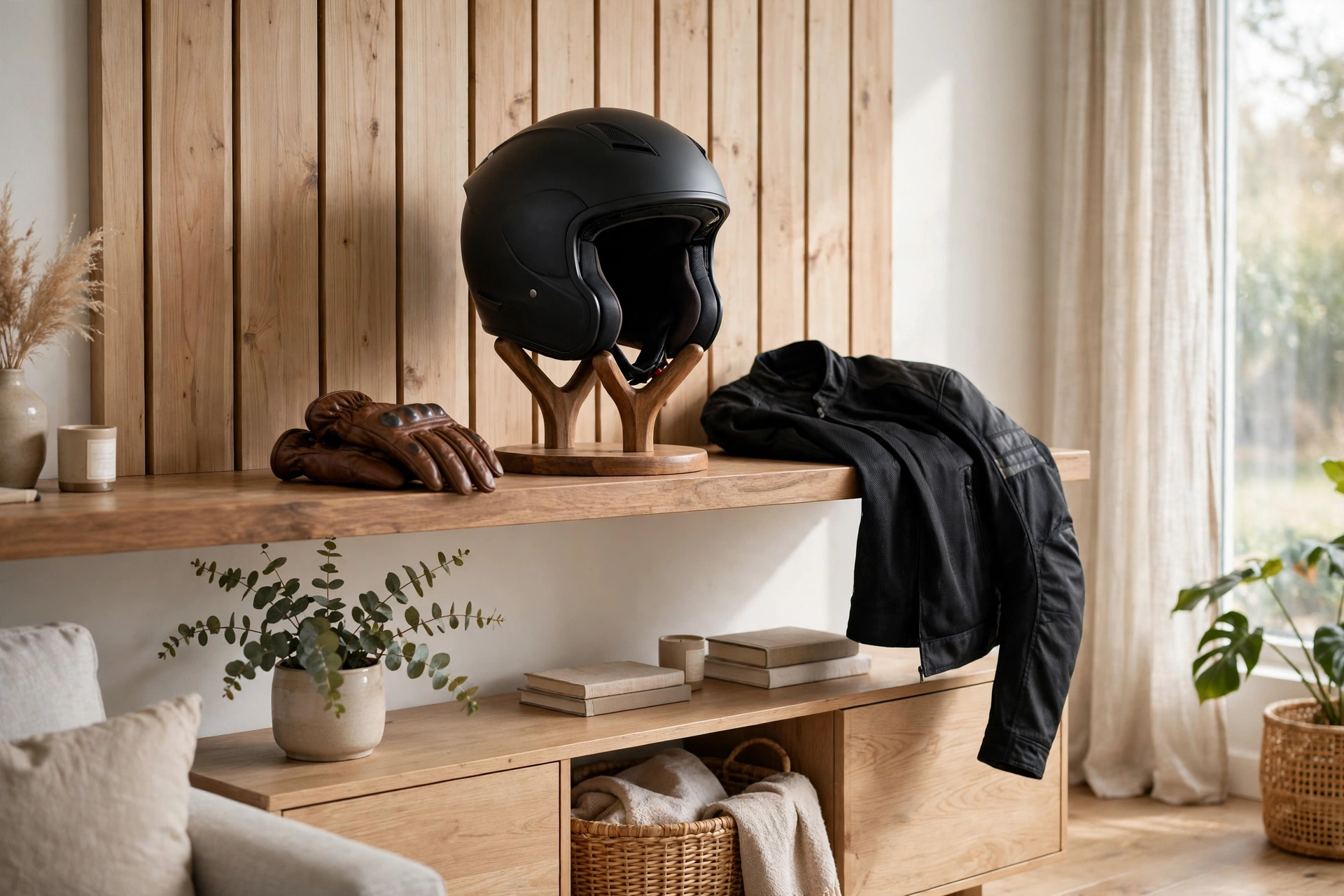
The simplest type is a desktop stand, a small base with a post or a shaped cradle that holds the helmet upright on a desk, shelf, or sideboard. These are compact and inexpensive, and they suit a single helmet displayed in a home or an office. Some desktop stands are made from wood or metal, while others are made from clear acrylic so the helmet appears to float.
Wall-mounted stands are another popular option. These fix to the wall with screws or brackets and hold the helmet out from the wall, saving floor and shelf space. They are a good choice for a garage or a hallway, and they work well for a collection of several helmets displayed in a row. Some wall mounts are simple hooks, while others are shaped cradles that support the helmet from underneath.
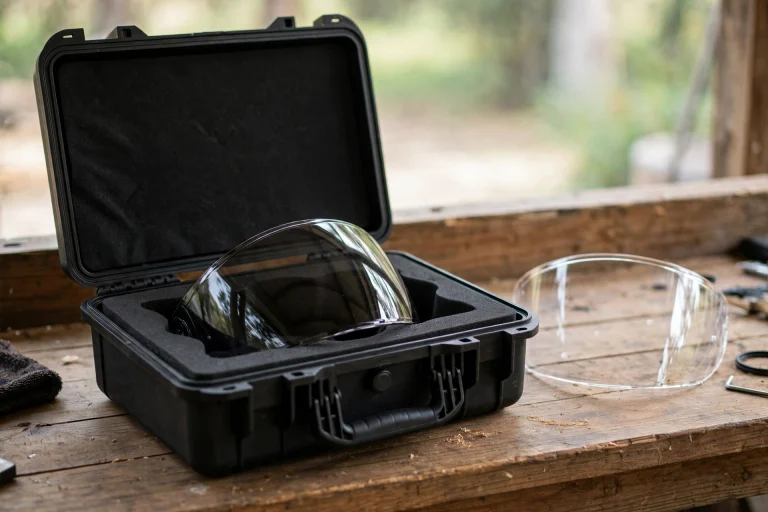
For collectors, there are display cases: enclosed boxes, often with a glass front, that protect the helmet from dust while still showing it off. A case is the best option for a rare or signed helmet, since it keeps dust and sunlight away. Freestanding floor stands and multi-helmet racks are also available for larger collections or for shops, and they can hold several helmets at once.
Why Use a Display Stand Instead of a Shelf?
A display stand holds a helmet in a stable, upright position, which is better than resting it on a flat shelf where it can roll or be knocked over. A helmet that rolls off a shelf can be damaged, and even a small drop can affect it, so keeping it secure matters. A stand with a shaped cradle supports the helmet from underneath and stops it from moving.
A stand also keeps the helmet off the surface it sits on, which allows air to circulate around it. This helps the liner dry out after a ride and stops moisture from collecting underneath the helmet.

How Do You Choose the Right Display Stand?
Start by thinking about where the helmet will be displayed. A desktop stand suits a shelf or a desk, a wall mount suits a hallway or a garage, and a display case suits a helmet that needs protection from dust. Measure the space first, and check that the stand will fit without crowding the helmet against a wall or another object.
Next, check that the stand fits your helmet. Most stands are made to fit a standard full-face or open-face helmet, but a very large or unusually shaped helmet may need a wider cradle. The stand should support the helmet without pressing on the visor or the liner, and it should hold the helmet level rather than tilted. If you want to learn about the safety technology inside the helmet you are displaying, reading about what MIPS is for helmets is a useful background read.
Also consider the material. Wood and metal stands are sturdy and look good in a home, while acrylic stands are light and unobtrusive. A stand with a felt or rubber lining will protect the helmet from scratches, which matters if the helmet is valuable.
Where Is the Best Place to Display a Helmet?
The best place is a cool, dry room away from direct sunlight. Sunlight can fade the paint and the graphics on a helmet over time, and heat can affect the materials inside. A living room shelf, a study, or a bedroom is usually better than a sunny windowsill or a hot garage. If the helmet is displayed near a window, a case with a UV-resistant front can help.
It is also worth keeping the helmet away from sources of heat and chemicals. A helmet displayed above a radiator or near cleaning products may suffer over time, since heat and fumes can affect the shell and the liner. A well-ventilated spot at room temperature is ideal, and it is also the most comfortable place to look at the helmet.
For a helmet that is still in regular use, the display stand should be easy to reach. A stand in the hallway or near the door makes it simple to grab the helmet on the way out, while a stand high on a shelf may look good but be awkward to use every day. Think about how often you wear the helmet, and choose a spot that suits both display and everyday use.
How Do You Look After a Helmet on Display?
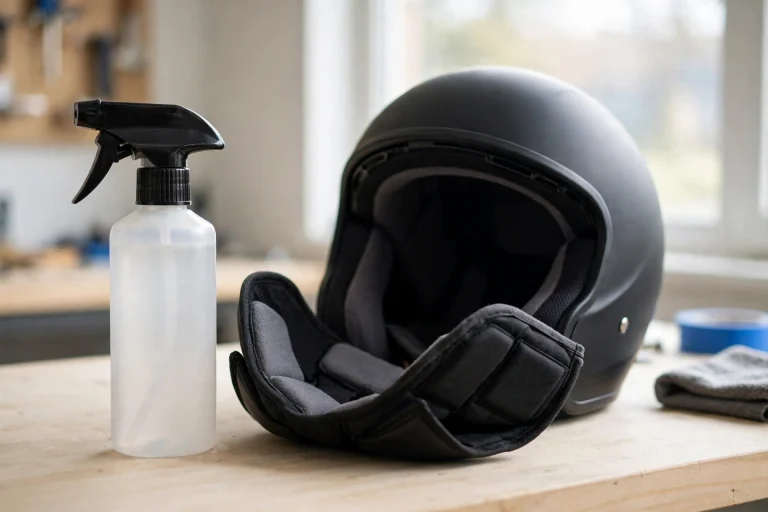
A helmet on display still needs care. Dust it regularly with a soft cloth, and wipe the visor with a microfibre cloth to keep it clear. If the helmet is in an open stand, dust will settle on it over time, so a quick wipe every week or two will keep it looking its best. A display case reduces this work, but the case itself will need cleaning.
Check the helmet now and then, even if it is not being worn. Look for signs of damage, fading, or changes in the liner, and make sure the stand is still stable and secure. If the helmet is a collector’s item that is rarely worn, it is still worth checking it every few months to make sure it is in good condition.
In general terms, a helmet on display should be treated as a valued object, not as a piece of furniture to stack things on. Do not hang other gear from the stand or rest anything on top of the helmet, since that can scratch the paint or distort the shape. A helmet that is looked after on its stand will stay looking good for years, whether it is worn every day or kept as a keepsake.
Frequently Asked Questions
Q: Will a display stand damage my helmet?
A: In general terms, no, as long as the stand fits the helmet and supports it without pressing on the visor or the liner. Choose a stand with a soft or lined cradle, and check that the helmet sits level and stable on it.
Q: Is it safe to store a helmet on a wall mount?
A: Yes, if the mount is fixed securely to the wall and is rated to hold the weight of a helmet. Make sure the fixings are suitable for your wall type, and check the mount now and then to confirm it is still firm.
Q: Should I keep my helmet in a display case or on an open stand?
A: A case is best for a rare or valuable helmet, since it keeps dust and sunlight away. An open stand is better for a helmet you wear regularly, since it is easier to reach and lets air circulate around the liner.

Olivia
Writer at Helmet Today, covering helmet reviews, fit and riding safety.