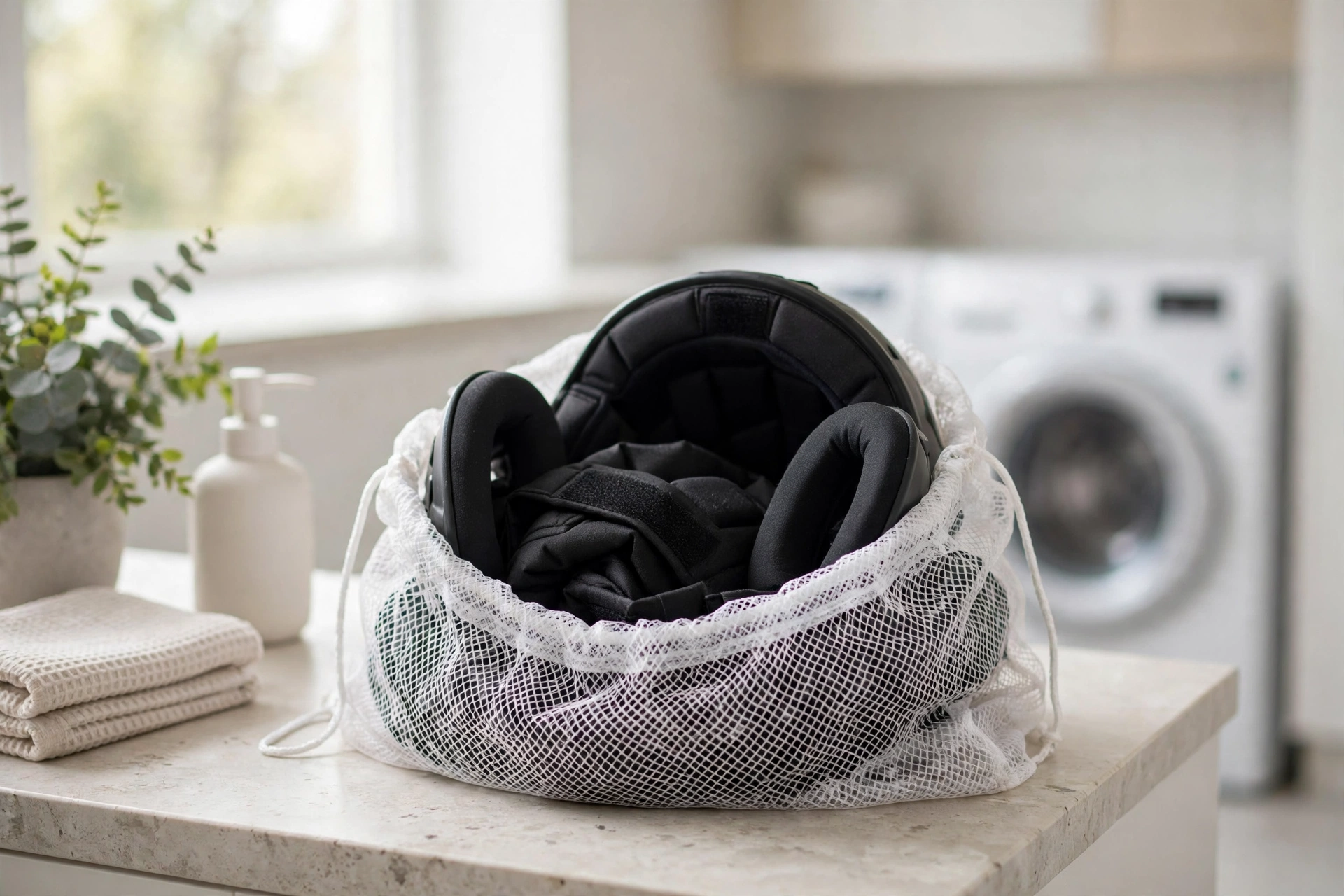
A helmet liner wash bag is a small mesh laundry bag that holds a removable helmet liner, cheek pads, and chin strap covers while they go through a washing machine, so they come out clean without being stretched, torn, or tangled. Helmet liners soak up sweat, skin oils, and dust every time you ride, and washing them keeps the helmet fresh and comfortable. In general terms, a wash bag is a simple, low-cost accessory that makes that cleaning job much safer for the liner itself.
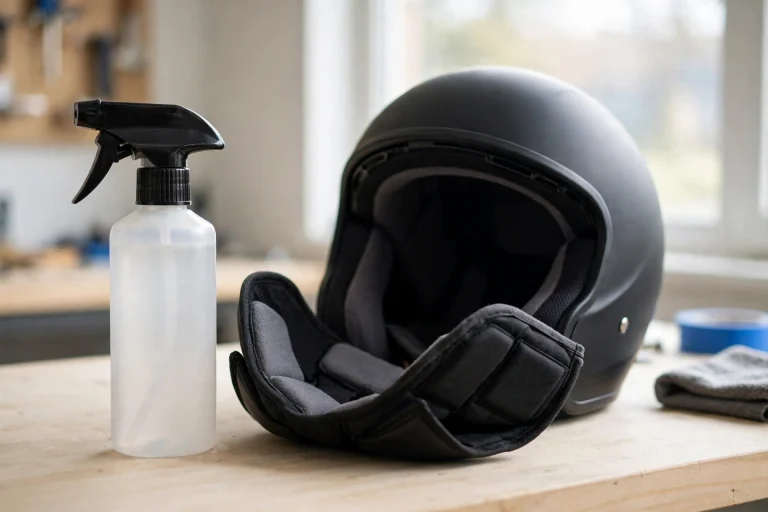
Most modern helmets have removable liners and cheek pads that are designed to be taken out and washed, following the manufacturer’s guidance. A mesh wash bag holds everything together, lets water and detergent flow through, and protects the fabric, foam, and fasteners inside. This guide explains what liner wash bags are, how they work, what to look for, and how to wash a helmet liner properly.
What Is a Helmet Liner Wash Bag?
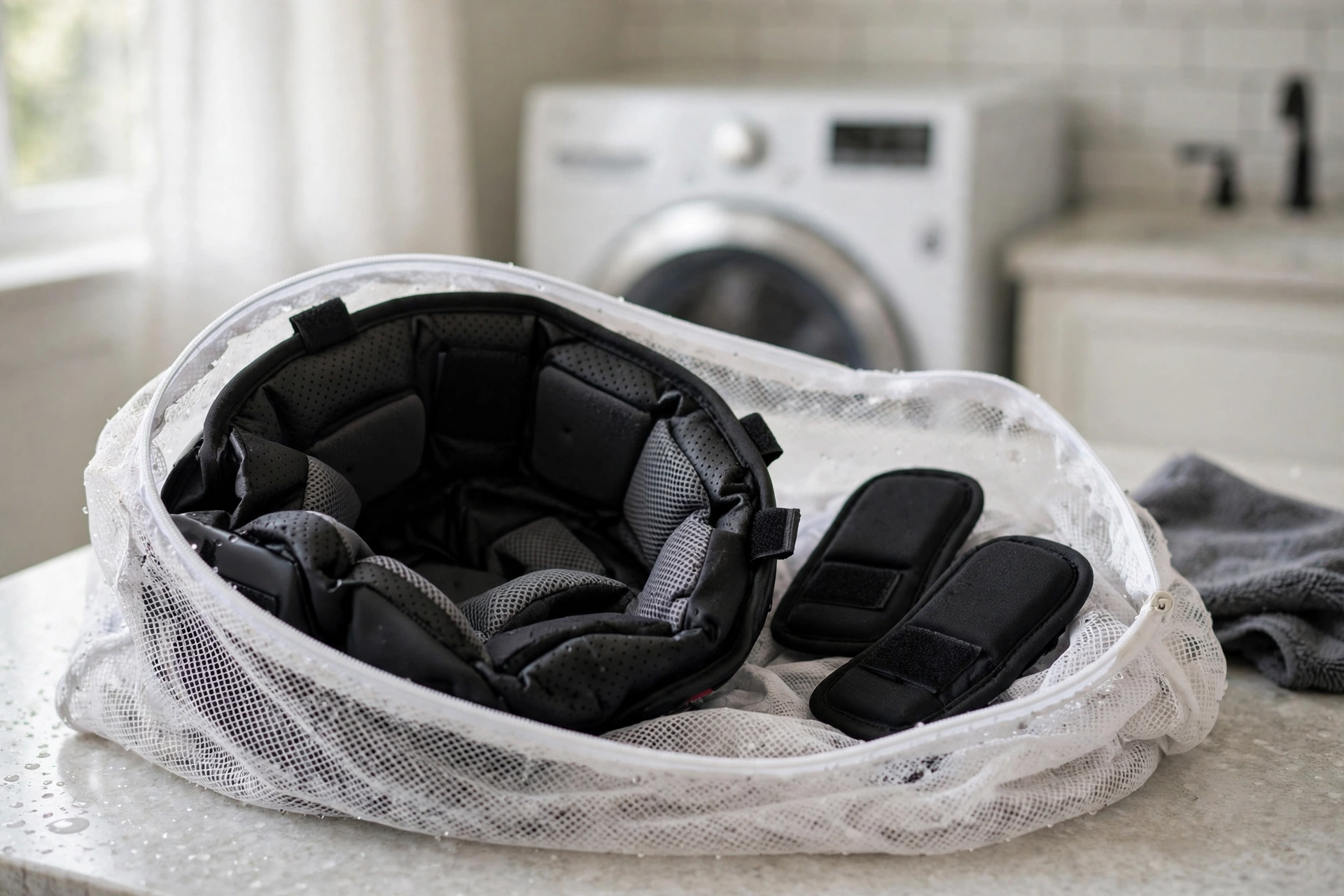
A helmet liner wash bag is a zippered bag made from fine mesh fabric, sized to hold the soft inner parts of a helmet: the crown liner, the cheek pads, and sometimes the chin curtain or neck roll. The mesh is fine enough to keep the liner parts contained, but open enough to let water and detergent pass through freely so the liner actually gets clean. Most bags close with a zip, and some have a small flap over the zip to stop it snagging on the liner fabric.
The bag is used in a washing machine, usually on a gentle or delicate cycle with cold or lukewarm water and a mild detergent, following the helmet manufacturer’s guidance. The liner parts go into the bag, the bag is zipped shut, and the whole thing goes into the machine with other light laundry or on its own. The bag stops the liners from tangling with other items and from being stretched by the drum, which is the main risk when washing them loose.
Why Use a Wash Bag Instead of Washing Liners Loose?
Washing a liner loose in a machine exposes it to several risks. The liner can catch on the drum or on zips and buttons from other laundry, which can pull threads, tear the fabric, or damage the poppers and hook-and-loop fasteners that hold it in the helmet. The spin cycle can also stretch the liner out of shape, so that it no longer sits snugly in the helmet shell when you put it back.
A wash bag prevents most of this. It keeps the liner parts together in one bundle, so they cannot tangle with other items. It cushions them against the drum, and it limits how much they are pulled and twisted during the wash. The mesh still allows a full wash, so the liner comes out clean without the wear that a loose wash can cause. For liners with delicate mesh panels or thin foam backing, this protection makes a real difference to how long they last.
If you are learning about how helmets handle different kinds of impact, reading about what MIPS is for helmets can help you understand one of the technologies used in modern helmet design.
What Should You Look for When Choosing a Wash Bag?
Size matters first. The bag needs to be big enough to hold the crown liner and both cheek pads without squeezing them into a tight ball, because a cramped bag stops water from circulating and the liners will not wash properly. A bag roughly the size of a small pillowcase works for most helmets, but check the size against your liner set before buying. A bag that is too large is less of a problem than one that is too small, though a very large bag lets the liners tumble around more.
Next, look at the mesh and the zip. A fine mesh keeps small parts contained and protects delicate fabric, while a coarse mesh can let straps or fasteners poke through and snag. The zip should be sturdy and covered, so it cannot scratch the liner or catch on the machine drum. Some bags have a drawstring instead of a zip; these work too, but a zip closure is more secure during a spin cycle.
- Size: large enough for the crown liner and both cheek pads without cramming.
- Mesh: fine enough to contain small parts and protect delicate fabric.
- Closure: a sturdy zip, ideally covered, that stays shut in the machine.
- Material: a durable mesh that will survive many washes without fraying.
- Extras: a second smaller bag for cheek pads or strap covers is handy.
How Do You Wash a Helmet Liner in a Wash Bag?
Start by removing the liner parts from the helmet, following the manufacturer’s guidance. Most liners are held in by poppers, press studs, or hook-and-loop fasteners, and they come out with a gentle pull. Check the liner for any damage, such as torn seams or compressed foam, before washing, and remove any loose dirt or hair first. Place the crown liner and cheek pads in the wash bag, close the zip, and check that nothing is poking through the mesh.
Wash on a gentle or delicate cycle with cold or lukewarm water and a mild detergent, and avoid fabric softener, bleach, or strong chemicals, which can damage the liner fabric and foam. Do not use a hot wash or a tumble dryer: heat can shrink the fabric and break down the foam that gives the liner its shape and comfort. After washing, take the liner parts out of the bag and let them air dry fully, away from direct heat or strong sunlight, before putting them back in the helmet.
In general terms, washing the liner when it starts to smell or feel damp is a good rule, and a quick wash every few weeks keeps it fresh without wearing it out.
Can You Wash a Helmet Liner Without a Wash Bag?
Yes, you can hand wash a liner in a basin of lukewarm water with a little mild detergent, gently squeezing it clean and rinsing it well. Hand washing is actually the gentlest method of all, and it is the method many helmet makers recommend. A wash bag is still useful for hand washing, because it keeps the parts together and makes them easy to lift out, but it is not essential for a hand wash.
In general terms, a wash bag is a small purchase that protects a part of the helmet that is expensive or awkward to replace, so it is worth having in your kit.
Frequently Asked Questions
Q: How often should I wash my helmet liner?
A: It depends on how much you ride, but in general terms, wash it when it starts to smell or feel damp, or every few weeks if you ride daily. Regular washing keeps the liner fresh and comfortable.
Q: Can I put my helmet liner in the tumble dryer?
A: No. Heat from a tumble dryer can shrink the fabric and damage the foam inside the liner. Always air dry liner parts fully, away from direct heat, before putting them back in the helmet.
Q: Do all helmets have removable liners?
A: Most modern helmets do, but not all. Check your helmet’s manual or the manufacturer’s guidance. If the liner is not removable, wipe the inside gently with a damp cloth instead of washing it.

Olivia
Writer at Helmet Today, covering helmet reviews, fit and riding safety.