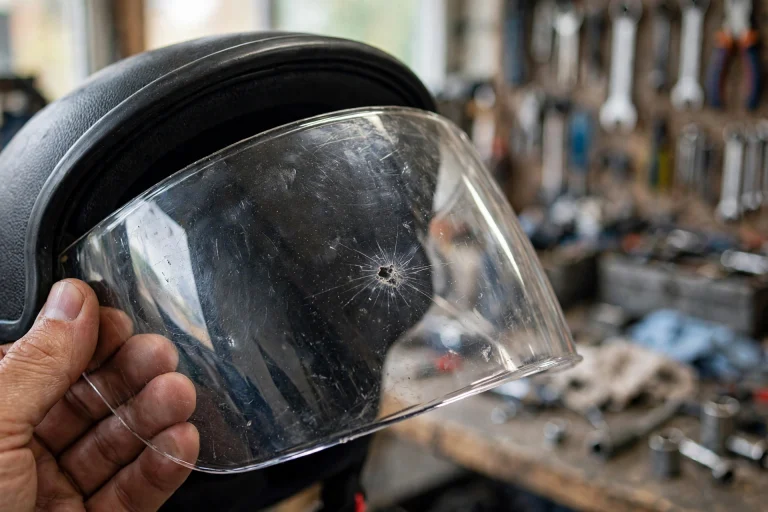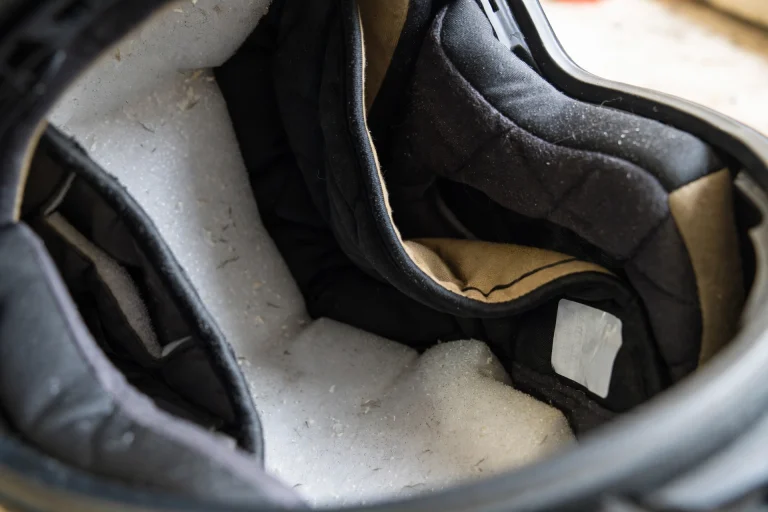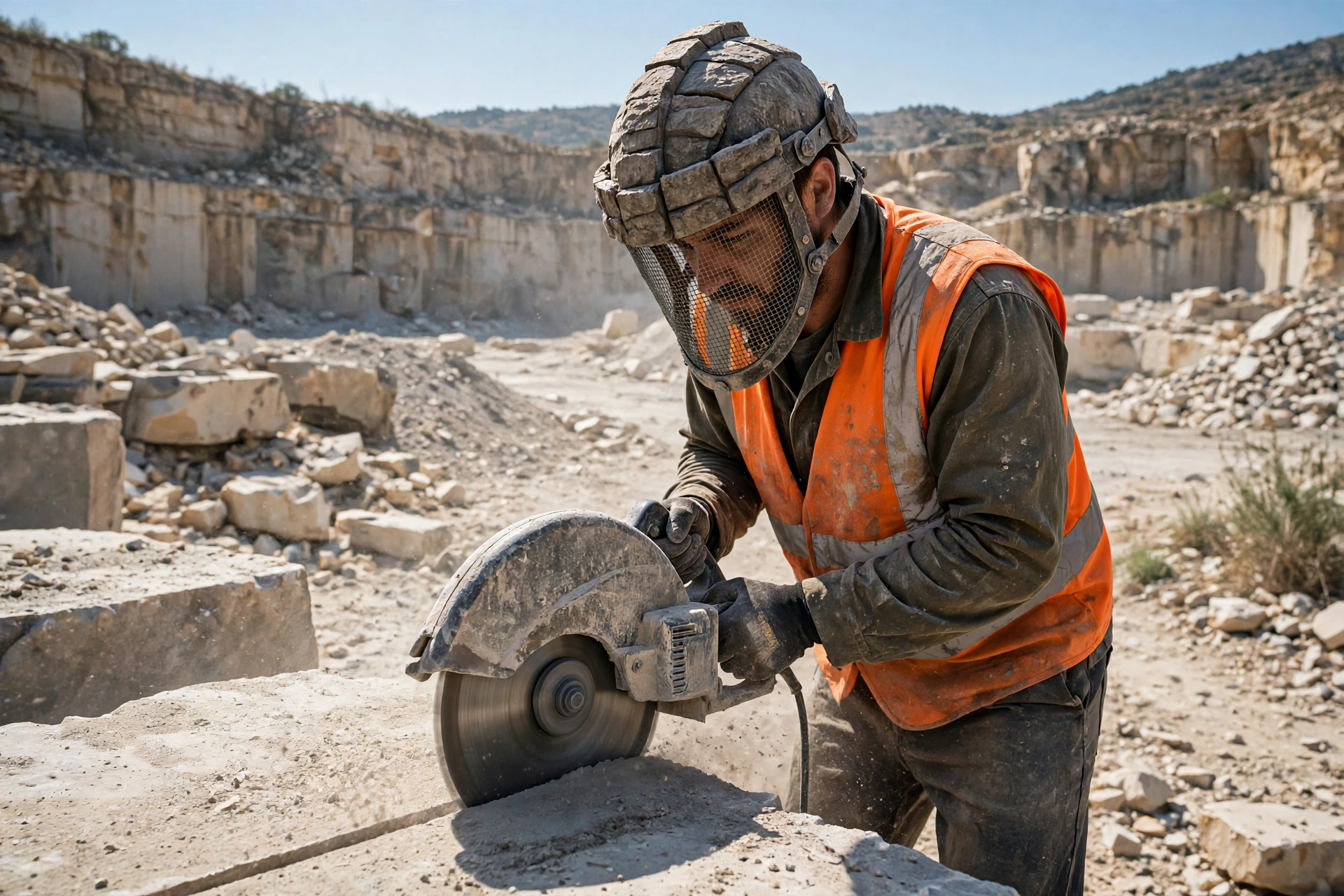
The EN 14021 standard is the European standard for stone shield helmets, a type of protective helmet worn by workers in quarries, stone processing, and other jobs where small stones and chips can be thrown up at the head. It sets the requirements for how these helmets must perform and how they must be tested. Stone shield helmets are a specialist kind of head protection. They are lighter than a full industrial hard hat, but they are designed for a specific hazard: fast-moving fragments of stone that can strike the face and head.
What Is a Stone Shield Helmet?
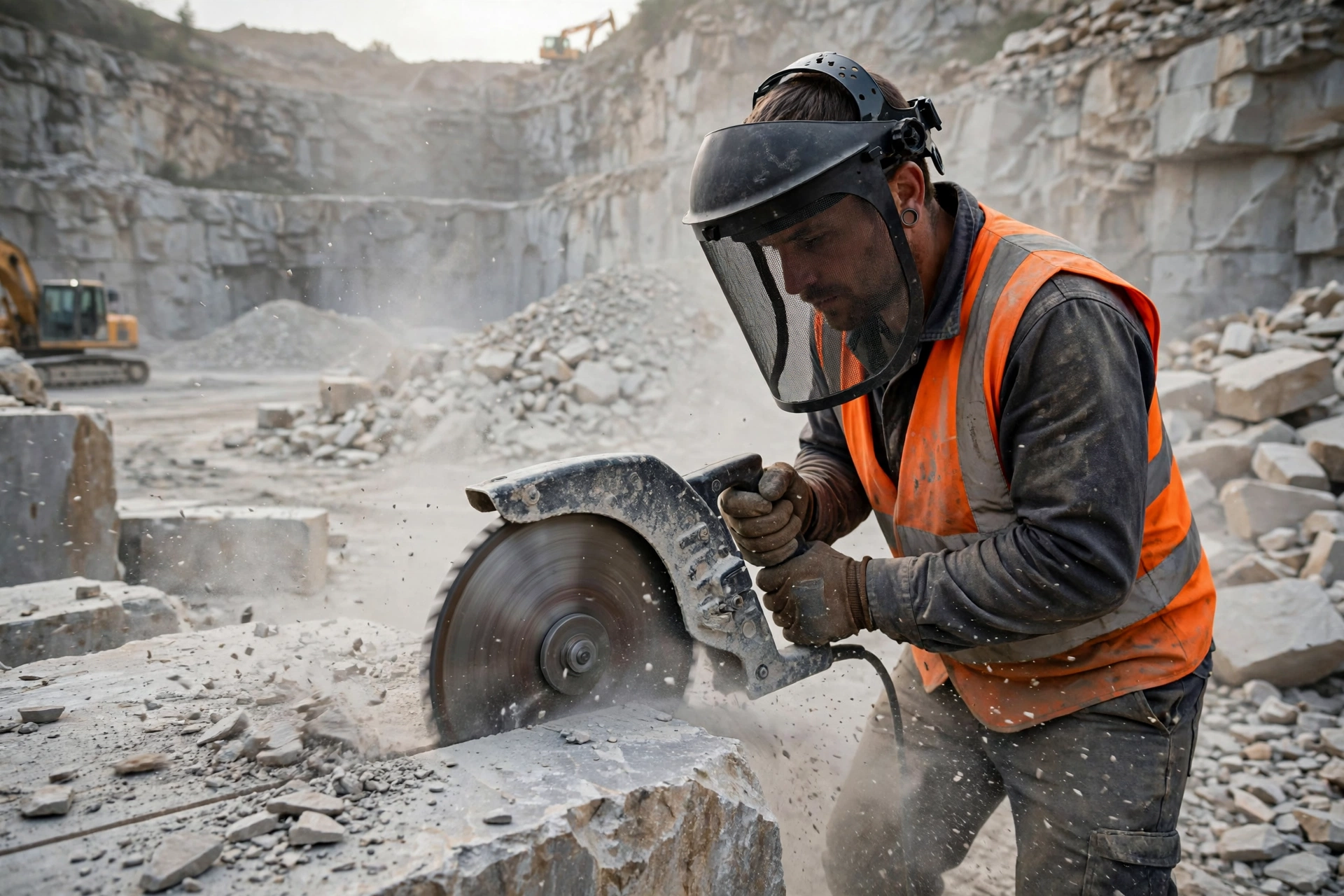
A stone shield helmet is a protective helmet worn by workers who cut, drill, or break stone, and by anyone working near stone-cutting machinery. The helmet usually has a shell that covers the top and sides of the head, and it often has a face shield or a mesh visor that protects the face from flying chips. Some designs look like a forestry helmet, with a visor that can be raised and lowered.
The hazard is real: when stone is cut or split, small sharp fragments can fly off at speed, and a chip to the head or face can cause a serious injury. The helmet and its shield are designed to stop those fragments before they reach the wearer. In general terms, a stone shield helmet is the right choice when flying stone chips are the main risk.
What Does the EN 14021 Standard Require?
In general terms, the EN 14021 standard requires a stone shield helmet to resist impacts from small, fast-moving objects and to protect the face as well as the head. During testing, the helmet and its shield are struck by objects that mimic stone chips, and the helmet must stop them from reaching the wearer. The shell is also tested for impact and penetration, so that a heavier knock does not break through.
The standard also covers the fit and the fastening of the helmet. The helmet must stay on the head during normal work, and the shield must stay in place when it is lowered. The materials used must be suitable for outdoor and dusty work, and the helmet must be marked with the standard number and the maker’s details so that it can be identified.
Where Are EN 14021 Helmets Used?
EN 14021 helmets are used in quarries, stone yards, and workshops where stone is cut, shaped, or broken. Stonemasons, quarry workers, and people who operate stone-cutting saws are the main users. They are also used in demolition and groundworks where stone fragments can be thrown up by machinery.
The helmets are popular because they protect both the head and the face in one piece of kit. A worker who needs eye and face protection as well as head protection can get it from a single helmet, rather than wearing a hard hat plus separate goggles. The employer should still carry out a risk assessment to confirm that a stone shield helmet is enough for the job.
How Is EN 14021 Different From EN 397?
EN 397 is the general European standard for industrial safety helmets, and it is designed to protect against falling objects and heavy impacts from above. EN 14021 is a specialist standard for stone shields, and it focuses on protection against small, fast-moving fragments and on face protection. A stone shield helmet may not give the same level of protection against a heavy falling object as a hard hat to EN 397.
Choosing between the two comes down to a risk assessment of the workplace. If there is a risk of heavy objects falling from height, a hard hat to EN 397 is the right choice. If the main risk is flying stone chips at head height, a stone shield helmet may be more suitable. In general terms, the two standards cover different hazards, and the right helmet is the one that matches the risk.
How Should an EN 14021 Helmet Fit?
An EN 14021 helmet should fit snugly and sit level on the head, covering the top and sides without slipping down over the eyes or riding up at the back. The face shield or mesh visor should sit close enough to the face to stop chips from getting behind it, but far enough away to be comfortable and to let air flow. Most helmets have an adjustable band or strap at the back, and it should be tightened so the helmet stays in place when the wearer bends down or looks up.
Comfort matters, because stone work is hard and the helmet may be worn for a whole shift. A helmet that pinches or presses will soon be taken off, and that leaves the worker unprotected. If you want to understand one of the safety technologies used in modern helmets, reading about what MIPS is for helmets is a good place to start, though stone shield helmets are a simpler kind of head protection than the helmets that use that system.
When Should an EN 14021 Helmet Be Replaced?
An EN 14021 helmet should be replaced if it has taken a hard knock, or if the shell or the shield is cracked, dented, or showing signs of damage. A damaged shield may not stop a stone chip the next time, and a cracked shell may not protect as well as it should. The mesh or visor can also wear out, and the strap or adjustment can lose its grip over time.
Age and use matter as well. Repeated exposure to dust, sun, and daily wear can weaken the materials, and a helmet that no longer fits snugly should be replaced. Checking the helmet before each shift is a good habit: look for cracks in the shell, damage to the shield, frayed straps, or a loose fit. If anything seems wrong, it is time for a new one rather than risking another chip.
Is a stone shield helmet the same as a forestry helmet?
Not quite. They look similar and both often have a mesh visor, but a stone shield helmet is tested to EN 14021 for stone work, while a forestry helmet is tested for the hazards of chainsaw and forestry work.
Does EN 14021 protect against falling objects?
Not to the same level as a hard hat. EN 14021 focuses on flying stone fragments and face protection, while protection against heavy falling objects is covered by the EN 397 industrial helmet standard.
Can I wear safety glasses instead of a stone shield helmet?
No, safety glasses protect the eyes only. A stone shield helmet protects the head and the face together, and it is the right choice where flying stone chips are a risk.

Olivia
Writer at Helmet Today, covering helmet reviews, fit and riding safety.