Yes, in general terms helmet standards do cover visor impact tests, because the visor is part of the helmet’s safety system and must protect the eyes and face during a crash. Most major helmet standards include tests that check whether the visor stays in place, resists breaking, and keeps sharp objects away from the wearer’s eyes. A helmet that protects the skull but lets the visor shatter into the rider’s eyes would not be much use, so the visor is tested as part of the whole helmet rather than as an afterthought.
Why Does the Visor Need Testing?
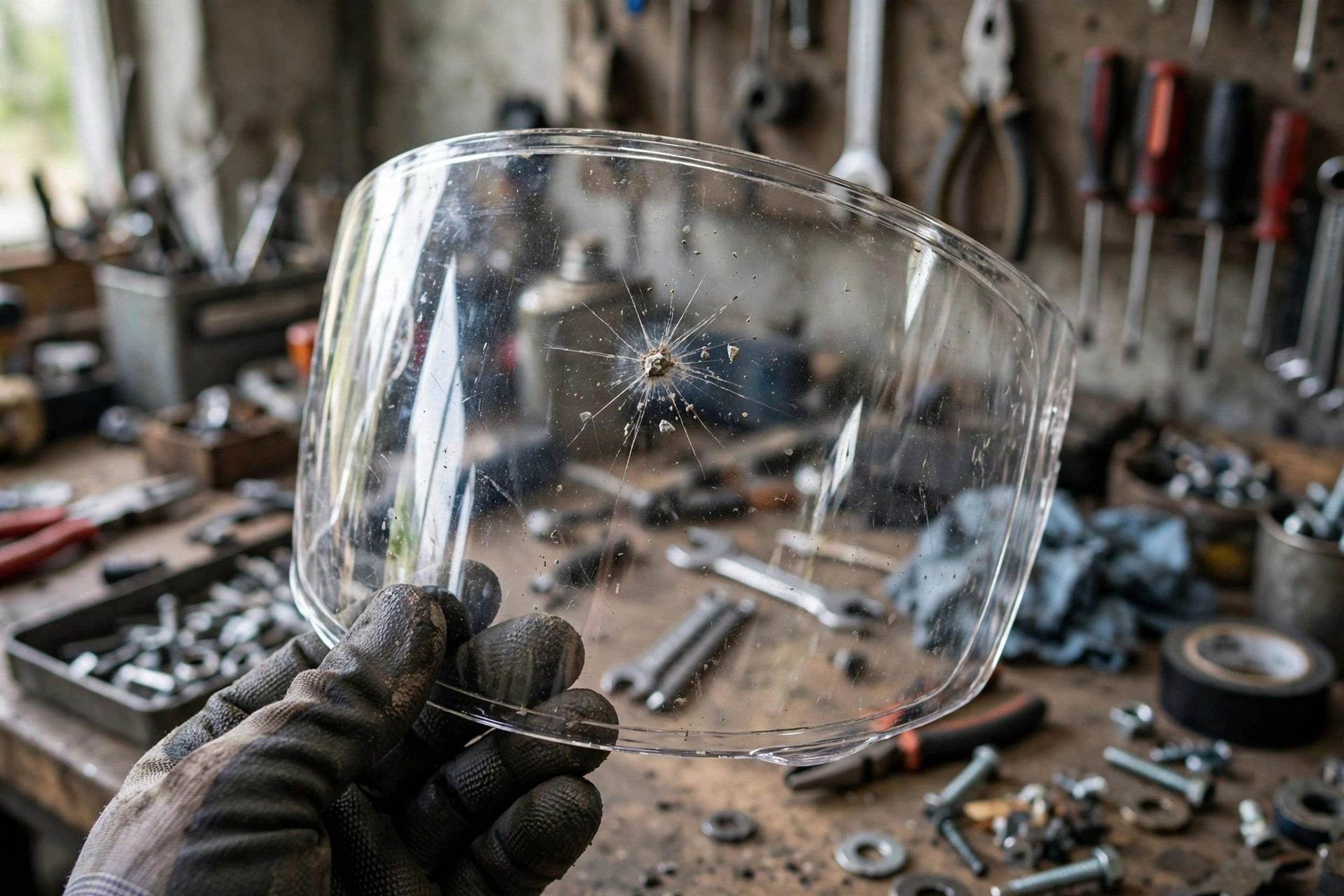
The visor is the clear shield in front of the rider’s eyes, and it faces the same hazards as the rest of the helmet. In a crash, the visor can be struck by the road, by debris, or by another vehicle, and it can also be hit by stones and insects at speed. If the visor breaks into sharp pieces, those pieces can injure the eyes, and if the visor comes off, the eyes are left unprotected.
Testing matters because a visor is made of different materials from the shell, and it behaves differently in an impact. A visor that is too brittle will crack, while one that is too soft may bend into the face. The standard sets out how the visor must behave, so that it protects the eyes without creating a new hazard of its own.
What Do Visor Impact Tests Involve?
In general terms, a visor impact test involves striking the visor with a small object at speed and checking what happens. The test may use a steel ball or a pointed object, dropped or fired at the visor, and the visor must not break through or let the object reach the inside of the helmet. The visor must also stay attached to the helmet during the test, so that it does not fly off in a crash.
Some standards also test the visor’s resistance to scratching and to changes in light, since a visor that is hard to see through is a danger in itself. The visor’s optical quality matters: it must not distort the rider’s view of the road. In general terms, a visor that passes the tests is one that stays in place, stays clear, and keeps objects out.
Do All Helmet Standards Test the Visor the Same Way?
No, different standards test the visor in different ways, because they are written for different kinds of helmet. A motorcycle helmet standard will test the visor for high-speed impacts, while a motorsport helmet standard may test it for the extreme forces of a racing crash. An industrial helmet standard may not have a visor at all, since the visor is an optional accessory on many work helmets.
In general terms, the more demanding the standard, the harder the visor tests. A racing helmet visor must cope with higher speeds and harder impacts than a visor on an everyday road helmet. That is why a visor from one helmet should not be fitted to another helmet unless the maker says it is compatible: the visor and the helmet are tested together as a system.
Can You Replace a Visor and Still Meet the Standard?
Yes, in general terms you can replace a visor, but only with a visor made for that helmet model by the maker or by an approved supplier. A visor that is not made for the helmet may not fit properly, may not stay in place in a crash, and may not have passed the same impact tests. Using the wrong visor can mean the helmet no longer meets the standard it was certified to.
Aftermarket visors, including tinted and mirrored visors, should be checked carefully. A tinted visor that is too dark can be dangerous at night or in poor light, and some visors are not approved for road use. The maker’s manual will say which visors are approved for the helmet, and it is worth following that guidance rather than fitting any visor that happens to fit.
How Should You Look After a Helmet Visor?
A helmet visor should be cleaned gently with water and a soft cloth, and it should be stored away from scratches and chemicals. Scratches on a visor can scatter light and make it hard to see, especially at night or in low sun. A scratched visor should be replaced, since it is no longer giving the rider a clear view of the road. If you want to understand one of the safety technologies used in modern helmets, reading about what MIPS is for helmets is a good place to start, though visor care is a separate part of looking after a helmet.
The visor mechanism should also be checked from time to time. The pivots and seals can wear out, and a visor that does not close properly can let in wind, rain, and dust. A loose visor may also lift at speed, which is distracting and can be dangerous. If the mechanism feels worn or the visor does not seal, it is worth having it checked or replacing the visor.
When Should a Visor Be Replaced?
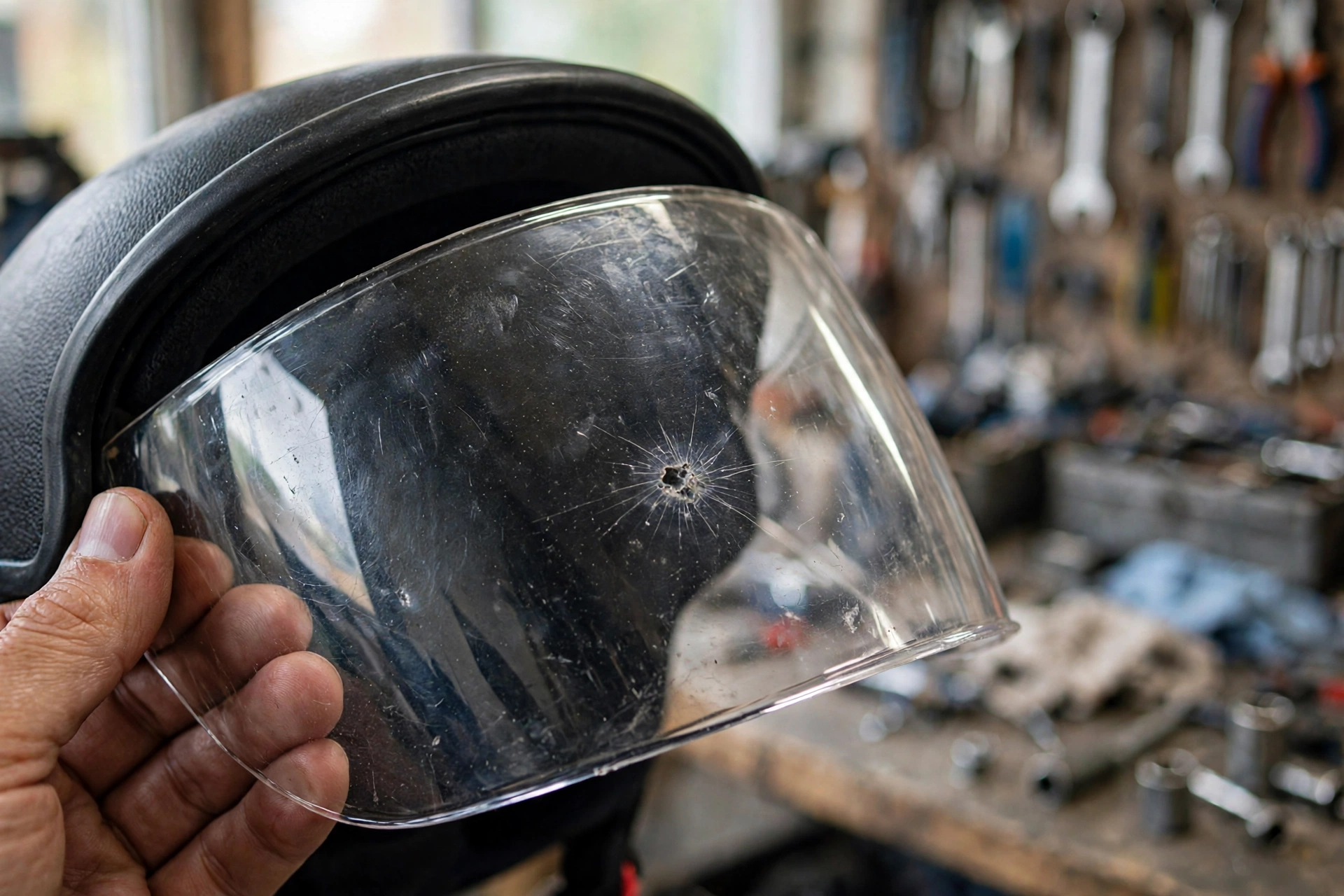
A visor should be replaced if it is cracked, deeply scratched, or no longer seals properly against the helmet. A cracked visor may not protect the eyes in a crash, and a scratched visor can make it hard to see. Even a visor that looks fine can wear out over time, as the coating that resists fogging and scratching breaks down with use.
It is also worth replacing a visor after a crash, even if the damage is not obvious. The visor may have been stressed in the impact, and it may not behave the same way in a second crash. Checking the visor before each ride is a good habit: look for cracks, scratches, and a good seal. If anything seems wrong, a new visor is a small price to pay for clear vision and eye protection.
Do helmet standards test tinted visors?
Yes, in general terms visors of different tints are tested for impact and for optical quality, and a visor that is too dark for night riding may not be approved for road use.
Can a visor be repaired after a crack?
No, a cracked visor should be replaced. A repair cannot restore the visor’s strength or its optical clarity, and a cracked visor may fail in a crash.
Does a helmet without a visor still meet its standard?
Yes, in general terms helmets without a visor are tested as they are sold, and the standard applies to the helmet as supplied, with the visor fitted where one is part of the design.

Olivia
Writer at Helmet Today, covering helmet reviews, fit and riding safety.