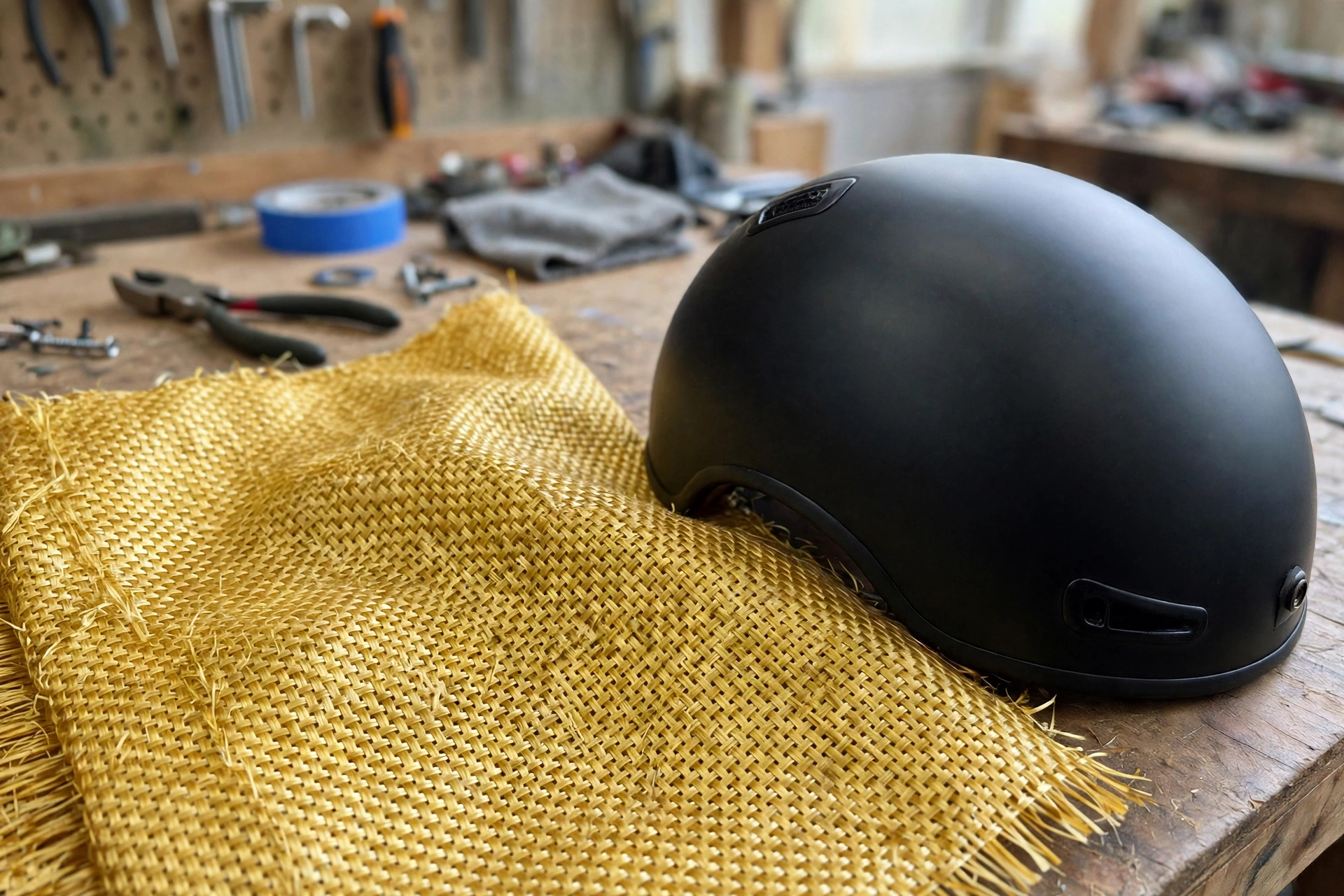
A Kevlar helmet shell is a helmet shell made with Kevlar, a strong synthetic fibre, which is layered with resin to form a hard outer layer that resists impacts, cuts, and penetration. Kevlar is known for being very strong for its weight, and it is used in helmets where a tough, light shell matters. In general terms, a Kevlar shell is a premium material choice, often found in motorcycle, military, and high-end sports helmets rather than in basic models.
What Is Kevlar?
Kevlar is a synthetic fibre made from a type of plastic called aramid, and it is known for being extremely strong while staying light. A single strand of Kevlar is hard to stretch or break, and when many strands are woven into a fabric, the result is a material that can resist tearing, cutting, and impact. Kevlar is used in body armour, ropes, and tyres as well as helmets, because it gives a lot of strength without adding much weight.
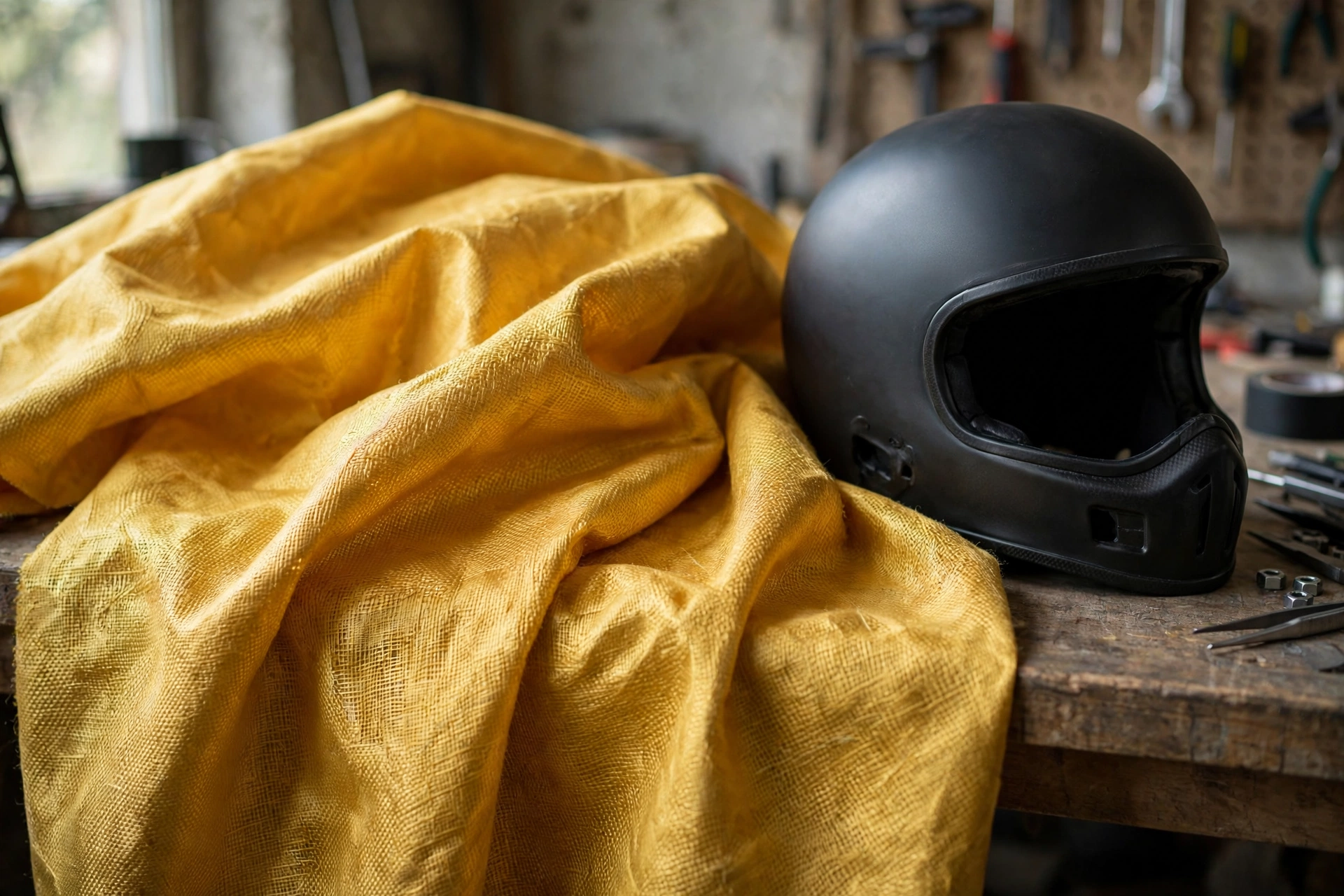
The fibre itself is not hard like a shell: it becomes a shell only when layers of Kevlar fabric are laid up with a resin that hardens around them. The resin holds the fibres in place and turns the flexible fabric into a rigid shape. In general terms, Kevlar is the reinforcement, and the resin is the glue that makes it into a solid shell. The number of layers and the way they are arranged affect how strong and how heavy the finished shell is.
How Is a Kevlar Helmet Shell Made?
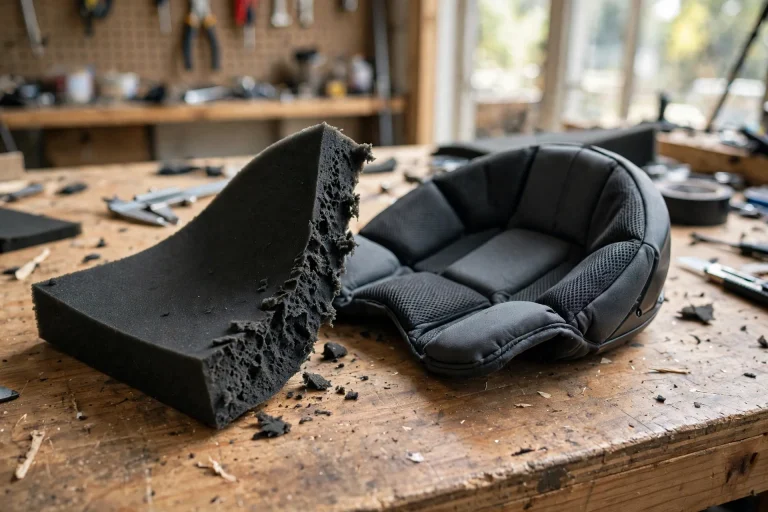
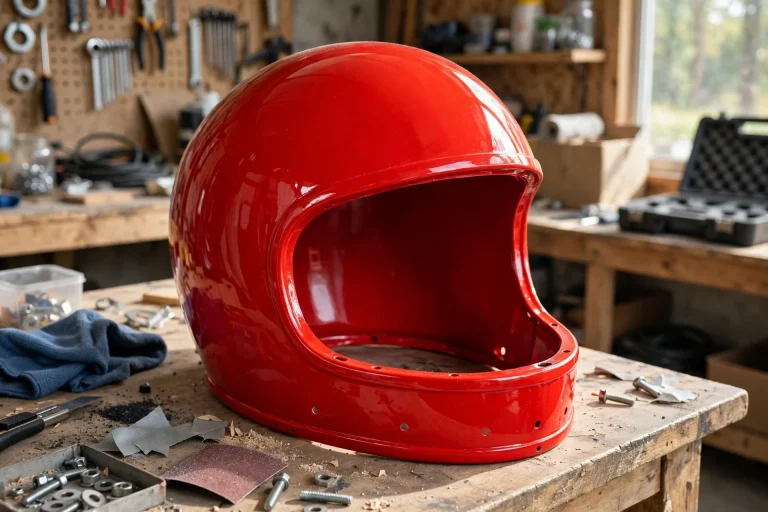
A Kevlar helmet shell is made by laying sheets of Kevlar fabric into a mould shaped like a helmet, adding resin between the layers, and then curing the whole piece with heat and pressure. The layers are usually laid in different directions so the shell is strong from every angle, not just one. Once the resin has hardened, the shell is trimmed, sanded, and finished, and the liner, straps, and vents are fitted inside. The process takes more time and skill than moulding a plastic shell, which is one reason Kevlar helmets usually cost more.
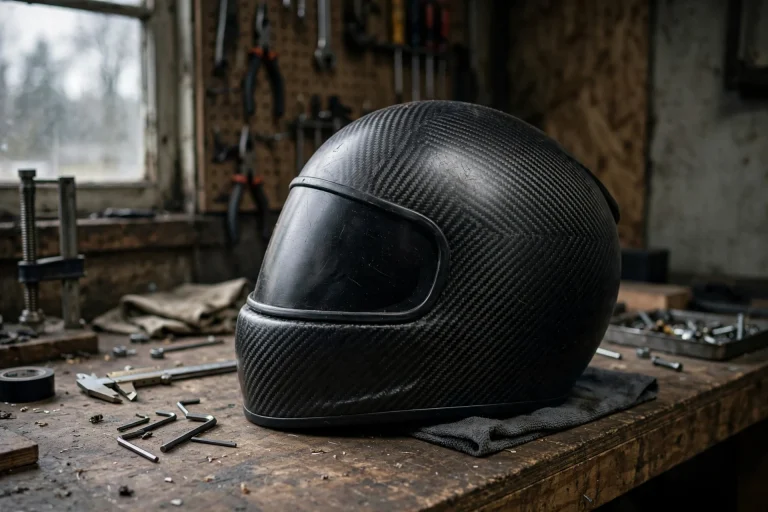
Some shells mix Kevlar with other fibres, such as carbon fibre or fibreglass, to balance strength, weight, and cost. A shell that is all Kevlar is very tough, while a mixed shell can be lighter or cheaper depending on the mix. In general terms, the making of a Kevlar shell is a careful, layered process, and the quality of the finished shell depends on how well the layers are laid and cured. A poorly made shell may have weak spots, so the maker’s reputation and the helmet’s certification matter.
How Does a Kevlar Shell Protect the Head?
A Kevlar shell protects the head by spreading the force of an impact over a wide area and by resisting penetration. When the helmet is hit, the hard shell takes the first blow and spreads the energy across its surface, so the liner underneath can absorb it more evenly. Kevlar’s strength also makes the shell hard to pierce: a sharp object that might cut through a plastic shell is more likely to be stopped or slowed by the woven fibres. If you want to understand a safety system that works with the shell to protect the head, reading about what MIPS is for helmets is a good place to start, since the shell, the liner, and any slip layer all play different parts in a crash.
Even so, the shell is only one part of the helmet. The liner inside does most of the work of slowing the head down, and a Kevlar shell cannot protect the head on its own. In general terms, the shell’s job is to take the hit, spread the force, and keep sharp objects out, while the liner absorbs the energy. A helmet should always be checked for the right certification, since the shell material alone does not guarantee that the whole helmet meets the standard.
What Are the Benefits of a Kevlar Helmet Shell?
The main benefit of a Kevlar helmet shell is its strength for its weight. A Kevlar shell can be thinner and lighter than a plastic shell of similar strength, which makes the helmet feel lighter on the head and less tiring on long rides. The material also resists cuts and abrasion well, so the shell holds up better if it slides along the road or scrapes against a rough surface. For riders who want a tough shell without extra weight, Kevlar is an attractive choice.
There is also a durability point. Kevlar does not crack as easily as some hard plastics, and a well-made shell can last a long time if it is looked after. In general terms, these benefits make Kevlar a popular choice for helmets where weight and toughness both matter, such as motorcycle touring and off-road riding. Even so, the benefits are only worth it if the helmet fits well and is certified, since a light shell that does not fit is still a poor helmet.
What Are the Limits of a Kevlar Shell?
A Kevlar shell has limits, and the main ones are cost and care. Kevlar helmets usually cost more than helmets with plastic or fibreglass shells, because the material and the layered making process are more expensive. The shell can also be damaged by sunlight over a long time, since ultraviolet light can weaken the fibres, so the shell is usually covered with a protective finish and should not be left in strong sun for long periods.
Another limit is that Kevlar is strong but not the stiffest fibre, so a shell made only from Kevlar may flex more than one made with carbon fibre. In general terms, this is why many makers mix Kevlar with other fibres rather than using it alone. A Kevlar shell also needs proper care: it should be cleaned as the maker directs, and it should be replaced after a hard impact, even if the outside looks fine, since the layers inside may have been damaged.
Should You Choose a Helmet With a Kevlar Shell?
Choosing a helmet with a Kevlar shell comes down to the same checks as any helmet: fit, certification, and comfort. The shell material is a bonus, but it matters far less than whether the helmet fits snugly, covers the head properly, and carries the safety certification for the kind of riding you do. If a Kevlar helmet meets those checks and feels comfortable, the lighter, tougher shell is a genuine advantage, especially for long rides where weight matters.
It is worth weighing the extra cost against the benefit. A rider who rides daily or tours long distances may feel the difference in weight, while a rider who rides short distances may not. In general terms, a Kevlar shell is a good choice for riders who want a strong, light helmet and are willing to pay more for it, as long as the helmet itself fits well and is certified for their sport.
Is a Kevlar helmet shell bulletproof?
No. Kevlar is used in body armour, but a helmet shell is not made to stop bullets, and it should not be treated as bulletproof. Its job is to protect against impacts, cuts, and penetration in riding crashes.
Is Kevlar heavier than carbon fibre?
In general terms, Kevlar is a little heavier than carbon fibre for the same strength, but it is tougher against cuts and abrasion. Many shells mix the two fibres to get the best of both.
Does a Kevlar shell last longer than a plastic shell?
It can, since Kevlar resists cracking and abrasion well. Even so, any helmet should be replaced after a hard impact or when it no longer fits, whatever the shell is made from.

Olivia
Writer at Helmet Today, covering helmet reviews, fit and riding safety.