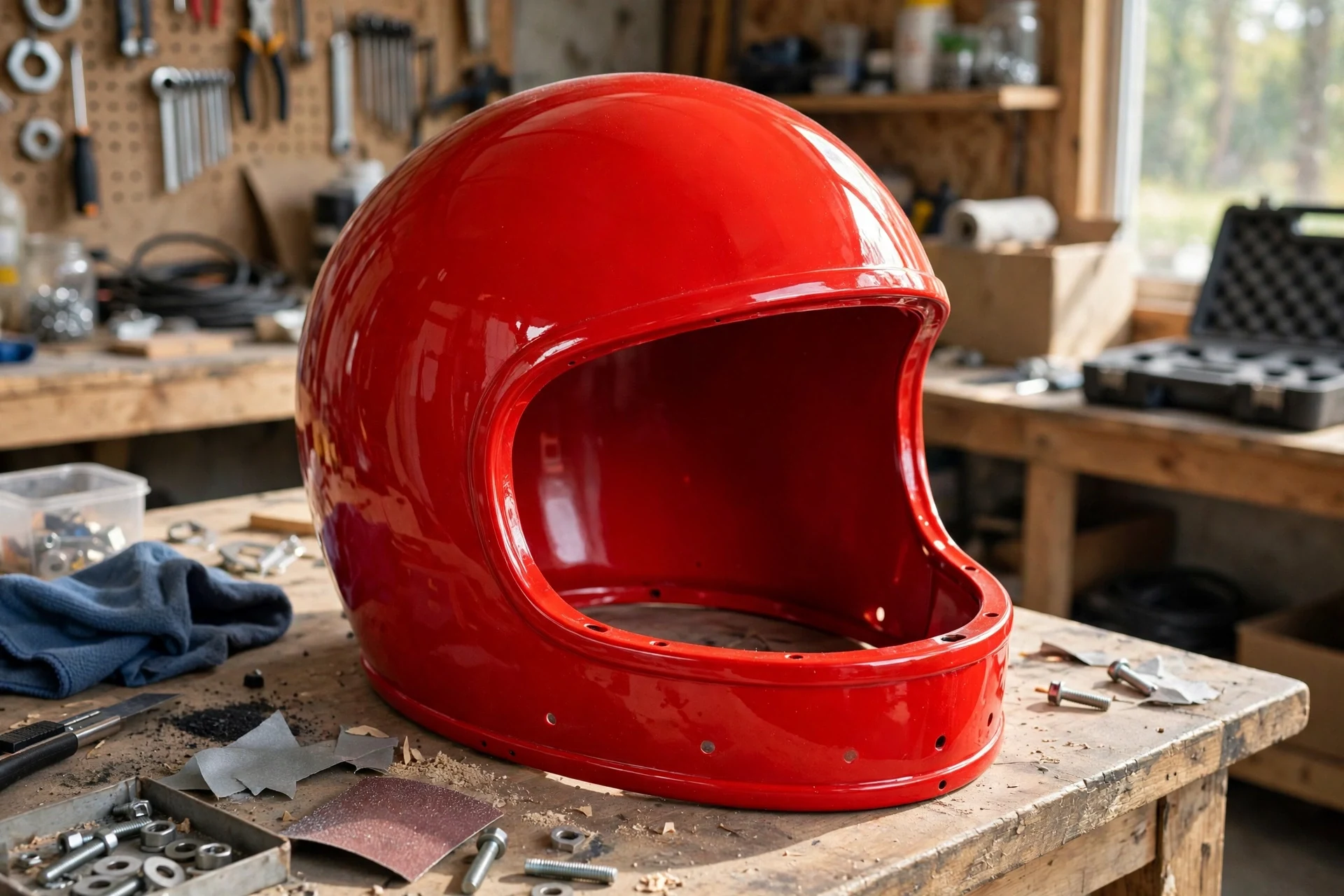
A thermoplastic helmet shell is a hard outer shell made from a type of plastic that softens when heated and hardens again when it cools, which allows it to be moulded into the shape of a helmet. Thermoplastic shells are used in many motorcycle, bicycle, ski, and work helmets, because the material is tough, relatively light, and can be produced quickly in large numbers. Polycarbonate and ABS are the most common thermoplastics used for helmet shells.
What Is a Thermoplastic?
A thermoplastic is a plastic that can be melted and reshaped many times without changing its basic chemical structure. When it is heated, the long chains of molecules inside the plastic slide past each other and the material becomes soft and mouldable. When it cools, the chains lock back into place and the plastic becomes hard again. This is different from a thermoset plastic, which hardens permanently once it is cured and cannot be melted and reshaped.
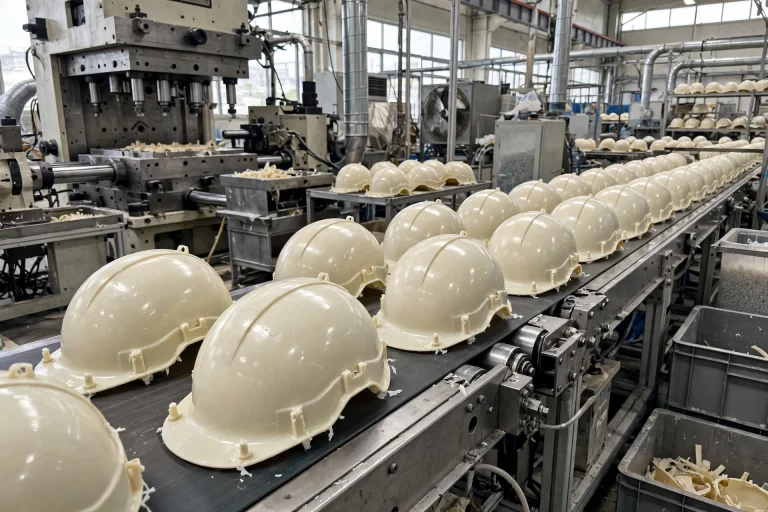
This property is what makes thermoplastics so useful for manufacturing. Offcuts and rejected parts can often be melted down and used again, and the same material can be formed into complex shapes with vents, ridges, and mounting points. For helmets, this means shells can be made by injection moulding, where melted plastic is forced into a steel mould and cooled into the shape of a shell.
Which Thermoplastics Are Used in Helmet Shells?
Polycarbonate is one of the most widely used thermoplastics for helmet shells. It is known for being strong and resistant to cracking on impact, and it can be made into thin, light shells that still spread force well. Many motorcycle and bicycle helmets use polycarbonate shells, sometimes on their own and sometimes as part of a blend with other plastics.
ABS, which stands for acrylonitrile butadiene styrene, is another common choice, valued for its toughness and ease of moulding. Some shells use a blend of polycarbonate and ABS to combine the best qualities of both. If you want to understand one of the safety technologies used in modern helmets, reading about what MIPS is for helmets is a good place to start, though the shell material and the safety system are separate parts of the helmet’s design.

How Does a Thermoplastic Shell Protect the Head?
A thermoplastic shell protects the head by taking the force of an impact and spreading it over a wider area, so the energy is not concentrated on one small spot. The shell also resists penetration from sharp objects and rough surfaces, and it holds the foam liner in place so the foam can crush and slow the head down gradually. This two-stage process is how the helmet reduces the force that reaches the brain.
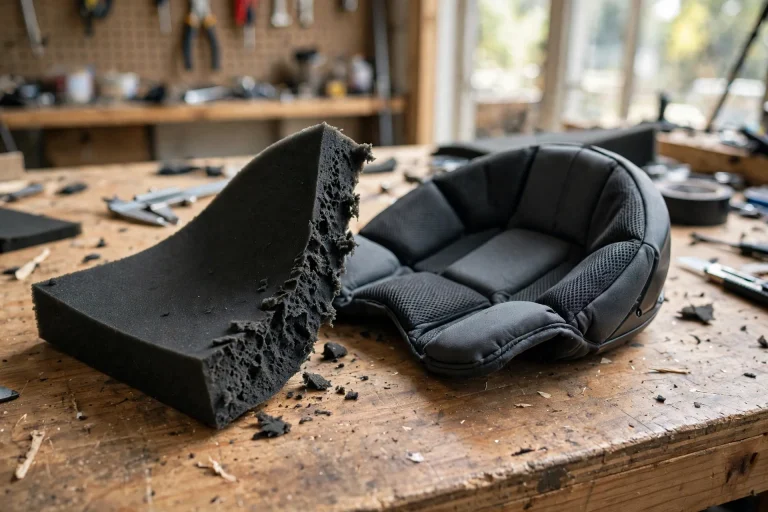
The shell works together with the foam liner inside it. On impact, the shell flexes slightly and passes the remaining energy into the foam, which absorbs it by compressing. A thermoplastic shell is stiff enough to spread force well, yet flexible enough to work with the foam rather than against it. In general terms, a helmet that meets a recognised safety standard has been tested as a complete unit, with its shell and foam working together.
What Are the Benefits of a Thermoplastic Helmet Shell?
One of the main benefits of a thermoplastic shell is cost. Thermoplastic helmets can be made quickly by injection moulding, which keeps the price down and makes good helmets available to more riders. The material is also consistent from shell to shell, since every shell comes from the same mould, which means reliable fit and quality.
Thermoplastic shells are also relatively light and can be moulded into detailed, attractive shapes with built-in vents and mounting points. The colour runs through the plastic, so scratches are often less noticeable than on a painted surface. In general terms, a thermoplastic shell offers a good balance of protection, weight, and price for everyday helmets.
Are There Any Downsides to Thermoplastic Shells?
Thermoplastic shells have some downsides. One is sensitivity to heat and chemicals: a helmet left in a hot car or exposed to strong solvents may warp or weaken, and the plastic can become brittle with age. In general terms, a thermoplastic shell may need to be a little thicker than a fibre-composite shell to reach the same level of strength, which can add weight.
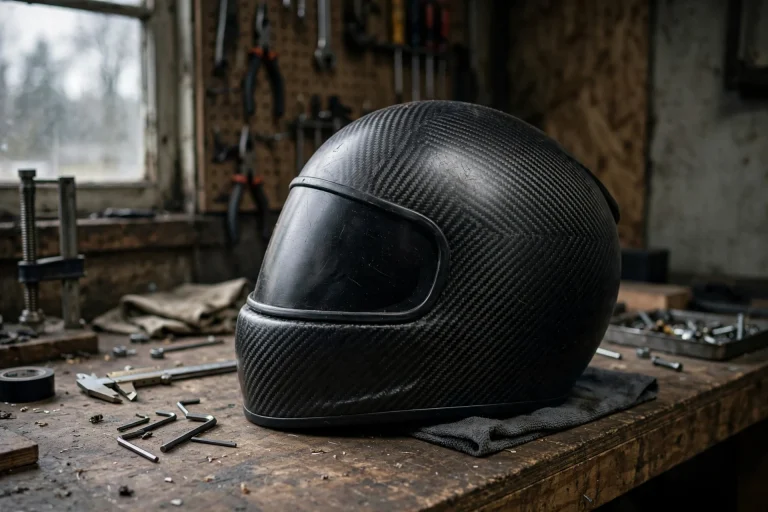
Another downside is that thermoplastic is not quite as strong per unit of weight as some fibre composites, such as carbon fibre, which is why very high-performance helmets often use composite shells instead. Thermoplastic shells can also be damaged by some cleaning products, so it is worth using only mild cleaners on the shell. These are trade-offs to weigh against the lower cost and easy availability of thermoplastic helmets.
How Do You Look After a Thermoplastic Helmet Shell?
Looking after a thermoplastic helmet shell starts with storing it away from heat and strong sunlight, since long exposure to either can weaken the plastic over time. A cool, dry place such as a shelf or a helmet bag is a good choice, and the helmet should not be left in a hot car for long periods. Keeping the helmet out of contact with petrol, solvents, and harsh cleaners is important too.
Cleaning is simple: a soft cloth with mild soap and water is usually enough to remove dirt and insects, and the shell should be dried with a soft towel rather than a rough one that could scratch it. The shell should be checked regularly for cracks, deep scratches, or signs of warping, and the helmet should be replaced after a hard impact, even if the shell looks fine, because damage to the foam inside may not be visible. If the shell shows any sign of damage, or if the helmet has been in a crash, replacing it is the safe choice, since a damaged shell cannot be relied on to protect the head a second time.
Is a thermoplastic helmet shell safe?
Yes, in general terms a thermoplastic shell is safe when the helmet is well designed and meets a recognised safety standard for its intended use. The shell and foam liner work together to protect the head.
What is the difference between a thermoplastic and a fibreglass shell?
A thermoplastic shell is moulded from melted plastic, while a fibreglass shell is made by bonding layers of glass fibre with resin. Fibreglass shells can be stronger for their weight but usually cost more to make.
Can a thermoplastic helmet be left in a hot car?
It is best not to leave any helmet in a hot car for long periods, because heat can weaken thermoplastic and warp the shell. Store the helmet in a cool, dry place instead.

Olivia
Writer at Helmet Today, covering helmet reviews, fit and riding safety.