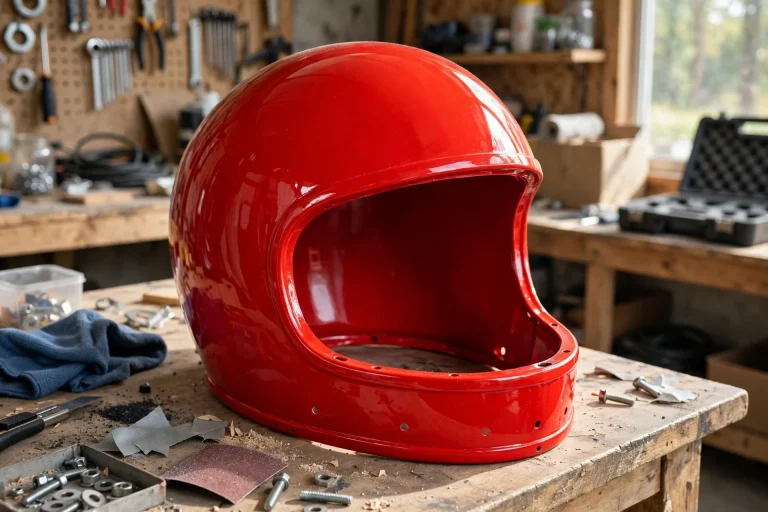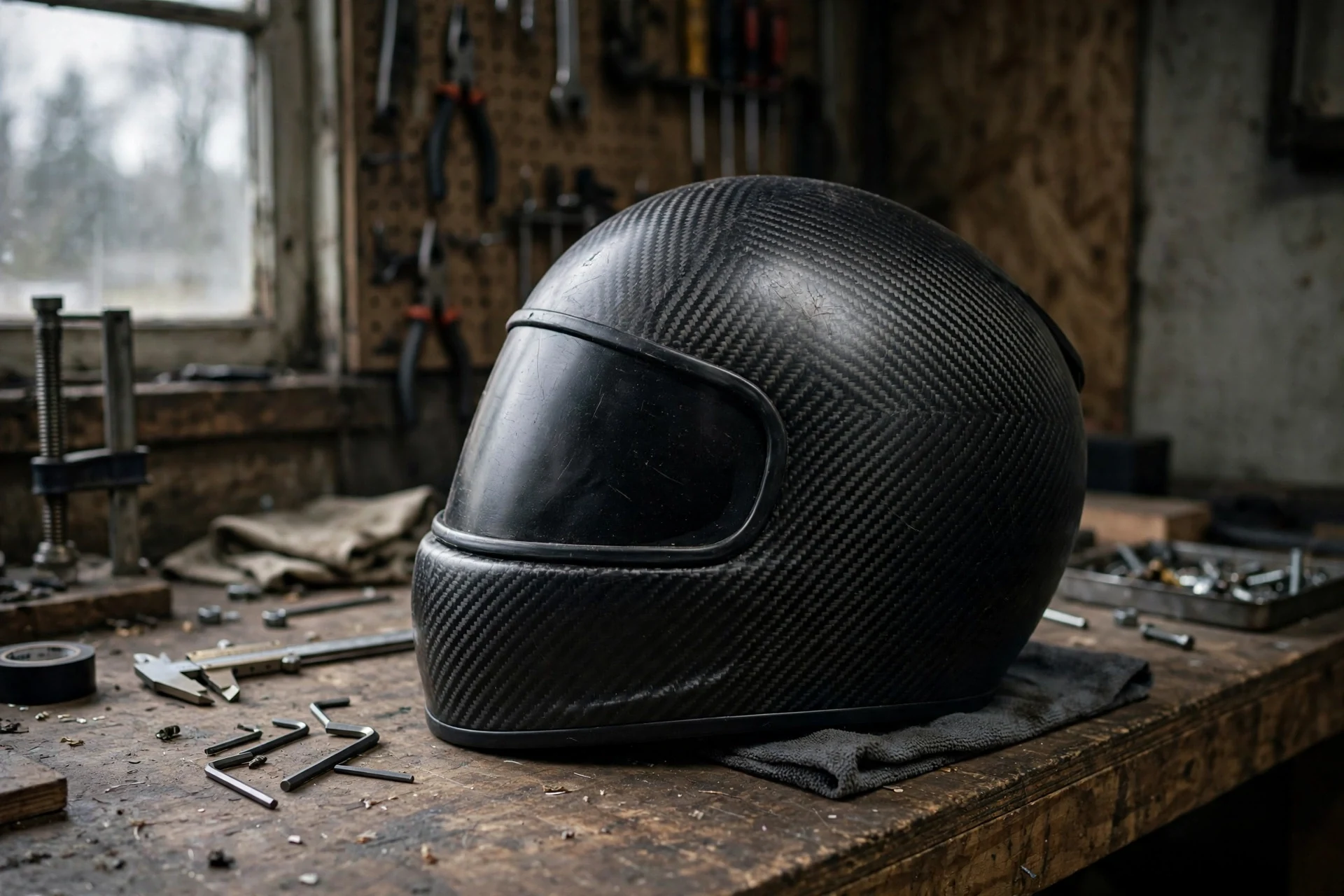
A thermoset helmet shell is a hard outer shell made from a resin-based material that hardens permanently when it is cured, so it cannot be melted and reshaped afterwards. Thermoset shells are usually made from fibre composites, such as fibreglass or carbon fibre bonded with resin, and they are used in many motorcycle, racing, and high-performance helmets. They are known for being strong and light, though they usually cost more than thermoplastic shells.
What Is a Thermoset Material?
A thermoset material starts as a liquid resin mixed with a hardener, and when the two are combined, a chemical reaction takes place that links the molecules together into a rigid network. Once this curing reaction is complete, the material is set permanently: heating it again will not soften it or let it be reshaped, and strong heat will usually damage it rather than melt it. This is the key difference from a thermoplastic, which softens every time it is heated.
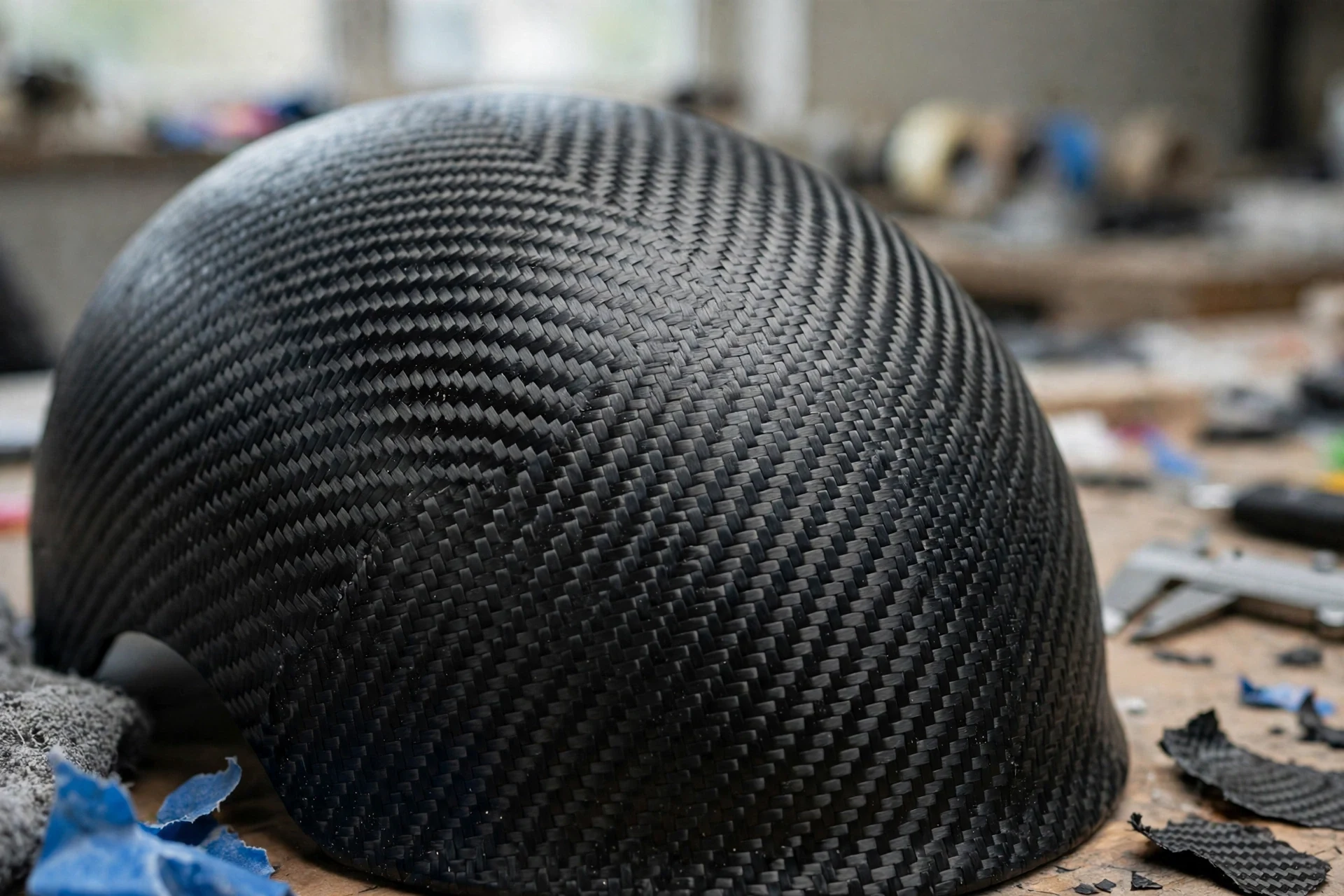
For helmet shells, the thermoset resin is usually combined with layers of fibre, such as glass fibre, carbon fibre, or aramid fibre. The fibres give the shell its strength and stiffness, while the resin holds the fibres together and gives the shell its smooth, hard surface. The result is a composite material that is stronger for its weight than most plastics used on their own.
How Is a Thermoset Helmet Shell Made?
A thermoset helmet shell is made by laying sheets of fibre cloth into a mould shaped like a helmet, then adding resin to bond the layers together. The layers may be laid by hand or by machine, and the number and direction of the layers are chosen to give the shell strength where it is needed most. Once the layers are in place, the mould is closed and the shell is cured, often with heat and pressure, until the resin hardens fully.
After curing, the shell is removed from the mould and trimmed, and the edges are finished smooth. Vents and holes for the visor and straps are cut, and the shell may be painted or given a clear coating to show off the fibre pattern underneath. If you want to understand one of the safety technologies used in modern helmets, reading about what MIPS is for helmets is a good place to start, though the shell material and the safety system are separate parts of the helmet’s design.
How Does a Thermoset Shell Protect the Head?
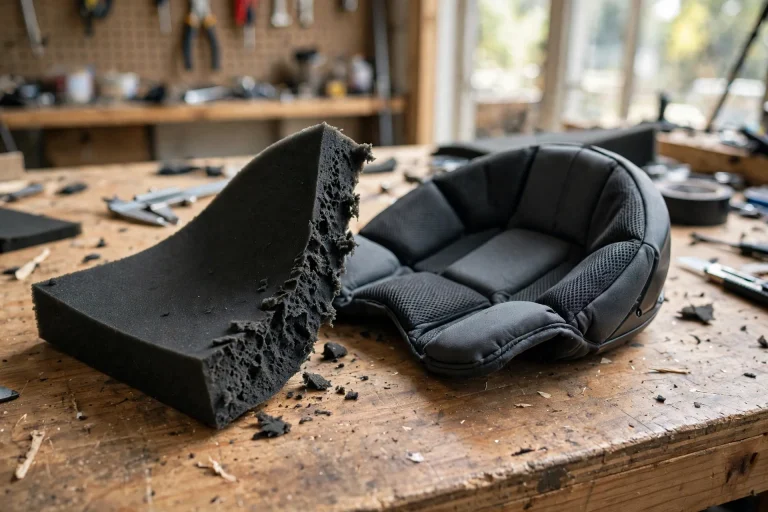
A thermoset shell protects the head by taking the force of an impact and spreading it over a wide area, so the energy is not concentrated on one small spot on the skull. The fibre layers are very stiff, which helps the shell resist denting and penetration from sharp objects, and the shell holds the foam liner in place so the foam can crush and slow the head down gradually.
Because the fibres run in different directions, the shell can handle impacts from many angles, not just from straight above. On impact, the shell may crack or delaminate in places, and that breaking apart absorbs some of the energy that would otherwise reach the head. In general terms, a helmet that meets a recognised safety standard has been tested as a complete unit, with its shell and foam working together.
What Are the Benefits of a Thermoset Helmet Shell?
One of the main benefits of a thermoset shell is its strength for its weight. A fibre-composite shell can be both thinner and lighter than a thermoplastic shell of similar strength, which makes the helmet more comfortable to wear for long periods and less tiring on the neck. This is one reason thermoset shells are common in racing and high-performance helmets.
Thermoset shells are also stable in heat: they do not soften in a hot car the way some thermoplastics can, and they hold their shape well over time. The finish is often attractive too, with the woven fibre pattern visible under a clear coat on some models. In general terms, a thermoset shell offers high performance for riders who are willing to pay more for it.
Are There Any Downsides to Thermoset Shells?
Thermoset shells have some downsides. The main one is cost: laying fibre layers by hand and curing them takes time and skilled labour, so thermoset helmets are usually more expensive than thermoplastic ones. Repair is also harder, since a damaged composite shell cannot simply be melted and reshaped, and a cracked shell means the helmet should be replaced rather than fixed.
Another downside is that the shell can be brittle in some kinds of impact. While the fibres are very strong, the resin between them can crack, and damage inside the shell may not be visible from the outside. In general terms, a thermoset shell that has taken a hard knock should be treated with the same caution as any other helmet: if it has absorbed a serious impact, it should be replaced.
How Do You Look After a Thermoset Helmet Shell?
Looking after a thermoset helmet shell is much like looking after any good helmet. Store it in a cool, dry place away from strong sunlight, and avoid dropping it or knocking it against hard surfaces, since even a small crack can weaken the composite. Cleaning is simple: a soft cloth with mild soap and water will remove dirt and insects, and the shell should be dried with a soft towel.
Harsh solvents and strong cleaners should be kept away from the shell, since they can damage the resin or the clear coating. The shell should be checked regularly for cracks, chips, or areas where the surface feels rough or lifted, and the helmet should be replaced after a hard impact, even if the shell looks fine, because damage to the foam liner inside may not be visible from the outside.
Is a thermoset helmet shell safer than a thermoplastic shell?
Not necessarily. Both types can be safe when the helmet is well designed and meets a recognised safety standard. A thermoset shell is often stronger for its weight, but the whole helmet, including the foam liner and fit, decides how well it protects.
What materials are used in thermoset helmet shells?
Thermoset shells are usually made from fibre composites, such as fibreglass or carbon fibre bonded with resin. The fibres provide strength, and the resin holds them together in a hard, rigid shape.
Can a cracked thermoset shell be repaired?
No, a cracked helmet shell should not be repaired. A crack can weaken the shell in ways that are hard to see, so a helmet with a cracked shell should be replaced.

Olivia
Writer at Helmet Today, covering helmet reviews, fit and riding safety.