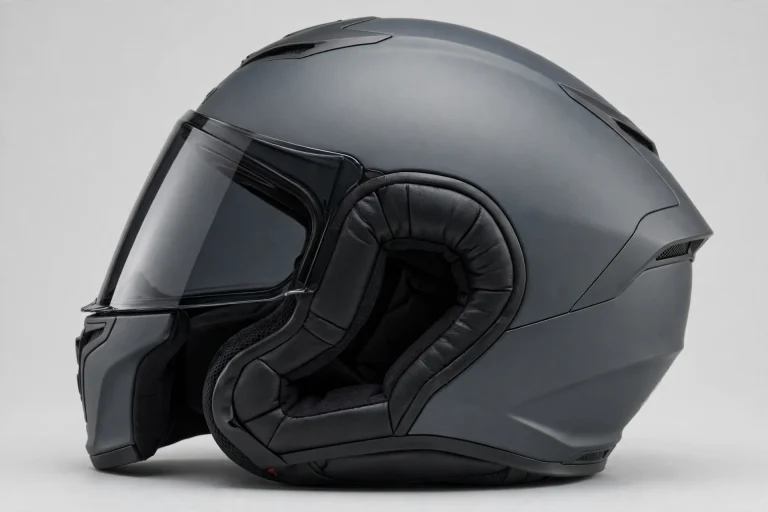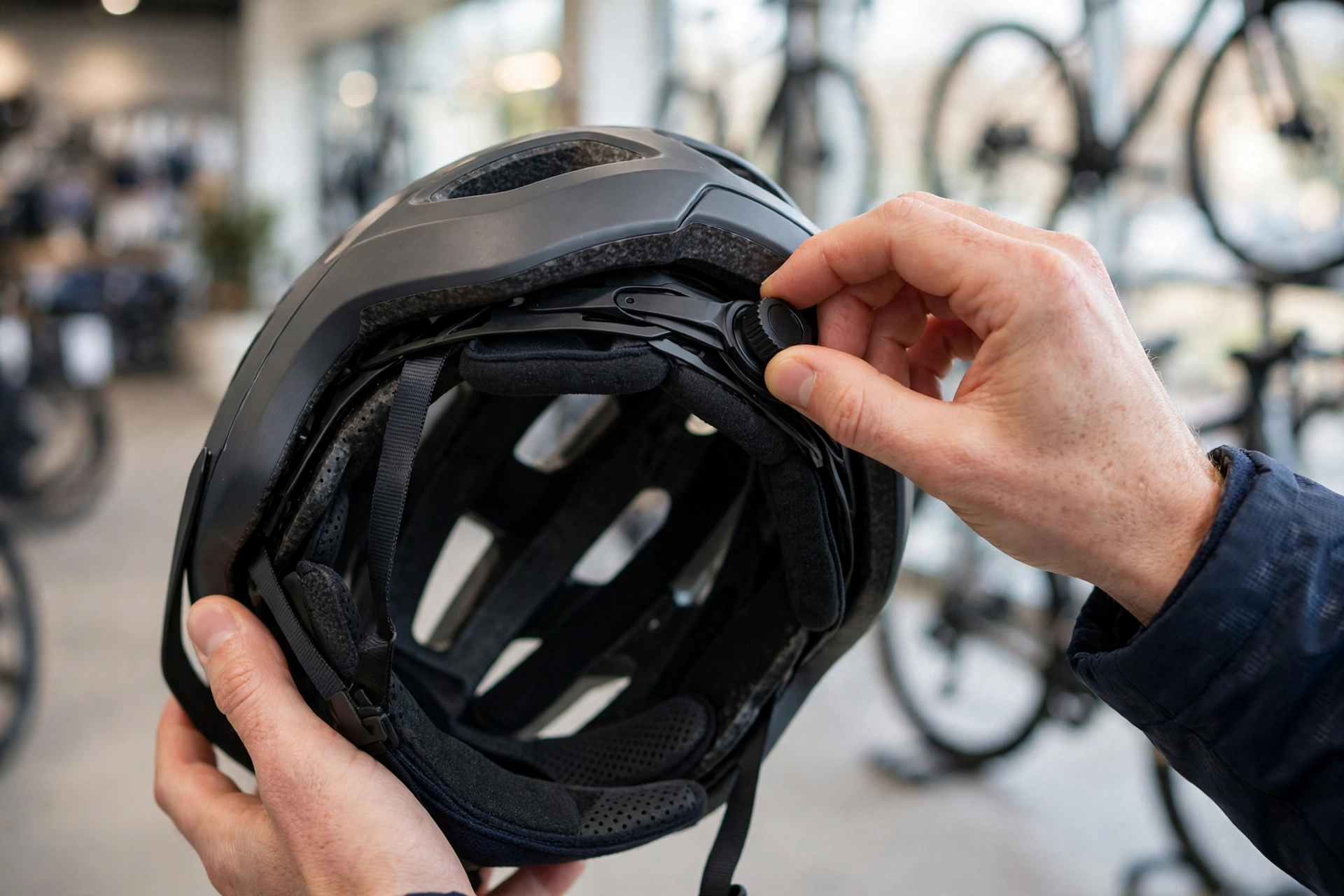
A helmet with a self-adjusting fit system is a helmet that adjusts itself to the shape of the rider’s head, usually through pads, bands, or air chambers that tighten or loosen automatically or with a single control, so the rider gets a snug fit without fiddling with many separate parts. Instead of relying only on fixed padding in set sizes, the system adapts to the head it is on. In general terms, it aims to give more riders a comfortable, secure fit from a single helmet.
How Does a Self-Adjusting Fit System Work?
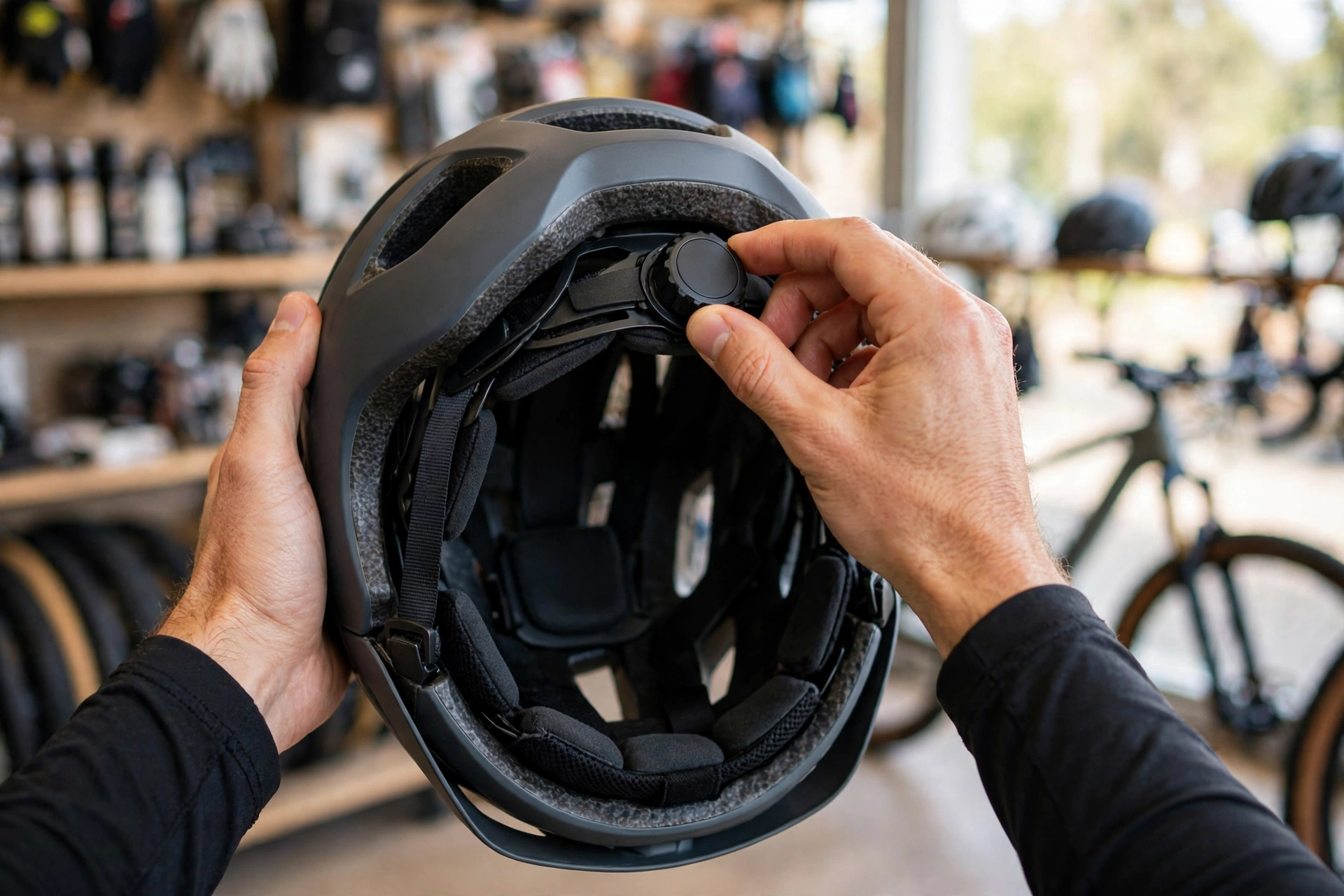
A self-adjusting fit system works in different ways depending on the design, but the idea is always the same: parts of the fit system move to match the head. Some designs use an inner band that tightens evenly around the head when a dial or lever is turned, spreading the pressure so no single spot feels tight. Others use air chambers that inflate to fill the gaps between the shell and the head, or flexible pads that compress where the head presses hardest and stay fuller where there is space. In some designs, the system adjusts on its own as the helmet is put on, with no input from the rider at all.
The key is even pressure. A good fit system spreads the hold around the whole head, rather than gripping hard in one place and leaving a gap somewhere else. In general terms, the system should make the helmet feel secure when the rider shakes their head, without creating a pressure point on the forehead or the sides.
Why Does Helmet Fit Matter So Much?
Helmet fit matters because a helmet can only protect the head properly if it stays in the right place during a crash. A helmet that is too loose can shift or come off, while a helmet that is too tight can cause headaches and distract the rider. A snug, even fit keeps the helmet level on the head, covering the forehead and the back of the head, and stops it from rocking forwards or backwards when the rider moves. In general terms, fit is as important as the shell and the liner, because the best materials in the world cannot help if the helmet is not sitting where it should.
If you want to understand the impact protection that a good fit supports, reading about what MIPS is for helmets is a good place to start, since systems like that work best when the helmet is sitting correctly on the head. In general terms, a self-adjusting system tries to solve the fit problem for more head shapes than fixed padding can.
What Are the Benefits of a Self-Adjusting Fit?
The main benefit of a self-adjusting fit is that it adapts to head shapes that do not match a standard size. Heads come in many shapes, and a helmet that comes in only a few sizes may fit one rider perfectly and another poorly, even if both have the same head measurement. A system that adjusts can fill small gaps and ease tight spots, so more riders can get a secure fit from the same shell. This can be especially useful for riders who sit between sizes and find one size too tight and the next too loose.
Another benefit is speed. A single dial or automatic adjustment is quicker than swapping pads or trying several sizes, which matters in a shop or when sharing a helmet between riders. In general terms, the system also makes it easier to get the same fit every time, since the rider does not have to guess how tight the straps or pads should be. That consistency can be reassuring, especially for new riders who are still learning what a good fit feels like.
What Are the Drawbacks of a Self-Adjusting Fit System?
A self-adjusting fit system has drawbacks that riders should think about before choosing one. The moving parts add complexity, and anything with moving parts can wear out, jam, or break over time. A dial that sticks, an air chamber that leaks, or a band that loses its spring can leave the helmet fitting worse than a simple fixed-pad design. Repairs may also be harder, since the parts are specific to that helmet and may not be easy to replace.
In general terms, a self-adjusting system is not a substitute for choosing the right shell size: if the shell is far too big or too small for the head, no adjustment system can fix that. Riders should still start with the closest shell size and let the system fine-tune the fit, rather than expecting it to make a wrong size work.
How Do You Adjust and Maintain the System?
Adjusting a self-adjusting fit system usually starts with putting the helmet on and letting the system settle, then using the dial, lever, or pump as the maker directs. The helmet should feel snug all round, without a pressure point, and it should not rock when the rider shakes their head. It is worth wearing the helmet for a few minutes indoors before riding, since pads and bands can settle and the fit may change slightly. If the helmet loosens, a small extra turn of the dial is usually enough.
Maintenance means keeping the moving parts clean and free of grit, since dirt can jam a dial or wear a band. The fit pads should be cleaned as the maker directs, and any air chambers should be checked for leaks from time to time. If anything feels rough or loose, it is worth having it looked at before relying on the helmet.
What Should You Look For When Choosing One?
When choosing a helmet with a self-adjusting fit system, the first thing to check is the shell size and the safety certification, because the adjustment system matters far less if the shell is the wrong size or the helmet is not certified for the kind of riding you do. Try the helmet on and wear it for several minutes, since a fit that feels fine for a moment in the shop may press after a while. Check that the adjustment feels smooth and that the helmet stays snug when you shake your head.
It is also worth asking whether the fit parts can be replaced if they wear out, and whether the system can be cleaned easily. A system that is simple to use is better than one with many settings, since the rider needs to adjust it quickly and without thinking too hard. In general terms, the best choice is the helmet whose shell fits well and whose adjustment system feels natural, secure, and easy to use, rather than the one with the most features.
Does a self-adjusting fit system replace choosing the right size?
No. The system fine-tunes the fit, but the shell still needs to be close to the right size for your head. Start with the closest size, then let the system adjust the rest.
Can a self-adjusting fit system break?
Yes, in general terms, the moving parts can wear out or jam over time. Keep the parts clean, check the adjustment before each ride, and have the helmet looked at if the system feels rough or loose.
Is a self-adjusting helmet good for sharing between riders?
Yes, it can help, since the system adapts to each head. Even so, sharing a helmet is not ideal, because sweat and wear build up, and each rider should still check the fit before riding.

Olivia
Writer at Helmet Today, covering helmet reviews, fit and riding safety.