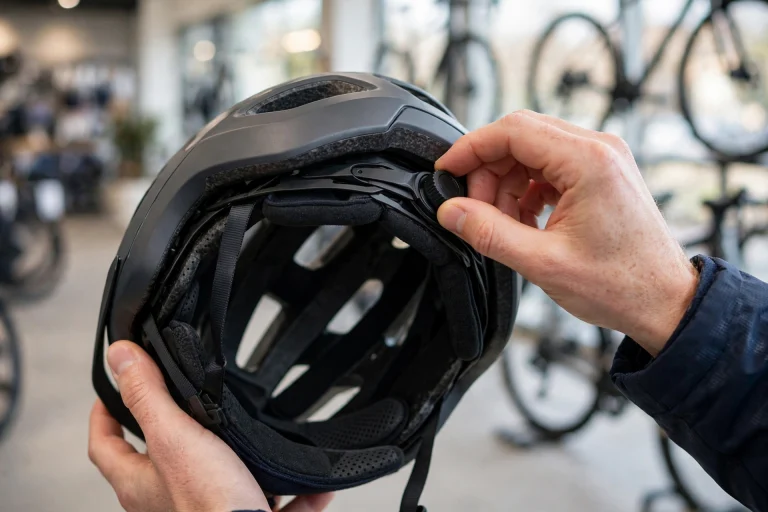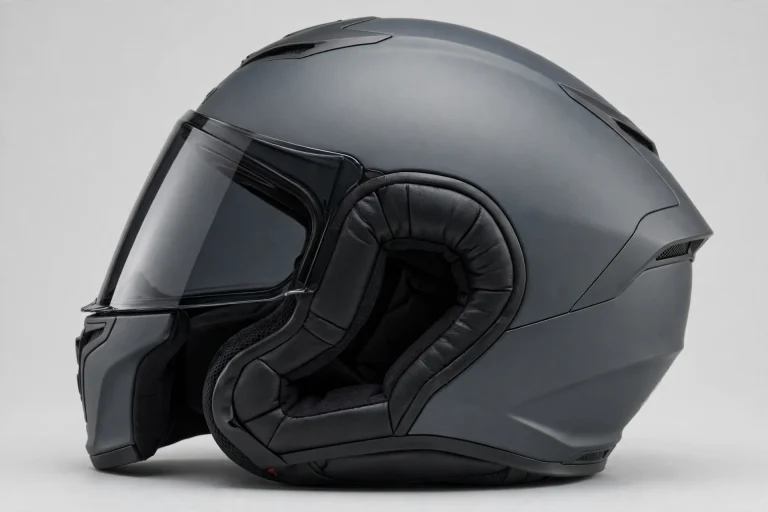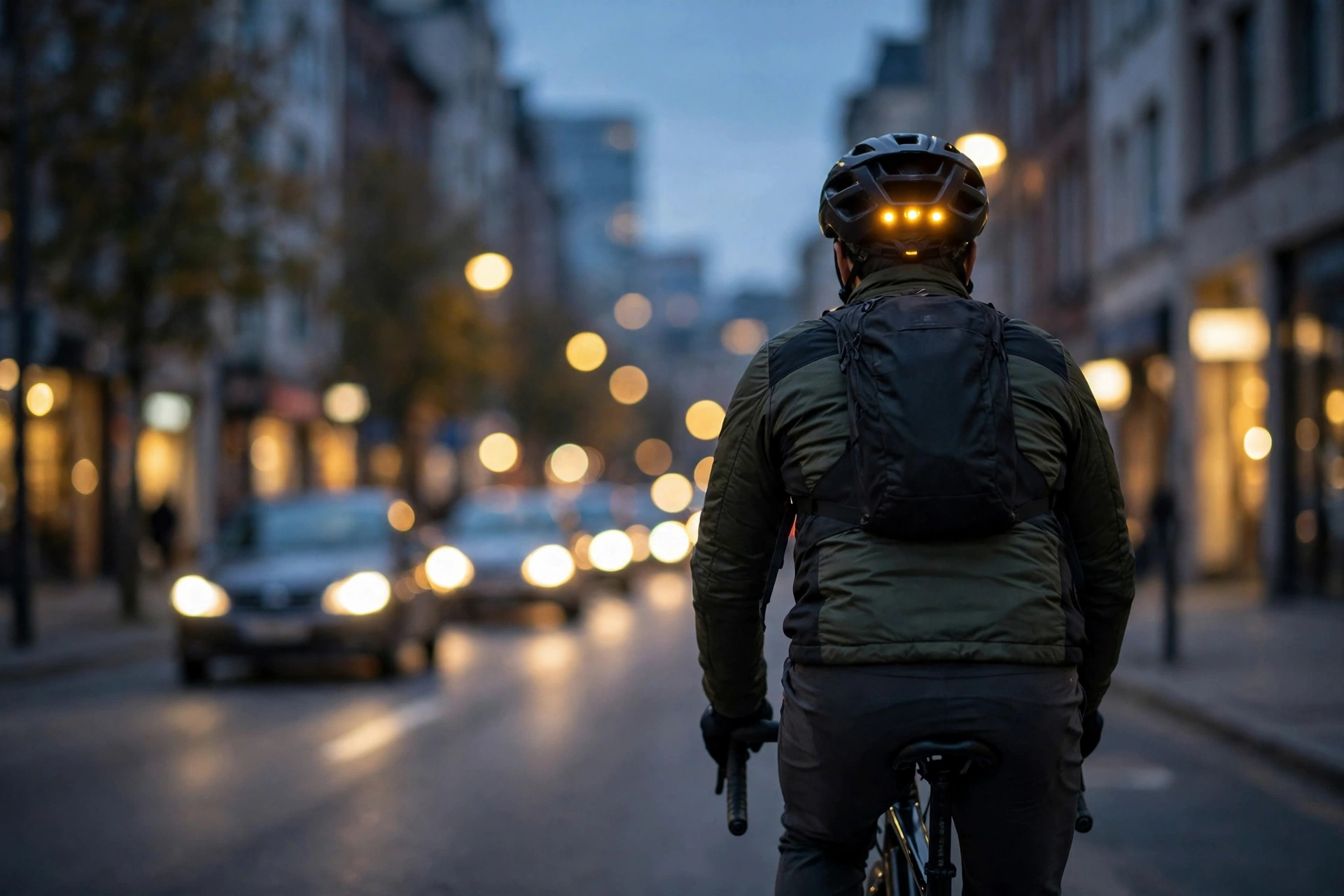
A helmet with a built-in rear indicator is a helmet that has turn signals built into the back of the shell, usually as bright lights that flash when the rider signals a turn, so drivers behind can see the rider’s intention more clearly. The indicators are controlled by a switch on the handlebars or a control on the helmet itself, and they sit at head height, where they are easy for following traffic to spot. In general terms, they are an extra visibility aid, not a replacement for the bike’s own indicators or for hand signals.
How Does a Built-In Rear Indicator Work?
A built-in rear indicator works through a set of lights, usually light-emitting diodes, set into the back of the helmet shell. When the rider presses a control, the lights on the matching side flash in an amber colour, much like the indicators on a car or a motorcycle. Some designs use a wireless link between a handlebar control and the helmet, while others have a small switch on the helmet that the rider presses. The lights run on a small battery, which needs charging before long rides.
The key point is position. Lights at head height sit above most car bonnets and above the bike’s own tail light, so a driver following behind may see them sooner than a low-mounted indicator. Riders should still use the bike’s indicators where they exist, since other road users expect to see signals in the usual places.
Why Would a Rider Want Indicators on a Helmet?
A rider may want indicators on a helmet because being seen from behind is a real concern, especially in traffic. A bicycle’s rear light and indicators sit low, and they can be hidden by the rider’s body, a bag, or the bike itself. Lights on the back of the helmet sit higher and move with the rider’s head, which can make them easier to notice. For a rider turning across traffic, an extra signal at head height may give a following driver a clearer warning.
There is also a clarity point. A flashing light on the helmet shows the direction of the turn from the rider’s own position, which can be easier to read than a small light on the bike. If you want to understand the safety technology that protects the head underneath features like this, reading about what MIPS is for helmets is a good place to start, since the indicator lights are an add-on that should never weaken the helmet or interfere with its protection. In general terms, the indicators are about being seen, while the helmet itself is about protection.

Are Helmet Indicators a Replacement for Bike Indicators?
Helmet indicators are not a replacement for a bike’s own indicators or for hand signals. On a motorcycle, the bike’s indicators are in the position other road users expect, and they are usually brighter and more widely spaced than lights on a helmet. On a bicycle, hand signals are the standard way to show a turn, and many riders use them alongside lights. A helmet indicator should be treated as an extra signal that supports the main one, not as a substitute for it.
There is also a legal point. In some places, the rules about what counts as a turn signal are written around the vehicle’s lights, and a helmet light may not meet those rules on its own. In general terms, riders should keep using the bike’s indicators or hand signals as the main way to show a turn, and treat the helmet lights as a helpful addition. Relying only on the helmet lights could leave other road users unsure of what the rider is doing.
What Are the Drawbacks of Built-In Rear Indicators?
Built-in rear indicators have drawbacks that riders should think about before choosing one. The lights and their battery add weight to the helmet, and the extra parts can make the helmet feel heavier on a long ride. The electronics also add cost, and a helmet with built-in lights usually costs more than a similar helmet without them.
There is also a fit and safety point. The lights and wiring sit in or on the shell, and they should not weaken the helmet or create a hard point that could press into the head in a fall. Riders should check that the helmet is certified for their kind of riding and that the lights do not interfere with the fit or the vents.
How Do You Use and Maintain Helmet Indicators?
Using helmet indicators starts with learning the control, which may be a button on the handlebars, a switch on the helmet, or a control in an app. The rider should practise using it at low speed until pressing it becomes natural, since fumbling for a control in traffic is distracting. The indicators should be switched on in good time before a turn, just like a bike’s indicators, and switched off after the turn so following drivers are not confused by a light that keeps flashing.
Maintenance means keeping the battery charged and the lights clean, since dirt can dim them. The helmet should be checked before each ride to make sure the lights work, and the charging port should be kept clean and covered when not in use. In general terms, a quick check of the indicators should become part of the normal pre-ride routine, alongside checking the fit and the straps. If a light stops working, it is worth having it looked at rather than riding with a signal that only works on one side.
What Should You Look For When Choosing One?
When choosing a helmet with a built-in rear indicator, the first thing to check is the fit and the safety certification, because the lights matter far less if the helmet does not fit or is not certified for the kind of riding you do. Once the basics are right, look at how bright the lights are and how easy the control is to use while riding. A control that needs the rider to take a hand off the bars for long is not a good design.
Battery life is another practical point. A system that lasts a full day’s riding is more useful than one that needs charging after a few hours, and a helmet with a clear low-battery warning is better than one that simply goes dark. It is also worth asking whether the lights can be replaced if they fail, and whether the helmet can be used normally with the lights switched off. In general terms, the best choice is a helmet that fits well, is certified, and has indicators that are bright, simple to use, and easy to keep charged.
Do helmet indicators work in daylight?
Yes, in general terms, bright lights can be seen in daylight, though they are easier to spot at dusk or at night. Check that the lights are bright enough to notice in daylight before relying on them.
Can I add rear indicators to my existing helmet?
Some stick-on light kits exist, but they may not sit well on every shell or stay fixed at speed. Avoid anything that needs holes drilled in the shell, and check that any add-on does not block vents or weaken the helmet.
Do helmet indicators need charging?
Yes, in general terms they run on a small battery that needs charging. When the battery is flat, the indicators stop working, so check the charge before a ride and keep the bike’s own signals as the main way to show a turn.

Olivia
Writer at Helmet Today, covering helmet reviews, fit and riding safety.