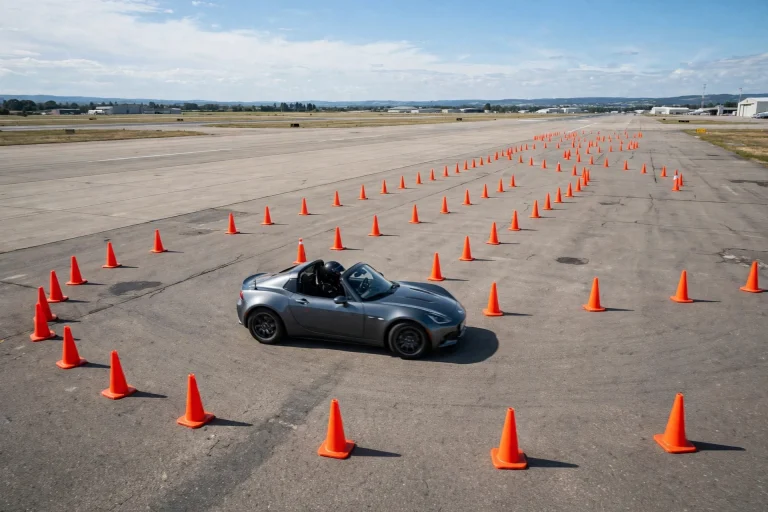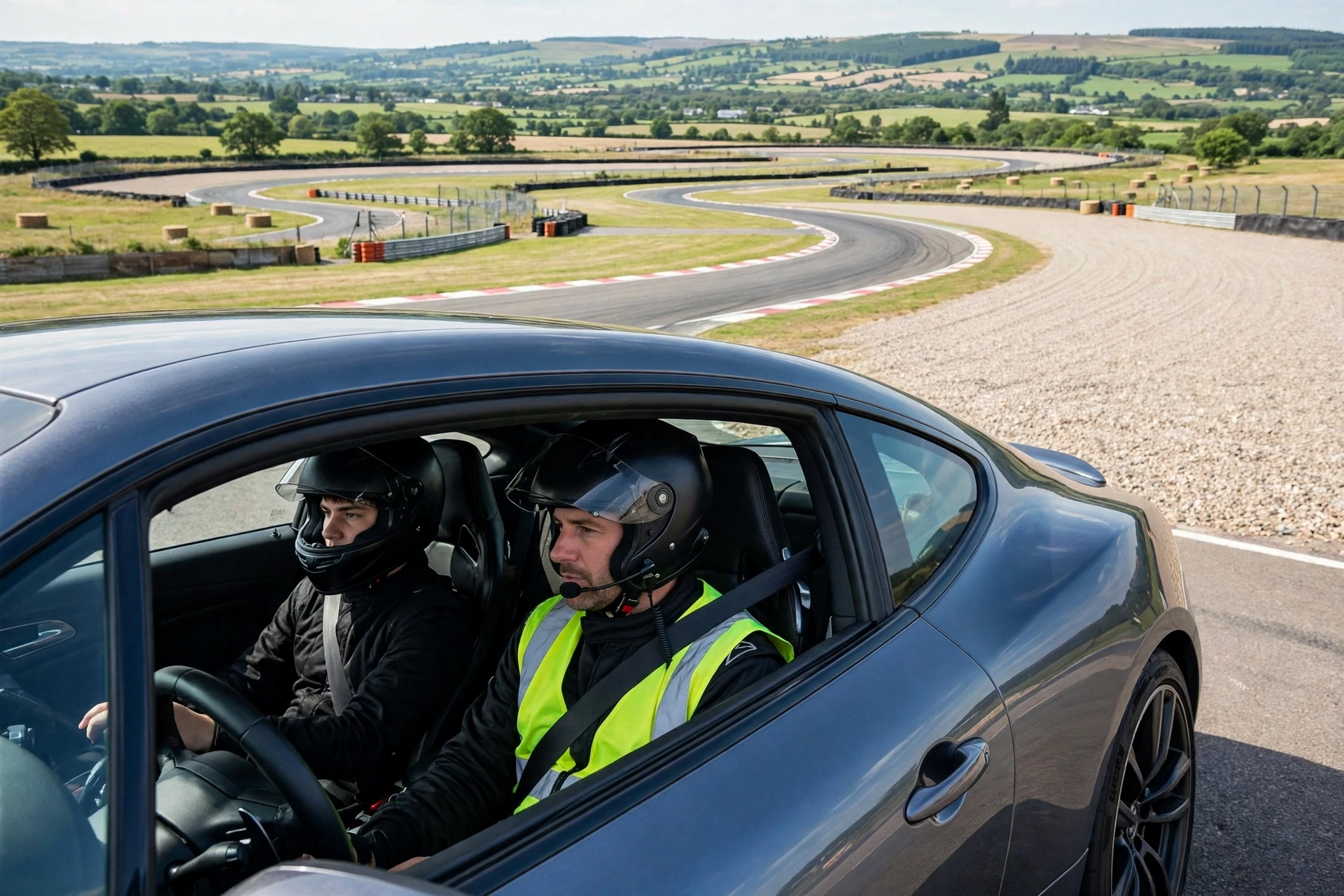
A track day helmet for beginners is a motorsport helmet worn by a first-time driver on a track day, an event where ordinary drivers take their own cars onto a race circuit to learn how the car handles at speed in a safe, controlled setting. A helmet is required at most track days, and for a beginner the right helmet is one that meets the event’s safety standard, fits well, and is comfortable enough to wear for several sessions through the day.
What Is a Track Day?
A track day is an event at a race circuit where drivers pay to drive their own cars on the track in timed sessions, usually in small groups sorted by experience. There is no racing and no winner: the point is to learn how the car behaves, practise braking and cornering, and enjoy driving in a place where there is no oncoming traffic and plenty of run-off space. Instructors are often available to ride along and give advice.
Track days are open to a wide range of cars, from ordinary family cars to sports cars, and they are a popular first step into motorsport. The speeds are higher than on the road, and the car is worked much harder, so the organisers set rules for safety, including helmets, seatbelts, and a check that the car is in good condition. In general terms, a track day is a controlled way to explore what a car can do, and the helmet is part of that control.
What Kind of Helmet Does a Beginner Need for a Track Day?
A beginner needs a helmet that meets the safety standard required by the track day organiser, which is usually a recognised motorsport standard for car helmets. A full-face helmet is the most common choice, because it protects the whole head and face, and it also keeps wind and noise out on an open circuit. Some events allow an open-face helmet, but it is worth checking the rules before booking.
Many beginners hire a helmet from the circuit for their first track day, which is a sensible way to try the sport without buying kit first. If you do buy one, it should be a proper motorsport helmet, not a bicycle helmet, and it should be new rather than second-hand, since a used helmet may have hidden damage. If you want to understand one of the safety technologies used in modern helmets, reading about what MIPS is for helmets is a good place to start, though motorsport helmets use their own specialised systems as well.
How Should a Track Day Helmet Fit?
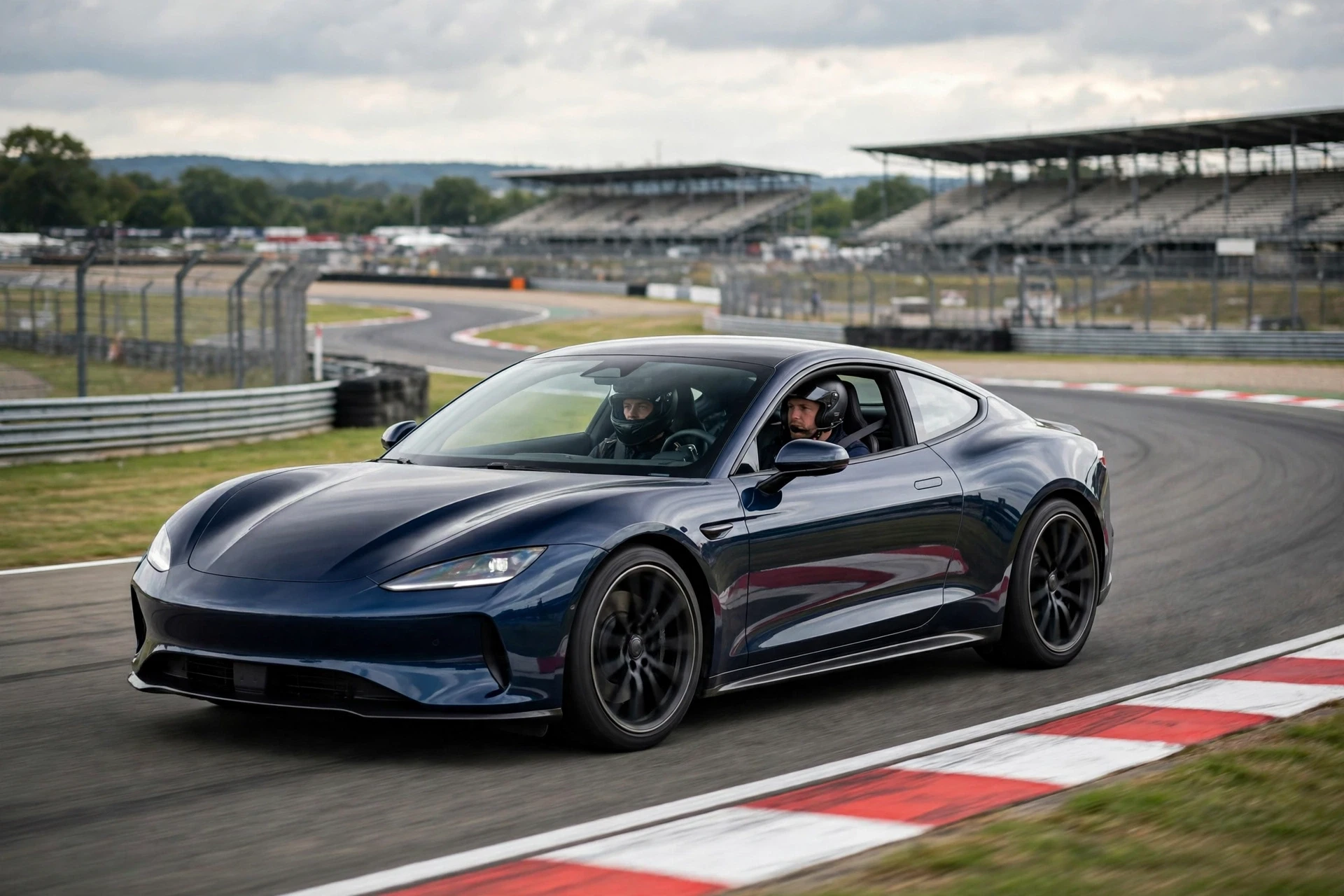
A track day helmet should fit snugly all round the head, without pressure points and without wobbling when the driver shakes their head. It should sit level, covering the forehead without slipping down over the eyes, and the back should sit low enough to protect the back of the head. If the helmet can be rocked forwards or backwards easily, it is probably too loose.
The chin strap should be fastened snugly before going out on track, and it is worth trying the helmet on with any glasses or balaclava that will be worn during the day. A helmet that fits well will stay put under hard braking and fast cornering, while a loose helmet can shift and block the driver’s view. In general terms, comfort matters a lot on a track day, because the driver will wear the helmet for several sessions, and a helmet that pinches becomes a distraction.
What Should a Beginner Expect on Their First Track Day?
A beginner on their first track day should expect a briefing, a sighting lap, and a series of short sessions on track, with breaks in between to rest and check the car. The briefing covers the flags, the rules for overtaking, and what to do if something goes wrong, and it is worth listening carefully, since the rules are different from the road. An instructor can ride along for the first session, which helps a new driver learn the racing line and the braking points.
The car will use more fuel, brakes, and tyres than on the road, so it is worth checking tyre pressures, fluid levels, and brake condition before and during the day. The driver should also bring water, food, and sun protection, since a track day is a long day outdoors. In general terms, the first track day is about learning rather than speed, and the drivers who enjoy it most are the ones who build up gradually.
How Can a Beginner Stay Safe on a Track Day?
A beginner stays safe on a track day by following the briefing, driving within their limits, and leaving plenty of space around other cars. Overtaking is usually only allowed on the straights and only when the car ahead signals, so patience matters. If the car feels wrong, or the driver feels tired, the sensible move is to come into the pits and take a break rather than push on.
The helmet is part of the safety picture, along with the seatbelt, the car’s condition, and the driver’s own judgement. It is also worth remembering that a track day is not a race, and there is no prize for the fastest lap. In general terms, the safest beginners are the ones who treat the day as a learning experience, listen to the instructors, and build speed slowly session by session.
When Should You Replace a Track Day Helmet?
A track day helmet should be replaced after a crash or a hard impact, even if it looks fine from the outside. The liner inside a helmet can be damaged by a heavy knock without any visible sign on the shell, and a helmet that has already absorbed an impact may not protect as well the next time. For that reason, a helmet that has been in a crash should be retired rather than kept in use.
Age and wear matter as well. The padding, straps, and visor can wear down over several seasons of use, and the helmet may no longer fit as snugly as it once did. Safety standards also change over time, and an older helmet may no longer meet the rules of the event, so it is worth checking the date and the standard on the label before the season starts. In general terms, a helmet is a piece of safety equipment with a working life, and it should be replaced before it stops doing its job properly.
Do I need a helmet for a track day?
Yes, in general terms most track days require a helmet for everyone driving on the circuit, and many circuits offer helmet hire for beginners who do not own one yet.
Can I use a motorcycle helmet on a track day?
Some organisers accept a motorcycle helmet that meets a recognised standard, but many require a helmet made for car motorsport, so it is worth checking the rules of the event before you book.
Should a beginner take an instructor on a track day?
Yes, in general terms an instructor is a good idea for a first track day, since they can teach the racing line, braking points, and track rules far faster than learning alone.

Olivia
Writer at Helmet Today, covering helmet reviews, fit and riding safety.