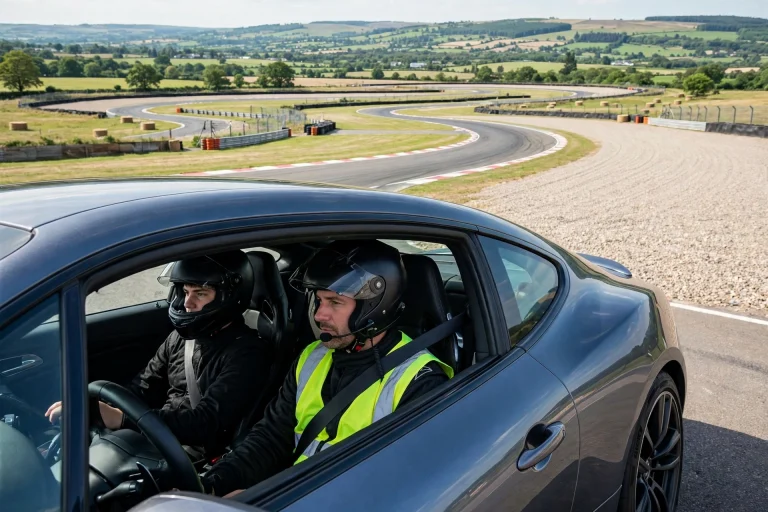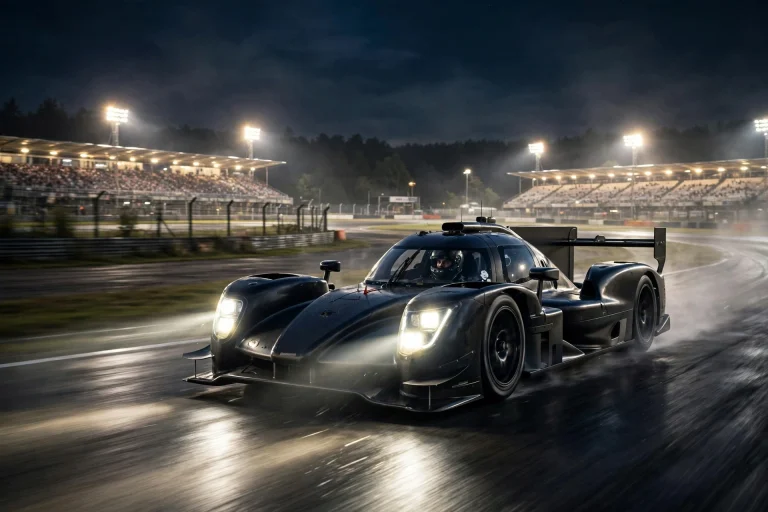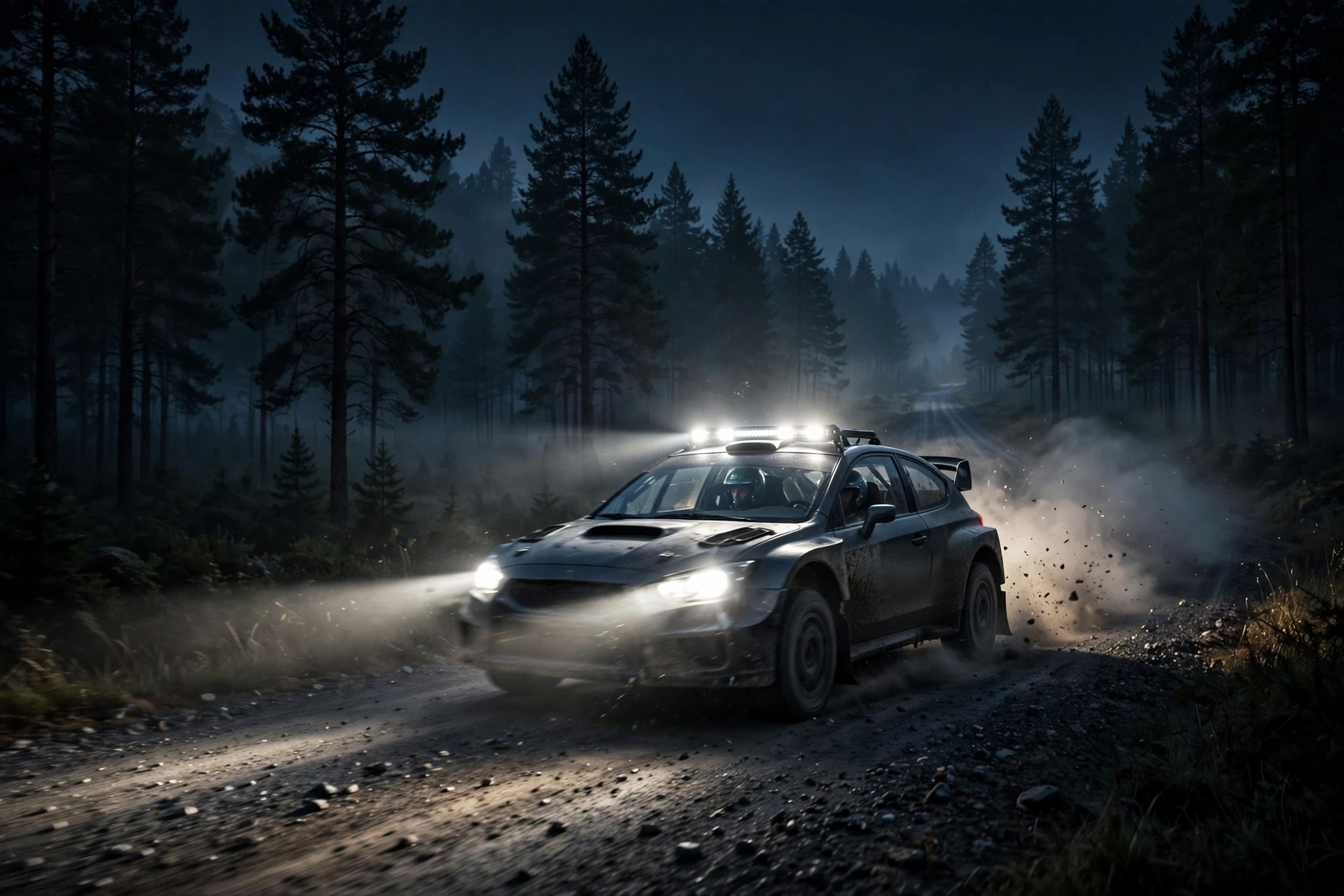
A rally helmet for night stages is a motorsport helmet worn by rally drivers and co-drivers on stages run after dark, built to protect the head on rough forest and gravel roads while letting the crew see, hear, and communicate in the dark. Night stages are some of the most demanding parts of a rally: the car races along narrow, unlit roads at speed, lit only by its own lights, and the helmet has to work with the intercom, the lights, and the cold of the night.
What Is a Rally Night Stage?
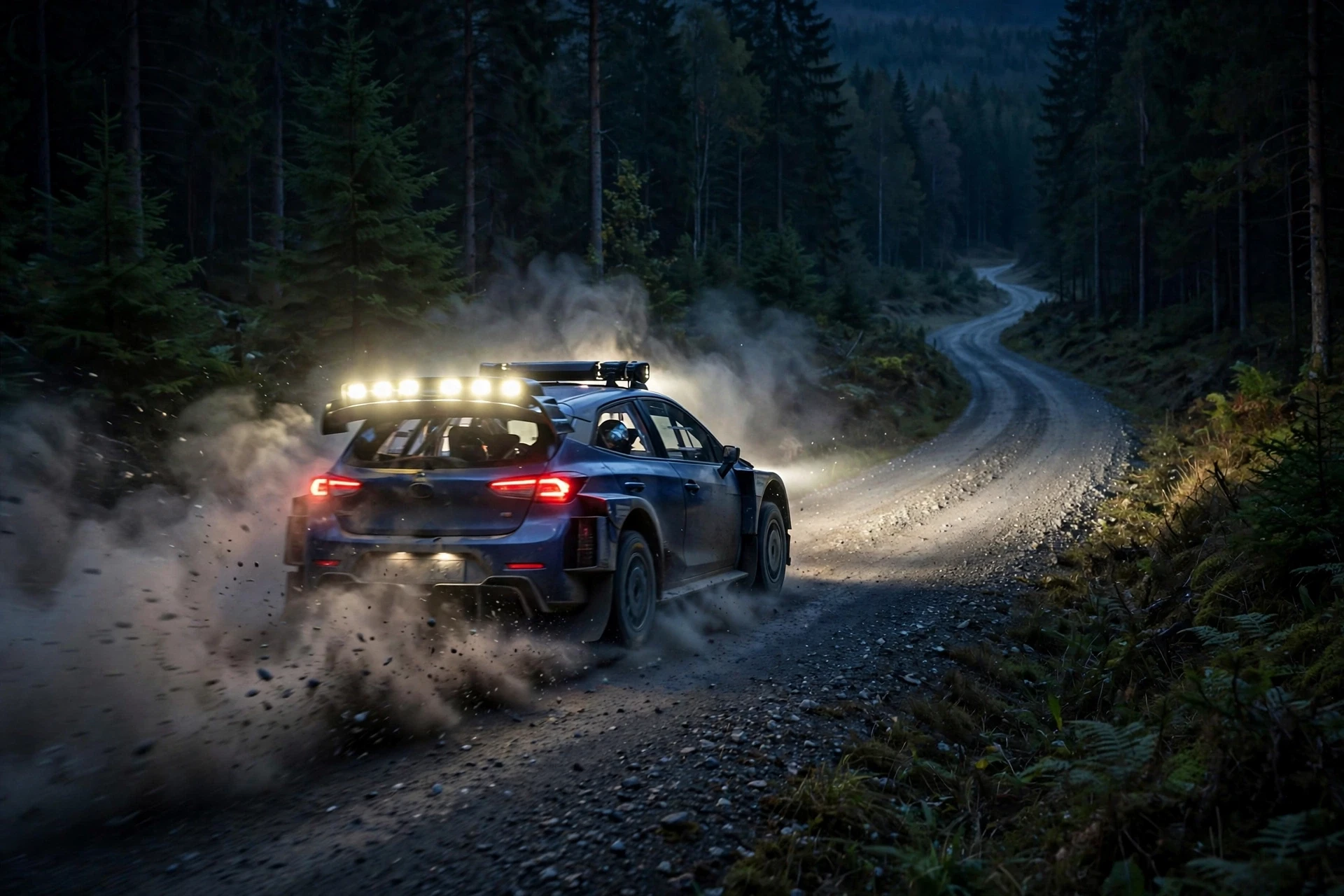
A rally is a motorsport event in which cars race one at a time against the clock on closed public roads or forest tracks, and a stage is one timed section of the rally. A night stage is a stage run after dark, when the road is lit only by the car’s headlights and by extra spotlights mounted on the front. The driver relies on pace notes read out by the co-driver to know what is coming next, because they cannot see far ahead.
Night stages are demanding because the driver has less visual information, the road surface can be hard to read in the dark, and the cold and damp of the night can make the surface slippery. The car is also bouncing over gravel, mud, or rough tarmac, so the crew is shaken around inside the car. In general terms, the helmet is essential on a night stage, because the risks of a rally are higher when the driver cannot see as far or as clearly.
How Is a Night Stage Helmet Different?
A rally helmet for night stages is usually an open-face or full-face motorsport helmet with an intercom system built in, so the driver and co-driver can talk to each other clearly over the noise of the engine and the gravel. The intercom is essential at night, because the driver depends on the co-driver’s pace notes more than ever, and a missed call can mean a missed corner.
The helmet must also work with the car’s lights and with the crew’s own torches and headlamps in the service area. Some drivers use a clear visor or no visor at all, since a tinted visor would make the dark even darker, and the helmet needs to fit well with a balaclava underneath for warmth. If you want to understand one of the safety technologies used in modern helmets, reading about what MIPS is for helmets is a good place to start, though motorsport helmets use their own specialised systems as well.
Why Is Communication So Important at Night?
Communication is the heart of rallying, and at night it matters even more. The co-driver reads pace notes that describe every corner, crest, and hazard ahead, and the driver has to trust those notes completely, because the headlights only show a short stretch of road. If the intercom fails or the helmet’s earpieces let in too much noise, the driver may miss a call and run out of road.
The intercom system in a rally helmet is designed to cut out engine and road noise while letting the co-driver’s voice come through clearly. The driver and co-driver usually practise their pace notes in the daytime, so that the calls are familiar by the time the night stage starts. In general terms, a quiet, clear intercom is as important as the helmet’s impact protection on a night stage.
How Do Rally Crews Deal With the Cold and Dark?
Night stages are often cold, especially in forest rallies, and the crew can get chilled sitting in a car that is moving fast through cold air. A balaclava under the helmet keeps the head warm, and the helmet itself should fit well over it without becoming tight. The car’s heater is often turned off or set low, because a warm, stuffy cockpit can make the driver drowsy on a long night stage.
Light is the other challenge. The car’s headlights and spotlights are the main source of light, and the driver has to adjust to the way they pick out the road ahead. Some drivers use extra lights mounted on the car, while others rely on the standard setup. In general terms, the night rewards crews who stay calm, trust their notes, and drive to what they can see, rather than pushing beyond the reach of their lights.
What Makes a Night Stage Helmet Comfortable?
A night stage helmet needs to be comfortable for a long time, because a rally can run late into the night and the crew may wear their helmets for hours with only short breaks. The helmet should fit snugly without pressing on the forehead or ears, and the padding should stay comfortable even when the driver is sweating or the balaclava is damp. A helmet that pinches becomes a real distraction when the driver is tired.
Weight matters too, since a heavy helmet strains the neck on a bumpy gravel road, especially over a long stage. Many rally helmets are made from lightweight composite materials to keep the weight down. In general terms, the best night stage helmet is one the crew forgets they are wearing, so they can focus on the road, the notes, and the car.
When Should a Rally Night Stage Helmet Be Replaced?
A rally helmet should be replaced after a crash or a hard impact, even if it looks fine from the outside. The liner inside a helmet can be damaged by a heavy knock without any visible sign on the shell, and a helmet that has already absorbed an impact may not protect as well the next time. Rally teams inspect helmets after every event and retire them after any serious incident.
Age and wear matter as well. The padding, straps, and intercom wiring can wear down over a season of use, and the helmet may no longer fit as snugly as it once did. Safety standards also change over time, so it is worth checking the date and the standard on the label before the season starts. In general terms, a helmet is a piece of safety equipment with a working life, and it should be replaced before it stops doing its job properly.
Do rally drivers wear helmets on night stages?
Yes, rally drivers and co-drivers wear helmets on every stage, including night stages, and the helmet includes an intercom so the crew can communicate clearly in the dark.
Why is the intercom important in a rally helmet?
The intercom lets the co-driver read pace notes to the driver over the noise of the engine and the road, which is essential at night when the driver cannot see far ahead.
Can I use a tinted visor on a night stage?
No, in general terms a tinted visor would make the dark harder to see through, so rally crews use a clear visor or no visor at all on night stages.

Olivia
Writer at Helmet Today, covering helmet reviews, fit and riding safety.