A helmet for a rider with limited neck movement is a standard protective helmet chosen for a fit that works with a stiff or restricted neck, so the rider can still see the road and turn the head enough to ride safely. It is an ordinary bike or motorcycle helmet, but the shape, weight, and fit matter more when the neck cannot move freely. Limited neck movement can come from many causes, and it can make riding harder because a rider needs to look around, check mirrors, and watch for traffic. A helmet adds weight to the head, so choosing one that is light and well-balanced can make a real difference to comfort and control on the road.
What Does Limited Neck Movement Mean for a Rider?
Limited neck movement means the rider cannot turn, tilt, or bend the neck as far as most people can. In general terms, this can make it harder to look over the shoulder before changing lanes, to glance at mirrors, or to look up and down at the road ahead. Some riders find they have to turn their whole upper body to see to the side, which takes more effort and can affect balance, especially at low speed.
The causes vary, and so does the amount of restriction. Some people have a stiff neck that eases with movement, while others have a lasting limit that does not change much. Whatever the cause, a rider with limited neck movement has to work harder to see what is around them. A helmet cannot fix that, but the wrong helmet can make it worse: a heavy helmet pulls on the neck, and a helmet that restricts vision can narrow what the rider can see even further.
How Does a Helmet Affect Neck Movement?
A helmet affects the neck in two ways: weight and shape. The weight of a helmet sits on top of the head, and the neck muscles have to support it, especially when the rider leans forward or turns. A light helmet is easier on a stiff or weak neck than a heavy one, and a helmet that is well balanced, with its weight spread evenly, feels lighter than one that pulls forwards or backwards. In general terms, the lighter the helmet, the less strain it puts on the neck.
The shape matters too. A helmet with a wide opening at the front and sides gives a wider field of vision, which helps when the rider cannot turn the head far. A visor that opens wide and a peak that does not block the view upwards can also help. If you want to understand one of the safety technologies used in modern helmets, reading about what MIPS is for helmets is a good place to start, though not every helmet uses that system. A rider should try a helmet on and look around in it before buying, to check that it does not cut off the view at the edges.
What Should the Helmet Fit Like?
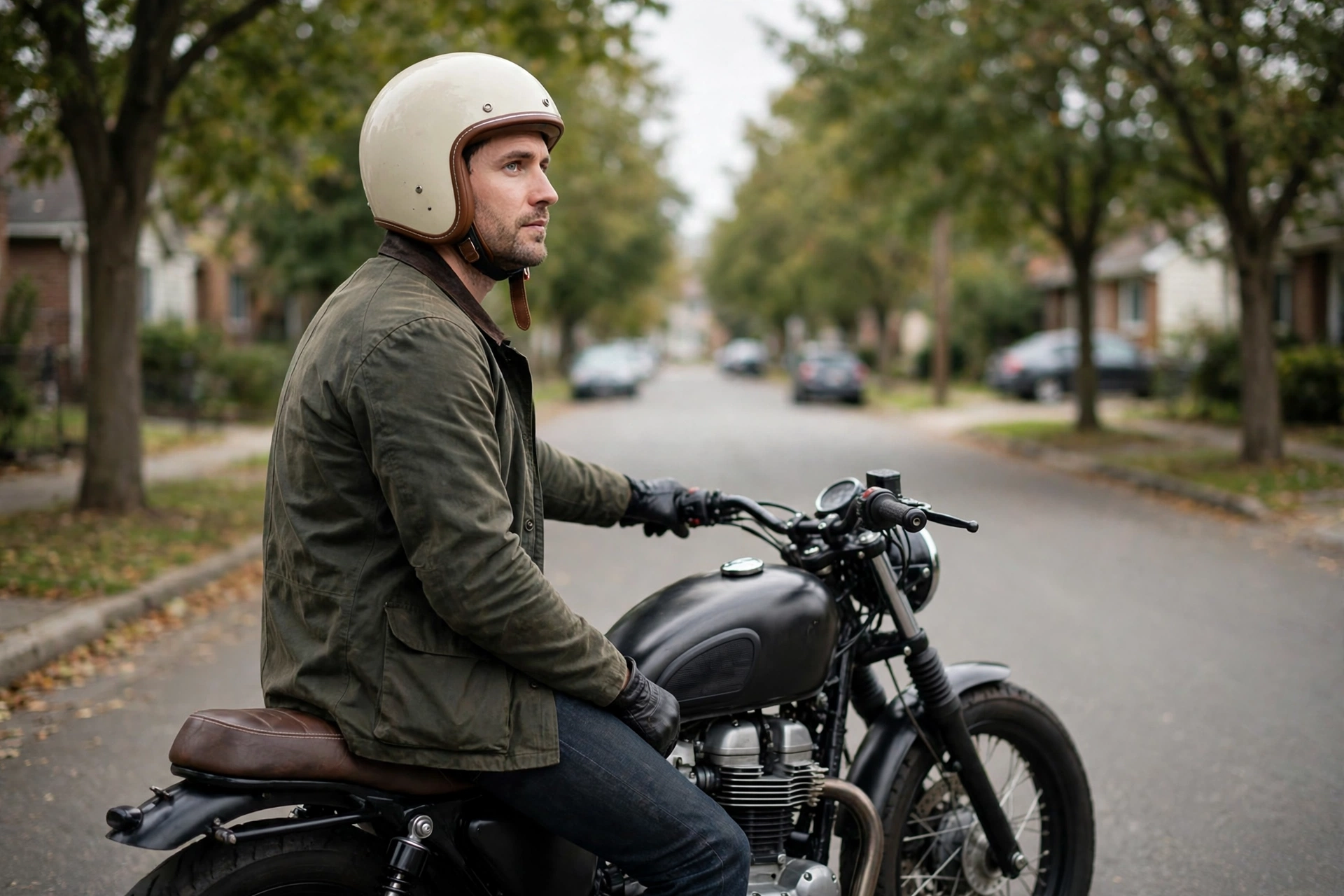
A helmet for a rider with limited neck movement should fit snugly all round the head, without pressure points and without wobbling when the rider moves. It should sit level, covering the forehead without slipping down over the eyes, and the back should sit low enough to protect the back of the head. If the helmet can be rocked forwards or backwards easily, it is probably too loose, and it may shift when the rider moves.
Because the neck may not move freely, it can be harder for the rider to check the fit by looking in a mirror or by turning the head. It helps to have someone else look at the helmet from the front and the side to check that it sits level. The chin strap should be fastened snugly before every ride, because a loose strap can let the helmet come off in a fall. A strap that is easy to adjust with one hand is useful, and the rider should be able to fasten and unfasten it without straining the neck.
What Features Can Help a Rider with Limited Neck Movement?
Several features can make a helmet easier to live with when neck movement is limited. Light weight is the most important, because it reduces the strain on the neck over a long ride. A wide visor opening and a clear, wide field of vision help the rider see more without turning the head far. A flip-up or modular design can also help, because the front can be lifted to talk, to get fresh air, or to put the helmet on and take it off without bending the neck as much.
A simple fastening is useful too. A buckle that clicks shut with one movement is easier than a strap that needs threading through rings while the head is tilted. Padding that can be removed and washed keeps the helmet fresh, and a fit system that adjusts with a dial is easier than one that needs small parts to be moved by hand. In general terms, the best helmet is the one that feels light, lets the rider see clearly, and can be put on and taken off without a struggle.
What Else Helps on the Road?
A helmet is only part of riding with limited neck movement. Mirrors can help a great deal: well-adjusted mirrors let the rider see behind without turning the head far, and some riders add extra mirrors to cover blind spots. Riding position matters too. A bike that lets the rider sit upright, with the head in a natural position, puts less strain on the neck than a bike that forces the rider to lean forward and crane the neck upwards to see ahead.
Route choice helps as well. Quieter roads with fewer junctions mean fewer situations where the rider needs to check over the shoulder quickly. Riding at a steady pace, and leaving plenty of space around other traffic, gives the rider more time to look around and react. In general terms, a rider with limited neck movement should think about the whole ride, not just the helmet: the bike, the mirrors, and the route all work together to make riding safer and more comfortable.
When Should a Helmet Be Replaced?
A helmet for a rider with limited neck movement should be replaced after a hard impact, even if it looks fine from the outside. The liner inside a helmet can compress or crack in a heavy knock, and that damage may not be visible under the shell. A helmet that has already absorbed a hard blow may not protect as well the next time, so it is generally sensible to retire it after a serious impact and use a new one.
Do riders with limited neck movement need a special helmet?
No, in general terms there is no special helmet for limited neck movement. A standard helmet is the right choice, but it should be light, well balanced, and give a wide field of vision.
What matters most when choosing one?
Light weight and a wide view matter most. A light helmet puts less strain on the neck, and a wide visor opening helps the rider see more without turning the head far.
Can mirrors help a rider who cannot turn the head far?
Yes, well-adjusted mirrors can help a great deal. They let the rider see behind without turning the head, and extra mirrors can cover blind spots that a stiff neck makes hard to check.

Olivia
Writer at Helmet Today, covering helmet reviews, fit and riding safety.