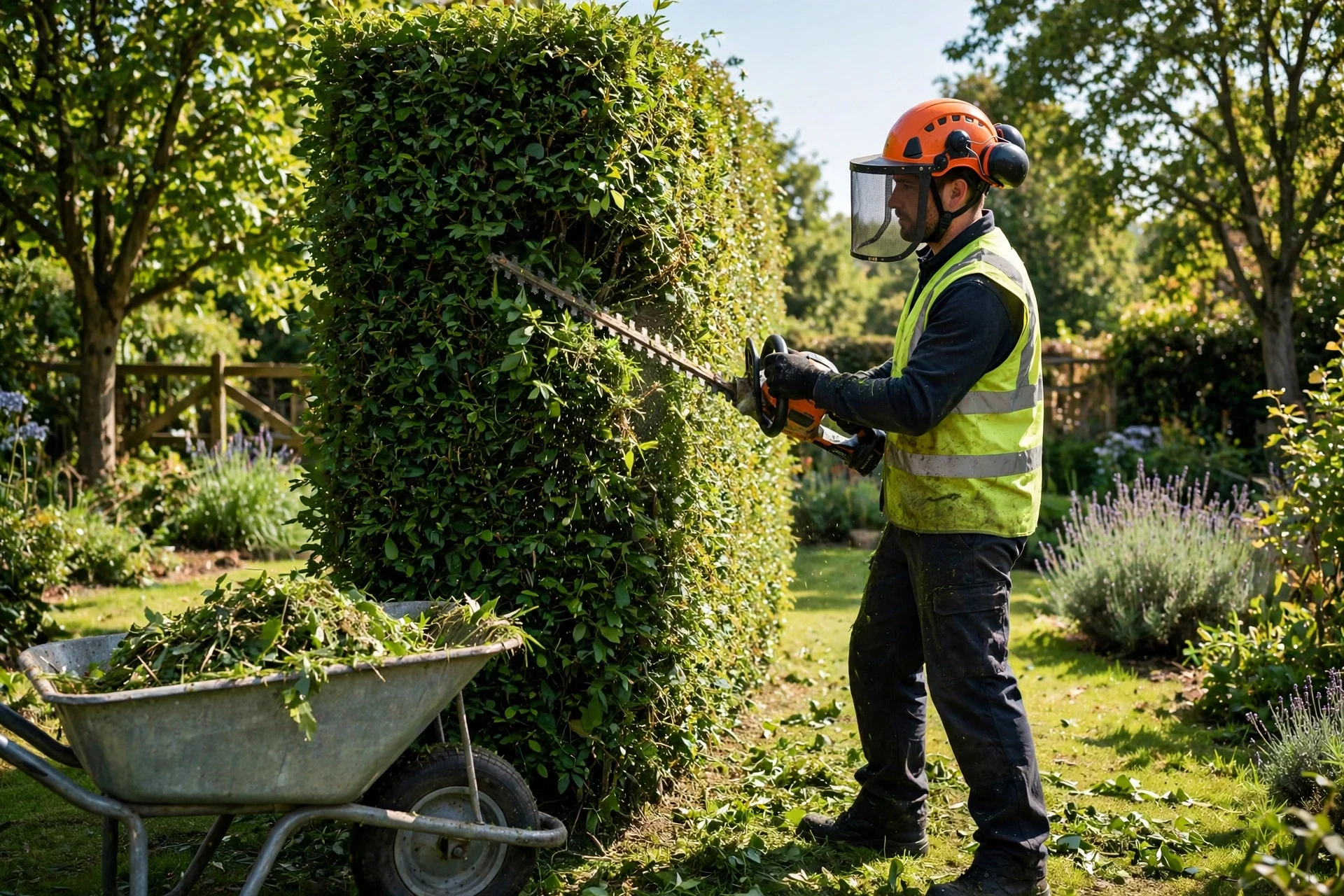
A landscaper helmet is a safety helmet worn by landscapers to protect the head from falling branches, flying debris, and knocks while working outdoors. It is usually a lightweight hard hat or forestry-style helmet, often fitted with a visor and ear defenders for work with chainsaws, brush cutters, and chippers. Landscaping work takes place around trees, machinery, and uneven ground, so the head is exposed to hazards that are easy to overlook. A helmet is therefore a sensible part of a landscaper’s kit, and in general terms it is expected on professional sites, especially where tree work or powered tools are involved.
What Does a Landscaper Helmet Protect Against?
A landscaper helmet mainly protects the head from falling and flying objects. Pruning and felling work can drop branches and twigs from above, while strimmers, brush cutters, and mowers can throw stones, wood chips, and soil at speed. The hard shell of the helmet spreads the force of an impact and helps prevent cuts and bruises to the scalp and skull, which are common injuries when working under trees or near machinery.
The helmet also protects against knocks when a landscaper moves through dense planting, ducks under low branches, or works in tight spaces around fences and structures. A bump against a branch or a scaffold pole may seem minor, but repeated knocks add up, and a hard blow can cause a serious injury. In general terms, a helmet does not make landscaping safe on its own, but it covers the head against the kinds of knocks that happen most often outdoors.
How Is a Landscaper Helmet Different From a Construction Hard Hat?
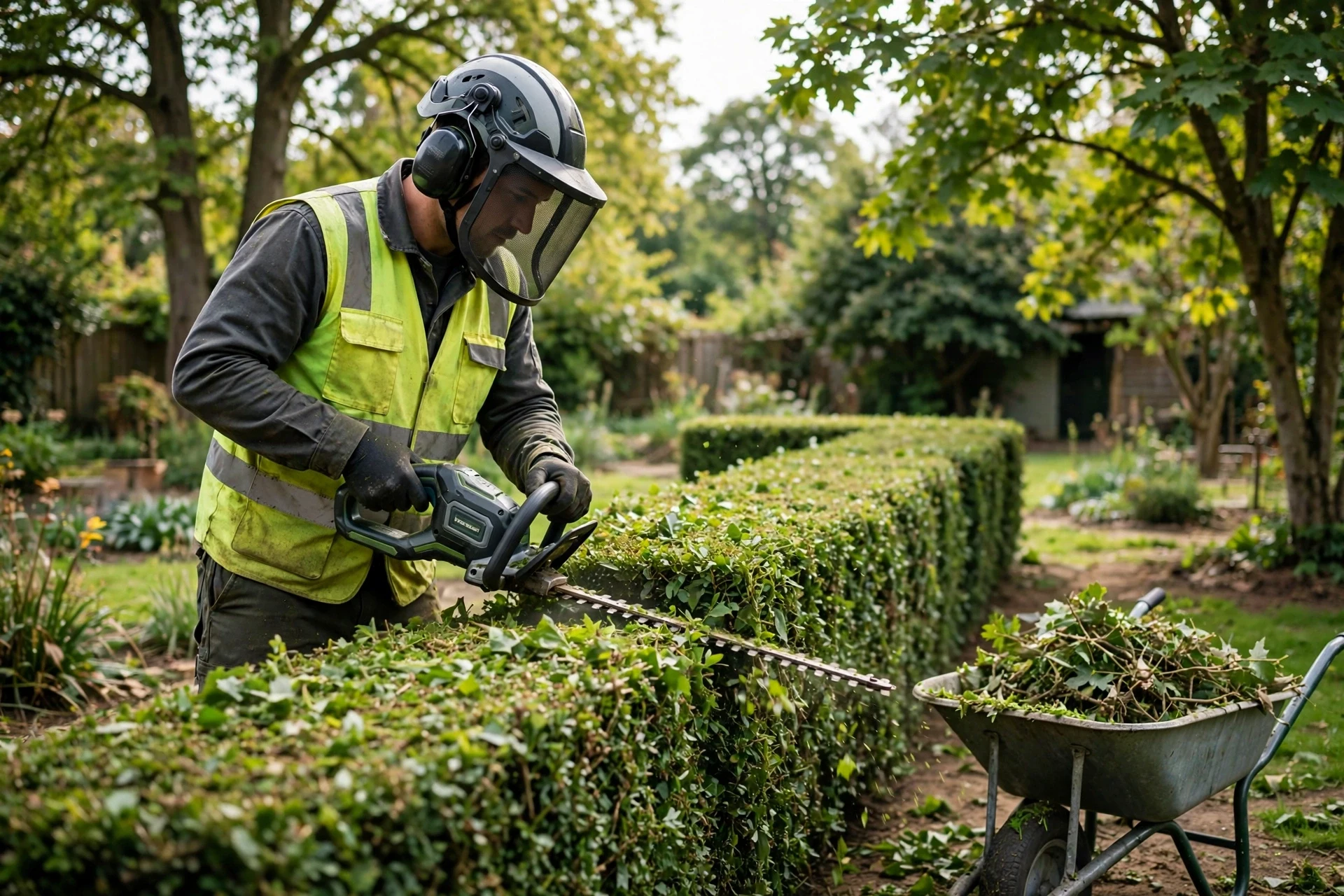
A landscaper helmet is similar to a construction hard hat in its basic job, but it is often set up differently for outdoor work. Many landscaper helmets are sold as a complete system, with a mesh visor that protects the face from flying chips and a pair of ear defenders that clip into the sides. This combination is common for chainsaw and brush cutter work, where the eyes, face, ears, and head all need protection at the same time.
Landscaper helmets also tend to be lighter and better ventilated than heavy industrial hard hats, because the work is physical and often done in warm weather. A lighter helmet is less tiring over a long day, and good airflow helps keep the wearer cool. Some models have a shorter brim or a rain gutter to keep water off the face, and many come in bright colours so the wearer is easy to see among trees and machinery. If you want to understand one of the safety technologies used in modern helmets, reading about what MIPS is for helmets is a good place to start, though that system is more common in sports helmets than in work helmets.
What Features Should a Landscaper Helmet Have?
A good landscaper helmet should have a strong shell, a comfortable suspension, and a fit that can be adjusted quickly. The shell should resist impacts and penetration from falling branches and thrown debris, and the suspension inside should hold the shell away from the head so that an impact is absorbed before it reaches the skull. A ratchet or dial adjuster at the back lets the wearer fine-tune the fit, even with gloves on.
Accessory fittings matter a great deal for landscaping. Slots on the sides let ear defenders clip on and off, and a visor mount lets the wearer add a mesh or clear face shield when cutting or chipping. Ventilation helps on hot days, and a chin strap keeps the helmet in place when bending, climbing, or looking up into trees. Bright colours and reflective details are also useful, since landscapers often work near roads, driveways, and moving vehicles.
How Should a Landscaper Helmet Fit?
A landscaper helmet should sit level on the head, covering the forehead without slipping down over the eyes, and it should feel snug all round without pressing painfully in one spot. The suspension should be adjusted so the shell sits a short distance above the head, because that gap is part of how the helmet absorbs an impact. If the helmet rocks easily when the wearer shakes their head, it is probably too loose.
The visor and ear defenders should be checked as part of the fit, since they change the balance of the helmet and can press on the ears or the bridge of the nose if they are set wrong. It is worth trying the helmet on with any other kit that will be worn at the same time, such as safety glasses or a dust mask. In general terms, a helmet that fits well and feels comfortable is far more likely to be worn correctly for a whole working day.
When Should a Landscaper Helmet Be Replaced?
A landscaper helmet should be replaced after a heavy impact, even if the shell looks undamaged from the outside. The shell and suspension can be weakened by a hard blow in ways that are not easy to see, and a helmet that has already absorbed a serious impact may not protect as well the next time. A falling branch that strikes the helmet hard is a good reason to inspect it carefully and consider replacing it.
Age and wear also matter. Sunlight, rain, heat, and daily knocks can age the shell over time, and a helmet left in a hot van or in direct sun may become brittle sooner than one stored in the shade. Cracks, fading, a loose suspension, or a visor that no longer stays in place are all signs that a helmet should be retired. Many workplaces follow the maker’s guidance on replacement, and in general terms it is better to replace a worn helmet early than to trust one that has seen several hard seasons outdoors.
What Other Safety Kit Goes With a Landscaper Helmet?
A landscaper helmet is usually worn with eye protection, hearing protection, gloves, and sturdy boots. The helmet system often includes the visor and ear defenders, but safety glasses are still useful underneath a mesh visor, since fine dust and small chips can pass through the mesh. Gloves protect the hands from thorns, splinters, and sharp tools, while boots with good grip protect against slips on wet grass and uneven ground.
Depending on the task, a landscaper may also wear chainsaw trousers, a high-visibility vest, and a harness when working at height in trees. The helmet works as part of this whole set: it protects the head, while the other kit protects the body, the hands, and the feet. No single item does the whole job, and the helmet is most effective when the rest of the kit is worn with it, especially during tree work and when using powered cutting tools.
Do landscapers have to wear a helmet?
In general terms, it depends on the job and the site rules. A helmet is usually required for tree work, chainsaw use, and work near falling hazards, and many professional landscaping employers make it part of the standard kit.
Can I use a bike helmet for landscaping?
No, a bike helmet is not a good choice for landscaping. It is not designed for falling branches or flying debris from powered tools, and it has no fittings for a visor or ear defenders, which are often part of a landscaper’s helmet system.
How do I clean a landscaper helmet?
Wash the shell and suspension with mild soap and warm water, clean the visor with a soft cloth, and let everything dry away from direct heat. Avoid solvents and harsh chemicals, which can weaken the shell, and check the helmet for cracks while you clean it.

Olivia
Writer at Helmet Today, covering helmet reviews, fit and riding safety.