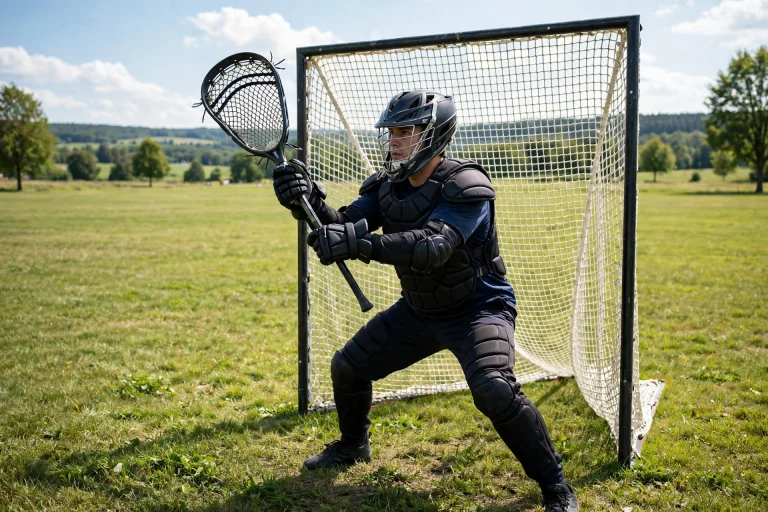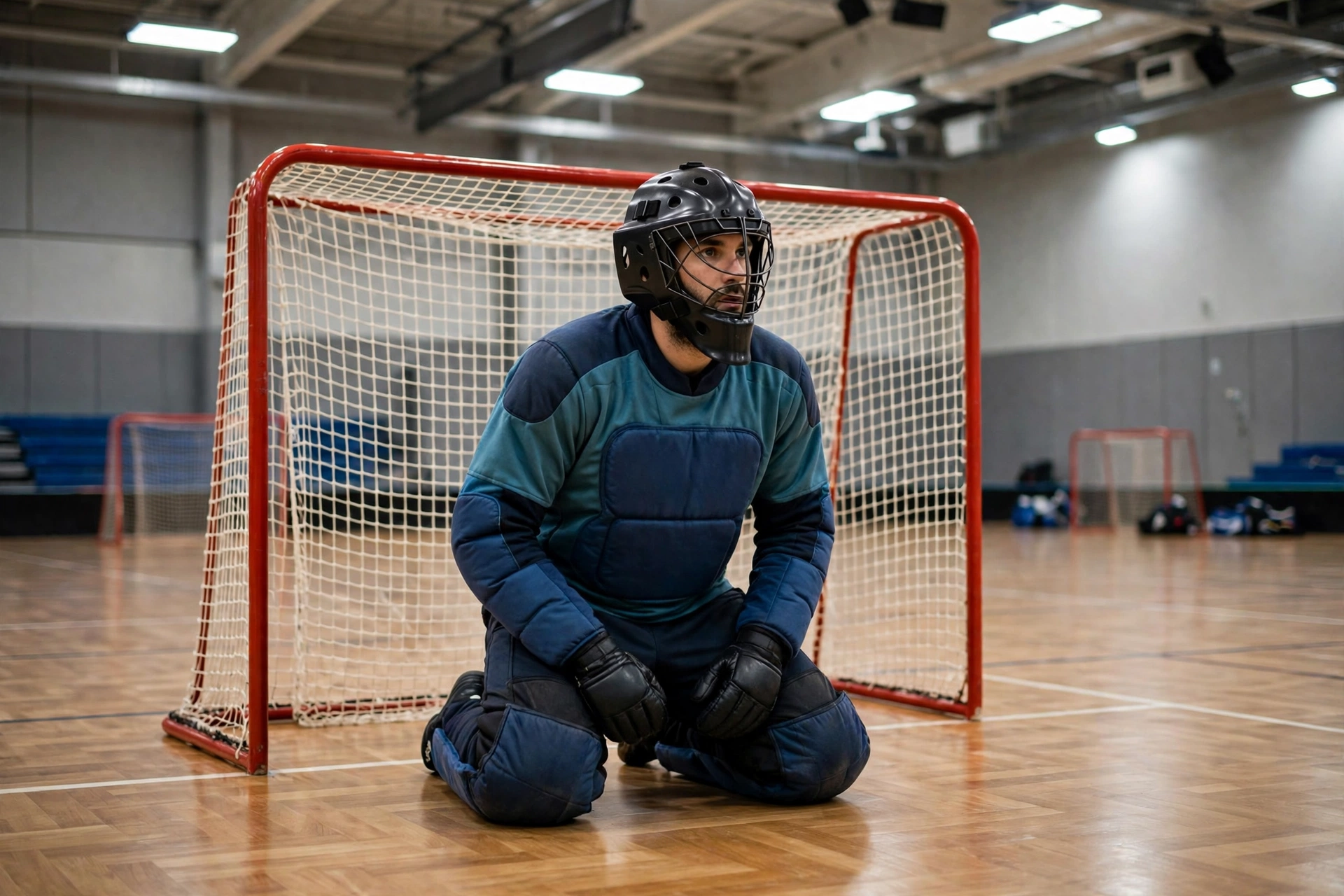
A floorball helmet is a lightweight protective helmet worn by floorball goalkeepers, and sometimes by young players, to protect the head from fast shots, sticks, and falls on the court. It is usually a close-fitting helmet with a face guard or grid, made to guard the head and face while keeping vision clear and the head cool during fast play. Floorball is played with a light plastic ball and sticks, and shots can travel quickly, so a goalkeeper facing the play needs proper head protection. In general terms, a floorball helmet is an essential piece of kit for anyone playing in goal.
What Is Floorball?
Floorball is a fast indoor team sport played with a light plastic ball and sticks, similar in some ways to ice hockey but played on a hard court without ice. Each team has five outfield players and a goalkeeper, and the aim is to score goals by hitting the ball into the other team’s net. The game is popular in northern Europe, where it is played in schools, clubs, and leagues, and it is growing in other countries too.
The ball is light, but it can travel quickly, and players move fast around the court with sticks at head height. Goalkeepers spend much of the game kneeling or crouching in front of the goal, facing shots from close range. In general terms, floorball is a quick, skilful game, and the speed of the ball is the main reason goalkeepers wear a helmet.
Who Wears a Floorball Helmet?
A floorball helmet is mainly worn by goalkeepers, who face shots from close range and are the most likely to be hit on the head. In many leagues, goalkeepers must wear a helmet, and it is part of their standard kit along with padded clothing and gloves. Some young outfield players also wear a helmet, especially in junior games, where coaches may want extra protection while players are learning the game.
Adult outfield players usually do not wear a helmet, since the rules of floorball limit high sticks and rough contact. Goalkeepers, however, are in the line of fire for much of the game, and a shot to the head or face is a real risk. In general terms, anyone playing in goal should wear a helmet, and young players should follow their league’s rules and their coach’s advice.
What Does a Floorball Helmet Look Like?
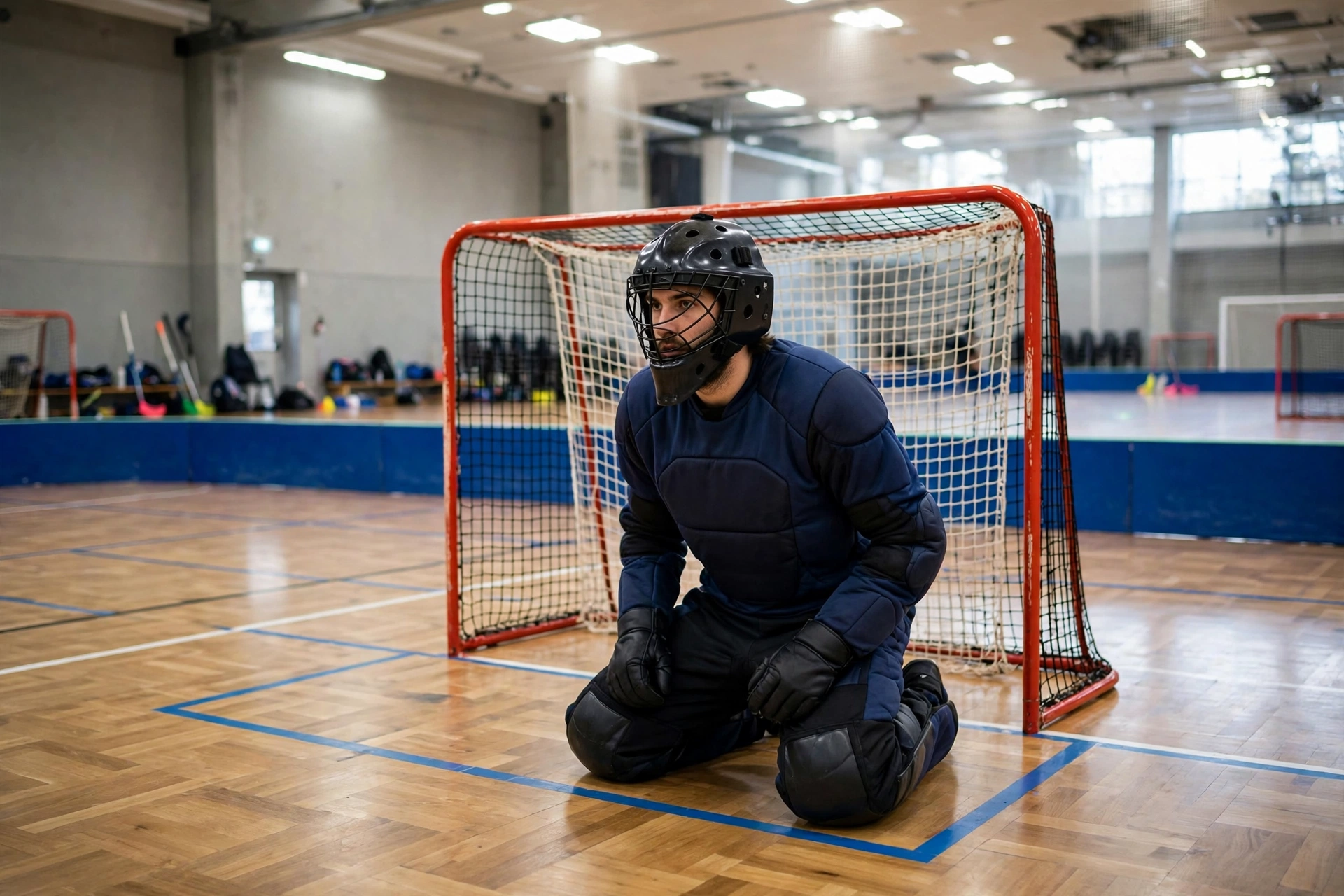
A floorball helmet looks like a close-fitting helmet with a cage or grid across the face, similar to an ice hockey goalkeeper mask but lighter. The shell is usually made from a hard plastic, with padding inside and vents to keep the head cool. The face guard is made from metal bars or a strong plastic grid, spaced closely enough to stop the ball while leaving the goalkeeper’s vision clear.
The helmet covers the top, sides, and back of the head, and the face guard protects the eyes, nose, and mouth. Some helmets have a chin cup or a strap to hold them firmly in place, and many are designed to be worn with a thin sweatband underneath. If you want to understand one of the safety systems used in modern helmets, reading about what MIPS is for helmets is a useful starting point, though not every floorball helmet uses that system. In general terms, a floorball helmet should feel light and stable, with a clear view through the face guard.
How Should a Floorball Helmet Fit?
A floorball helmet should fit snugly all round the head, with the padding in contact with the head evenly and no loose spots or pressure points. It should sit level, covering the forehead, and it should not tip forward or slide back when the wearer shakes their head. The face guard should sit close enough to protect the face without pressing against the nose, and the chin strap should be fastened snugly.
To check the fit, the goalkeeper should shake their head from side to side and nod up and down. The helmet should move with the head rather than wobbling on its own. A helmet that is too big can slip over the eyes, while one that is too small will feel tight and may cause a headache. In general terms, the fit should be checked with the helmet on and the goalkeeper in their playing stance, since that is how it will be worn in a game.
What Features Matter in a Floorball Helmet?
The most important features of a floorball helmet are a good fit, a strong face guard, and clear vision. The face guard should be sturdy enough to stop a fast shot, with bars or a grid that are close together, and it should not block the goalkeeper’s view of the ball. Vents are useful because goalkeeping is hard work, and a helmet that traps heat will become uncomfortable quickly. Padding inside the helmet should be soft, washable, and easy to remove.
Weight is another feature worth checking. A light helmet is easier to wear for a whole game and is less tiring on the neck, especially for young goalkeepers. Some helmets come in different sizes, while others use adjustable padding to fit a range of heads. In general terms, the best floorball helmet is the one that fits well, gives a clear view, and is comfortable enough to be worn properly for the whole match.
How Do You Look After a Floorball Helmet?
A floorball helmet should be cleaned and checked regularly. After each game or training session, wipe the shell and face guard with a damp cloth to remove sweat and dirt, and leave the helmet to air dry away from direct heat. The padding can usually be removed and washed following the maker’s instructions, which helps keep the helmet fresh and comfortable. Avoid leaving it in a hot car or near a radiator, since strong heat can damage the materials.
Check the helmet regularly for damage. Look for cracks in the shell, bent or loose bars on the face guard, worn straps, and padding that has gone flat or come unstuck. If the helmet has taken a hard blow from a shot or a fall, it should be checked carefully and replaced if there is any doubt. In general terms, a helmet that no longer fits snugly, shows damage, or has already absorbed a heavy impact has done its job and should be retired.
Do outfield floorball players need a helmet?
No, in general terms adult outfield players do not wear a helmet in floorball, since the rules limit high sticks and rough contact. Goalkeepers wear helmets because they face shots from close range, and some young players wear one too.
Can a floorball helmet be used for ice hockey?
No, a floorball helmet is not a substitute for an ice hockey helmet. Ice hockey involves harder pucks, faster play, and more contact, so a helmet made for ice hockey is needed for that sport.
How often should a floorball helmet be replaced?
It should be replaced after a hard impact, if it shows cracks or damage, or when it no longer fits snugly. With regular use, check it at the start of each season and replace it when the padding wears out or the fit becomes loose.

Olivia
Writer at Helmet Today, covering helmet reviews, fit and riding safety.