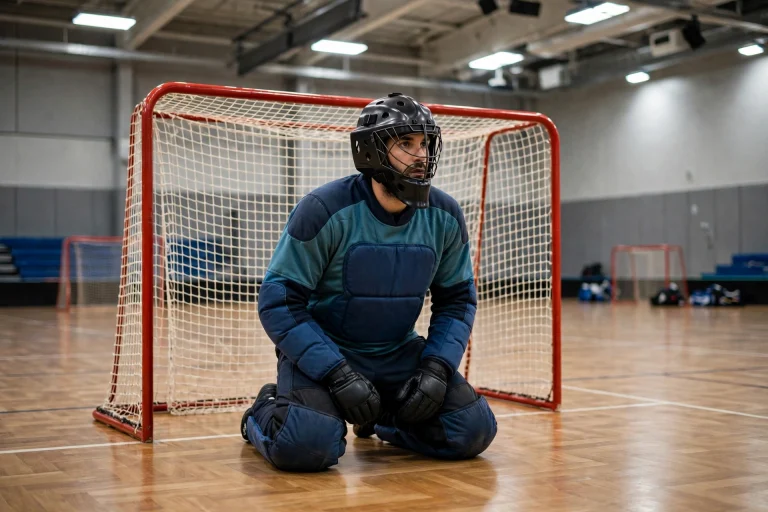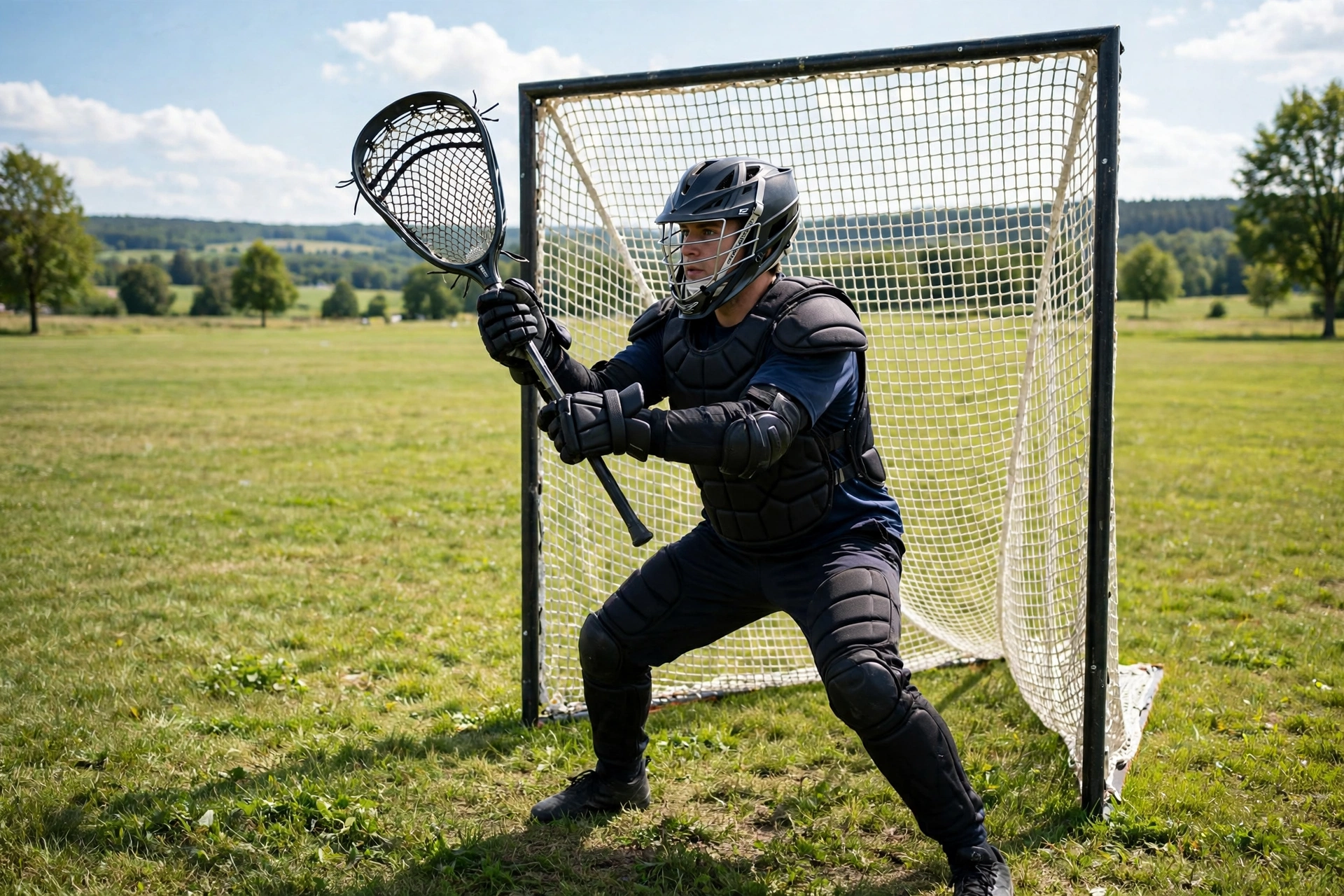
A lacrosse goalie helmet is a protective helmet with a face mask worn by lacrosse goalies to guard the head and face from fast shots, stick contact, and collisions around the goal. It combines a hard shell, thick padding, and a strong metal face mask into one piece of kit. The goalie stands in the path of shots that can travel very fast, so the helmet is built to take direct hits and spread the force away from the skull. In general terms, it is one of the most protective helmets in field sports.
What Is a Lacrosse Goalie Helmet?
A lacrosse goalie helmet is a specialist helmet designed for the player who defends the goal in lacrosse. It looks similar to a field player’s helmet, but it is usually built with extra padding and a stronger face mask, because the goalie faces shots at close range far more often than other players. The shell is hard and impact-resistant, and the inside is lined with foam that cushions the head when a ball or stick strikes the helmet.
The face mask is a key part of the design. It is made from metal bars that cover the face, the eyes, and the chin, with gaps small enough to stop a lacrosse ball from passing through. The mask is fixed firmly to the shell so that it does not shift on impact. A chin strap and a secure fit system hold the whole helmet steady, so it stays in place during dives, jumps, and sudden movements in front of the goal.
Why Does a Lacrosse Goalie Need a Helmet?
A lacrosse goalie needs a helmet because the ball is small, hard, and fast, and the goalie is its most frequent target. Shots can arrive with very little warning, and a ball striking an unprotected head could cause a serious injury. The helmet spreads the force of a direct hit and shields the face, the eyes, and the jaw from the ball and from the sticks of attacking players.
The helmet also protects the goalie during the physical play around the crease. Attackers may collide with the goalie, sticks can swing close to the head, and the goalie may dive to the ground to block a shot. If you want to understand one of the safety technologies used in modern helmets, reading about what MIPS is for helmets is a good place to start, though lacrosse helmets use their own padding and shell designs. A helmet gives the goalie the confidence to stand their ground and make the save.
How Should a Lacrosse Goalie Helmet Fit?
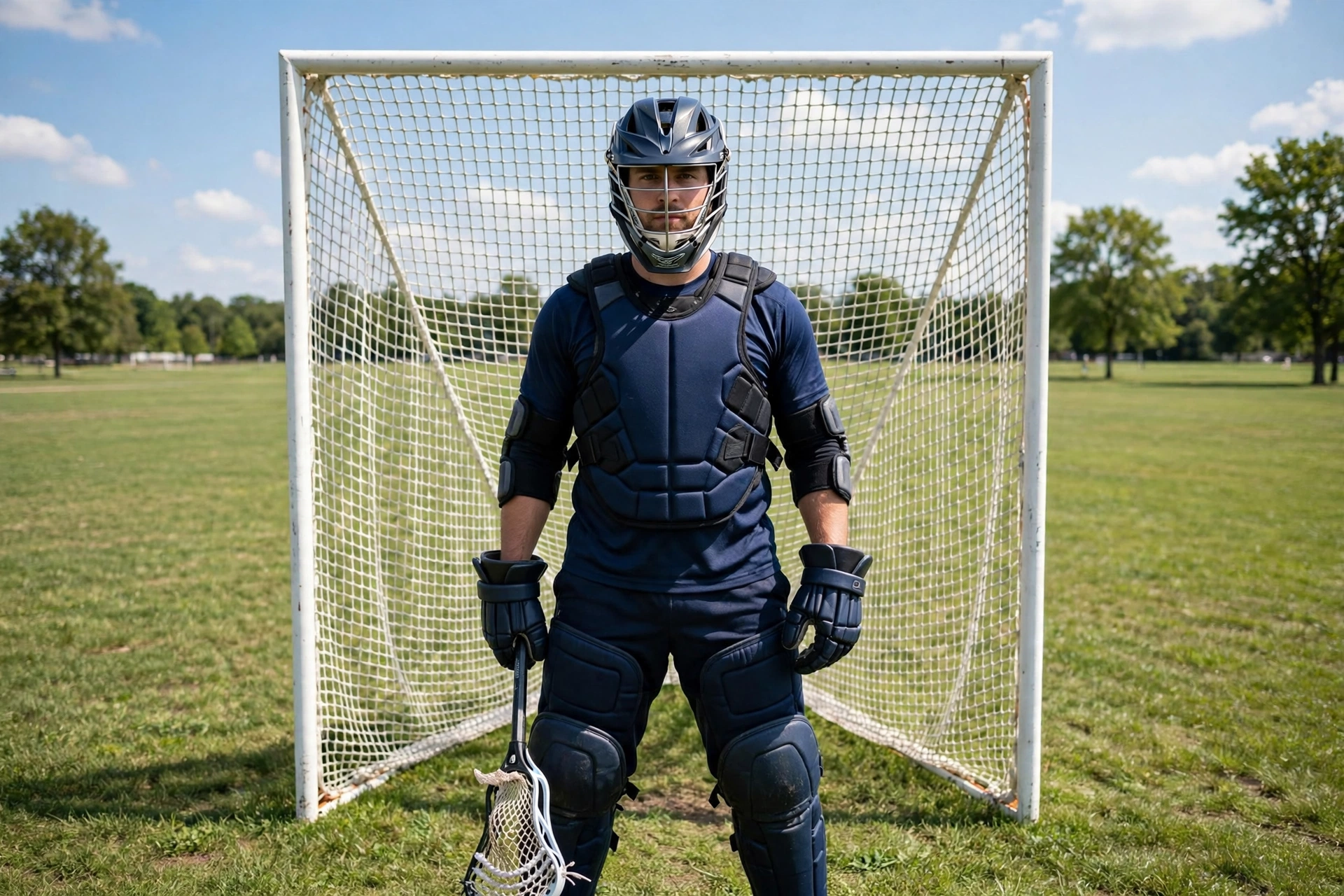
A lacrosse goalie helmet should fit snugly all round the head, with the padding in contact with the skull and no loose spots that would let the helmet shift when a ball hits it. It should sit level, covering the forehead, and the face mask should sit clear of the nose and chin without pressing on them. The chin strap should be fastened firmly, and the helmet should not rock forward or backward when the goalie shakes their head.
Because the helmet is worn for a full game, comfort matters as well as protection. It is worth trying the helmet on and moving around in it, bending, turning, and looking up and down, to check that it stays put and does not pinch. Many helmets have adjustable pads or a fit system that can be tightened, which helps get the fit right. A helmet that fits well will feel secure without causing a headache by the end of the game.
What Is the Difference Between a Goalie Helmet and a Field Player Helmet?
A goalie helmet and a field player helmet look alike at first glance, but the goalie version is usually built to take harder and more frequent direct hits. It often has thicker padding, a stronger face mask, and a shell designed for shots at close range. Field players run the length of the pitch and are hit less often, so their helmets balance protection with light weight and airflow for running.
Some leagues set rules about which helmets goalies may wear, and some helmets are made and approved mainly for goalies. In general terms, a field player helmet should not be used in goal without checking that it meets the rules and gives enough protection for the position. A goalie who uses the right helmet for the role is better protected against the shots they face every game.
How Do You Look After a Lacrosse Goalie Helmet?
A lacrosse goalie helmet should be wiped down after each game or training session to remove sweat, mud, and grass. The shell and face mask can be cleaned with a damp cloth and mild soap, and the padding should be left to air dry rather than dried with strong heat. Keeping the helmet dry helps prevent odours and keeps the padding in good shape.
Check the helmet regularly for damage. Look for cracks in the shell, bent or loose bars on the face mask, screws or clips that have worked loose, and padding that has flattened or torn. Tighten any loose fixings and replace worn padding when needed. A helmet that has taken many hard shots should be checked closely, since damage can build up over a season even when the helmet still looks sound from the outside.
When Should a Lacrosse Goalie Helmet Be Replaced?
A lacrosse goalie helmet should be replaced when it has taken a very hard impact that cracks or dents the shell, or when the face mask is bent out of shape. The padding inside is designed to absorb impacts, and once it has been heavily compressed it may not protect as well again. A helmet with a cracked shell or a damaged mask should not be used for another game.
Age and wear are also reasons to replace a helmet. If the padding has gone flat, the straps no longer hold, or the helmet has been used for several seasons of hard play, it may be past its best. In general terms, it is worth checking the helmet at the start of each season and replacing it when it no longer fits snugly or shows signs of serious wear, since a goalie relies on it in every game.
Can a field player helmet be used in goal?
It depends on the league rules and the level of play. Some field helmets give enough protection for casual goalkeeping, but a dedicated goalie helmet is the safer choice for regular play, since it is built for the harder, closer shots a goalie faces.
Does a lacrosse goalie helmet stop all head injuries?
No helmet can remove the risk entirely. A goalie helmet greatly reduces the force of a ball or stick impact and protects the face and skull, but a very hard or awkward hit can still cause injury, so it should be worn with good technique and care.
Do youth lacrosse goalies need a different helmet?
Youth goalies need a helmet sized for a younger, smaller head, with the same kind of shell, padding, and face mask as an adult goalie helmet. It should fit snugly and meet the rules of the youth league, and it should be checked for fit as the child grows.

Olivia
Writer at Helmet Today, covering helmet reviews, fit and riding safety.