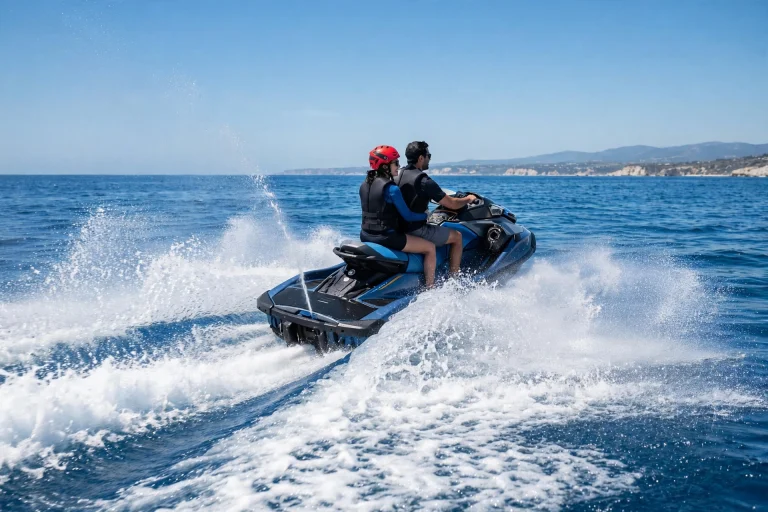
In general terms, most surfers do not wear a helmet, but a surfing helmet can be a sensible choice in some conditions, such as shallow reefs, big waves, crowded breaks, or foil surfing. A surfing helmet is a lightweight, close-fitting helmet made to protect the head from the board, the reef, and other surfers, while letting water drain away quickly. Surfing has traditionally been a bare-headed sport, and many surfers feel a helmet changes the experience. The honest answer is that a helmet is not needed for every surf, but it is worth considering when the risks are higher than usual.
What Is a Surfing Helmet?
A surfing helmet is a lightweight helmet made for use in the water, with a hard outer shell and a soft inner liner that absorbs the force of a knock. It is designed to fit closely, with vents or holes that let water drain out quickly, and a chin strap that keeps it in place when a wave hits. Unlike a bike or ski helmet, it is made from materials that do not absorb water, so it stays light even after being submerged.
Surfing helmets are usually low-profile, so they do not catch the water or feel bulky when paddling. Some have ear covers to protect the ears from cold water and impacts, while others leave the ears open for better hearing. In general terms, a surfing helmet is built to protect the head without getting in the way of surfing, and it should feel comfortable enough to wear for a whole session.
Do Most Surfers Wear a Helmet?
No, most surfers do not wear a helmet. Surfing culture has long favoured surfing without one, and many surfers feel that a helmet is unnecessary on a sandy beach break with small waves. Some also feel that a helmet can catch the water, affect balance, or make it harder to hear the wave. For a gentle surf on a soft sandy beach, many experienced surfers choose not to wear one.
That said, attitudes are changing, and helmets are becoming more common, especially among beginners, young surfers, and those surfing in riskier conditions. Surf schools often provide helmets for learners, since beginners fall often and are more likely to be hit by their own board. In general terms, not wearing a helmet is the norm, but the choice is a personal one, and wearing one is never a sign of poor surfing.
When Is a Surfing Helmet a Good Idea?
A surfing helmet is a good idea when surfing over a shallow reef, where a fall can mean hitting rock or coral. It is also worth considering in big waves, where the force of the water is greater and the board can be thrown back at the surfer. Crowded breaks are another case, since a loose board from another surfer can be a real hazard, and a helmet gives some protection against it.
Foil surfing is a strong reason to wear a helmet, since the foil has a sharp edge and sits below the board where a fall can bring the rider down onto it. Young surfers, beginners, and anyone returning to surfing after a head injury should also think about wearing one. If you want to understand one of the safety systems used in modern helmets, reading about what MIPS is for helmets is a useful starting point, though not every surfing helmet uses that system. In general terms, the riskier the conditions, the stronger the case for a helmet.

How Should a Surfing Helmet Fit?
A surfing helmet should fit snugly all round the head, with the liner in contact with the head evenly and no loose spots or pressure points. It should sit level, covering the forehead, and it should not tip forward or slide back when the surfer shakes their head. The chin strap should be fastened snugly enough that the helmet stays in place when a wave hits, but not so tight that it pinches or causes discomfort.
To check the fit, the surfer should shake their head from side to side and nod up and down. The helmet should move with the head rather than wobbling on its own. A helmet that is too big can fill with water and shift around, while one that is too small will feel tight and may cause a headache. In general terms, the fit should be checked while wet, since a helmet that fits well on dry land can feel different in the water.
What Features Matter in a Surfing Helmet?
The most important features of a surfing helmet are a good fit, a shell that does not absorb water, and drainage that lets water escape quickly. Vents or holes in the shell stop the helmet from filling with water and becoming heavy, and a secure chin strap keeps it in place in a wipeout. Ear covers are useful for cold water and for protecting the ears, though some surfers prefer open ears for better hearing.
Weight and comfort matter too. A light helmet is easier to wear for a long session and is less likely to cause neck strain in a heavy wipeout. The liner should be soft, quick-drying, and easy to rinse clean after a session in salt water. In general terms, the best surfing helmet is the one that fits well, drains quickly, and is comfortable enough to be worn properly for the whole surf.
How Do You Look After a Surfing Helmet?
A surfing helmet should be rinsed with fresh water after every session to remove salt, sand, and sunscreen. Shake out any water, wipe the shell with a soft cloth, and leave the helmet to air dry away from direct sunlight and heat. Strong sun can weaken the materials over time, so the helmet should be stored in a cool, shaded place, ideally in a bag that protects it from knocks.
Check the helmet regularly for damage. Look for cracks in the shell, a loose chin strap, or padding that has gone flat or come unstuck. If the helmet has taken a hard blow from a board or a reef, it should be replaced, since the liner inside can be damaged even when the outside looks fine. In general terms, a helmet that no longer fits snugly, shows damage, or has already absorbed a heavy impact has done its job and should be retired.
Is a surfing helmet required by law?
In general terms, no. Most places do not require surfers to wear a helmet, though some surf schools and competitions may require one. The choice is usually left to the individual surfer.
Can a surfing helmet be used for other water sports?
Some surfing helmets can be used for similar activities such as bodyboarding, but a helmet made for kayaking or wakeboarding may be a better fit for those sports. Check the maker’s guidance before using a helmet for a different activity.
Will a surfing helmet make me a worse surfer?
No, a helmet does not make someone a worse surfer. It may feel unfamiliar at first, but most surfers get used to it quickly, and the extra protection can give the confidence to try harder waves.

Olivia
Writer at Helmet Today, covering helmet reviews, fit and riding safety.