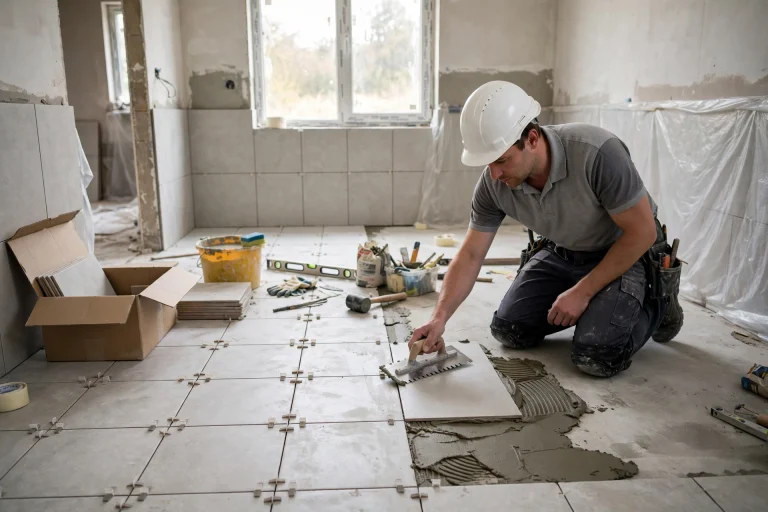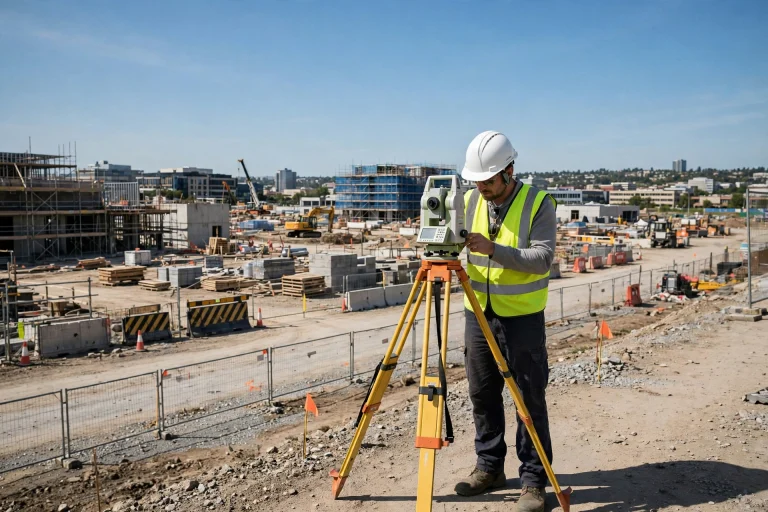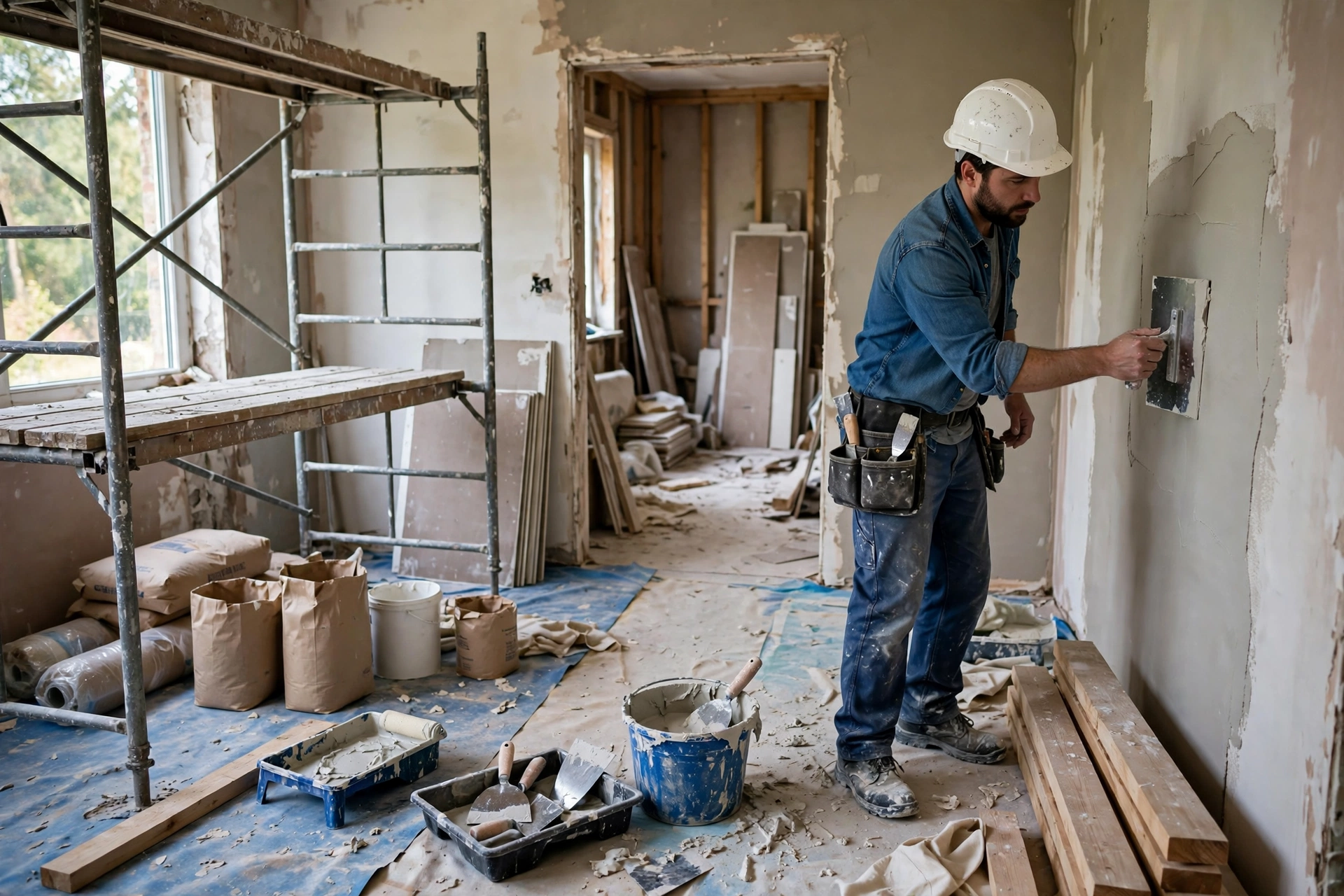
A helmet for plasterers is a hard hat that protects a plasterer’s head from falling tools, debris, and bumps on building and renovation sites. Plasterers work on ceilings and walls, often on scaffolding or steps, in rooms where other trades are working above them. A trowel, a piece of timber, or a lump of dried plaster falling from above can cause a serious head injury, so a hard hat is standard site safety wear.
Plastering also involves working in dusty, cramped spaces, under low ceilings, and around scaffolding poles and boards. It is easy to stand up into a joist, a scaffold tube, or a low beam, especially when you are focused on getting a wall smooth. A hard hat spreads the force of a bump and keeps a small knock from becoming a cut or a concussion.
What type of hard hat should a plasterer wear?
A standard industrial hard hat that meets a recognised safety standard is the right choice. In Europe, that is often EN 397, which covers shock absorption and penetration resistance. In the United States, the common standard is ANSI/ISEA Z89.1. Check the label inside the shell for the standard, the manufacturer, the date of manufacture, and the size range.
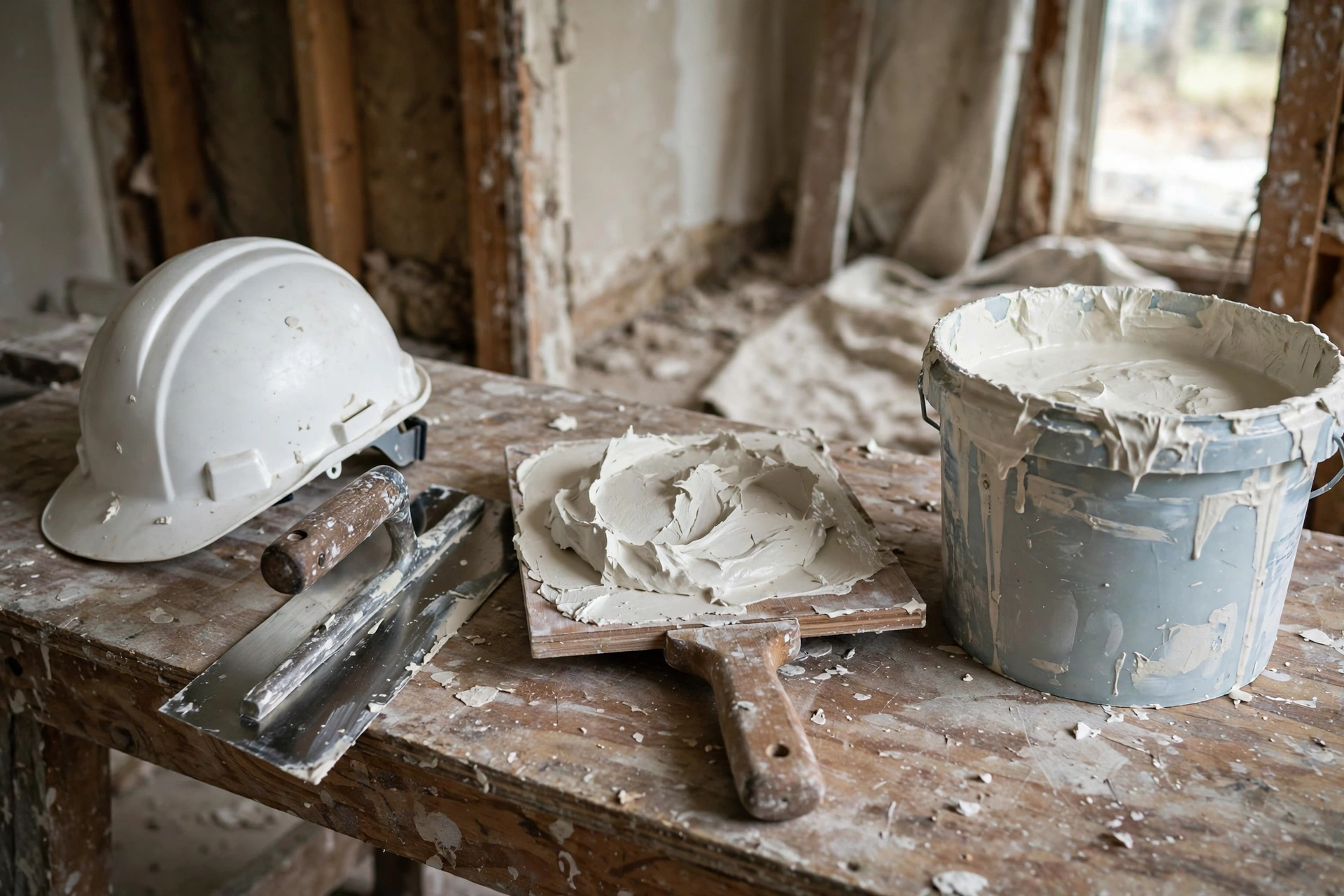
A hard hat with a short peak or a cap-style shell is popular with plasterers, because it does not get in the way when you look up at a ceiling. Some plasterers prefer a hard hat with a brim all the way around, which keeps drips and dust out of the face and neck. Either type works, as long as it fits well and is in good condition. A white or bright-coloured shell is easy to spot on site.
How should the hard hat fit for plastering work?
The hard hat should sit level on your head, low on your forehead, with the front edge about two finger widths above your eyebrows. It should feel snug but not tight, and it should not slide forward over your eyes when you look up at a ceiling. Most hard hats have an adjustment dial or a sliding strap at the back, so take a moment to set it before you start work.
Plaster dust gets everywhere, so check that the suspension inside the helmet is clean and dry before you put it on. A dusty or damp liner can irritate the skin and can also hide damage. Do not wear a thick beanie under a hard hat, because it changes the fit and reduces the gap between the shell and your head. A thin liner made for use under a helmet is a better choice in cold weather.
What other protection do plasterers need on site?
A hard hat is only one part of a plasterer’s safety kit. Eye protection is important, because plaster dust and splashes can irritate the eyes, and a lump of plaster in the eye is painful. Safety glasses or goggles that fit well with the hard hat are the best choice. A dust mask or a respirator is also needed when sanding or mixing, because plaster dust is not good to breathe in.
Gloves protect the hands from the drying effect of plaster and from rough surfaces, although many plasterers prefer to work with bare hands for feel and switch to gloves for other tasks. Knee pads are useful when working low on a wall, and sturdy safety boots protect the feet from dropped tools and materials. High-visibility clothing may also be required on larger sites.
When do plasterers need to wear a hard hat?
In general terms, a hard hat is required whenever a plasterer is working on a live construction site where there is a risk of falling objects or overhead work. That includes most new-build and renovation sites, especially when other trades are working above. On a small domestic job, such as plastering a single room in an occupied house, a hard hat may not be required, but it is still wise to wear one when working on a ceiling or under scaffolding.
The site manager or the main contractor sets the rules for the site, and those rules must be followed. If the site requires a hard hat, wear it for the whole time you are in the work zone, not just when you think there is a risk. Accidents happen when you least expect them, and a hard hat only protects you if it is on your head.
How do I look after a plasterer’s hard hat?
Plaster dust can damage a hard hat if it is left to build up, so wipe the shell and the suspension clean at the end of each day. Use a damp cloth and mild soap, and let the helmet dry in the shade. Do not use solvents or harsh cleaners, because they can weaken the plastic. Check the shell for cracks, dents, or deep scratches, and check that the suspension is not frayed or stretched.
Replace the hard hat after a hard impact, even if there is no visible damage, because the shell may have weakened in ways you cannot see. Replace it after about five years in general terms, because sunlight and everyday use wear down the materials. Some helmets include a slip layer such as MIPS to reduce rotational forces in an angled impact, which is a useful extra for any hard hat, including one worn for plastering.
What should a plasterer do if a hard hat is damaged?
If the hard hat is cracked, dented, or has a broken suspension, stop using it at once and replace it. Do not try to repair a cracked shell with glue or tape, and do not drill holes in a hard hat or paint it with solvent-based paint, because these can weaken it. A damaged hard hat should be thrown away, not passed on to someone else or kept as a spare.
Tell the site manager if you need a replacement, because most sites keep spare hard hats in the site office. If you are self-employed, keep a spare in your van so you are never caught without one. A hard hat is cheap compared with the cost of a head injury, and it is one of the simplest pieces of safety kit a plasterer can own.
Do plasterers have to wear a hard hat by law?
In general terms, the law requires employers to provide head protection where there is a risk of head injury, and workers to wear it. The exact rules depend on the country and the site, but on a construction site a hard hat is normally required, and the site manager can tell you the rules for that site.
Can a plasterer wear a bump cap instead of a hard hat?
A bump cap protects against minor bumps, but it is not a hard hat and does not protect against falling objects. It is not a substitute for a hard hat on a construction site. A bump cap may be used in a workshop or a warehouse, but not where there is a risk of things falling from above.
Does plaster dust damage a hard hat?
Plaster dust can clog the suspension and dry out the straps if it is left to build up, but it does not usually damage the shell. Wipe the helmet clean at the end of each day, let it dry, and check it regularly for cracks and wear.

Olivia
Writer at Helmet Today, covering helmet reviews, fit and riding safety.