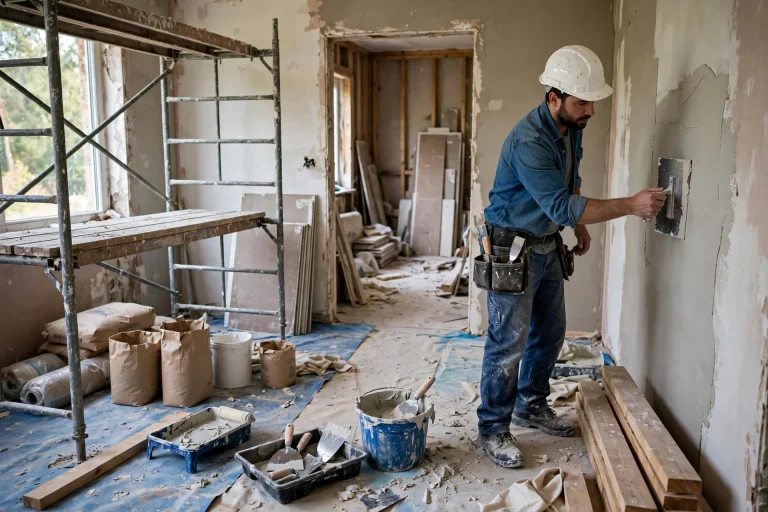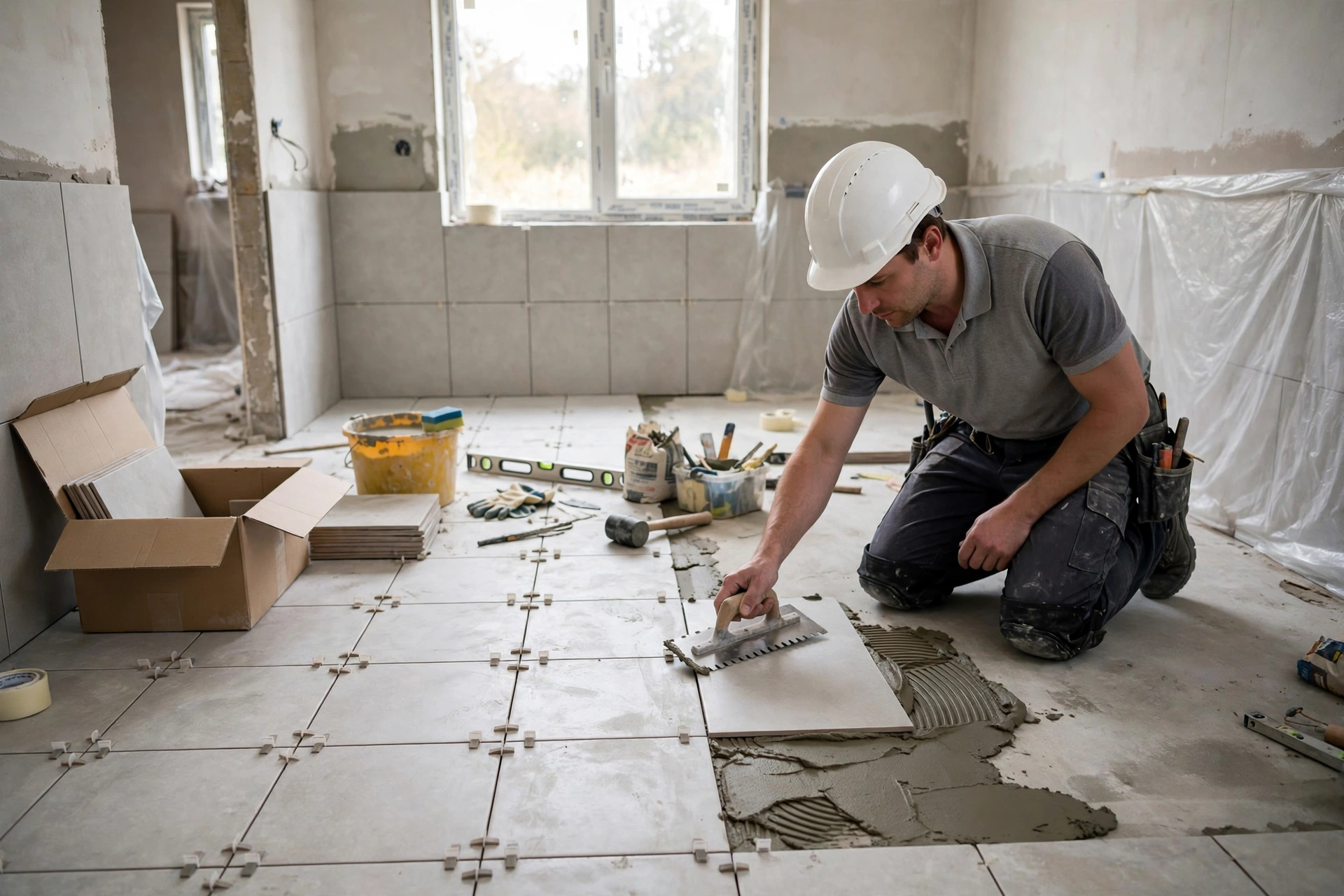
A helmet for tilers is a work helmet worn to protect a tiler’s head from falling tiles, tools, and knocks while tiling floors and walls on a building site. Tilers spend long hours bending, kneeling, and reaching, often under scaffolding, ladders, and other trades working overhead. A helmet gives the head a hard shell against objects dropped from above and against bumps into low beams, pipes, and scaffold poles.
What Does a Tiler Do That Needs Head Protection?
Tiling work usually takes place inside buildings that are still being built or renovated, so the work area is shared with other trades. While a tiler is focused on laying tiles on a floor or a wall, plumbers, electricians, and carpenters may be working above, and materials can be passed overhead or stored on scaffolding. A dropped tile, a slipped tool, or a piece of offcut can fall from height without warning, and the tiler below may not see it coming.
Tilers also work in tight spaces, under stairs, in bathrooms, and around kitchen units, where there are low ceilings, exposed joists, and protruding pipes. Standing up suddenly or turning in a cramped room can mean a painful bump to the head. In general terms, the risk is not only from falling objects but from the many hard surfaces a tiler works close to all day, so head protection is a sensible part of the kit on a live building site.
What Kind of Helmet Do Tilers Wear?
Most tilers who wear a helmet use a lightweight industrial safety helmet, the kind often called a hard hat, rather than a sports helmet. These helmets have a hard outer shell that spreads the force of an impact, with a suspension system or liner inside that holds the shell away from the head and absorbs some of the blow. They are designed for the kinds of knocks found on construction sites, and many meet a recognised industrial standard for head protection.
The fit matters as much as the shell. A helmet should sit level on the head, feel snug without pressing, and stay put when the wearer bends down to lay a floor tile or reaches up to a wall. A chin strap can help keep it in place when working at odd angles. If you want to understand one of the safety technologies used in modern helmets, reading about MIPS is a good place to start, though industrial helmets use different systems from sports helmets in general terms.
When Should a Tiler Wear a Helmet?
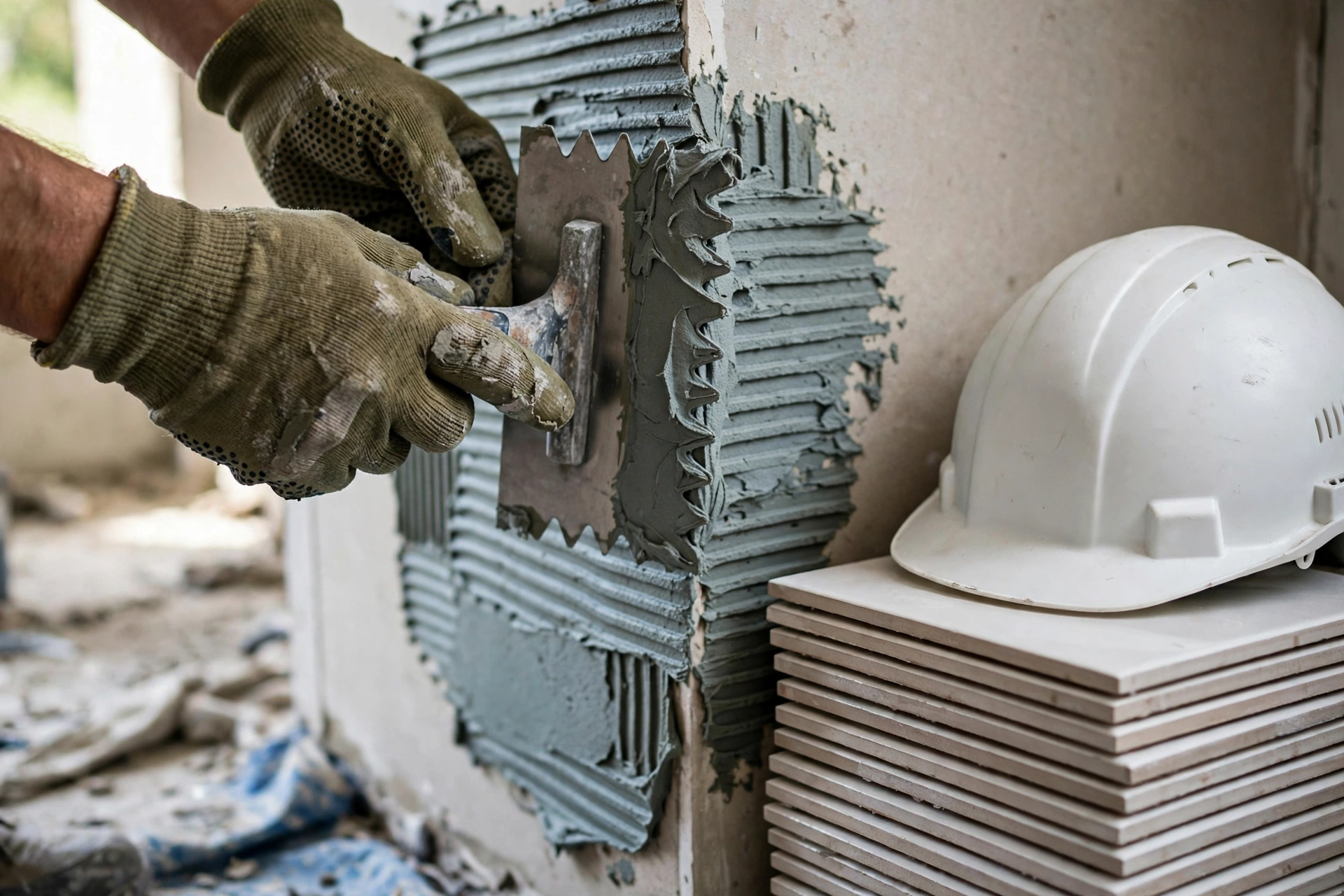
A tiler should wear a helmet whenever the site rules require it, which on most construction sites means whenever they are inside the site boundary. Site managers often set a rule that everyone on site wears a helmet, because the risk from overhead work is shared by everyone below, not just the people doing the work above. Even a small renovation can have moments when other trades are working overhead, and that is when a helmet earns its place.
There are also jobs where the risk is lower, such as tiling a finished room in an occupied home with no other work going on. In that case a helmet may not be needed, and the tiler may choose to work without one. The decision is usually guided by a risk assessment of the job: if there is anything overhead that could fall, or anything hard at head height, wearing a helmet is the safer choice. In general terms, when in doubt, wearing one is better than wishing you had.
What Should a Tiler Look for When Choosing a Helmet?
Comfort comes first, because a helmet that is uncomfortable will be taken off. A tiler spends hours bent over tiles, so a light helmet with good ventilation helps, especially in warm rooms or when working near freshly plastered walls that hold the heat. Adjustable fitting, whether a wheel at the back or a simple strap system, lets the wearer get a snug fit that stays put while bending and reaching.
Other features worth checking include:
- A shell that is free of cracks and dents, with no damage from previous impacts.
- A liner and suspension that are clean, intact, and comfortable against the head.
- A brim or peak that keeps dust and drips out of the eyes without blocking the view.
- A chin strap if the work involves a lot of bending, so the helmet does not slip off.
- Compatibility with other kit, such as eye protection and ear defenders.
It is also worth checking that the helmet meets a recognised industrial head protection standard for the country where the work is done, and that the label inside the helmet confirms it. Requirements vary by country, so the right standard depends on where the job is.
How Should a Tiler Care for a Work Helmet?
A work helmet needs regular checks to keep doing its job. Before each use, the tiler should look over the shell for cracks, dents, or signs of damage, and check that the liner and straps are intact and clean. Tile adhesive, grout, and dust get everywhere on a tiling job, so the helmet should be wiped down regularly and kept free of hardened material that could hide damage or make it uncomfortable to wear.
Helmets should be stored away from direct sunlight and extreme heat, which can weaken the shell over time. Leaving one on the dashboard of a hot van or on a sunny windowsill is not a good idea. A helmet that has taken a hard knock should be replaced, even if it looks fine, because the shell or liner may have absorbed damage that is not visible from the outside. In general terms, a helmet is a piece of safety kit with a working life, and replacing it when it is worn or damaged is part of looking after it properly.
Can a Tiler Wear Other Safety Kit With a Helmet?
Yes, a helmet is only one part of a tiler’s safety kit, and it is usually worn with other protection. Knee pads are almost as important as a helmet for a tiler, because so much of the work is done kneeling on hard floors. Eye protection guards against tile chips when cutting, and gloves protect the hands from sharp tile edges and from cement-based adhesive, which can irritate the skin.
Ear defenders matter when cutting tiles with a wet saw or a grinder, and a dust mask helps when cutting or mixing materials that raise dust. The helmet should fit comfortably with all of these, so it is worth trying the whole set together before settling on one helmet. In general terms, the best safety kit is the kit that is comfortable enough to wear all day, because protection only works when it is actually being worn.
Do tilers need to wear a helmet?
On a live construction site, yes, in general terms a helmet is part of the required safety kit, because other trades may be working overhead and materials can fall. On a small job in a finished home with no overhead work, it may not be needed.
Can a tiler use a bike helmet instead of a hard hat?
No, a bike helmet is not a substitute for an industrial safety helmet. Bike helmets are designed for cycling impacts, not for falling objects on a building site, so a proper work helmet is the right choice.
How often should a tiler replace a work helmet?
After any hard impact, and when the shell, liner, or straps show wear or damage. Even without a visible knock, a helmet that has been used hard for several years may need replacing, so regular checks are important.

Olivia
Writer at Helmet Today, covering helmet reviews, fit and riding safety.