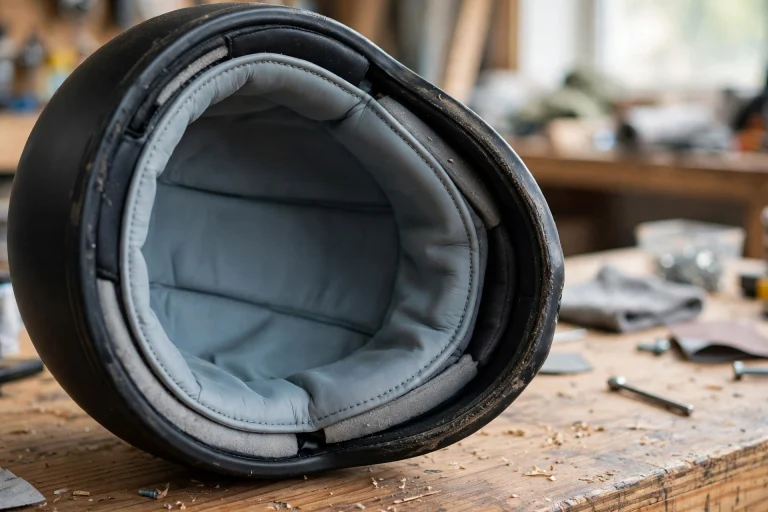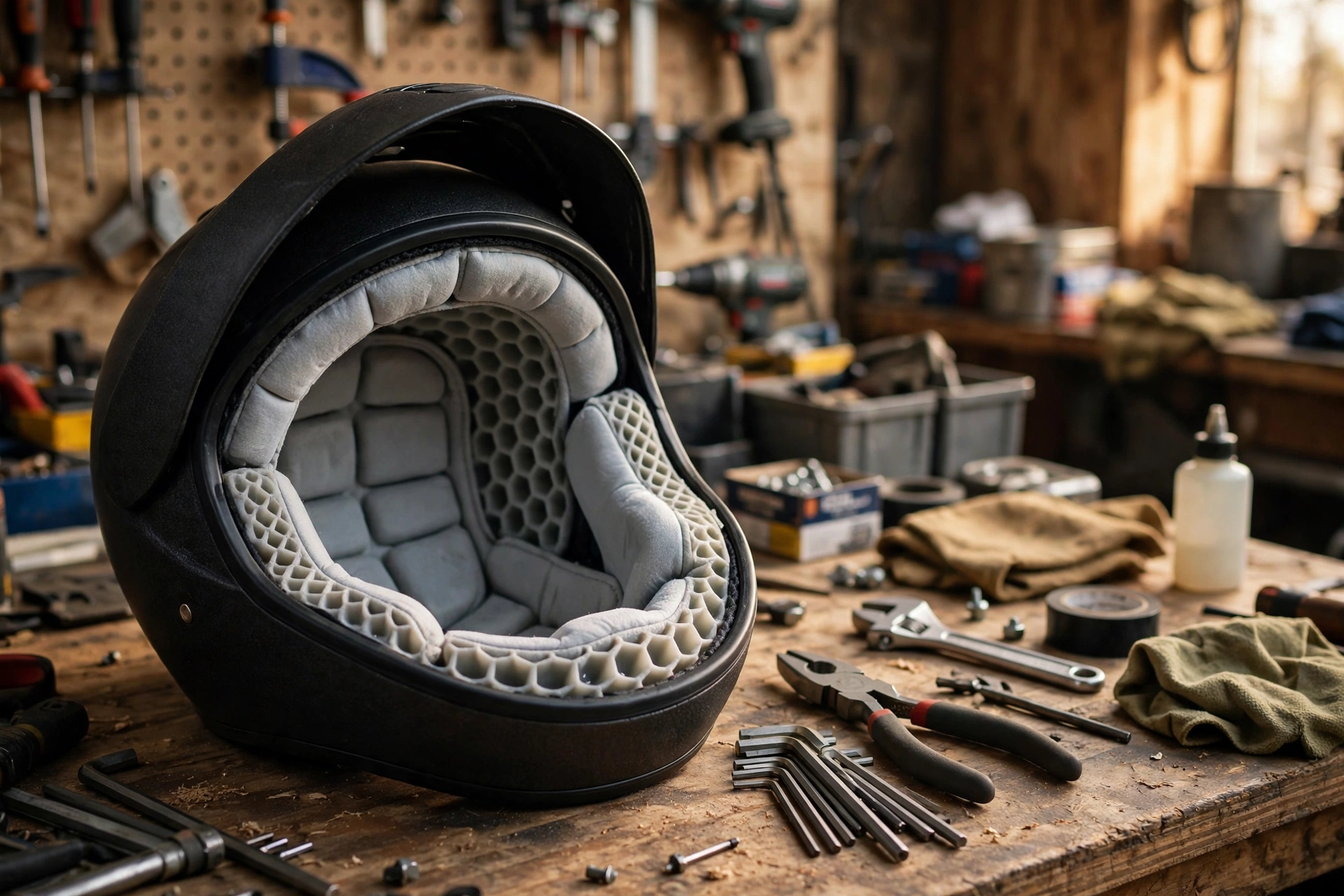
A gel helmet liner is a soft layer of gel, fitted inside a helmet between the shell and the head, that spreads the force of an impact and adds comfort. It is a flexible, jelly-like material that moulds to the shape of the head and cushions it, giving a close and comfortable fit. Gel liners are used in some motorcycle, cycling, and sports helmets as an alternative to, or alongside, the usual foam padding. They are valued both for comfort on long rides and for the way they handle the forces of a knock.
What Is a Gel Liner Made Of?
A gel liner is made from a soft, flexible gel, often a silicone-based or polymer material, that feels a little like a thick jelly. The gel is usually held in a pouch or a shaped pad that sits inside the helmet, against the shell or inside the foam liner. It keeps its shape well, but it is soft enough to mould slowly to the shape of the head when the helmet is worn.
Unlike foam, which is made of many tiny air pockets, gel is a solid, slow-moving material that flows gently under pressure and then returns to shape when the pressure is removed. In general terms, that slow movement is what makes gel comfortable: it spreads the pressure of the helmet evenly across the head, rather than letting it build up in one spot. The gel is sealed inside its pouch, so it does not leak or dry out in normal use.
How Does a Gel Liner Protect the Head?
A gel liner protects the head by spreading the force of an impact over a wider area and over a slightly longer time. When the helmet is hit, the gel deforms and flows, which takes some of the energy out of the blow before it reaches the head. Because the gel spreads the pressure, the force is not concentrated on one small point, which is gentler on the skull.
Gel is often used together with foam, with the foam doing most of the heavy work of absorbing a hard impact and the gel adding comfort and a second layer of cushioning. In general terms, the gel is not a replacement for the main impact-absorbing liner of the helmet, but a useful extra layer. If you want to understand one of the safety technologies used in modern helmets, reading about what MIPS is for helmets is a good place to start, since gel liners and rotational protection systems address different parts of the same problem.
Is a Gel Liner More Comfortable Than Foam?
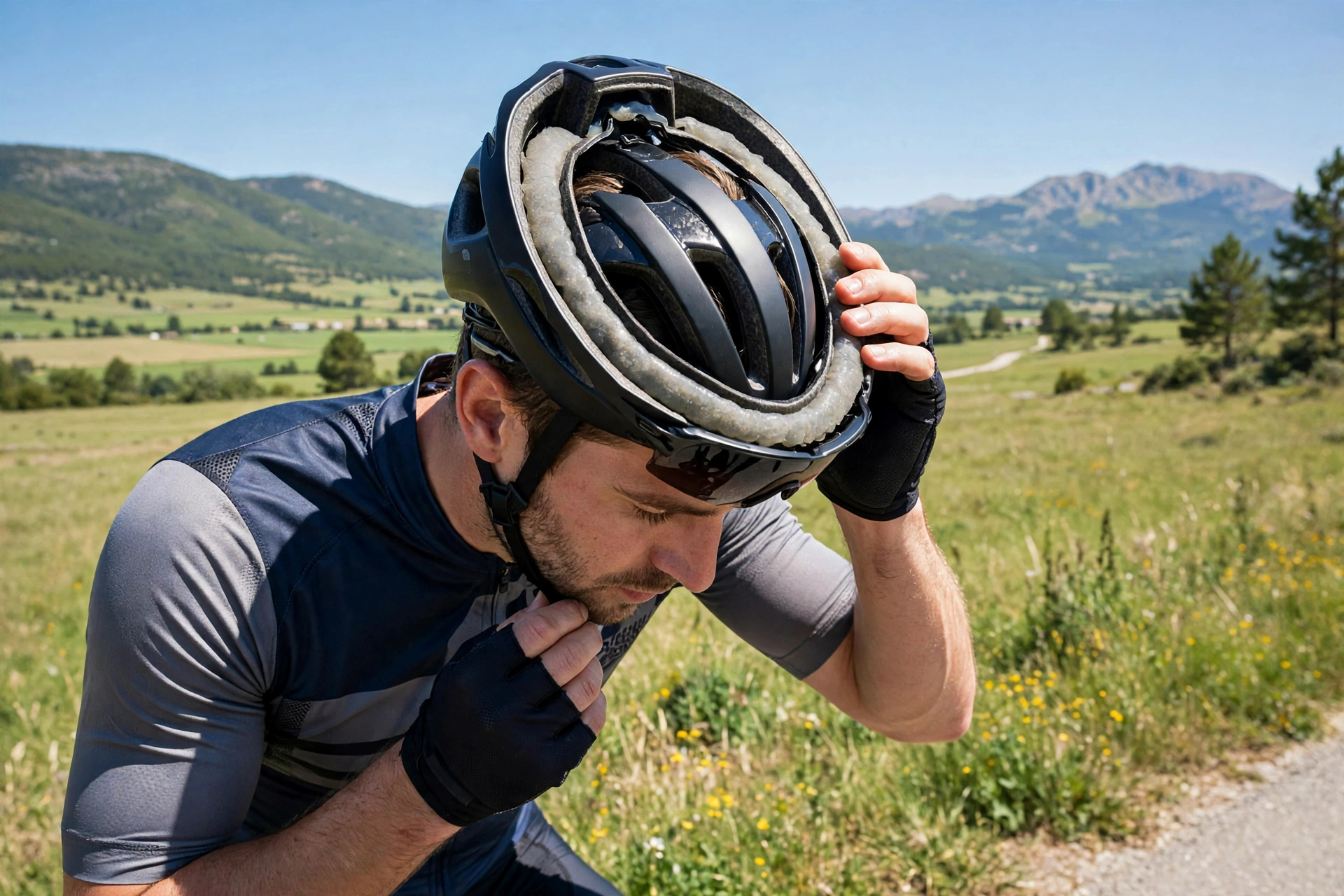
Many riders find a gel liner more comfortable than foam alone, because the gel moulds to the shape of the head and spreads pressure evenly. Foam pads can press on the head in a few places, especially on a long ride, and can feel hard where they are compressed. Gel, by contrast, gives a softer, more even feel, and it can reduce the hot spots and pressure points that make a helmet uncomfortable after an hour or two.
Gel also has a cooling feel when it is first put on, which some riders enjoy in warm weather, though it warms up to body temperature over time. On the other hand, gel is heavier than foam, so a helmet with a thick gel liner can feel heavier on the head. In general terms, comfort comes down to the fit of the whole helmet, and a gel liner is one way to improve it, but a well-fitting foam liner can be just as comfortable for many riders.
What Are the Downsides of a Gel Helmet Liner?
Gel liners have a few downsides worth knowing. The first is weight: gel is denser than foam, so a helmet with a gel liner is usually a little heavier, and that extra weight can be felt on the neck during a long ride. The second is heat: gel does not breathe as well as foam, so it can feel warmer, especially in hot weather, and sweat may build up under the gel more easily.
Gel can also change with temperature. In very cold weather it can feel firmer until it warms up, and in very hot weather it can feel softer. In general terms, these changes are small and the gel still works, but they are worth knowing about. Gel liners can also cost more than foam, so helmets with gel tend to be priced higher, and a damaged gel pad may need to be replaced as a whole rather than repaired.
How Do You Look After a Gel Helmet Liner?
Looking after a gel liner is mostly a matter of keeping it clean and checking it from time to time. Sweat and dirt can build up on the surface of the liner, so it should be wiped gently with a damp cloth and mild soap, then left to dry fully before the helmet is worn again. Harsh cleaners should be avoided, since they can damage the gel or its pouch.
The liner should be checked for tears, leaks, or flat spots, because a gel pad that has lost its gel or has gone hard will not cushion the head as it should. If the gel has leaked or the pad is damaged, it should be replaced, following the maker’s instructions. As with any helmet, a hard impact means the helmet itself should be replaced, even if the gel liner still looks fine, because damage to the shell or the main liner may not be visible.
Who Might Choose a Helmet With a Gel Liner?
A helmet with a gel liner might suit a rider who finds normal foam padding uncomfortable, or who rides for long hours and wants a softer, more even fit. Tourers, commuters, and riders who wear a helmet all day are the people most likely to notice the difference, because the comfort of a gel liner shows most over time rather than in a short try-on.
Riders with a head shape that does not match standard foam pads well may also find that gel moulds better to their head. In general terms, though, a gel liner is a comfort feature rather than a must-have, and the most important thing when choosing a helmet is still the fit, the safety standard, and the type of riding. A gel liner is worth trying if comfort is a problem, but it is not needed by every rider.
Does a gel liner make a helmet safer?
In general terms, a gel liner can help spread impact forces, but it is not a replacement for the helmet’s main impact-absorbing liner. The safety of a helmet still comes from its shell, its foam liner, and its fit, with the gel adding comfort and a little extra cushioning.
Can a gel liner be replaced?
Yes, in general terms. On many helmets the gel pads can be taken out and replaced with new ones, following the maker’s instructions. If the gel is built into the liner, the whole liner may need replacing instead.
Does a gel liner get hot in summer?
It can feel warmer than foam, because gel does not breathe as well and can hold heat against the head. Riders in hot weather may prefer a helmet with good vents, and should check that the gel liner does not make the helmet too warm for their riding.

Olivia
Writer at Helmet Today, covering helmet reviews, fit and riding safety.