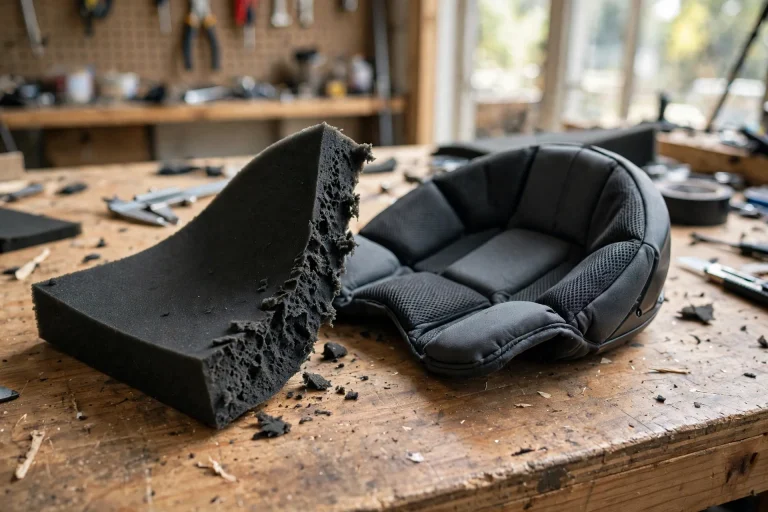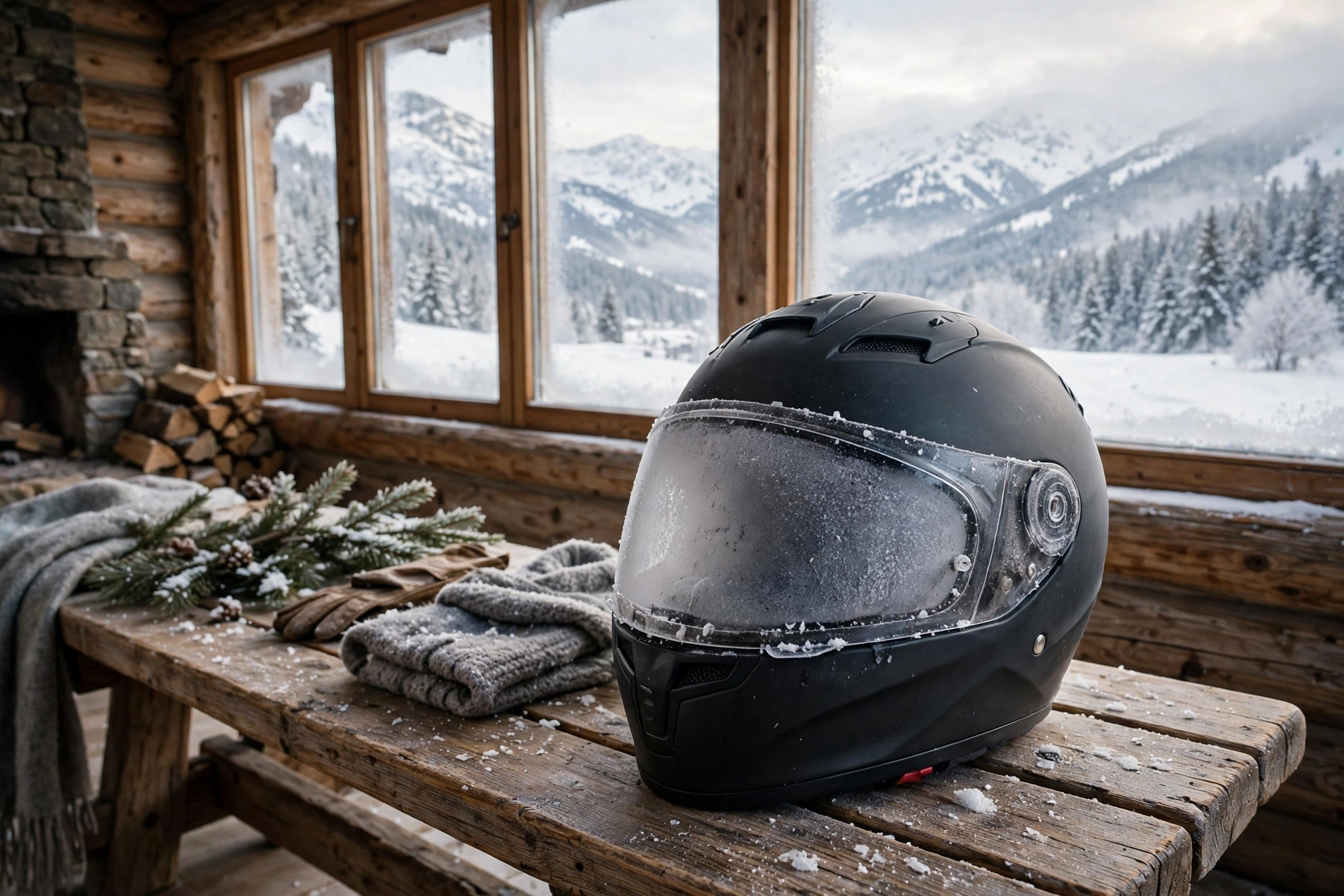
Aerogel insulation in a helmet is a very light, highly insulating material used in a thin layer inside the helmet to slow down the flow of heat, helping to keep a rider’s head warmer in cold weather or cooler in hot weather. Aerogel is a solid material made mostly of air held in a fine, sponge-like structure, and it is known for insulating far better than most other materials at the same thickness.
What Is Aerogel Insulation?
Aerogel is a material made by taking a gel and removing the liquid from it, leaving behind a solid structure that is mostly air. The result is a material that is extremely light and full of tiny air pockets, and air is a poor conductor of heat, so heat passes through aerogel very slowly. That is why aerogel is used as insulation in buildings, in clothing for extreme cold, and in equipment for space and industry, where keeping heat in or out matters a great deal.
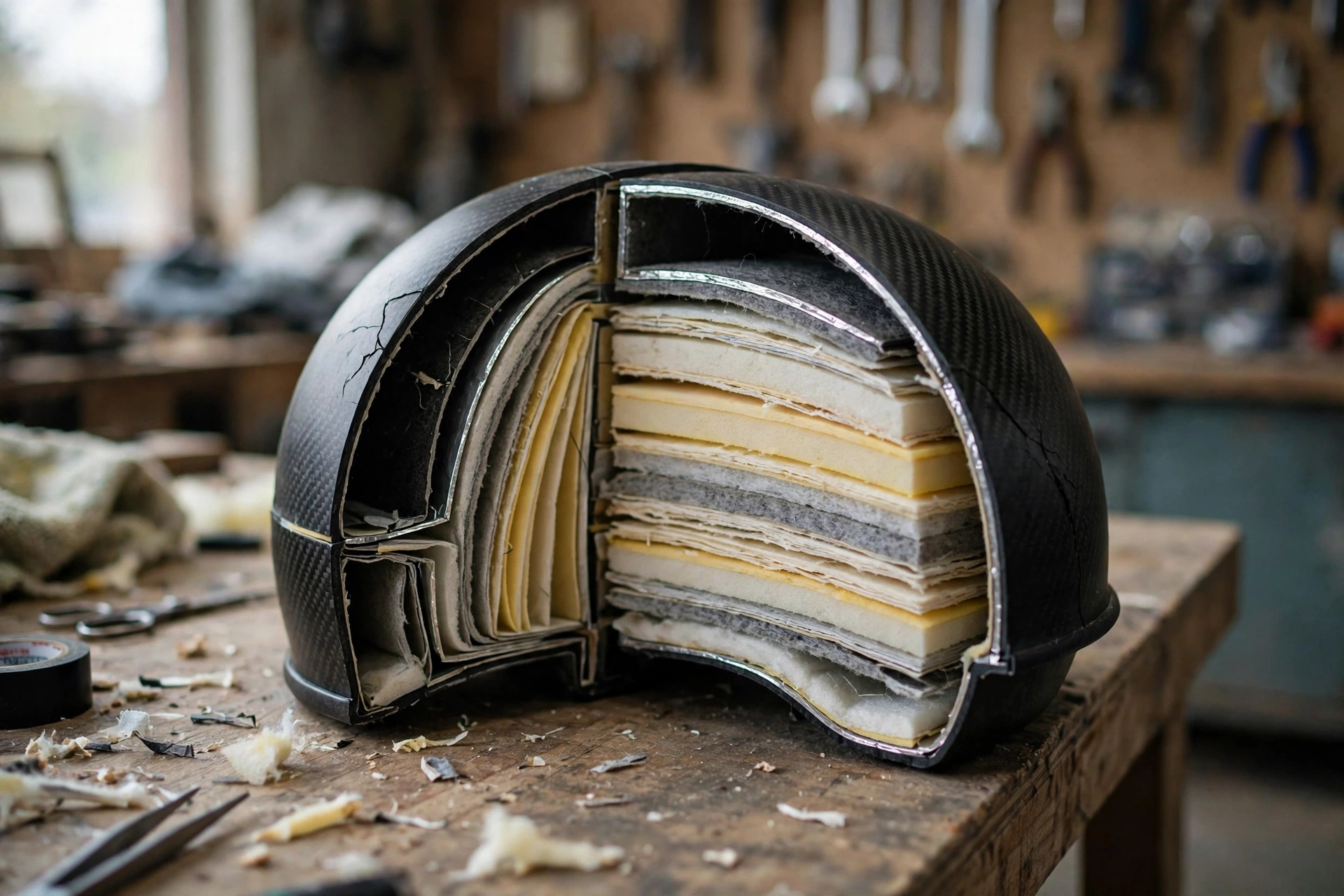
In a helmet, aerogel insulation is used as a thin layer or as small panels fitted inside the shell, usually alongside the normal foam liner. It does not replace the impact-absorbing foam, which is the part that protects the head in a crash. Instead, it adds a thermal barrier that slows heat moving between the outside of the helmet and the rider’s head. Because it insulates so well in a thin layer, manufacturers can add it without making the helmet noticeably thicker or heavier, which matters for comfort and fit.
How Does Aerogel Insulation Work in a Helmet?
Heat moves in three ways: by conduction through a material, by convection in moving air, and by radiation. Aerogel works mainly by slowing conduction, because its structure is mostly still air trapped in tiny pockets, and still air is a poor conductor of heat. When a thin layer of aerogel sits between the cold outside of a helmet and the warm head inside, it slows the flow of heat out of the helmet, so the head stays warmer for longer in cold weather.
In hot weather, the same layer works in the other direction, slowing heat from the sun and the hot air outside from reaching the head. The effect is a more stable temperature inside the helmet, which can make a ride more comfortable in both cold and warm conditions. For background on how helmet technology manages impact forces, see what MIPS is for helmets. Aerogel does not cool the head on its own, and it does not replace ventilation, so a helmet with aerogel still needs vents to bring in fresh air and let warm, moist air out.
Which Helmets Use Aerogel Insulation?
Aerogel insulation is most often found in helmets made for cold conditions, such as ski and snowboard helmets, winter motorcycle helmets, and helmets for riders who work or travel in cold climates. In those helmets, the aim is to keep the head warm without adding bulk, and a thin aerogel layer can do that job while leaving room for the impact liner and the fit padding. Some high-end helmets for other activities also use it, where temperature control is part of the design.
It is not a common feature in most helmets, and it is usually found in helmets at the higher end of the market, because aerogel is more expensive to make than ordinary foam or fabric insulation.
Does Aerogel Insulation Affect Helmet Safety?
In general terms, aerogel insulation does not affect the impact protection of a helmet, because it is not the part that absorbs energy in a crash. The impact-absorbing liner, normally made from expanded polystyrene foam, does that job, and the aerogel layer sits alongside it or on top of it. A helmet with aerogel insulation must still meet the same safety standard as a helmet without it, and the aerogel must not get in the way of the liner doing its job.
That said, any material added to a helmet must be fitted correctly, and it must not make the helmet fit worse, block the vents, or add weight that changes how the helmet sits on the head. When you buy a helmet, check that it carries the certification for the activity you do, and try it on to make sure the fit is snug and even all round. A helmet that fits badly will not protect you properly, whatever insulation it contains, and a helmet that has been in a serious crash should be replaced, whether or not it contains aerogel.
What Are the Pros and Cons of Aerogel Insulation in a Helmet?
The main advantage of aerogel insulation is that it insulates very well in a very thin layer, so it can keep a head warmer in the cold, or cooler in the heat, without adding noticeable bulk or weight. That is useful in winter helmets, where warmth matters but a bulky helmet is uncomfortable and can make it hard to wear a balaclava or a hood underneath. It is also a stable material that does not soak up water in the way that some fabrics do, so it keeps working when conditions are damp.
The main drawback is cost, because aerogel is more expensive than ordinary insulation, and that cost shows up in the price of the helmet. In general terms, aerogel is best thought of as a comfort feature rather than a safety feature: it can make a ride more pleasant in extreme temperatures, but it does not change how well a helmet protects the head, and it is no substitute for a good fit, a proper certification, and working vents.
Should You Choose a Helmet with Aerogel Insulation?
Whether aerogel insulation is worth having depends on the conditions you ride in. If you regularly ride, ski, or work in cold weather and you find your head gets cold in an ordinary helmet, a helmet with an aerogel layer may be worth trying, especially if you already wear a helmet that fits well and meets the right standard. Try the helmet on before you buy, and check that the insulation does not change the fit or block the vents.
If you ride mainly in mild weather, or if you run hot and need ventilation more than warmth, aerogel may make little difference to you, and a well-ventilated helmet without it may suit you better. A helmet that fits well and that you are happy to wear every time is worth far more than any single material in its lining.
Does aerogel insulation make a helmet safer?
Not in itself. Aerogel is a thermal insulator, not an impact absorber, so it does not change how well a helmet protects the head in a crash. The safety of a helmet comes from its shell, its impact liner, and its fit, and it must still meet the standard for the activity you do.
Can aerogel insulation be added to an existing helmet?
Not in general terms. Aerogel layers are fitted during manufacture, and adding material inside a finished helmet can change the fit, block vents, or interfere with the liner. If you want a warmer helmet, buy one designed for cold conditions rather than modifying the one you have.
Is aerogel insulation waterproof?
Aerogel itself does not soak up water in the way that fabric does, but a helmet is not waterproof just because it contains aerogel. Water can still get in through vents and seams, so treat the helmet’s weather protection as a whole, not as a property of one layer.

Olivia
Writer at Helmet Today, covering helmet reviews, fit and riding safety.