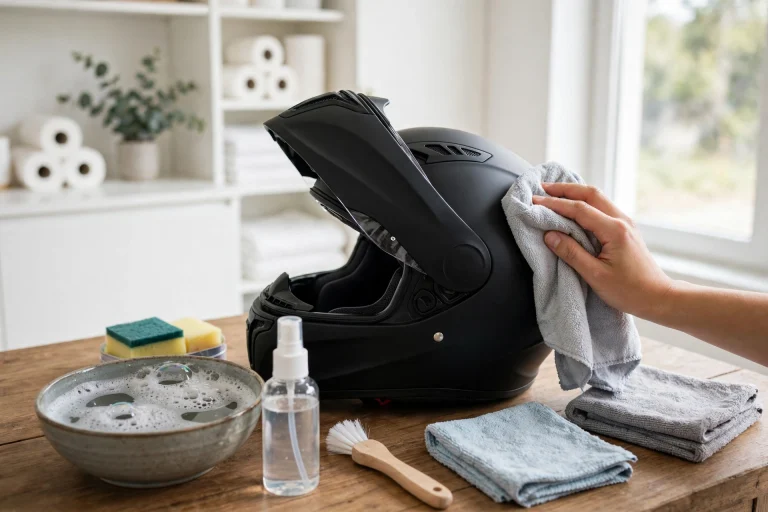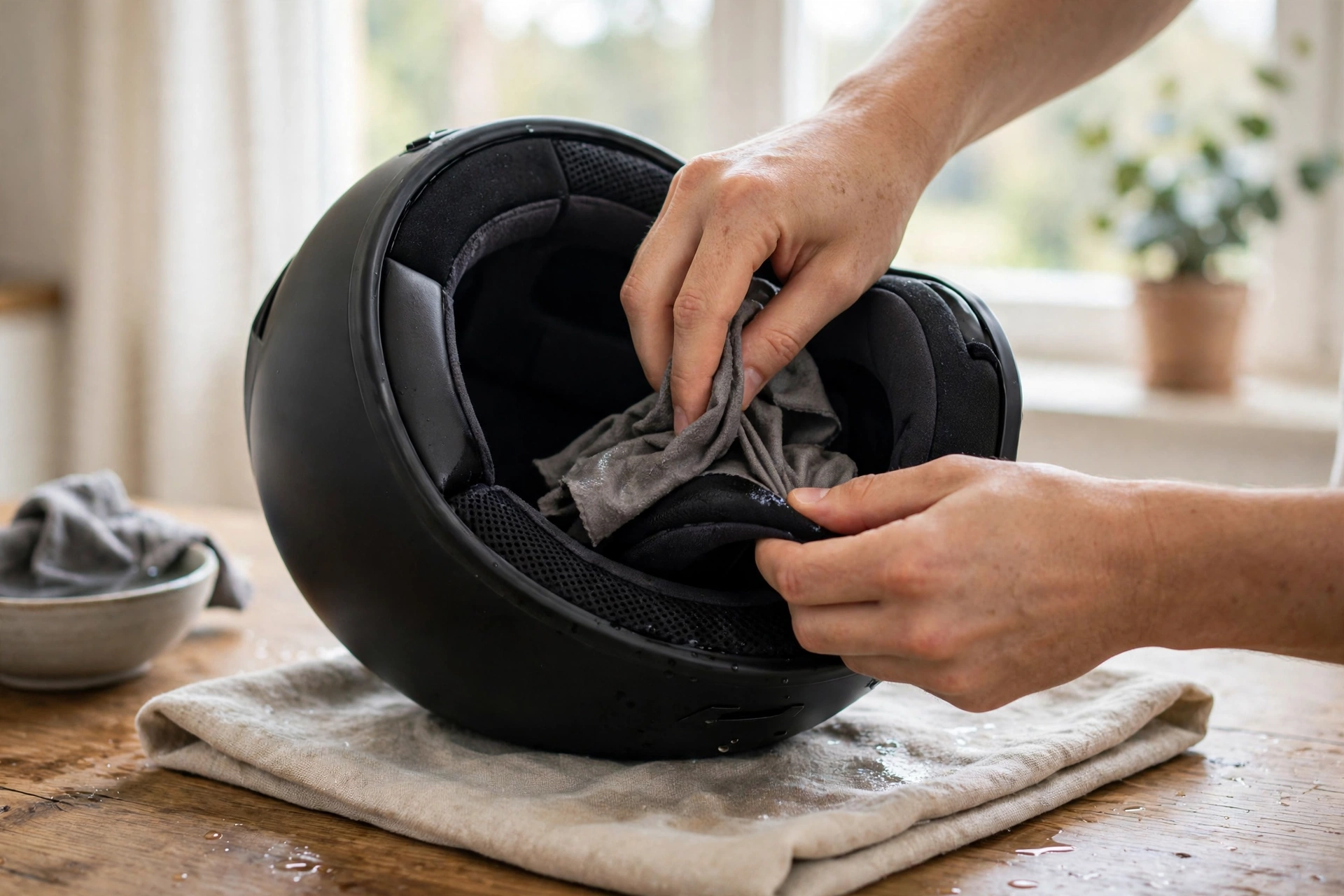
To clean a helmet interior without removing the liner, wipe the inside gently with a damp cloth and mild soap, freshen it with a light spray or wipe made for helmets, and let it air dry fully with the visor open. Some helmets have a fixed liner that cannot be taken out, so you need a method that cleans without soaking the foam or pulling at the stitching. The key is to use very little water, work gently, and give the helmet plenty of time to dry. Done regularly, this keeps a fixed-liner helmet fresh without damaging it.
Why Would You Clean a Helmet Without Removing the Liner?
You would clean a helmet without removing the liner when the liner is fixed in place and cannot be taken out, which is true of many helmets. Some liners are glued or stitched in, and trying to force them out can tear the fabric, break the fasteners, or damage the foam underneath. Other riders simply prefer a quick clean between deep washes, when taking the liner out feels like too much work for a light freshen-up.
A gentle wipe-down is also useful when you are travelling or short on time, since it needs no drying space for loose pads. In general terms, cleaning without removing the liner is a lighter clean, not a replacement for a full wash when the liner is removable, but for a fixed liner it is the main method you have, and it works well if you do it regularly.
What Do You Need to Clean a Fixed Helmet Liner?
You need very little: a clean, soft cloth, lukewarm water, a small amount of mild soap, and a dry towel. A soft brush, such as an old toothbrush, can help with vents and seams, and a helmet interior cleaner or a light fabric freshener made for helmets can help with smells. Avoid harsh cleaners, bleach, solvents, and strong sprays, since these can damage foam, fabric, and glue.
Keep a bowl of lukewarm water nearby, and wring the cloth out well before you start: the cloth should be damp, not dripping. In general terms, less water is better, because a fixed liner cannot be wrung out or hung up to dry on its own. Work in a well-lit place so you can see the padding clearly, and take your time rather than rushing the job.
How Do You Wipe the Inside of a Helmet Safely?
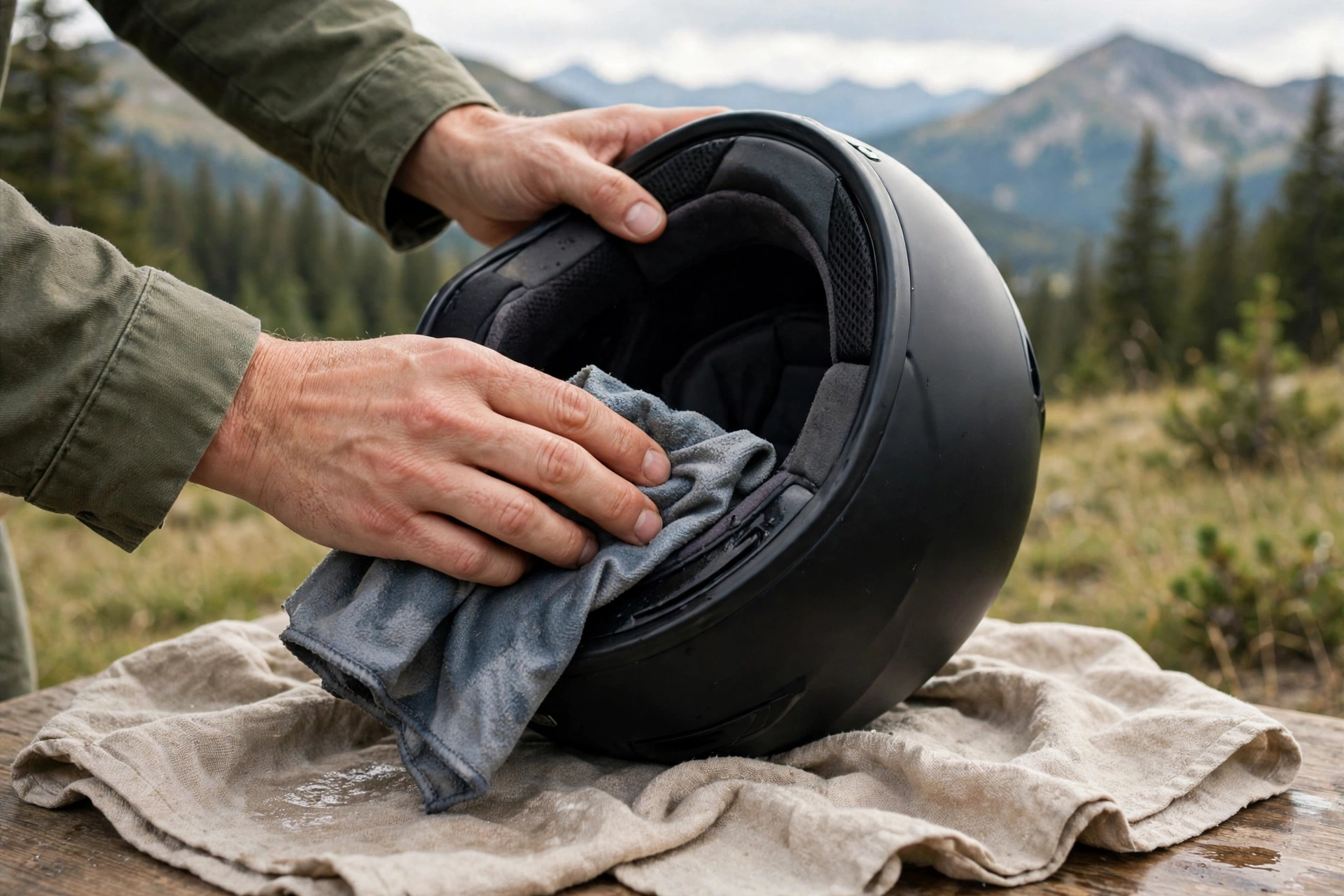
Start by shaking out any loose dust, then wipe the inside gently with the damp cloth, working in small sections from the crown down to the cheek pads. Use a little mild soap on the cloth for dirty or sweaty areas, and wipe again with a clean damp cloth to remove the soap. Press the cloth into the padding lightly, but do not scrub hard or soak the foam, since soaked foam takes a long time to dry and can develop a smell.
Pay attention to the cheek pads and the forehead area, where sweat gathers most, and use the soft brush gently around vents and seams. In general terms, a gentle wipe done often is better than a harsh scrub done rarely. If the cloth comes away very dirty, rinse it and go over the area again, rather than pressing harder.
How Do You Remove Smells from a Fixed Liner?
Smells come from sweat and bacteria in the padding, so the best fix is cleaning plus thorough drying. After wiping, let the helmet air in a ventilated place with the visor open, so fresh air can reach the inside. A light spray of helmet interior cleaner or fabric freshener can help, but use it sparingly and let the helmet dry fully afterwards. Some riders leave a small sachet of baking soda inside the helmet overnight to absorb smells, then shake it out and wipe the inside clean.
Do not mask a bad smell with strong perfume or air freshener, since that can irritate the skin and does not fix the cause. In general terms, if the smell stays after cleaning and airing, the padding may be worn or damaged, and the helmet may need new padding or a replacement. Regular cleaning stops smells from building up in the first place.
How Do You Dry a Helmet After Cleaning the Inside?
Dry the helmet by leaving it in a ventilated room, visor open, with the opening facing up so air can move through it. A small fan nearby can help, and a helmet dryer on a cool setting works well too. Do not use a radiator, a hair dryer on high, or direct sun to speed things up, since strong heat can shrink padding, weaken glue, and damage the foam liner. Patience is part of the job.
Check that the inside feels fully dry before you store the helmet or wear it again, including deep in the cheek pads and the crown. In general terms, drying may take several hours or overnight, depending on how damp the liner got. To understand more about how modern helmets protect your head, it helps to read about what MIPS is for helmets. Never store a helmet while it is still damp, or the smell and mould will come straight back.
When Is It Time to Replace the Liner or the Helmet?
Replace the liner, if it can be replaced, when the padding stays flat, feels hard, or smells bad even after cleaning. Some fixed liners cannot be replaced on their own, in which case a worn liner means it is time for a new helmet. Check the straps and fasteners too: if they no longer hold the fit, the helmet cannot protect you as it should.
Also replace the helmet if the shell is cracked, the foam liner is crumbling, or the helmet has been in a crash. In general terms, cleaning can keep a fixed liner fresh for a long time, but it cannot restore padding that has lost its shape or foam that has broken down. When cleaning no longer makes a difference, it is time to move on.
How do I clean a helmet interior without removing the liner?
Wipe the inside gently with a damp cloth and mild soap, use very little water, freshen it lightly if needed, and let it air dry fully with the visor open.
Can I use soap on a fixed helmet liner?
Yes, in general terms, a small amount of mild soap on a damp cloth is safe, but rinse the soap off with a clean damp cloth and avoid soaking the foam.
How long does a helmet take to dry after cleaning the inside?
It may take several hours or overnight, depending on how damp the liner got, so leave it in a ventilated place with the visor open until it feels fully dry.

Olivia
Writer at Helmet Today, covering helmet reviews, fit and riding safety.