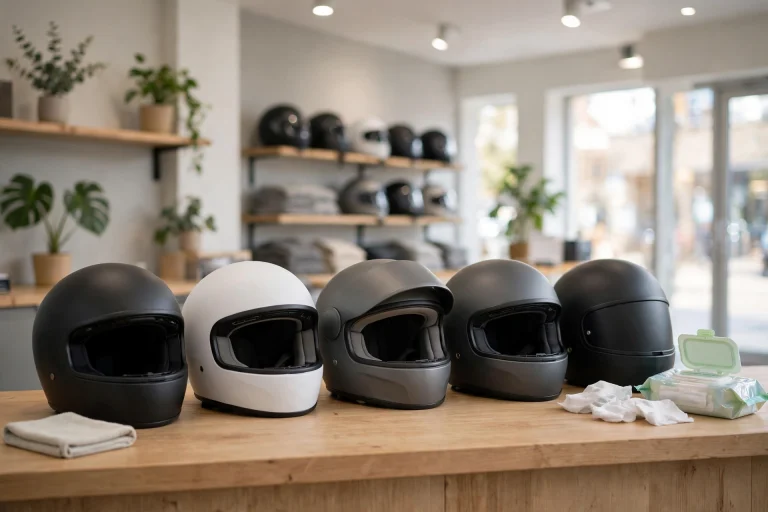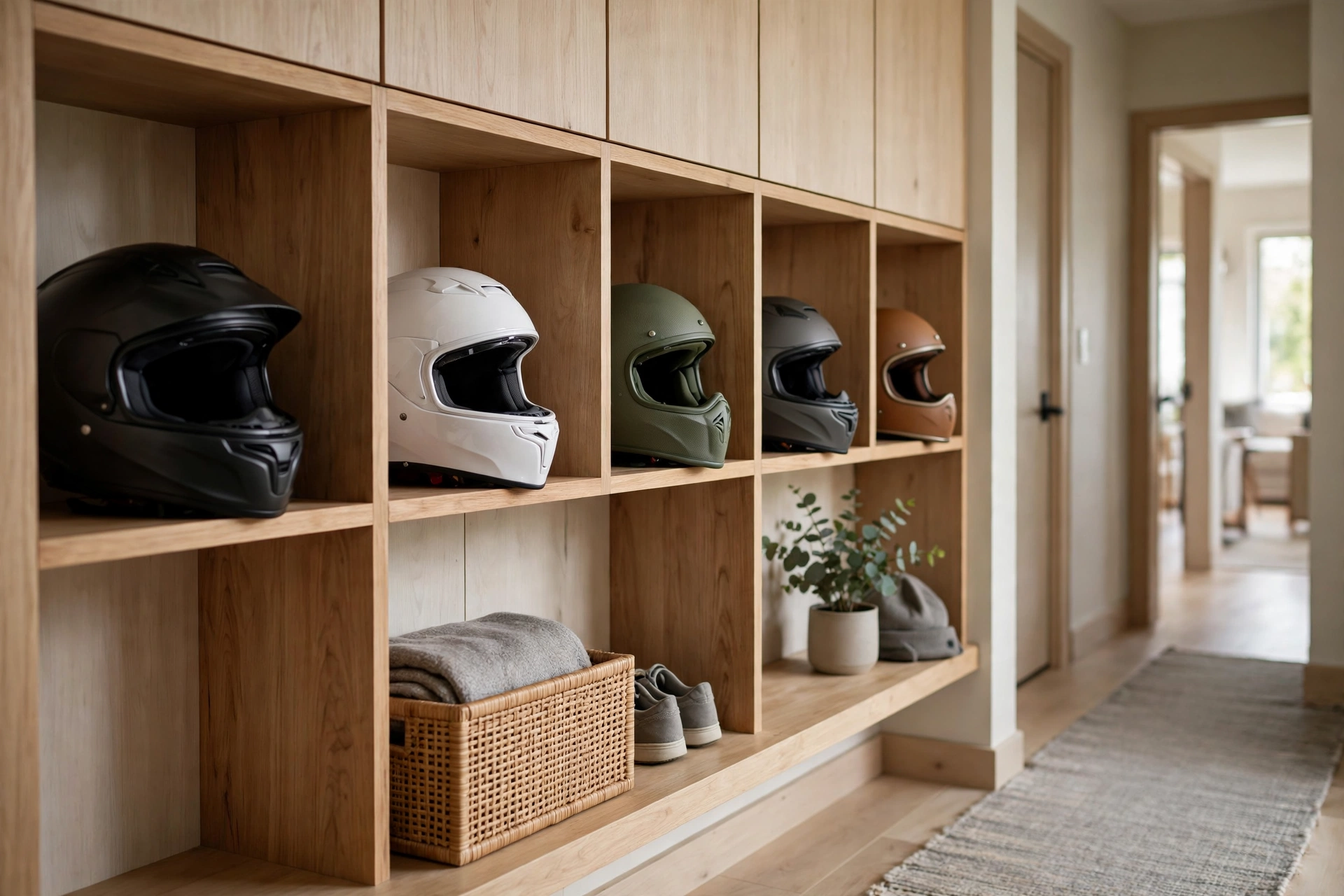
To store multiple helmets at home, keep them in a cool, dry, dark place, each on its own shelf, hook, or stand, with enough space between them so they do not knock together or fall. A family with several helmets, or a rider with helmets for different sports, needs a storage spot that protects the shells, liners, and visors while keeping the helmets easy to reach. The rules are simple: no stacking, no hanging by straps, no damp garages, and no direct sun. A little organisation now saves cracked shells and scratched visors later.
Where Is the Best Place to Store Multiple Helmets?
The best place is a cool, dry room inside the house, such as a hallway cupboard, a bedroom shelf, or a utility room with good airflow. Avoid the garage, shed, or loft if you can, because these places get hot in summer, damp in winter, and dusty all year round. Heat and damp both age helmets faster, and dust gets into vents and padding. A spot inside the house stays steadier through the seasons.
Choose a place that is easy to reach, so helmets get put away properly instead of being dropped on the floor by the door. In general terms, the best storage is a place you will actually use: a shelf by the door, a cupboard near the bikes, or a rack in a spare room. If the helmets are easy to grab, they are also easy to put back, and that habit protects them.
Should You Stack Helmets on Top of Each Other?
No, you should not stack helmets on top of each other. Stacking puts weight on the shell and visor below, can scratch the finish, and makes the whole pile unstable, so one knock can send them all tumbling to the floor. A fall from a shelf can crack a shell or damage a visor, even if the helmet looks fine afterwards. Each helmet deserves its own space.
If space is very tight, you can nest helmets carefully only if they fit together without pressure, but in general terms, side-by-side storage is safer. Give each helmet its own shelf, hook, or stand, with a little space between them. That way, taking one out does not disturb the others, and none of them rests its weight on another.
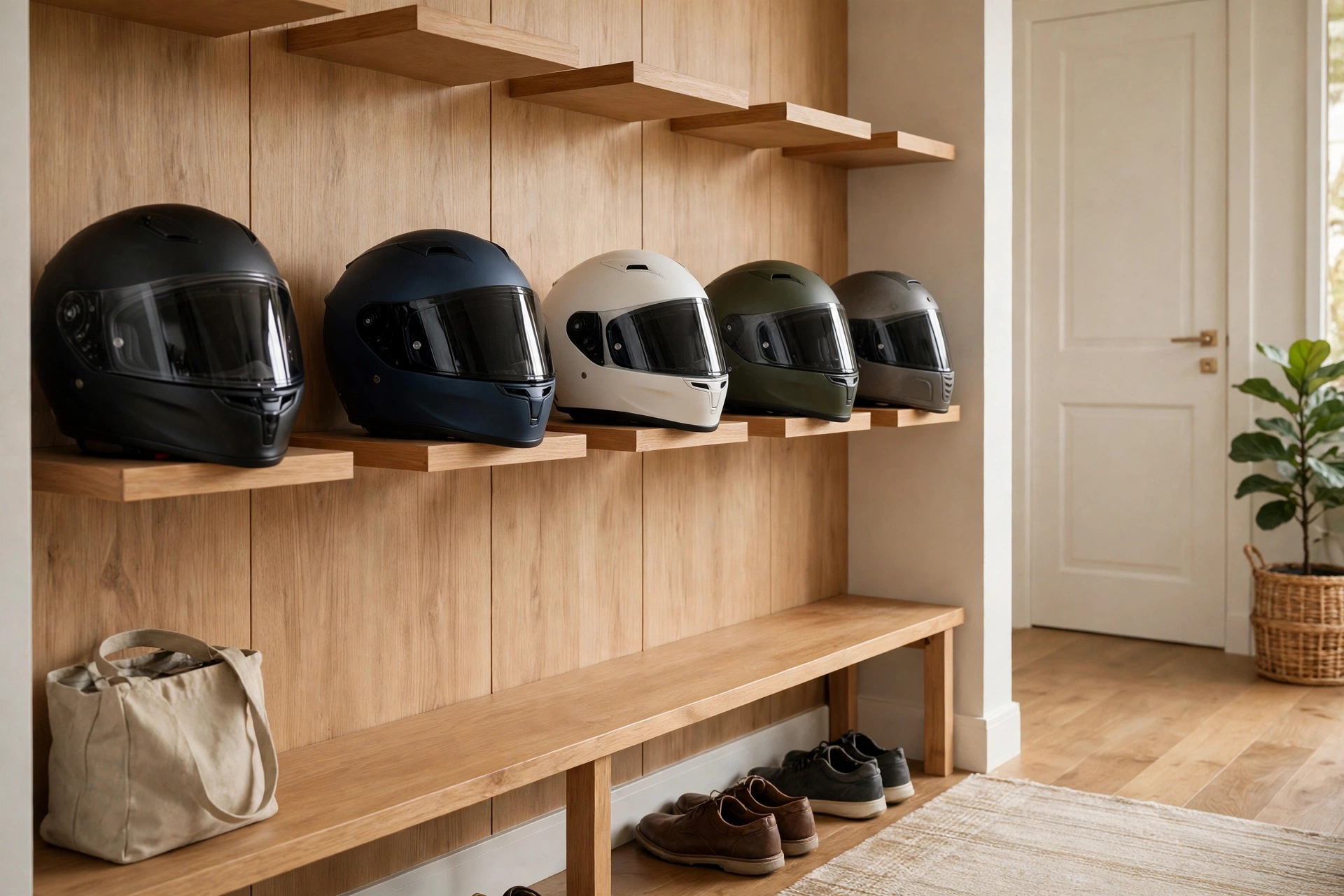
What Are the Best Ways to Store Helmets: Shelves, Hooks, or Stands?
Shelves are the simplest option: a sturdy shelf with a lip or a rail at the front keeps each helmet in place and easy to see. Wall hooks or helmet hangers work well too, as long as the helmet rests on its base or on a wide, padded hook, not hanging from its strap. A strap left hanging under the helmet’s weight can stretch over time and change how the helmet fits.
Helmet stands, whether bought or home-made, hold the helmet upright and keep the inside ventilated, which helps the padding dry and stay fresh. In general terms, any of these works well, so choose the one that fits your space and your budget. What matters is that each helmet is stable, supported from below, and not pressing against anything hard or sharp.
How Do You Protect Visors and Liners in Storage?
Protect visors by storing helmets with the visor closed or covered, and by keeping them away from anything that could scratch them. A soft helmet bag or a clean cloth over the visor helps, especially if helmets sit close together on a shelf. If a helmet came with a soft bag, use it: the bag keeps dust off the shell and stops the visor picking up scratches from nearby objects. Avoid putting keys, tools, or gloves on top of a helmet, since hard objects can scratch the shell or visor.
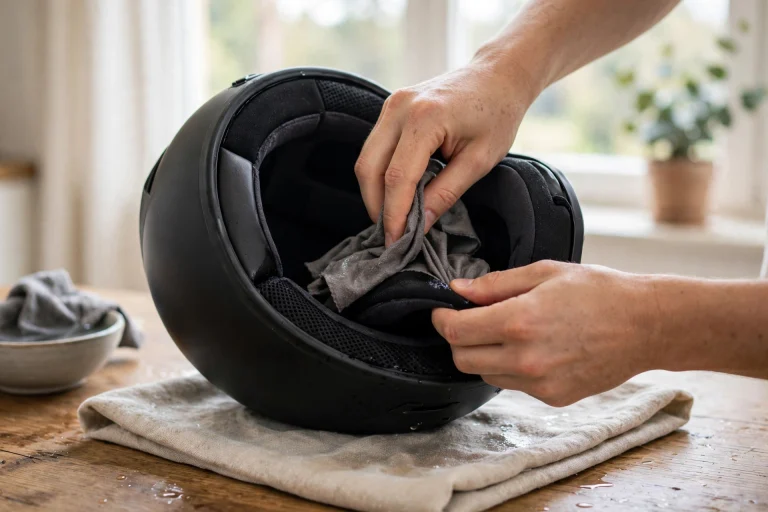
Protect liners by making sure each helmet is fully dry before you store it, and by leaving the visor open now and then so air can move through. A helmet stored damp in a closed bag can develop mould and a bad smell. In general terms, dry, ventilated storage protects the liner, while space and soft covers protect the visor. Check stored helmets now and then for dust, damp, or damage.
How Do You Organise Helmets for a Family?
Organise family helmets by giving each person their own spot, labelled if it helps, so nobody grabs the wrong size in a hurry. Keep children’s helmets low enough for them to reach safely, and keep adults’ helmets higher up. A simple shelf with a name label under each helmet works well, and it teaches children to put their own helmet away properly.
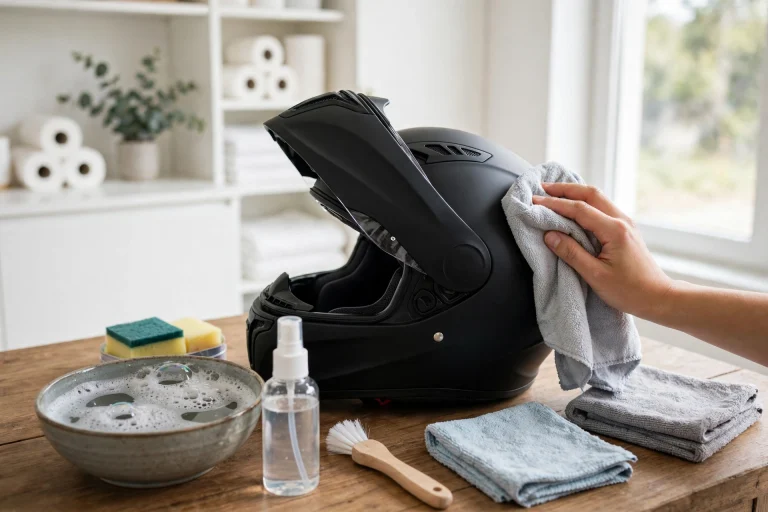
Keep spare visors, cleaning cloths, and small accessories nearby but not inside the helmets, since loose items can scratch the liner or visor. In general terms, a tidy, labelled system saves time and arguments, and it makes it easy to see at a glance whether every helmet is home and in good shape. To understand more about how modern helmets protect your head, it helps to read about what MIPS is for helmets. Check each helmet’s fit regularly, especially children’s, since they outgrow helmets fast.
What Storage Mistakes Should You Avoid?
Avoid the common mistakes: storing helmets in a hot car, a damp garage, or a sunny windowsill, stacking them in a pile, hanging them by their straps, or tossing them on the floor where they can be kicked or tripped over. Keep them away from fuel, solvents, and strong chemicals, and away from radiators or other heat sources. Do not store a helmet in a sealed plastic bag while it is still damp.
Also avoid storing helmets where they can fall from a height, such as the top of a tall wardrobe with no rail. Keep a small step stool nearby if the shelves are high, so you are not tempted to climb or stretch while holding a helmet. In general terms, treat each helmet as the safety gear it is, not as clutter to be shoved aside. A little care in storage keeps every helmet ready, clean, and safe for its next ride.
How do I store multiple helmets at home?
Keep them in a cool, dry, dark place inside the house, each on its own shelf, hook, or stand, with space between them so they do not knock together or fall.
Can I stack helmets on top of each other?
No, in general terms, stacking can scratch shells and visors and makes the pile unstable, so store helmets side by side, each in its own space.
Where should I not store helmets?
Avoid hot cars, damp garages, sunny windowsills, and sealed bags while damp, since heat, sun, and moisture all age helmets faster and can cause mould.

Olivia
Writer at Helmet Today, covering helmet reviews, fit and riding safety.