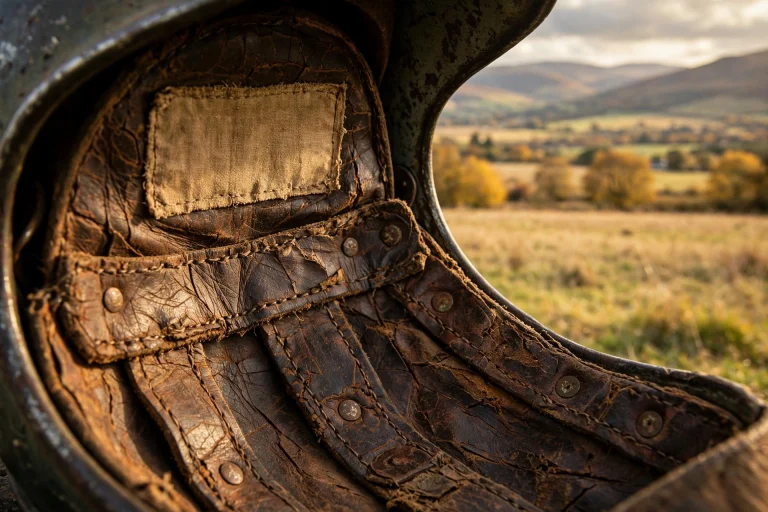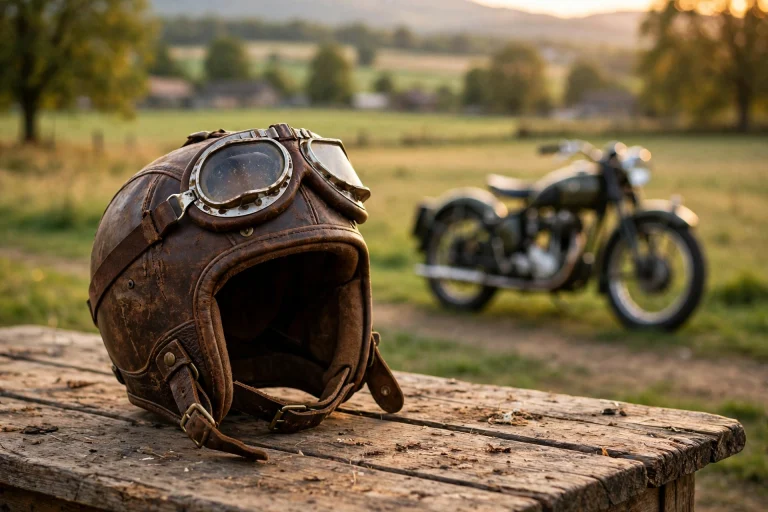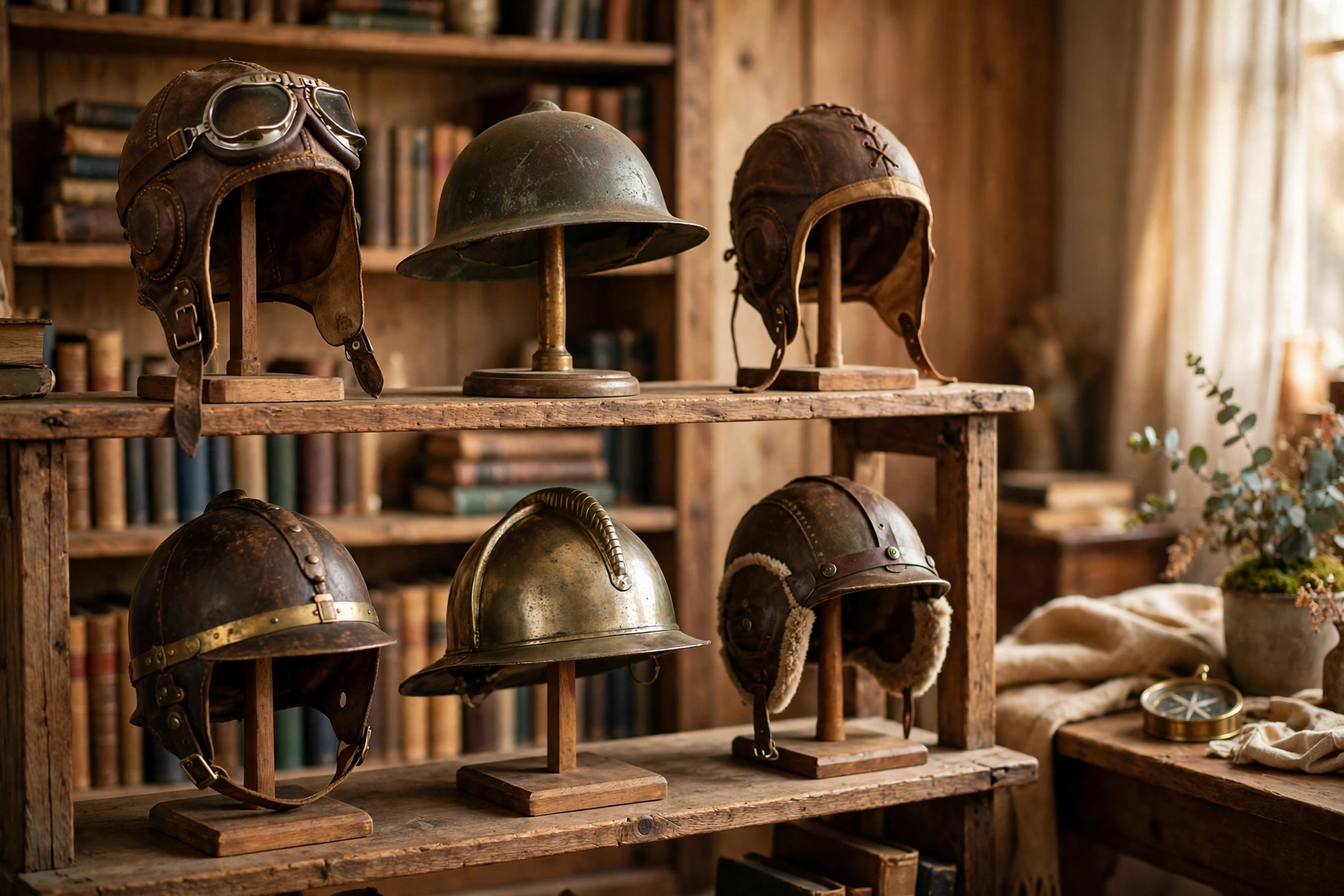
In general terms, the best way to display a vintage helmet collection is on sturdy shelves or stands in a dry, cool room away from direct sunlight, with each helmet supported from the inside and spaced so the pieces can be seen clearly. A good display protects the helmets from dust, damp, and knocks while showing off their shapes, colours, and history. Vintage helmets are often made from leather, cork, or early plastics that can dry out, crack, or fade, so the display should care for them as much as it shows them. A thoughtful display turns a collection into a piece of history you can enjoy every day.
Where Is the Best Place to Display a Vintage Helmet Collection?
The best place to display a vintage helmet collection is a dry, cool room with stable temperatures and no direct sunlight. Sunlight can fade paint, dry out leather, and make old plastics brittle, while damp can cause mould and rust on metal parts. A living room, study, or hallway usually works well, as long as the helmets are not near a radiator, a fireplace, or a window that gets strong afternoon sun.
Avoid garages, attics, and basements unless they are dry and well ventilated, since damp and temperature swings can damage old materials quickly. If the room has a window, hang a blind or curtain to block the strongest sun, or place the display on a wall that never gets direct light. In general terms, a stable indoor room is the safest home for helmets that may already be decades old.
What Kind of Shelves or Stands Work Best?
Sturdy wooden or metal shelves work well for a vintage helmet collection, as long as they are fixed firmly to the wall and deep enough to hold each helmet safely. Glass-fronted cabinets are a popular choice because they keep out dust and stop curious hands from touching the helmets, while still letting you see the collection. Open shelves look more relaxed and make it easy to pick a helmet up, but they need regular dusting.
Each helmet should sit on a stand or a padded support that holds its shape from the inside. A simple stand made from a turned wooden base, a metal ring, or a padded form will do, and it should be wide enough that the helmet cannot tip over easily. If you want to understand one of the safety systems used in modern helmets, reading about what MIPS is for helmets is a useful starting point, though vintage helmets were made long before such systems existed. Avoid stacking helmets inside each other, since this can scratch paint and crush soft liners.
How Should Each Helmet Be Positioned?
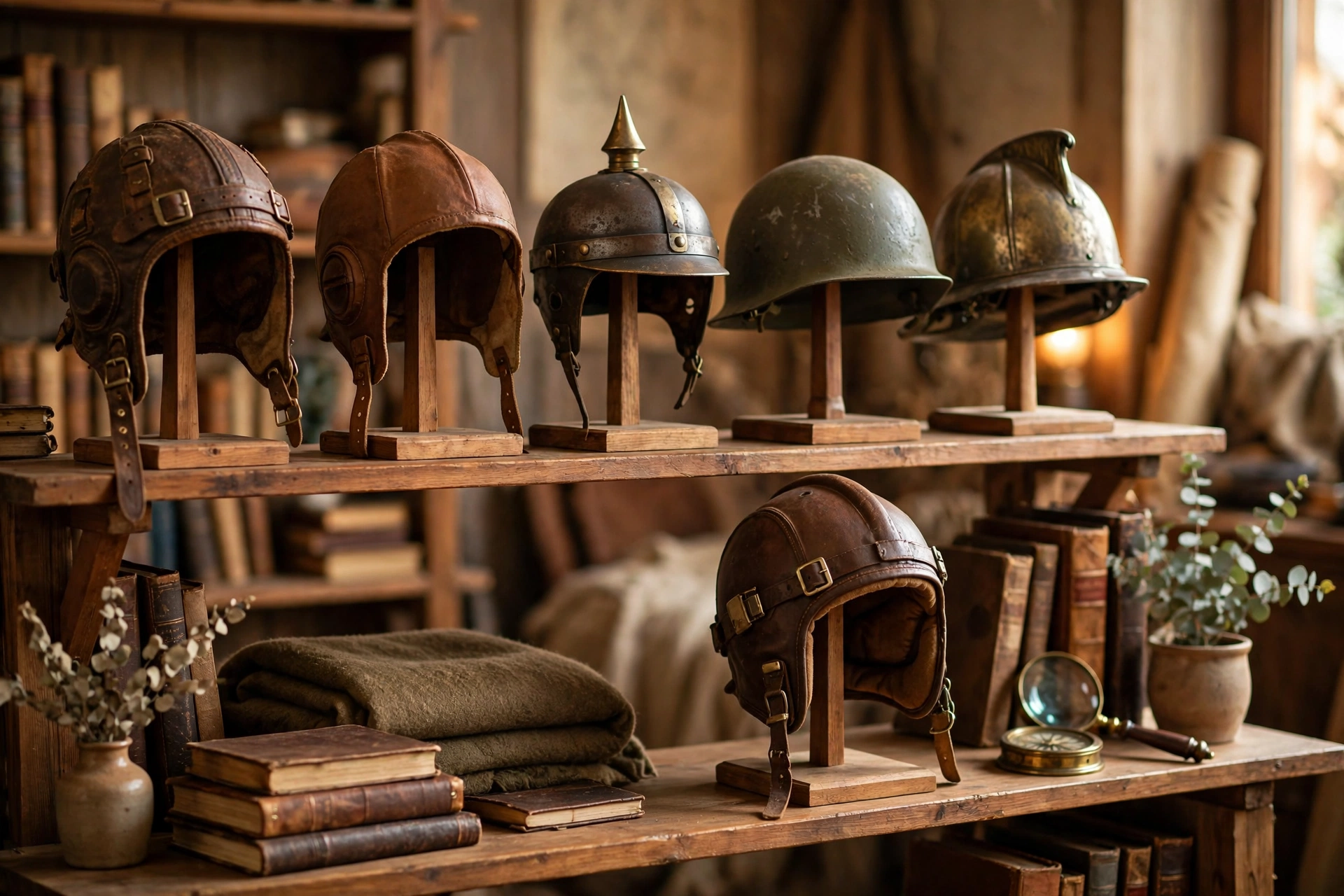
Each helmet in a collection should be positioned so its most interesting side faces outwards, with enough space around it to be seen clearly. Leave a gap between helmets so they do not touch, since paint and leather can stick together or scratch when pieces are crowded. Heavier helmets should sit on lower shelves, where they are less likely to fall far if they are knocked, and lighter pieces can go higher up.
Turn some helmets to show a badge, a maker’s mark, or a distinctive vent, and angle others so the shape of the shell can be appreciated. A small label next to each helmet, with its date and origin, helps visitors understand what they are looking at. In general terms, a display that gives each helmet room to breathe looks better and keeps the collection safer than one that is packed tightly together.
How Do You Protect Vintage Helmets on Display?
Vintage helmets on display need protection from dust, light, and handling. Dust should be removed gently with a soft brush or a dry cloth, since wiping with a damp cloth can damage old leather or flaking paint. Leather helmets can be kept supple with a small amount of leather conditioner, applied sparingly and tested on a hidden area first, while metal parts can be wiped lightly to prevent rust.
Keep hands off the helmets as much as possible, since oils from skin can stain old materials over time. If the display is in a room where children or pets pass through, a glass cabinet is a sensible choice. Check the helmets every few months for signs of damp, mould, or insect damage, and move any piece that shows a problem to a safer spot. In general terms, gentle handling and regular checks will keep a vintage collection in good condition for years.
Should You Add Lighting to a Helmet Display?
Lighting can make a vintage helmet display look far better, but it should be chosen carefully. Warm LED lights are a good choice because they give off very little heat and no harmful ultraviolet light, which can fade paint and dry out leather. Small spotlights or LED strips fitted inside a cabinet can highlight each helmet without warming the display, and they use little electricity.
Avoid old halogen bulbs, which give off heat, and avoid placing lights close to the helmets themselves. If the display is in a room with a window, keep the helmets out of direct sunlight even when the lights are on. A simple timer that switches the lights off at night is a good idea, since it saves electricity and gives the helmets a rest from the light. In general terms, gentle LED lighting shows a collection at its best without putting it at risk.
How Can You Tell the Story of Your Collection?
A display becomes much more interesting when it tells the story of the collection. Group helmets by era, sport, or country, so visitors can see how designs changed over time. A leather motorcycle helmet next to a steel racing helmet shows a clear story of progress, while a set of helmets from one sport shows how safety thinking developed. Short labels with the date, maker, and a line about where each helmet came from add context.
Photographs, old adverts, or small items such as goggles and gloves can be displayed alongside the helmets to fill out the story. A simple printed guide, or a small notebook kept near the display, lets visitors read more without handling the helmets. In general terms, a collection displayed with its story in mind is far more engaging than a row of helmets with no explanation at all.
Can vintage helmets be displayed in a garage?
Only if the garage is dry, well ventilated, and free from damp and temperature swings. Most garages are too damp for old leather and early plastics, so an indoor room is usually a safer choice.
Should vintage helmets be kept in their original boxes?
Original boxes are worth keeping for storage and for value, but helmets on display look better out of the box on a stand. Keep the boxes somewhere dry and use them when a helmet is put away.
How often should a displayed collection be cleaned?
A light dusting every few weeks and a closer check every few months is usually enough. Dust gently with a soft brush, and handle each helmet as little as possible to avoid wear.

Olivia
Writer at Helmet Today, covering helmet reviews, fit and riding safety.