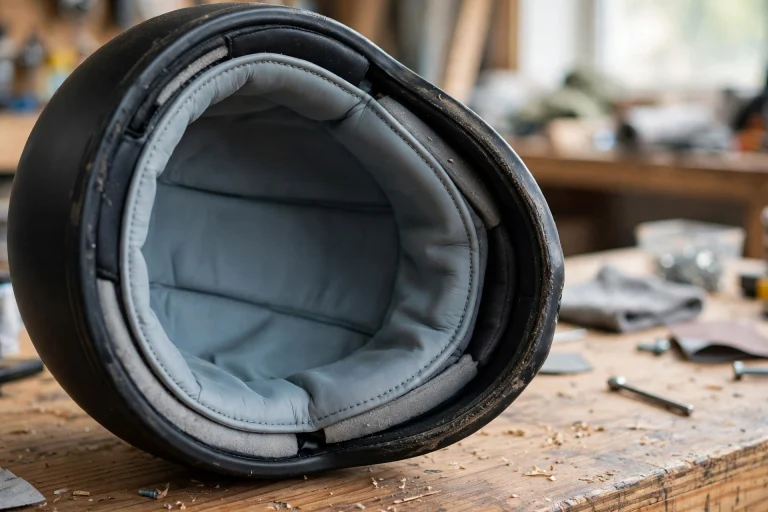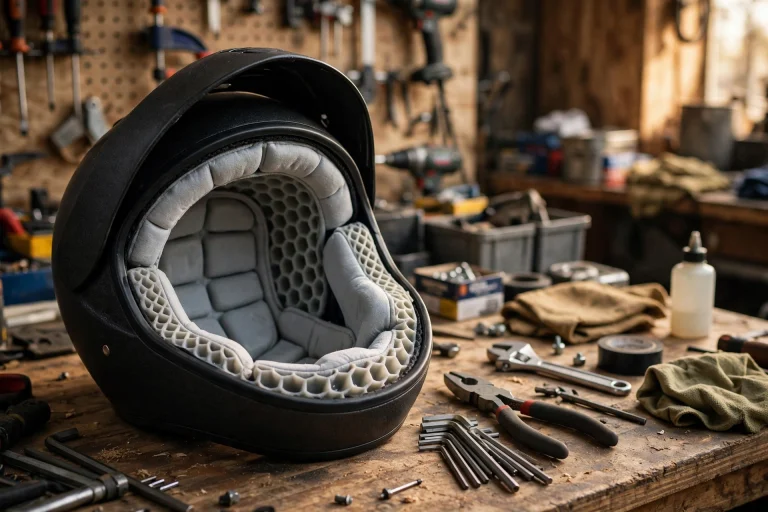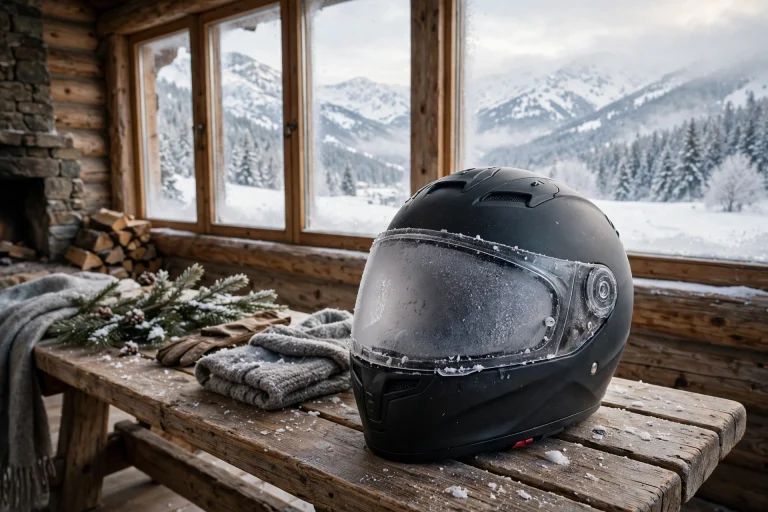
A neoprene helmet liner is a soft layer of neoprene, fitted inside a helmet between the shell and the head, that adds warmth, wicks away sweat, and helps the helmet sit snugly. It is made from the same stretchy, rubber-like material used in wetsuits, and it gives the inside of the helmet a soft, close-fitting feel. Neoprene liners are used in some ski, snowboard, water sports, and cold-weather helmets, where warmth and a snug fit matter most. They are valued for comfort in cold conditions and for the way they grip the head gently without slipping.
What Is Neoprene?
Neoprene is a synthetic rubber material that is soft, stretchy, and able to keep the body warm even when it is wet. It is made by foaming the rubber so that it is full of tiny closed air pockets, which trap warmth and keep cold water and cold air away from the skin. It is the material most often used for wetsuits, and it is also used for gloves, boots, and helmet liners.
In a helmet liner, neoprene is usually used as a thin, flexible layer, often with a soft fabric face on the side that touches the skin. It stretches to fit the shape of the head and springs back when it is taken off, so it keeps its shape well over time. In general terms, neoprene is tough, water-resistant, and easy to clean, which makes it a practical choice for a part of the helmet that is close to the skin and exposed to sweat.
How Does a Neoprene Liner Keep You Warm?
A neoprene liner keeps the rider warm by trapping a thin layer of air against the head and by blocking cold wind and water from reaching the skin. The tiny air pockets in the neoprene act as insulation, slowing the loss of body heat, while the rubber itself stops cold air from passing through. That makes a real difference on a cold day, especially when the rider is moving fast and the wind chill is strong.
Neoprene also stays warm when it is wet, which is why it is used in water sports. If sweat or spray gets into the liner, the neoprene still holds warmth, while a foam liner can feel cold and clammy when wet. In general terms, a neoprene liner is at its best in cold and wet conditions, and it can make a helmet feel much warmer than the same helmet with a plain foam liner.
Does a Neoprene Liner Help With Fit?
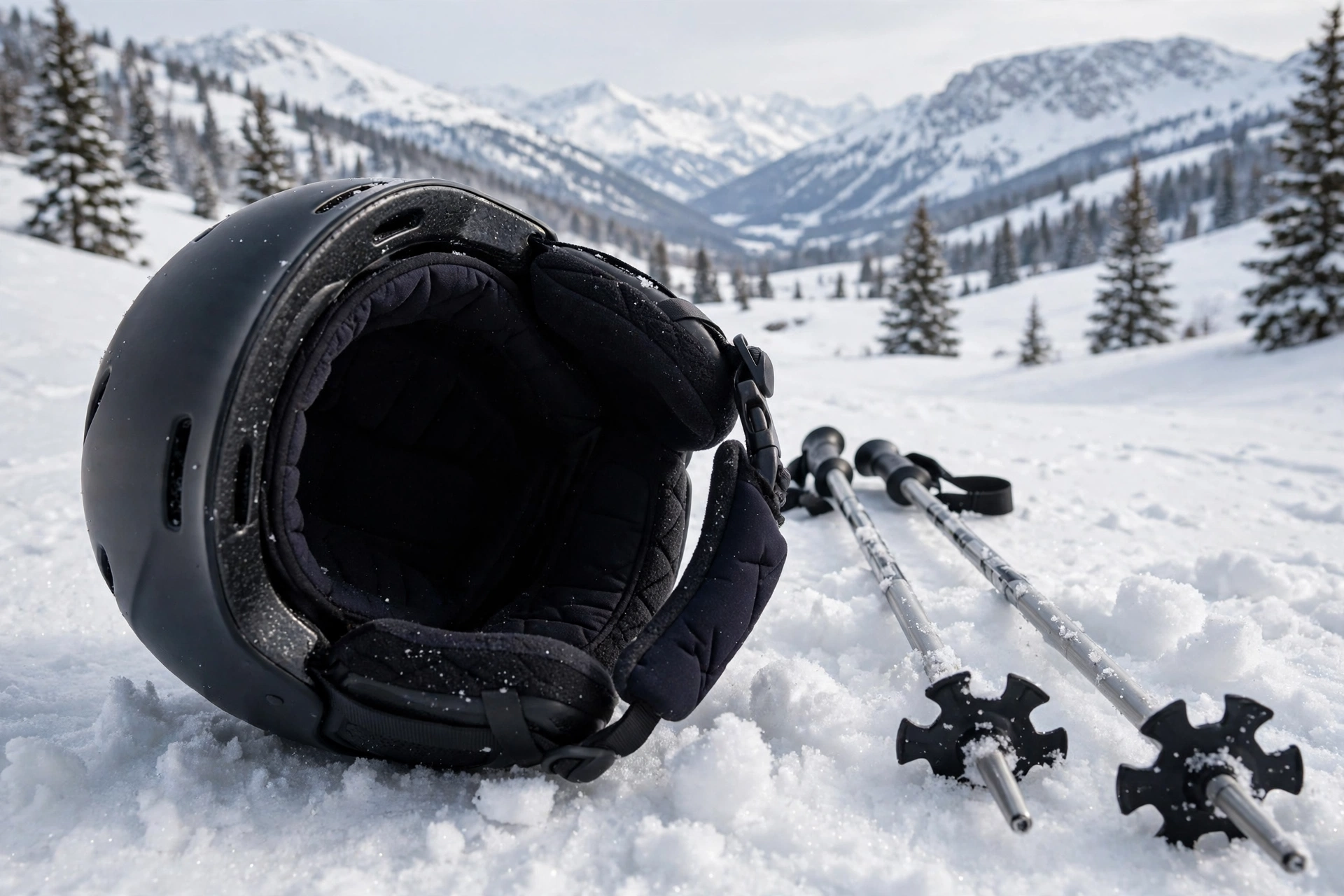
Yes, a neoprene liner can help with fit, because it is stretchy and moulds gently to the shape of the head. It fills small gaps between the head and the shell, which helps the helmet sit snugly without pressure points. The slight grip of the neoprene also helps the helmet stay in place, so it is less likely to shift or wobble during a run.
That snug fit is useful in sports where the helmet is shaken around, such as skiing, snowboarding, and water sports, because a helmet that moves is both distracting and less protective. In general terms, the liner works best when it is the right thickness for the helmet: too thick, and the helmet feels tight; too thin, and it does not fill the gaps. Trying the helmet on with the liner in place is the simplest way to check the fit.
What Are the Downsides of a Neoprene Helmet Liner?
Neoprene liners have a few downsides worth knowing. The first is heat: neoprene is an insulator, so it can make the helmet feel too warm in mild or hot weather, and it does not breathe as well as a fabric liner. A rider who wears a neoprene-lined helmet on a warm day may sweat more and feel uncomfortable.
The second is smell and care. Neoprene can hold onto odours from sweat, and it needs to be washed and dried properly to stay fresh. It can also feel clammy against the skin if it is damp and cold. In general terms, these are manageable problems, but they mean a neoprene liner suits cold-weather use better than all-year use. If you want to understand one of the safety technologies used in modern helmets, reading about what MIPS is for helmets is a good place to start, though a neoprene liner itself is a comfort and warmth feature rather than a safety system.
How Do You Clean a Neoprene Helmet Liner?
Cleaning a neoprene liner is simple, but it needs care to avoid damaging the material. The liner should be taken out of the helmet if it is removable, then washed gently by hand in lukewarm water with a mild soap, and rinsed well. It should not be put in a washing machine or a tumble dryer, because heat and rough handling can damage the neoprene.
After washing, the liner should be left to dry naturally, away from direct heat and sunlight, and it should be fully dry before it is put back in the helmet. Drying it flat helps it keep its shape. In general terms, washing the liner after every few uses, or whenever it smells, keeps it fresh and helps it last longer. If the neoprene has gone stiff, cracked, or lost its stretch, it is time to replace it.
When Is a Neoprene Liner Most Useful?
A neoprene liner is most useful in cold weather, in winter sports, and in water sports, where warmth and a snug fit matter most. Skiers, snowboarders, and river and sea sports riders all benefit from the extra warmth and the way the liner grips the head. It is also useful for anyone who rides in cold rain or wind, where a plain liner can feel chilly.
The liner is less useful in warm weather, when its insulation becomes a drawback and a lighter, more breathable liner would be more comfortable. That is why many helmets with a neoprene liner make it removable, so the rider can take it out in summer and fit it again in winter. In general terms, a neoprene liner is a seasonal feature that makes a big difference in the cold, and it costs the rider nothing to have it there when it is not needed.
Can I add a neoprene liner to my helmet?
In general terms, yes. Neoprene liner pads and skull caps are available as add-ons, and many can be fitted inside an existing helmet. They may not fit as neatly as a built-in liner, so it is worth checking that the helmet still fits comfortably with the liner in place.
Does neoprene cause skin irritation?
Some people are sensitive to neoprene, and it can cause itching or a rash, especially when worn for long periods. If the skin feels sore or itchy after wearing a neoprene liner, it is best to stop using it and try a fabric liner instead.
Will a neoprene liner make my helmet too tight?
It can, if the liner is thick and the helmet is already a snug fit. The liner adds a layer inside the shell, so the helmet should be tried on with the liner fitted to make sure it is still comfortable and does not press on the head.

Olivia
Writer at Helmet Today, covering helmet reviews, fit and riding safety.