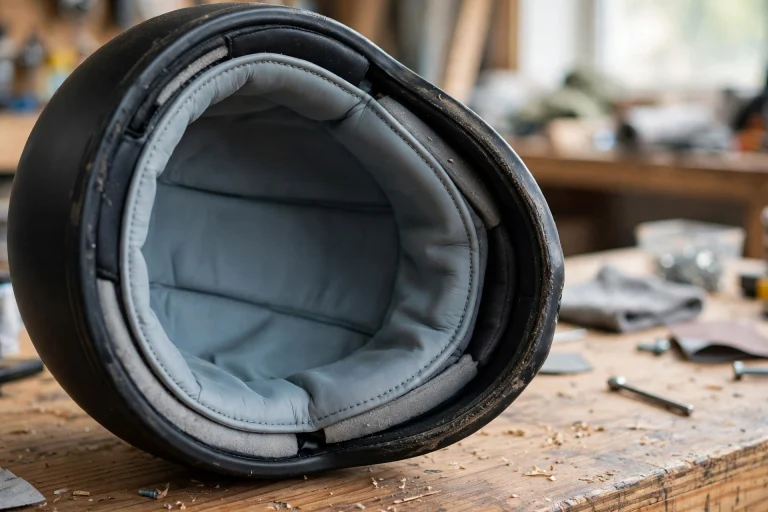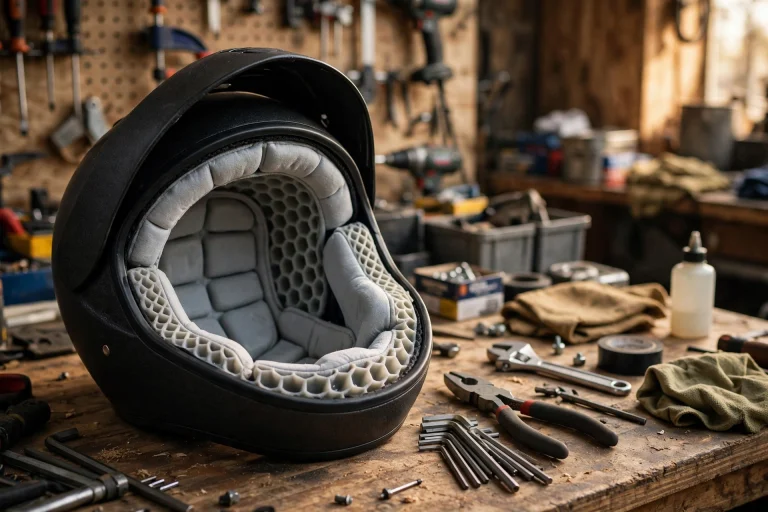
A cotton helmet liner is a soft layer of cotton fabric fitted inside a helmet, between the shell and the head, that adds comfort, absorbs sweat, and gives a gentle feel against the skin. It is usually a thin, washable fabric cover over the foam padding, or a set of cotton pads fixed inside the shell, and it is one of the simplest and most familiar liner materials used in helmets. Cotton liners are found in some motorcycle, cycling, work, and sports helmets, and they are valued for their softness, their breathability, and the fact that they can usually be taken out and washed.
What Is a Cotton Liner Made Of?
A cotton liner is made from cotton fabric, sometimes on its own and sometimes blended with a small amount of another fibre to help it keep its shape. The fabric is cut and sewn into a shape that fits the inside of the helmet, and it is usually fixed to the foam padding with press studs, hook-and-loop fasteners, or stitching. Some liners are a single piece that covers the whole inside of the helmet, while others are separate pads for the crown, the sides, and the back.
Cotton is a natural fibre, which is why it feels soft against the skin and lets air pass through it. In general terms, that breathability is the main reason cotton is used: it allows sweat to evaporate and air to circulate, which helps keep the head cooler and drier than a liner made from a solid, non-breathable material. The fabric is usually thin, so it adds very little bulk or weight to the helmet.
How Does a Cotton Liner Protect the Head?
A cotton liner does not protect the head on its own. It is a comfort layer, not an impact layer, and the real protection comes from the helmet’s hard outer shell and its foam impact liner. The cotton sits over the foam and makes it comfortable to wear, but it is far too thin and soft to absorb the force of a knock by itself.
That said, a cotton liner still helps safety in a small way. A comfortable helmet is one a rider will actually wear, and a liner that fits well helps the helmet sit in the right position on the head. If you want to understand one of the safety technologies used in modern helmets, reading about MIPS is a good place to start, since cotton liners and rotational protection systems deal with very different parts of the same problem.
Is a Cotton Liner Comfortable to Wear?
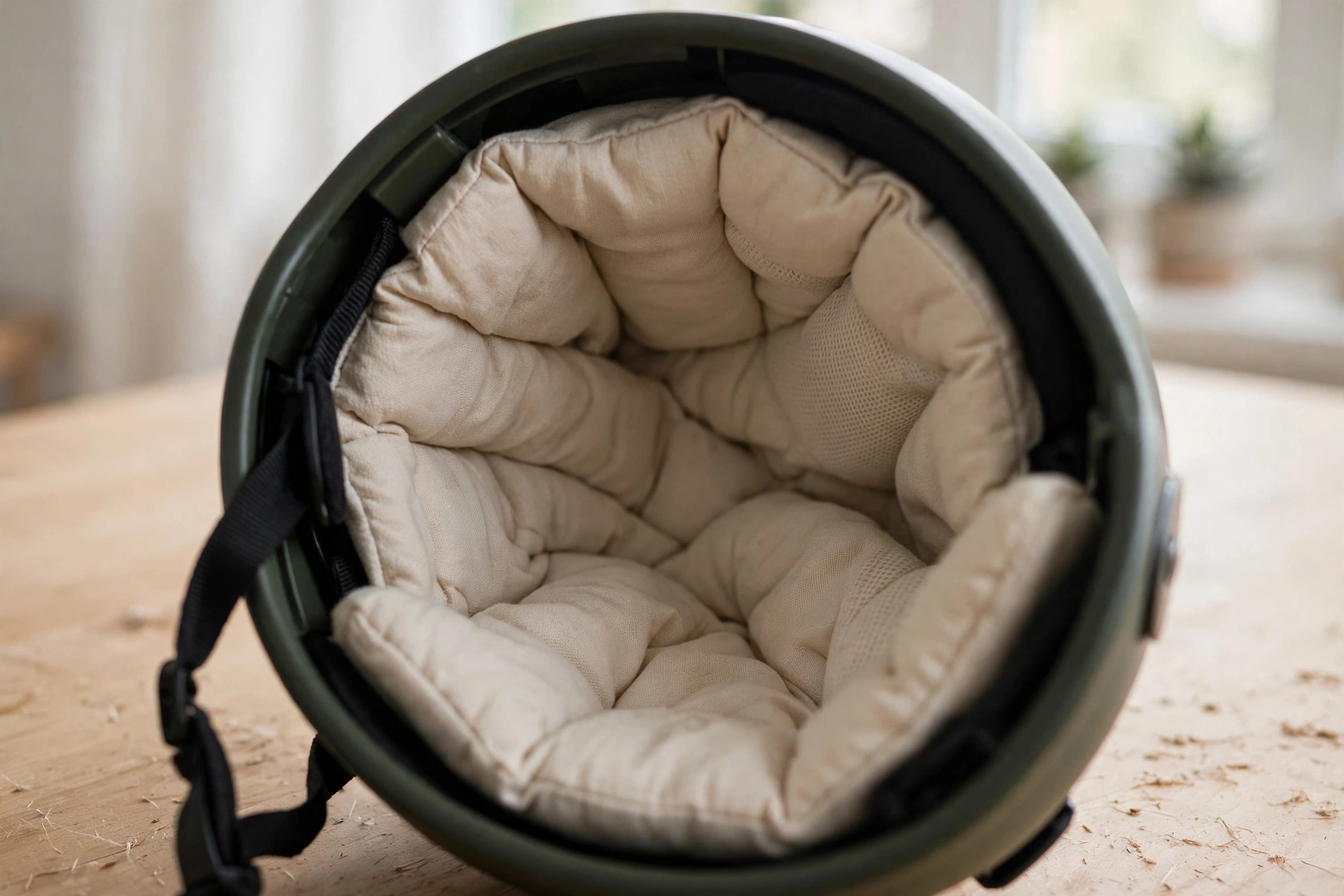
Most riders find a cotton liner comfortable because cotton is soft, smooth, and gentle against the skin. It does not feel sticky or rubbery, and it breathes well, so it is a good choice for warm weather and for long rides. Riders with sensitive skin often prefer cotton to synthetic fabrics, because it is less likely to irritate the skin or cause itching after hours of wear.
Cotton also absorbs sweat, which keeps moisture away from the skin for a while, though the fabric can become damp on a very hot day or a long ride. In general terms, comfort comes down to the fit of the whole helmet, and a cotton liner is one way to improve it, but a well-fitting foam or synthetic liner can be just as comfortable for many riders. The main comfort advantage of cotton is its soft, natural feel.
What Are the Downsides of a Cotton Helmet Liner?
Cotton liners have a few downsides worth knowing. The first is that cotton absorbs moisture and holds on to it, so a cotton liner can stay damp after a sweaty ride and can take a while to dry. If it is not dried properly, it can start to smell, and in time the fabric can wear thin where it rubs against the head.
Cotton can also shrink slightly when it is washed, especially if it is washed in hot water, which can change the fit of the liner inside the helmet. In general terms, these are small trade-offs, and the liner still works well, but they are worth knowing about. Cotton liners can also wear out faster than synthetic ones, so they may need replacing more often if the helmet is used every day.
How Do You Clean a Cotton Helmet Liner?
Cleaning a cotton liner is usually simple, because most cotton liners can be taken out of the helmet. The liner should be removed, following the maker’s instructions, and washed by hand or on a gentle cycle with mild soap, then left to dry fully in the air before it is put back. It should not be put in a tumble dryer, since the heat can shrink the fabric or damage the fasteners.
If the liner cannot be removed, it can be wiped inside the helmet with a damp cloth and mild soap, then left to dry with the helmet open in a well-ventilated place. The liner should be checked from time to time for thin spots, tears, or loose stitching, and if it is worn out it should be replaced, following the maker’s instructions.
Who Might Choose a Helmet With a Cotton Liner?
A helmet with a cotton liner might suit a rider who likes a soft, natural feel against the skin, or who has sensitive skin that reacts to synthetic fabrics. Commuters and riders who wear a helmet daily are the people most likely to notice the difference, because the washability of cotton matters most when a liner is used every day and needs regular cleaning.
Riders in warm climates may also like cotton, since it breathes well and feels cool against the head. In general terms, though, a cotton liner is a comfort feature rather than a must-have, and the most important thing when choosing a helmet is still the fit, the safety standard, and the type of riding. A cotton liner is worth trying if comfort or easy washing matters to you, but it is not needed by every rider.
Does a cotton liner make a helmet safer?
In general terms, no. A cotton liner is a comfort layer, not a safety layer. The safety of a helmet comes from its shell, its foam liner, and its fit, with the cotton adding softness and sweat absorption rather than impact protection.
Can a cotton liner be replaced?
Yes, in general terms. On many helmets the cotton liner can be taken out and replaced with a new one, following the maker’s instructions. Replacement liners are often sold as spares, so a worn liner does not mean a new helmet is needed.
Does a cotton liner shrink when washed?
It can shrink slightly, especially if washed in hot water. Washing in cool water with mild soap and drying in the air helps the liner keep its shape and fit inside the helmet.

Olivia
Writer at Helmet Today, covering helmet reviews, fit and riding safety.