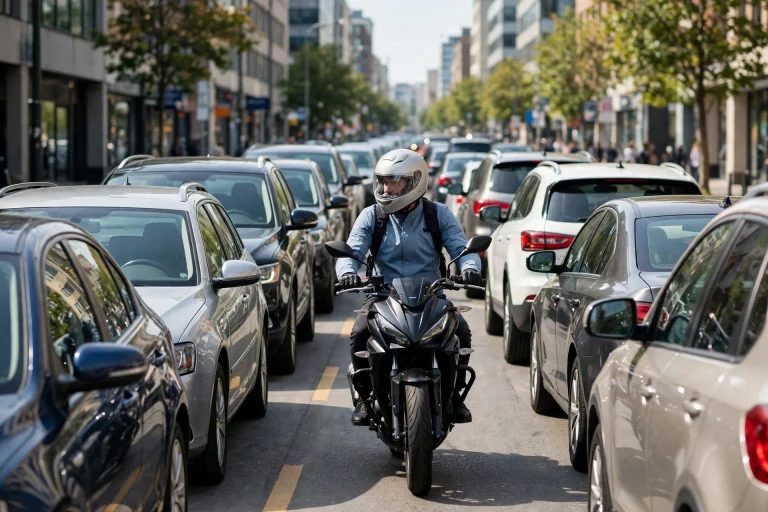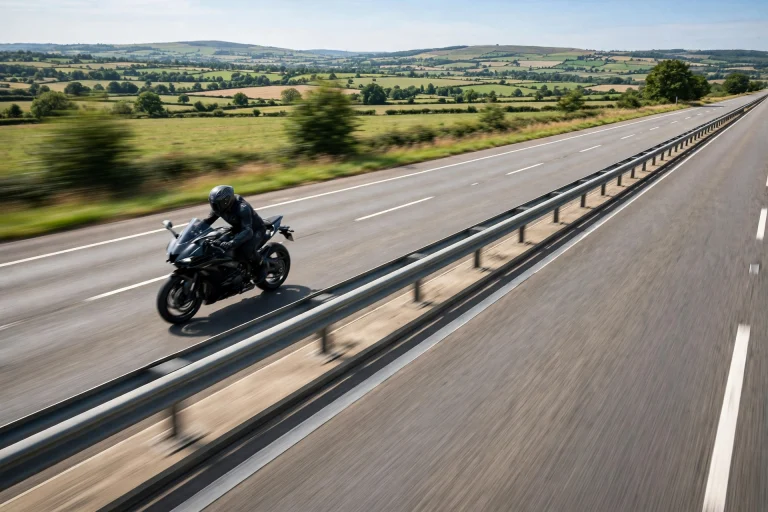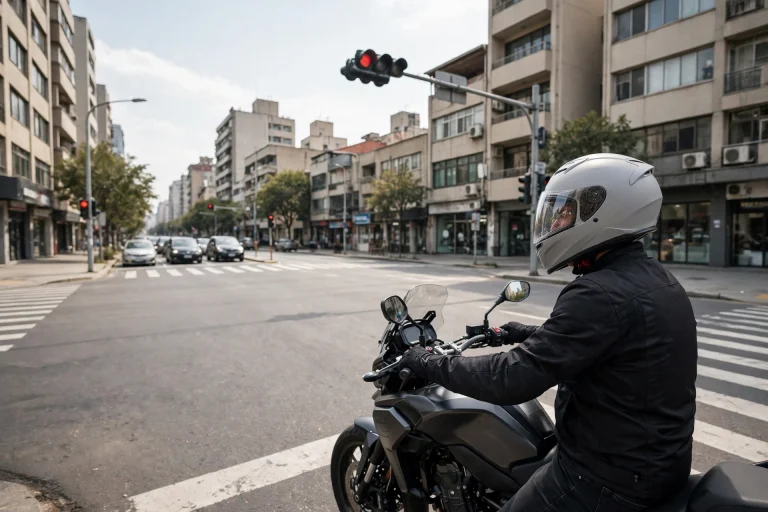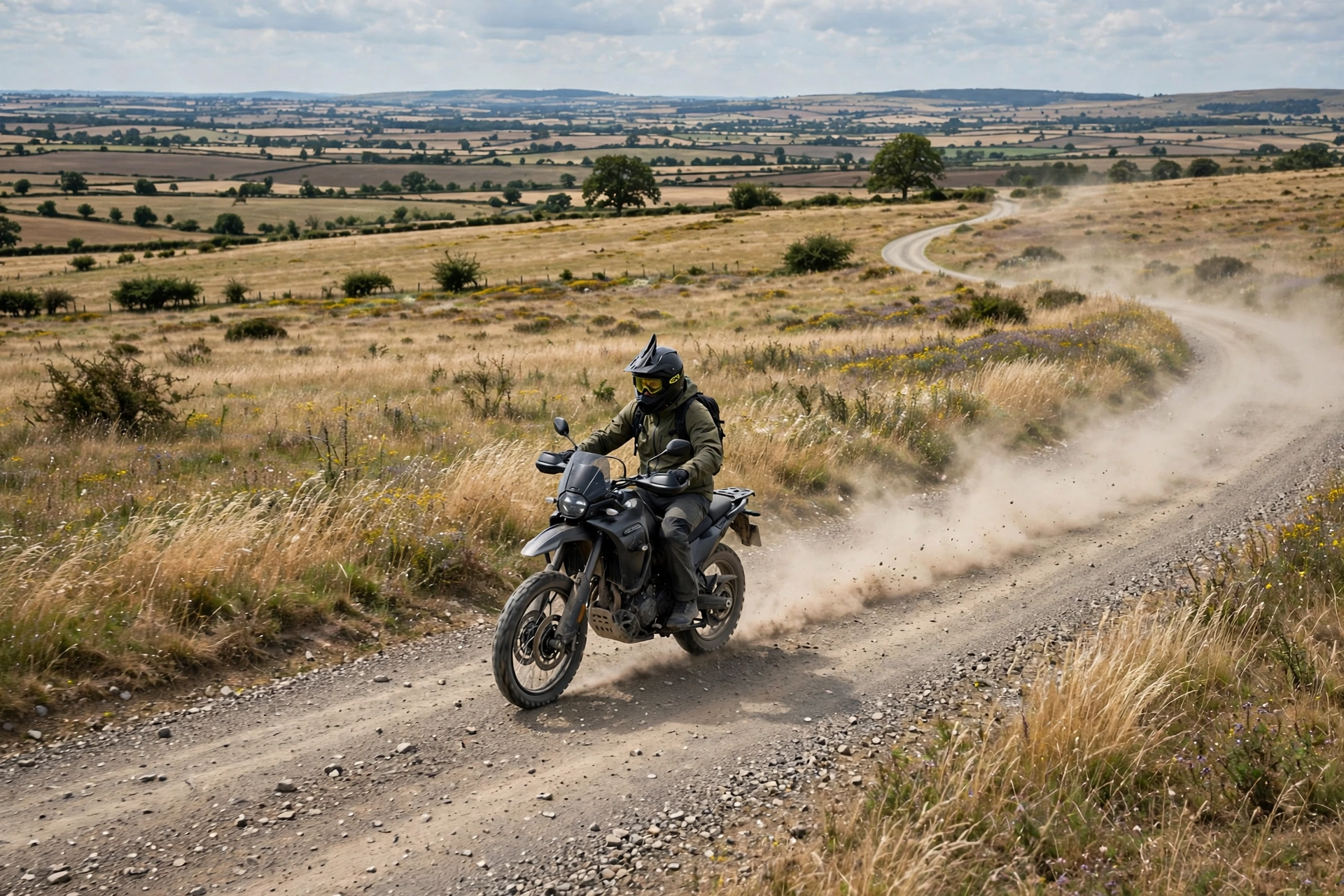
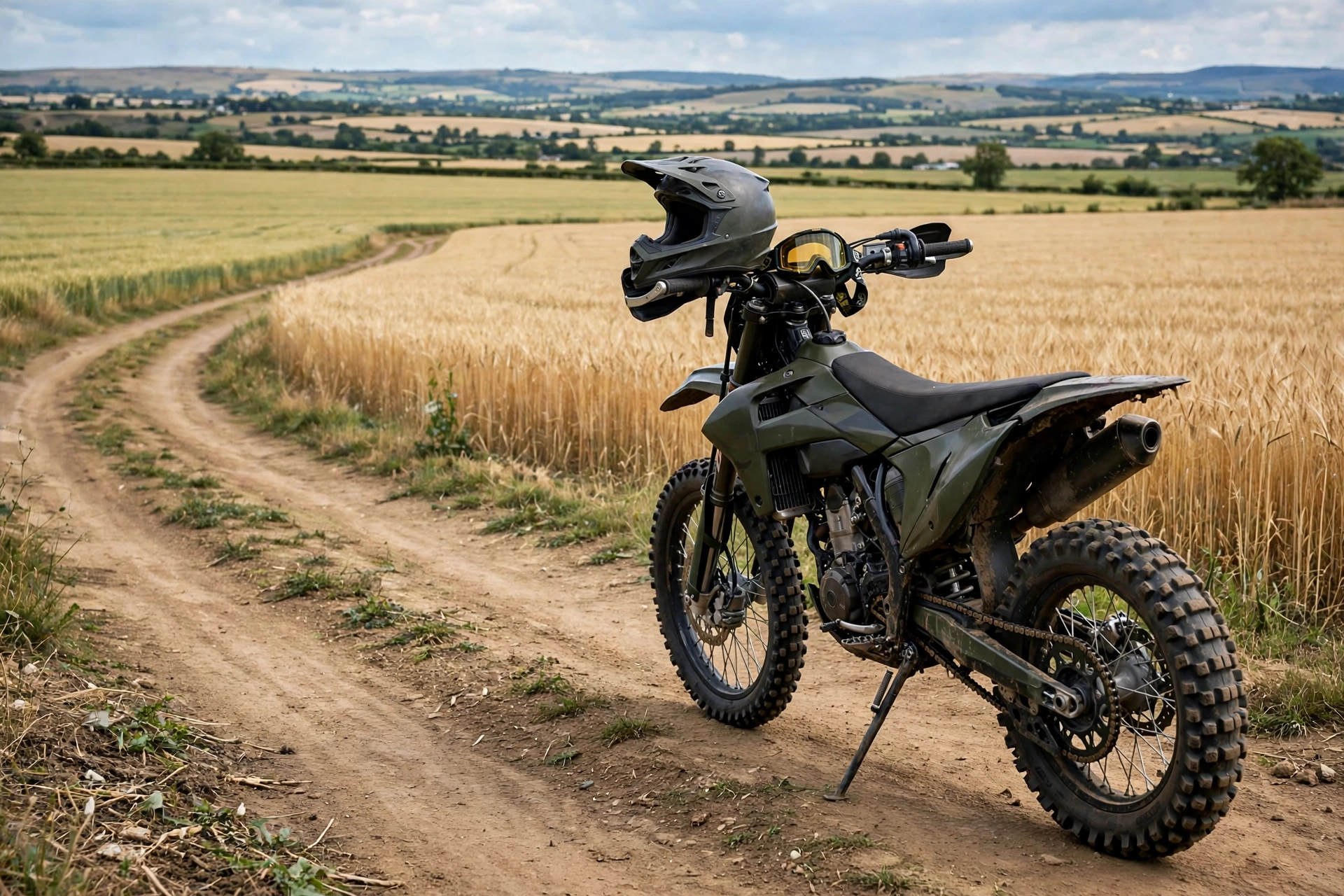
A motorcycle helmet for riding on unpaved roads is a sturdy, well-ventilated helmet with a peak to block sun and roost, a clear visor or goggles, and a snug fit that stays steady over bumps and loose surfaces. Unpaved roads mean gravel, dirt, dust, and ruts, and the helmet needs to cope with all of them: shielding the eyes from dust and stones, staying comfortable when the bike bounces, and keeping the rider cool on slow, dusty stretches.
Riding on unpaved roads is very different from riding on tarmac. The surface changes constantly, from hard-packed dirt to loose gravel, and the bike moves around more underneath the rider. Dust hangs in the air, stones flick up from the wheels, and the sun beats down with little shade. A helmet built for this kind of riding balances protection, ventilation, and vision, so the rider can see the road ahead and stay comfortable through a long, bumpy ride.
What makes unpaved roads hard on a helmet?
Dust is the biggest problem. On a dry dirt road, every vehicle ahead throws up a cloud of dust that hangs in the air and gets into the helmet, the eyes, and the lungs. A helmet with a good seal around the visor or goggles keeps most of the dust out, and vents that can be closed stop dust blowing in through the top.
Stones and roost are another hazard. Loose gravel flicked up by the wheels can hit the visor and the shell, and a stone to the face without protection hurts and can distract the rider at the wrong moment. A strong visor or goggles, and a peak that deflects debris, are important on unpaved roads.
Bumps and vibration are a third factor. An unpaved road shakes the bike constantly, and a helmet that is loose or heavy will bounce on the head and tire the rider’s neck. A snug fit and a light shell make a long dirt ride far more comfortable.
How should an unpaved-road helmet fit?
The helmet should fit snug all around, with no rocking over bumps. Check the fit by shaking your head gently: the helmet should move with your head, not slide around on its own. The chin strap should be snug, with one or two fingers fitting underneath, and it should hold the helmet steady when the bike bounces.
Check the fit with goggles if you wear them. Goggles should sit neatly against the helmet, with no gap at the forehead, and the strap should fit over the back of the helmet without slipping. A helmet with a goggle-friendly shape and a peak that sits above the goggles works best for dirt riding.
- The helmet sits level, with the front just above the eyebrows.
- It stays steady over bumps, with no bouncing or rocking.
- The peak does not catch the wind and lift the helmet.
- You can see the road ahead clearly, even in dust.
Should you choose a peak, a visor, or goggles?
A peak is very useful on unpaved roads. It blocks low sun, deflects stones and branches, and shields the eyes from dust thrown up ahead. A peak that is adjustable lets you set it for the sun, and one that is firmly attached will not flap or lift at speed.
Goggles are often the best eye protection for dirt riding. They seal around the eyes, keep dust out, and can be swapped quickly for a different tint. A helmet made for goggles has a wide eye port and a shape that holds the goggle strap in place. Tear-offs or roll-offs on the goggles let you clear mud and dust without stopping.
A visor is a good alternative if you ride on both paved and unpaved roads. It is easier to use than goggles, and it keeps out wind and rain. Choose a clear visor with an anti-fog coating, and make sure it seals well against the helmet, so dust does not blow in around the edges. Some helmets also include a MIPS liner, which sits inside the shell, so check the fit and the ventilation when you try the helmet on.
How do you stay cool and see clearly in dust?
Good ventilation helps, but it needs to be controllable. Vents that can be opened and closed let you get airflow when the air is clear and shut the dust out when you are riding in a cloud behind another vehicle. A helmet with a dust filter or a fine mesh over the vents can help too, but it needs cleaning regularly.
Keep a gap from the vehicle ahead. Dust is worst directly behind another rider or vehicle, so a bigger gap means clearer air and a clearer visor. If you must ride in dust, slow down, keep your eyes on the road, and wipe or clear your goggles or visor at the next safe stop.
How do you handle loose gravel and ruts?
Slow down and look ahead. On loose gravel, the bike moves around more, and sudden braking or steering can make it slide. A steady speed, a relaxed grip, and eyes well ahead give you time to pick a line through the gravel and avoid the deepest ruts.
Stand on the pegs when the road is rough. Standing lets your legs absorb the bumps and keeps the bike steadier, and it also takes some weight off the saddle. A helmet that fits well helps here, because a bouncing helmet makes it harder to keep your head steady and your eyes on the road.
How do you look after a helmet used on dirt roads?
Clean the helmet after every dirt ride. Dust and grit get into the vents, the visor mechanism, and the liner, and they can wear parts out if left there. Wipe the shell with a soft cloth and clean water, rinse the vents, and let the helmet air-dry with the vents open.
Clean the visor or goggles carefully. Rinse them with clean water first, to wash off dust and grit, and then wipe them gently with a soft cloth. Wiping a dusty lens dry can scratch it, and a scratched lens makes it harder to see on the next ride.
Check the helmet for damage after a ride. Look for cracks in the shell, a peak that has loosened, or a visor mechanism that feels stiff. If the helmet has been in a crash or a hard fall, replace it, even if it looks fine, because the foam inside may be damaged.
Do I need a special helmet for unpaved roads?
In general terms, a dual-sport or adventure helmet works best. It has a peak, good ventilation, and room for goggles, which suit dirt riding. A road helmet can be used on a short dirt stretch, but it is less good at keeping dust out and blocking sun.
Are goggles better than a visor on dirt roads?
Many riders find goggles better, because they seal around the eyes and keep dust out. A visor is easier to use and works well if you ride on both paved and unpaved roads. Choose the option that seals well and suits the riding you do most.
How do I keep dust out of my helmet?
Close the vents when riding in a dust cloud, keep a gap from the vehicle ahead, and use goggles or a well-sealed visor. Clean the helmet and the vents after every dirt ride, so dust does not build up inside.

Olivia
Writer at Helmet Today, covering helmet reviews, fit and riding safety.