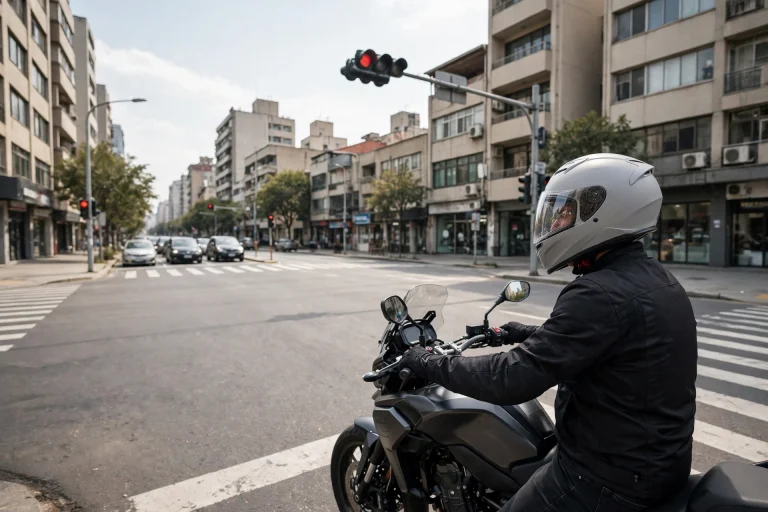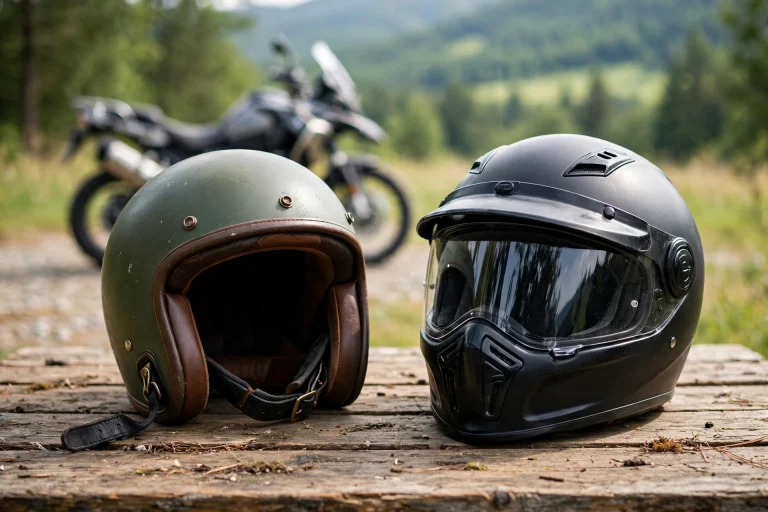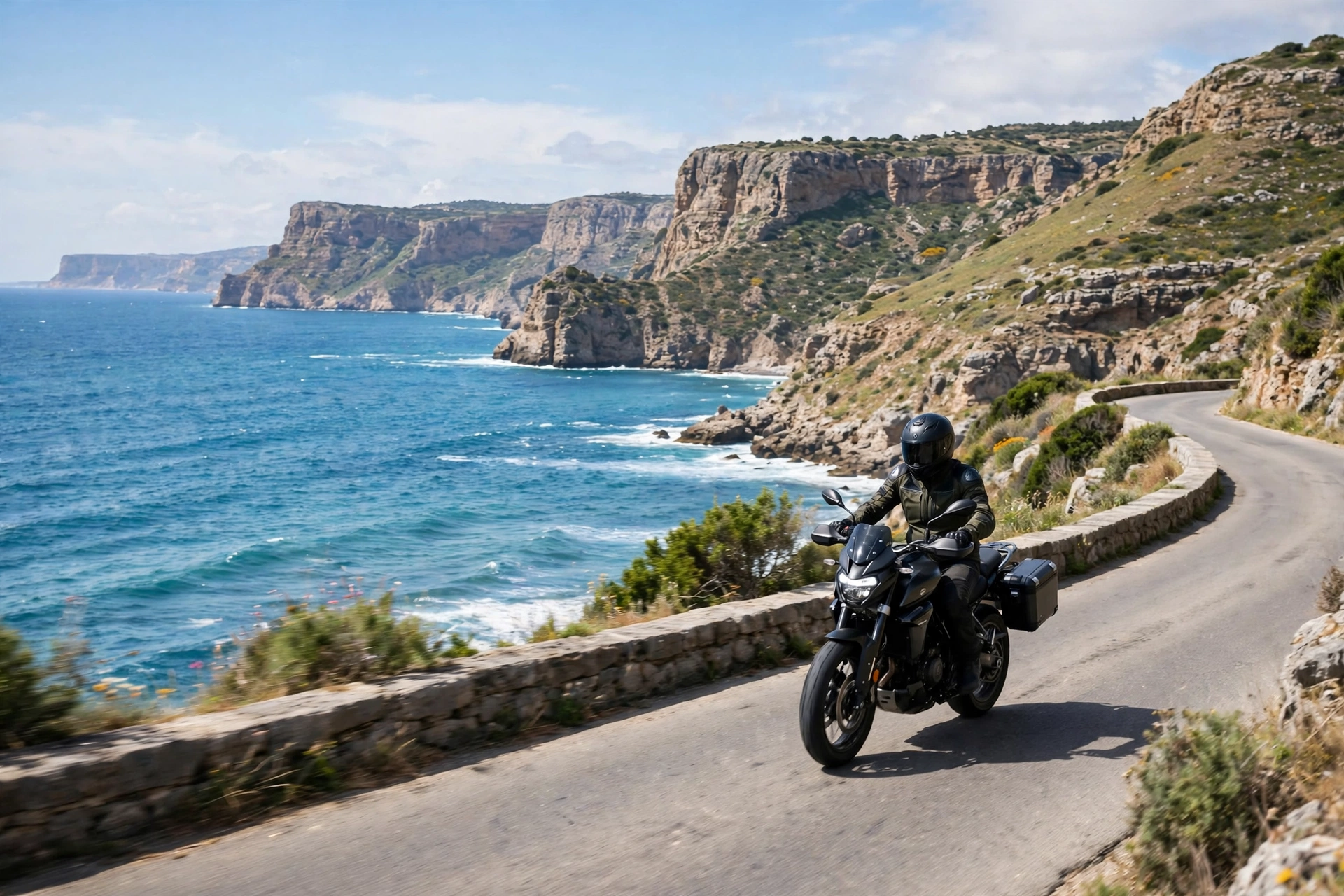
A motorcycle helmet for riding in coastal areas is a well-ventilated helmet with a clear, anti-fog visor and a snug, comfortable fit, made to handle sea wind, salt air, bright glare, and sudden changes in weather. Coastal riding is enjoyable, but it asks more of a helmet than a short town ride: the wind is stronger, the air carries salt, and the light off the water can be harsh. A helmet that copes with those conditions keeps the rider comfortable, able to see clearly, and focused on the road.
Coastal roads often run along cliffs, beaches, and harbours, where the wind comes in gusts and changes direction quickly. Salt in the air settles on the visor and the shell, and a bright sun low over the sea can dazzle a rider at any time of day. Add the chance of rain blowing in from the sea, and the helmet needs to be versatile: good airflow when it is warm, a visor that stays clear when it is damp, and a fit that stays steady in gusty wind.
What makes coastal riding hard on a helmet?
Wind is the biggest factor. Sea wind is often stronger and gustier than inland wind, and it can buffet a helmet, pushing it sideways and making the rider’s neck work harder. A helmet with a smooth, aerodynamic shape cuts through the wind better than one with a tall peak or sharp edges, and a snug fit stops it rocking in gusts.
Salt air is the second problem. Salt settles on the visor as a fine film, which blurs vision, and it can also dull the shell and corrode metal parts such as vents and visor fittings over time. A visor that is easy to wipe and a helmet that is easy to clean matter more on the coast than inland.
Glare is the third challenge. Sunlight reflecting off the sea can be very bright, even on a cloudy day, and it often comes from low down, straight into the rider’s eyes. A clear visor with good sun protection, or a helmet with a drop-down sun visor, helps a rider see the road without squinting.
How should a coastal riding helmet fit?
The helmet should fit snug all around, with no rocking in the wind. A loose helmet catches the wind and moves, which is tiring and distracting on a coastal road. Check the fit by shaking your head gently: the helmet should move with your head, not slide around on its own. The chin strap should be snug, with one or two fingers fitting underneath.
Check the fit with the layers you will wear. On the coast, the weather can change quickly, so you may wear a thin balaclava on a cool morning and nothing under the helmet in the afternoon. Fit the helmet over a thin layer, and make sure it still feels right without one.
- The helmet sits level, with the front just above the eyebrows.
- It stays steady in gusty wind, with no rocking or lifting.
- The chin strap is snug but comfortable.
- You can turn your head easily to check for traffic.
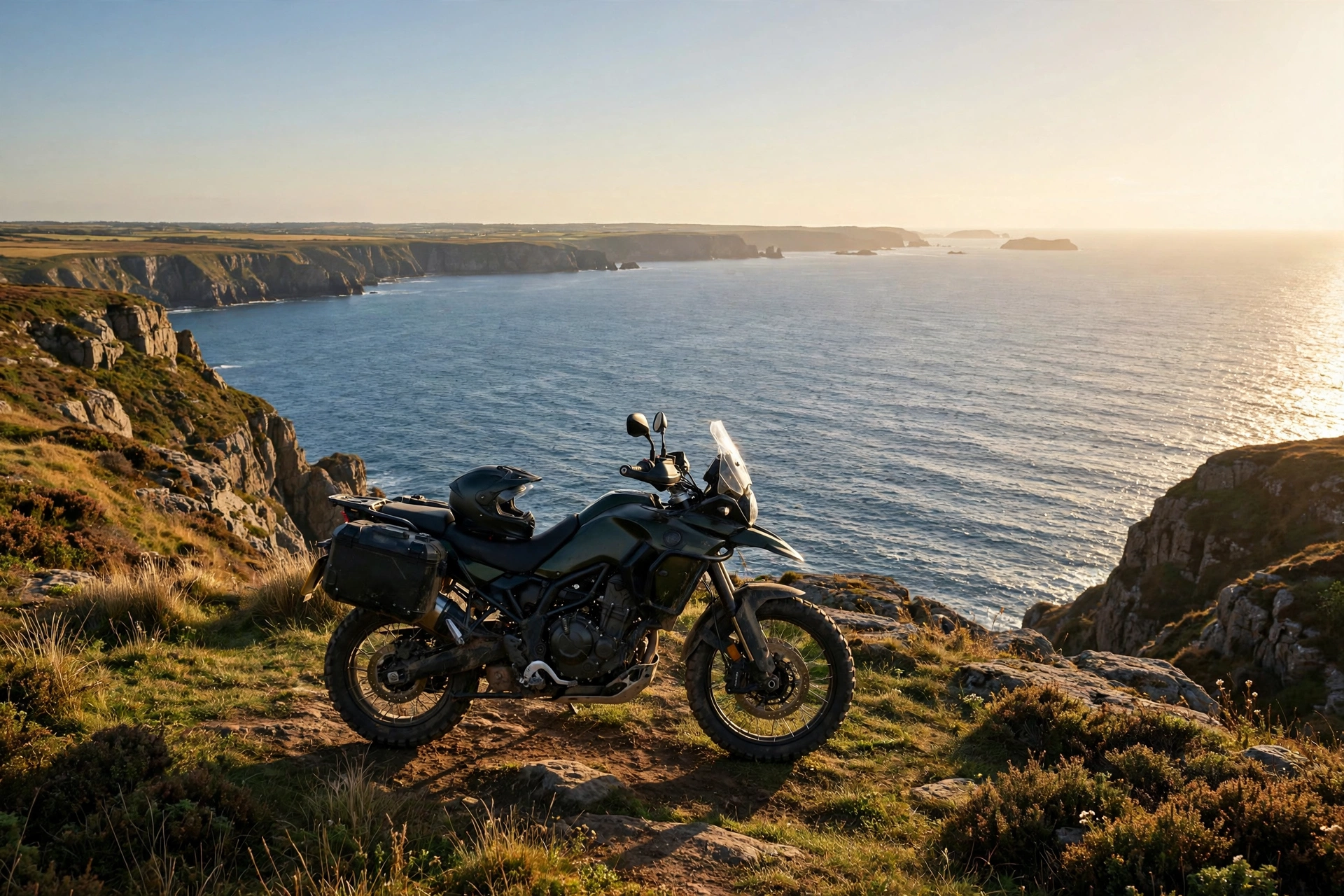
What visor works best by the sea?
A clear visor with an anti-fog coating is the best all-round choice for coastal riding. It gives a true view of the road, and the anti-fog coating stops the inside misting up when the air is damp or when you stop at a junction. Carry a spare clear visor if you often ride at dawn or dusk, when the light changes quickly.
A drop-down sun visor is very useful by the sea. It lets you cut the glare from the water at the flick of a switch, without stopping to change visors. A tinted visor is another option, but it is not ideal when the light fades, so a clear visor plus a sun visor is a more flexible combination.
Keep the visor clean. Salt film builds up quickly on the coast, so wipe the visor with a soft cloth and clean water after a ride, and carry a small cloth for wiping it during a stop. Do not wipe a dry, salty visor with a rough cloth, because the salt can scratch it. Some helmets also include a MIPS liner, which sits inside the shell, so check the fit and the ventilation when you try the helmet on.
How do you handle wind and buffeting on coastal roads?
Choose a helmet with a smooth, aerodynamic shape. A full-face helmet with a clean outline cuts through the wind better than an open-face helmet or one with a tall peak, which can catch the wind and lift. A small, well-designed spoiler can help stability, but a large peak is a drawback in strong coastal gusts.
Keep your riding position steady in gusts. Grip the bars firmly but not stiffly, look well ahead, and let the bike move a little in the wind rather than fighting every gust. A helmet that fits well helps here, because a rocking helmet makes it harder to keep your head steady and your eyes on the road.
How do you look after a helmet used on the coast?
Clean the helmet after coastal rides. Wipe the shell and visor with a soft cloth and clean water to remove salt, and let the helmet air-dry with the vents open. Salt left on the shell can dull the finish, and salt on the visor fittings can cause stiffness over time.
Look after the vents and fittings. Open and close the vents a few times after cleaning, to clear out salt and grit, and check that the visor mechanism still moves smoothly. A drop of care keeps the helmet working well, and a stiff visor is a hazard when the light changes and you need to swap visors quickly.
What else should coastal riders plan for?
Plan for changing weather. Coastal weather can shift from sun to rain in minutes, so carry a waterproof layer and a clear visor, and be ready to stop and adjust. A helmet with closable vents helps, because you can shut the vents when rain blows in and open them again when the sun comes out.
Watch the road surface as well as the sky. Coastal roads can be wet, sandy, or covered in seaweed near the shore, and all of those reduce grip. Slow down on damp patches, and be careful on bends where sand may have blown across the road.
Take breaks and enjoy the view. Coastal riding is at its best when you stop, take the helmet off, and look at the sea. A short break also lets the helmet air out and the visor dry, so the next stretch of road is clearer and more comfortable.
Does salt air damage a motorcycle helmet?
In general terms, salt air can dull the shell and stiffen vents and visor fittings over time if it is left on the helmet. Wipe the helmet with a soft cloth and clean water after coastal rides, and store it indoors in a dry place.
Should I use a tinted visor for coastal riding?
A tinted visor helps with glare, but it is not ideal when the light fades. A clear visor with an anti-fog coating, plus a drop-down sun visor, is a more flexible choice for coastal roads, where the light can change quickly.
Is an open-face helmet okay for coastal riding?
It can be used, but a full-face helmet is usually a better choice on the coast. It protects better against wind, salt spray, and flying grit, and its aerodynamic shape handles gusts more steadily than an open-face helmet.

Olivia
Writer at Helmet Today, covering helmet reviews, fit and riding safety.