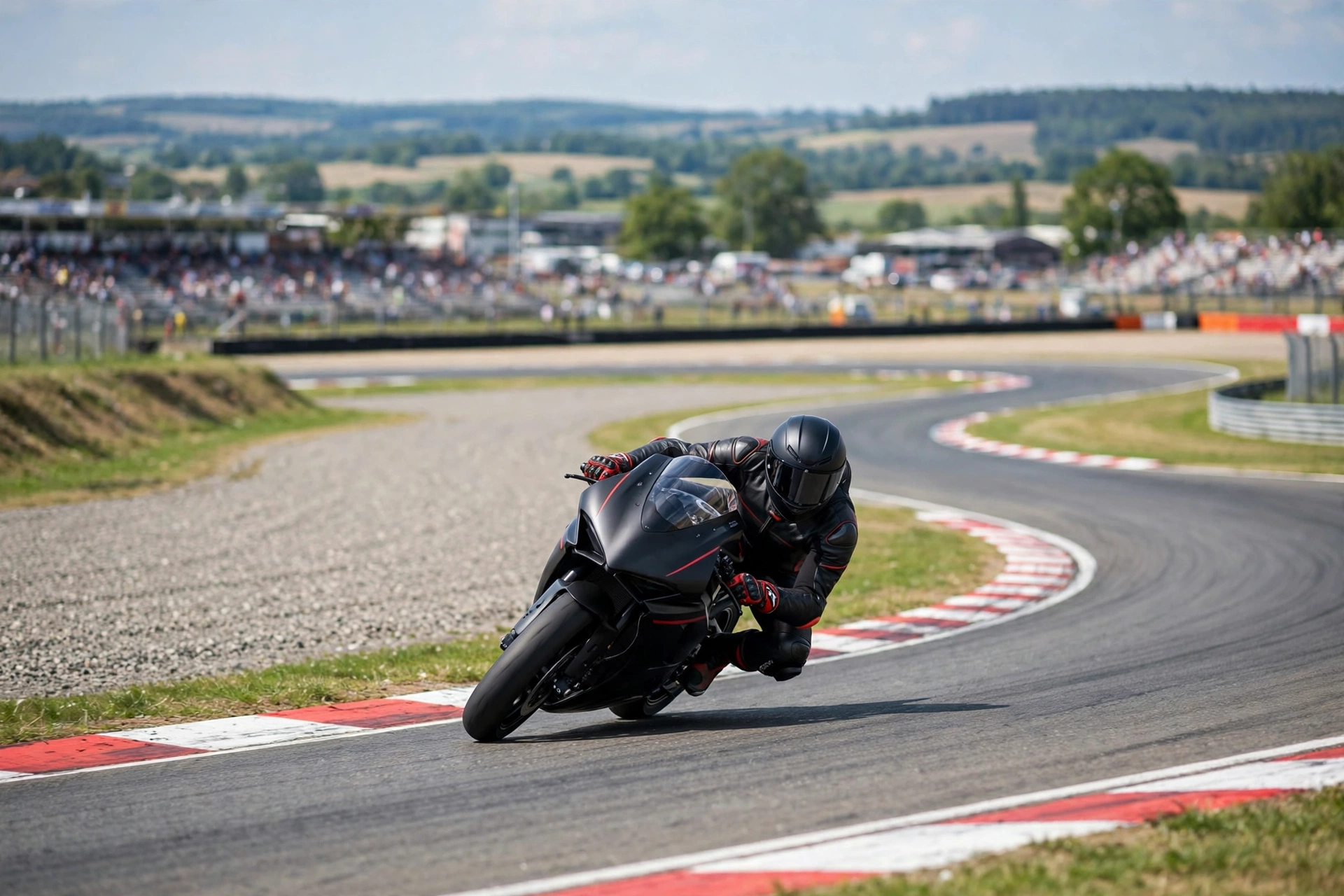
A MotoGP helmet is a full-face racing helmet made for Grand Prix motorcycle racing, built to protect the rider at very high speeds on a closed circuit. It is shaped to cut through the wind, fitted to stay still at speed, and made to give a clear view of the track ahead. For a MotoGP rider, the helmet is a central part of the safety kit, used in every practice session, qualifying lap, and race.
MotoGP is the top level of Grand Prix motorcycle racing, with riders on powerful prototype machines racing on circuits around the world. The bikes reach very high speeds on the straights and lean at extreme angles through the corners. A crash at those speeds can be violent, so the helmet must be able to absorb a hard impact and stay in place. It must also be light and comfortable enough to wear for a full race distance.
What makes a MotoGP helmet different?
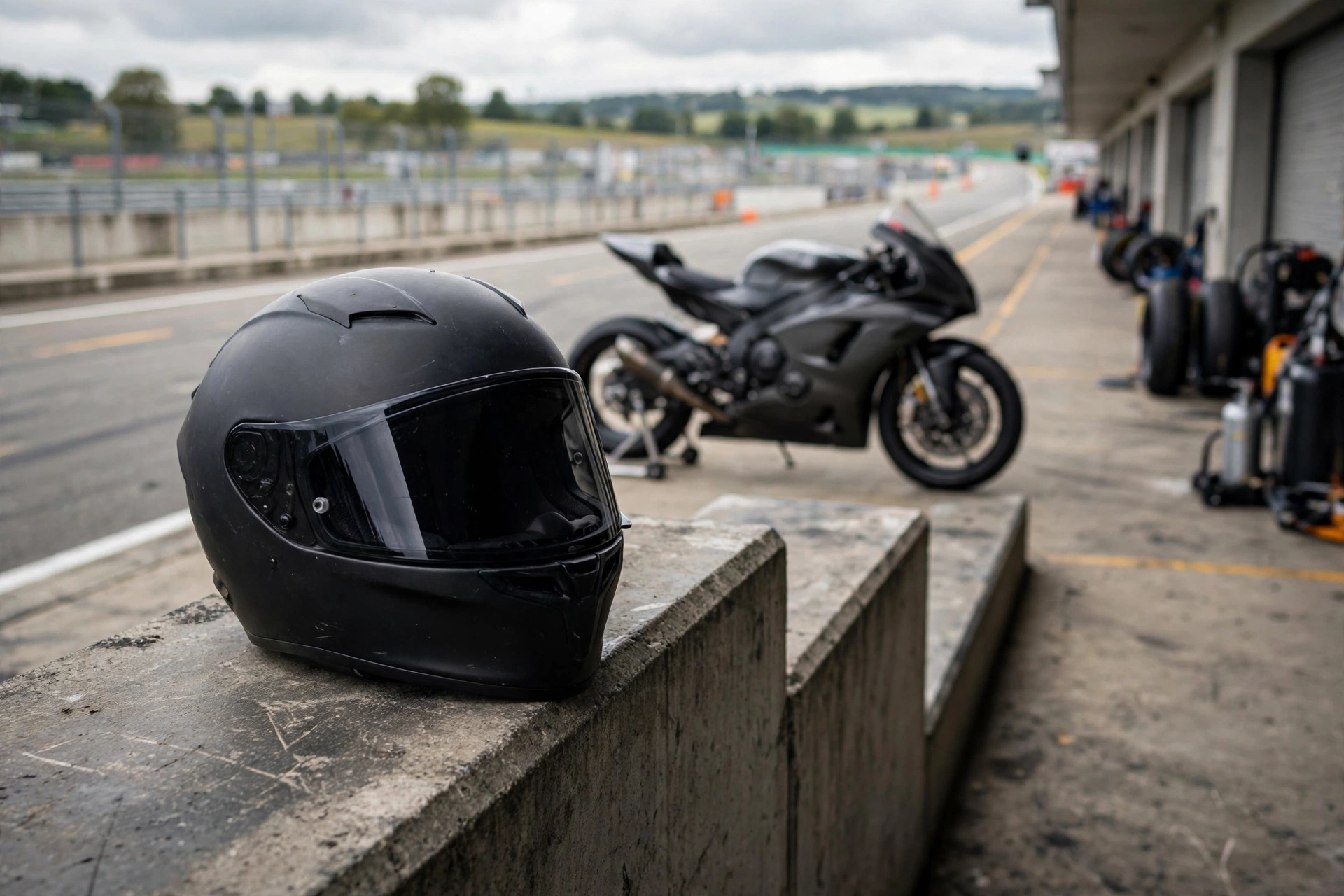
A MotoGP helmet is different from an ordinary road helmet in several ways. The shell is made from strong, light materials and shaped in a wind tunnel to reduce drag and lift. At racing speeds, even a small amount of lift can pull the rider’s head back and tire the neck, so the shape is tuned to keep the helmet stable. Small spoilers and ridges on the back of the shell help manage the airflow.
The visor is large and curved to give a wide field of view, which matters when the rider is looking through a corner at full lean. The visor mechanism is designed to be opened and closed with one gloved hand, and it locks shut so it cannot flip open in a crash. Many riders use a tinted visor in bright conditions and a clear visor when the light is poor.
What safety standards do MotoGP helmets meet?
In general terms, helmets used in MotoGP must meet the FIM homologation standard for racing helmets. This is a strict standard set by the governing body for international motorcycle sport, and it tests helmets for impact protection, penetration resistance, and how the helmet behaves in an angled impact. Only helmets that pass these tests can be used in the championship.
The FIM standard is stricter than the standards used for most road helmets, because the speeds and risks in Grand Prix racing are higher. Helmets are checked before the season and can be inspected again during race weekends. A helmet that is damaged or does not carry the right approval cannot be used, and teams keep spare helmets ready in case one is needed.
How is a MotoGP helmet fitted?
Fitting a MotoGP helmet starts with choosing the right shell size for the rider’s head. The helmet should sit level, with the brow just above the eyebrows, and it should feel snug all the way round. The cheek pads should hold the cheeks gently, and the helmet should not rotate when the rider shakes their head. A helmet that moves around at speed will blur the rider’s vision and distract them.
Riders often work with the helmet maker to fine-tune the fit. Interchangeable liners and cheek pads in different thicknesses let the team adjust the fit in small steps. The rider will test the helmet on the bike, checking that it is comfortable in a full racing crouch and that the visor gives a clear view when the rider is tucked behind the screen.
The chin strap is fastened with a double D-ring on most racing helmets. It should be snug enough that the helmet cannot be pulled off, but not so tight that it presses on the throat. Riders check the strap every time they put the helmet on, because a loose strap is one of the easiest mistakes to make and one of the most dangerous.
Why is aerodynamics so important in MotoGP?
At MotoGP speeds, the air pushes hard against the rider’s helmet. A helmet that is not shaped well will catch the wind, pull the head back, and make the rider’s neck ache. Over a full race, that extra strain can slow the rider down and make it harder to hold a tight racing line. Helmet makers spend a lot of time in wind tunnels, shaping the shell so the air flows smoothly over and around it.
The shape also matters in a crash. A smooth, round shell is more likely to slide along the ground than to catch and twist, and that can reduce the forces on the rider’s neck. Some helmets also use a system that lets the shell move slightly in an angled impact, an idea similar to MIPS in other sports helmets. The goal is to manage the forces of a crash as well as possible.
How do MotoGP riders look after their helmets?
A MotoGP rider’s helmet is looked after by the team between sessions. The shell is wiped clean, the visor is checked for scratches, and the lining is aired out. Many helmets have a removable lining that can be washed, which keeps the fit and the freshness of the helmet. A clean helmet is more comfortable and easier to see through.
Helmets are stored in padded bags away from heat and sunlight. A helmet that has been in a crash is taken out of use, even if the shell looks undamaged, because the inside may have absorbed the impact. Teams keep a stock of spare helmets so a rider is never left without a safe helmet to wear.
Can a fan buy a MotoGP-style helmet?
Yes, in general terms, many of the helmets worn in MotoGP are sold to the public, often as replica models. They are usually expensive, because they use the same materials and the same design as the racing version. A replica helmet can be a good choice for a track day rider, but it is only worth the money if it fits properly.
When buying any helmet, the fit matters more than the brand or the graphics. Try on several sizes, wear the helmet for a few minutes in the shop, and check that it does not press too hard in one place. Make sure it meets the safety standard required in your country, and buy from a dealer you trust. A helmet bought online without trying it on may not fit, and a poor fit reduces protection.
A MotoGP-style helmet is built for the track, so it may be noisier and less comfortable for everyday road riding than a touring helmet. Think about how you will use it before you buy. For a rider who does track days, a racing helmet makes sense, while a commuter may prefer a quieter helmet with more ventilation for slow traffic.
Do all MotoGP riders wear the same brand of helmet?
No, riders choose from several helmet makers, and each rider picks the model that fits them best. All the helmets must meet the same FIM racing standard, but the shape, fit, and features differ between brands.
How long does a MotoGP helmet last?
A racing helmet should be replaced after a crash, and in general terms after a few years of regular use. Teams replace helmets far more often than road riders, because the helmets are used hard and checked constantly. Always follow the maker’s guidance on replacement.
Are MotoGP helmets road legal?
In general terms, a racing helmet sold to the public must meet the road standard for the country where it is used. A pure racing helmet without the right road approval should not be used on public roads, so check the label before you buy.

Olivia
Writer at Helmet Today, covering helmet reviews, fit and riding safety.