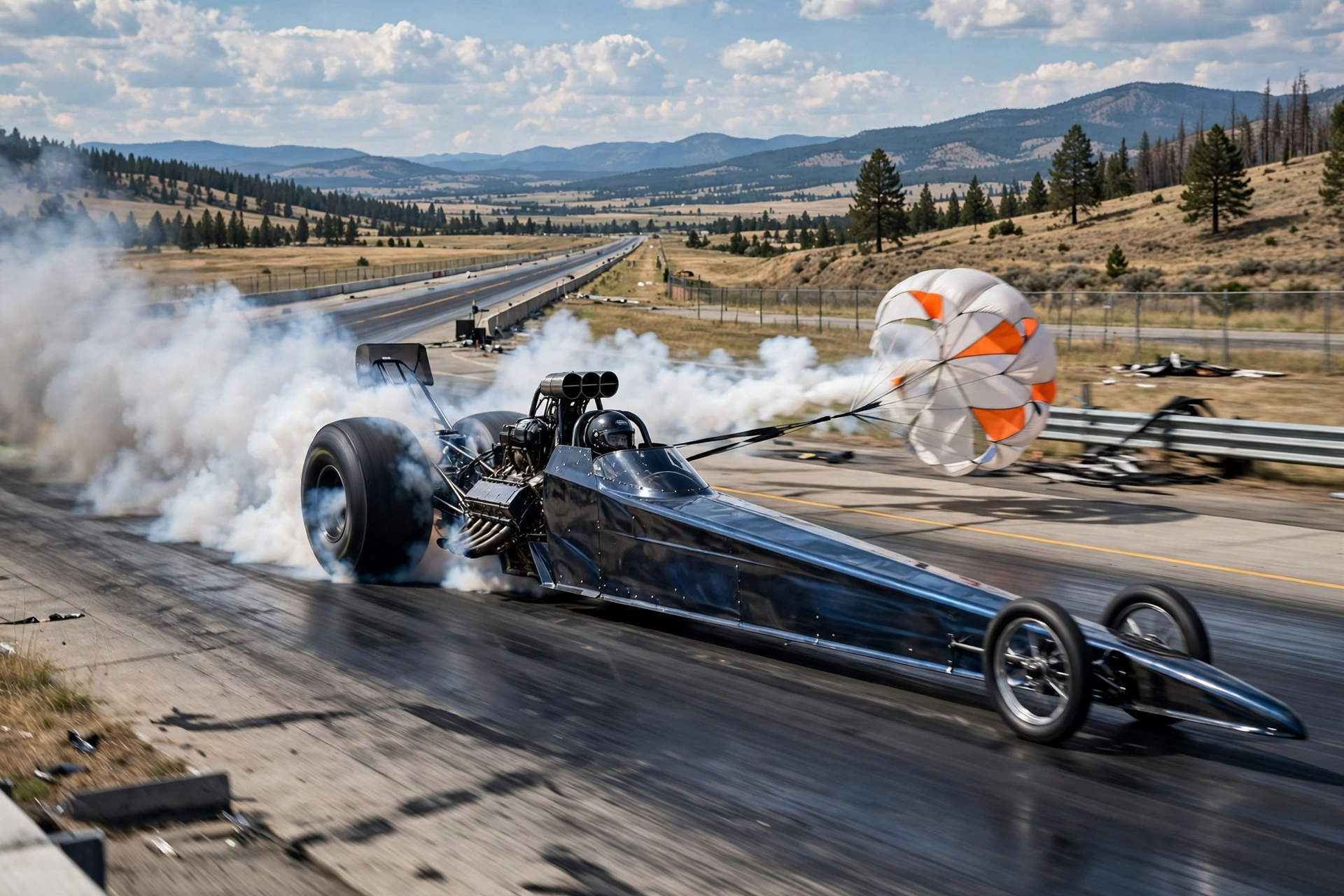
A top fuel dragster helmet is a fire-resistant full-face helmet worn by the driver of a top fuel dragster, giving protection against extreme speed, heat, and impact. Top fuel dragsters are among the fastest accelerating vehicles in motorsport, covering a quarter-mile strip in a few seconds. The driver sits in front of a very powerful engine, so the helmet has to guard against fire as well as against a crash.
Drag racing is a straight-line sport. Two cars race side by side down a strip, and the winner is the one who reaches the finish first. In the top fuel class, the cars are long, narrow machines with huge rear tyres and an engine that produces enormous power. The driver is strapped into a small cockpit, with the engine close behind. A fire, an engine failure, or a crash can happen very quickly, so the helmet is a vital part of the driver’s safety kit.
What makes a top fuel dragster helmet different?
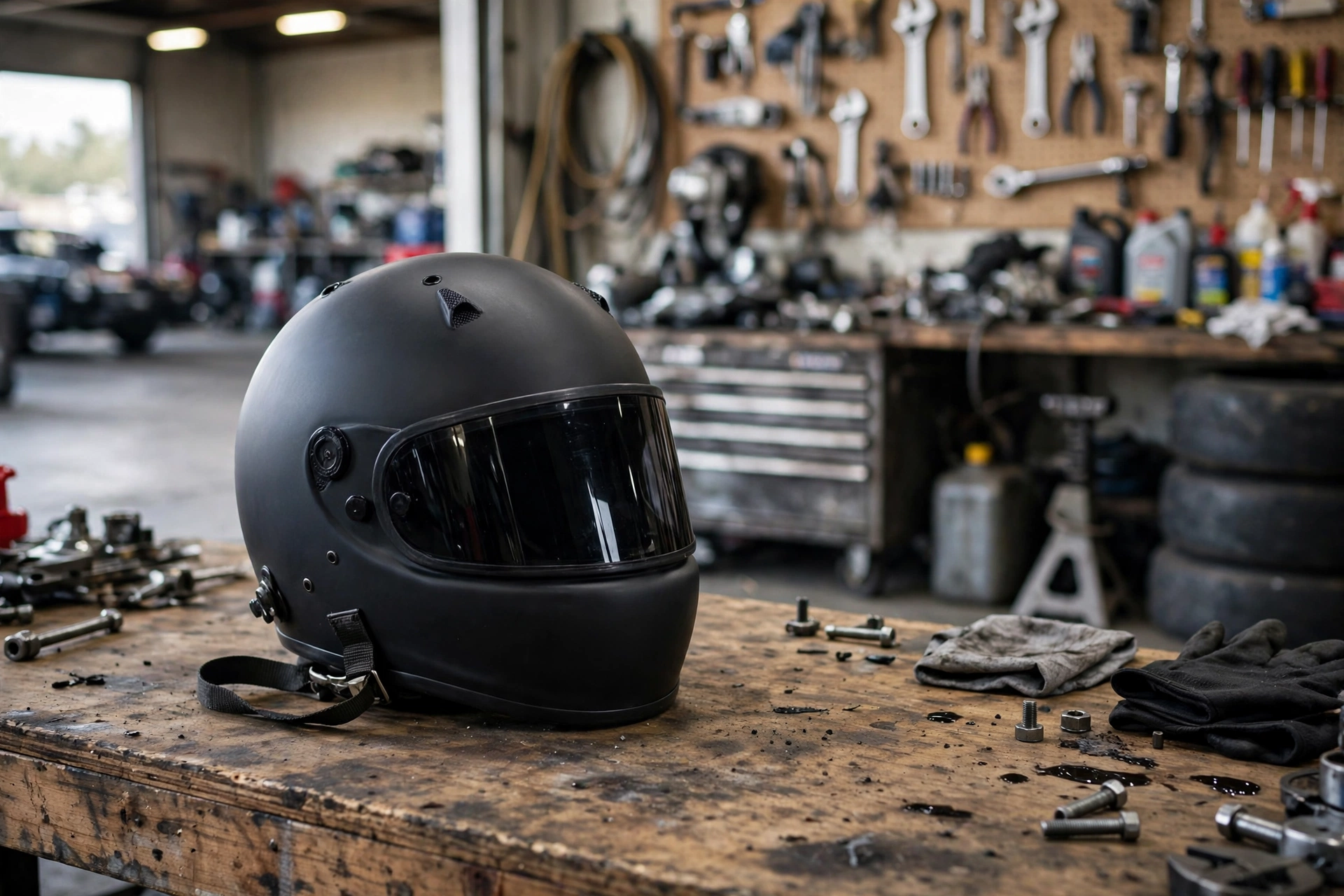
A top fuel dragster helmet is different from a normal racing helmet because fire protection is just as important as impact protection. The shell is made to resist heat and flame, and the lining and padding are made from fire-resistant materials. The visor is also made to cope with high temperatures, and it seals closely to the shell so that flames and hot air cannot easily get inside.
The helmet is a full-face design, covering the whole head and chin. It fits snugly so it cannot be pulled off by the force of a crash, and the chin strap is fastened tightly before every run. Because the driver is strapped in and cannot move much, the helmet must be comfortable in a fixed seated position, with a clear view straight ahead down the strip.
What safety standards do dragster helmets meet?
In general terms, helmets used in top fuel drag racing must meet the standards set by the sanctioning body for the event. These standards cover impact protection, penetration resistance, and fire resistance. A helmet that does not meet the required standard cannot be used, and officials check helmets as part of the technical inspection before racing begins.
The most common standards for drag racing helmets are set by the Snell Memorial Foundation and by the FIA, the governing body for world motorsport. Snell SA helmets are made for car racing and include tests for fire resistance, while FIA-approved helmets meet similar rules for international events. Drivers should check which standard their event requires before they buy a helmet.
How is a dragster helmet fitted?
Fitting starts with measuring the driver’s head and choosing the right shell size. The helmet should sit level, with the visor opening just above the eyebrows, and it should feel snug all round. The cheek pads should press gently against the cheeks, and the helmet should not twist when the driver turns their head. A loose helmet can move in a crash and let in heat and flames.
Drivers usually try the helmet on with their balaclava and their head and neck restraint, because these change the fit. The helmet must work with the restraint system, which holds the head steady in a crash. If the helmet and the restraint do not work together, the fit must be adjusted or a different model chosen.
The chin strap should be fastened snugly before every run. Most racing helmets use a double D-ring fastening, which is simple and secure. The driver or a crew member checks the strap, the visor, and the helmet’s position as part of the routine before the car is pushed to the start line.
Why does fire protection matter so much?
Top fuel dragsters carry a large amount of fuel, and the engine runs at very high temperatures. If fuel leaks or the engine fails, a fire can start in seconds. The driver is strapped into the cockpit and cannot get out quickly, so the helmet and the fire suit must buy time for the driver to escape or for the safety crew to reach the car.
Fire-resistant materials do not burn easily, and they do not melt onto the skin. The helmet shell, the lining, and the visor are all chosen with this in mind. The driver also wears a fire suit, gloves, and boots made from similar materials, so the whole body is covered. The helmet is the part that protects the head and face, which are the most exposed.
Some helmets also use a system that lets the shell move slightly in an angled impact, an idea similar to MIPS in other sports helmets. In a dragster, the main risks are a straight-line crash and fire, but any extra protection against twisting forces is welcome. The key point is that the helmet must handle both impact and heat at the same time.
What other safety kit does a dragster driver wear?
A dragster driver wears a full set of safety kit alongside the helmet. The fire suit covers the body from neck to ankles, and it is made from several layers of fire-resistant fabric. Gloves and boots are made from the same kind of material, and the driver wears a balaclava under the helmet to protect the head and neck.
A head and neck restraint is also worn, which connects the helmet to the driver’s shoulders and limits how far the head can move in a crash. The driver is held in the seat by a multi-point harness, which spreads the force of a crash across the body. An arm restraint may also be used to keep the driver’s arms inside the cockpit.
How should a dragster helmet be looked after?
A dragster helmet should be cleaned and checked after every race meeting. The shell is wiped down, the visor is checked for scratches and heat damage, and the lining is aired out. Many helmets have a removable lining that can be washed, which keeps the helmet fresh and helps it keep its shape. A dirty or damaged helmet should not be used.
Helmets should be stored in a padded bag in a cool, dry place, away from fuel, oil, and direct sunlight. Fuel and solvents can damage the shell and the lining, so the helmet should never be stored near fuel cans or in a toolbox with oily rags. A helmet that has been in a fire or a crash should be replaced, even if it looks fine on the outside.
Before every run, the driver and crew check the helmet once more. They look for cracks, test the visor, and pull the strap tight. This check takes only a minute, but it matters. A helmet is only useful if it is in good condition and fitted properly, so the check is part of the routine every time the car runs.
Can a top fuel dragster helmet be used for other motorsport?
In general terms, yes, if it meets the standard required for that form of motorsport. Many car racing helmets are used across several classes, but always check the rules for the event before you use a helmet in a different series.
How often should a dragster helmet be replaced?
A dragster helmet should be replaced after a crash or a fire, and in general terms after a few years of use, because the materials age. Always follow the maker’s guidance and the rules of the sanctioning body, and replace a helmet sooner if it is damaged.
Do dragster drivers wear ear protection?
Yes, in general terms, drivers wear earplugs or moulded earpieces under the helmet to cut the very loud noise of the engine. Hearing protection also helps the driver concentrate, because the noise and vibration of a top fuel car are extreme.

Olivia
Writer at Helmet Today, covering helmet reviews, fit and riding safety.