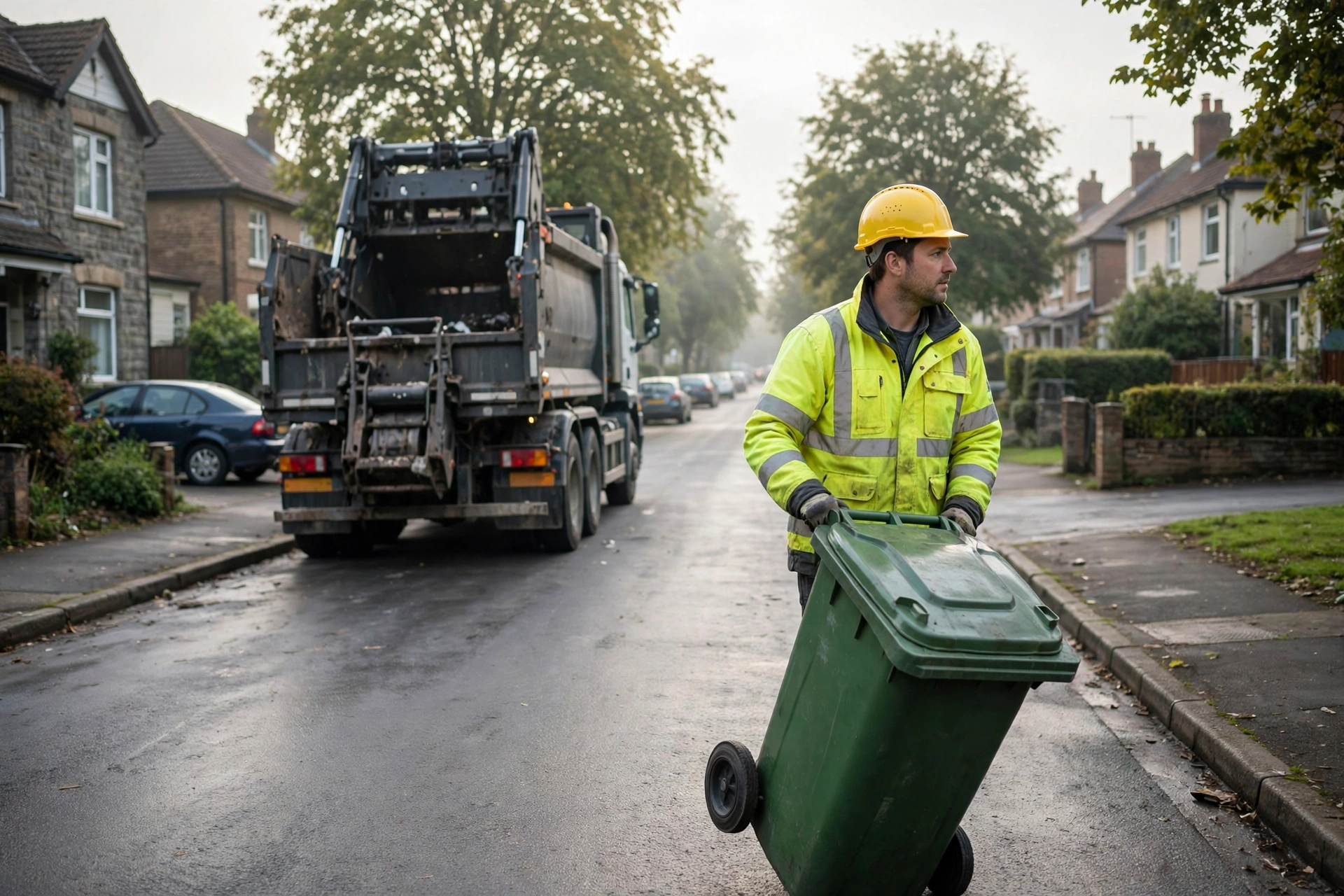
A refuse collector helmet is a hard hat that protects a refuse collector’s head from falling waste, bumps, and debris while collecting rubbish on rounds. Refuse collectors, often called bin men or bin workers, lift and empty bins, load waste into trucks, and work around moving vehicles all day. A hard hat is a simple piece of kit that guards against the knocks and falling objects that come with the job.
Refuse collection is physical, fast-paced work, usually done early in the morning in all weathers. Collectors walk beside a refuse truck, wheel bins to the back of the vehicle, tip them into the compactor, and return them to the kerb. They work near traffic, on pavements, in narrow lanes, and around driveways, so staying alert and wearing the right protection matters from the first bin to the last.
What does a refuse collector do all day?
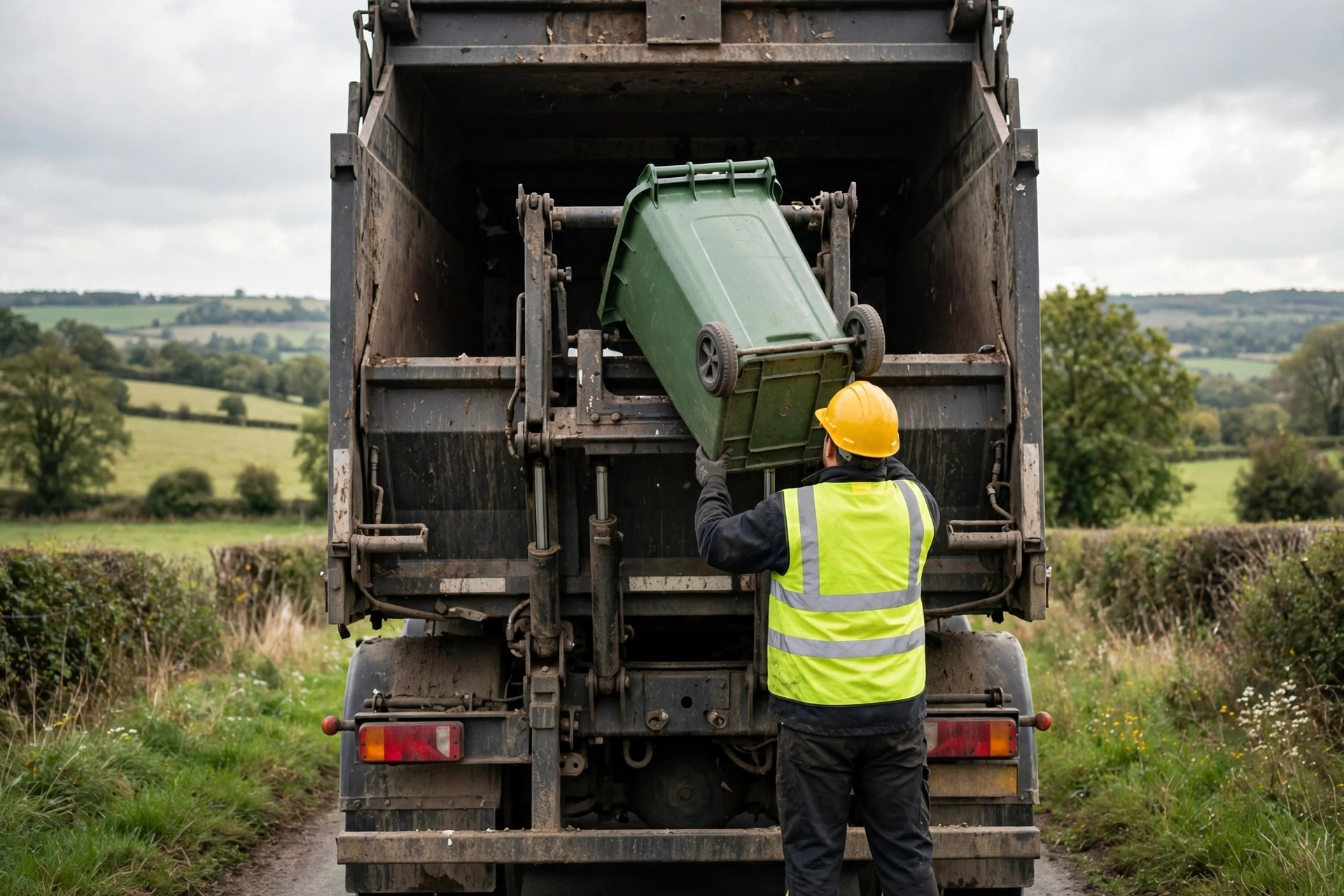
A refuse collector’s day starts early, often before most people are awake. The crew follows a set route, stopping at each house or block of flats to collect general waste, recycling, and sometimes garden waste or food waste. At each stop, the collector wheels the bin to the truck, hooks it onto the lifting mechanism or tips it in by hand, and puts the bin back where it belongs.
Between stops, the collector walks or rides on the back step of the truck, keeping an eye out for bins that have been missed, bags left beside bins, and anything that needs reporting. The work involves a lot of lifting, bending, and walking, and the crew works as a team with the driver to keep the round moving. A typical round can cover many streets, so comfortable footwear and well-fitting protective kit are essential.
What head hazards do refuse collectors face?
The most obvious head hazard is something falling from a bin as it is tipped. Bottles, cans, broken glass, and heavy objects can spill out of an overloaded bin, and a sharp or heavy item falling from height can cause a nasty cut or a concussion. Bins themselves can swing or slip while being lifted, and the metal lifting gear on the back of the truck is at head height for many workers.
Refuse collectors also work around low branches, garage doors, gates, and the tail lift of the truck, so bumps to the head are common. Working near traffic adds another risk, because a collector stepping into the road is close to passing vehicles. In general terms, a hard hat does not remove these risks, but it spreads the force of a blow and turns many injuries that would need a hospital visit into minor knocks.
What type of helmet should a refuse collector wear?
A standard industrial hard hat that meets a recognised safety standard is the right choice for refuse collection. Look for the standard marking and the date of manufacture printed inside the shell, and choose a size that fits your head. A cap-style hard hat with a short peak is popular, because it keeps rain and dripping waste out of the eyes without getting in the way when you look up at the lifting gear.
Some collectors prefer a hard hat with a brim all the way around, which gives extra protection from rain and falling drips. A bright-coloured shell, such as yellow or orange, is easy for the driver and other road users to spot. Whatever style you choose, make sure it is a genuine hard hat and not a bump cap: a bump cap guards against minor bumps, but it does not protect against falling objects.
How should the helmet fit for refuse collection work?
The helmet should sit level on your head, low on your forehead, with the front edge about two finger widths above your eyebrows. It should feel snug but not tight, and it should stay in place when you bend over to lift a bin or look up at the truck. Most hard hats have an adjustment dial or a sliding strap at the back, so take a moment to set the fit before the round starts.
Check that the suspension inside the helmet is clean and dry before you put it on, because waste and rain can leave it damp or dirty. Do not wear a thick beanie under a hard hat, because it changes the fit and reduces the gap between the shell and your head that absorbs impacts. A thin liner made for use under a helmet is a better choice on cold mornings.
What other protection goes with the helmet?
A hard hat is only one part of a refuse collector’s kit. High-visibility clothing is essential, because collectors spend much of the day near traffic and need to be seen by drivers. Gloves protect the hands from sharp objects hidden in bags and bins, and sturdy safety boots with a good grip protect the feet on wet pavements and around the truck.
Eye protection is worth considering too, because liquid and small debris can splash out of a bin as it is tipped. Some collectors also wear ear protection when working close to the truck’s compactor. Taken together, this kit is simple and light, and it lets the collector get on with a demanding job with less risk of a preventable injury.
How do I look after a refuse collector helmet?
Waste collection is dirty work, so wipe the shell and the suspension clean at the end of each shift. Use a damp cloth and mild soap, and let the helmet dry in the shade. Do not use solvents or harsh cleaners, because they can weaken the plastic shell. Check the shell for cracks, dents, or deep scratches, and check that the suspension straps are not frayed or stretched.
Replace the helmet after a hard impact, even if there is no visible damage, because the shell may have weakened in ways you cannot see. Replace it after about five years in general terms, because sunlight and everyday use wear down the materials. Some helmets include a slip layer such as MIPS to reduce rotational forces in an angled impact, which is a useful extra for any hard hat, including one worn for refuse collection.
Do refuse collectors have to wear a helmet?
In general terms, a helmet is worn where the employer or the site rules require head protection, and many waste collection crews wear hard hats as standard kit. If your employer provides a helmet, wear it for the whole round, not just when you think there is a risk, because accidents happen when you least expect them.
Can a refuse collector wear a bump cap instead of a hard hat?
A bump cap protects against minor bumps, but it is not a hard hat and does not protect against falling objects. It is not a substitute for a hard hat where there is a risk of things falling from a bin or from the truck’s lifting gear.
Does a refuse collector helmet keep out rain and waste?
A hard hat with a short peak or a full brim helps keep rain and drips out of the eyes and off the face, but it is not waterproof clothing. Pair it with a waterproof jacket with a hood that fits over the helmet for wet-weather rounds.

Olivia
Writer at Helmet Today, covering helmet reviews, fit and riding safety.