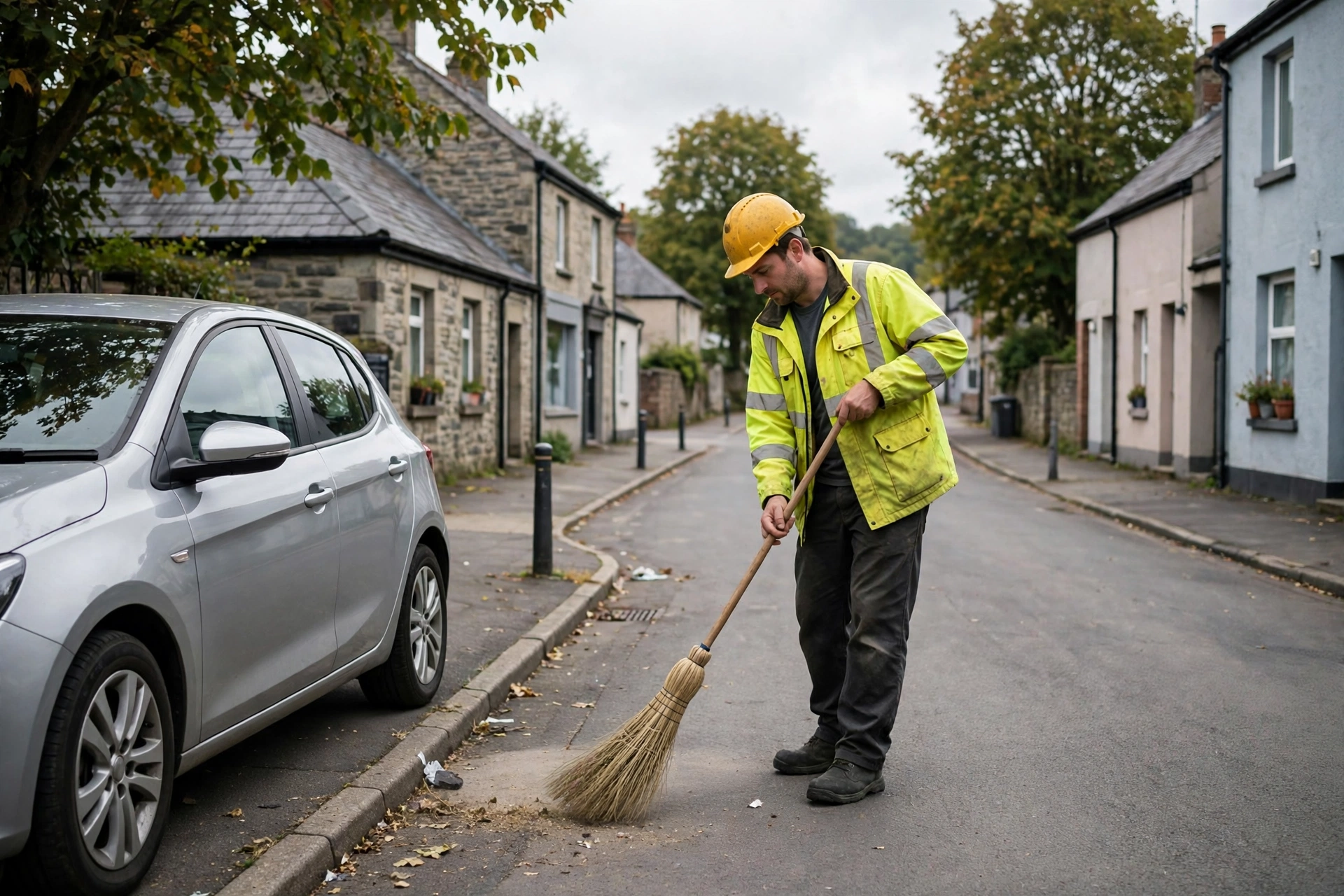
A street cleaner helmet is a hard hat that protects a street cleaner’s head from traffic, falling branches, and bumps while sweeping roads and pavements. Street cleaners keep towns and cities tidy by sweeping litter, clearing leaves, emptying street bins, and removing debris from roads and pavements. They work outdoors in all weathers, often close to moving traffic, so a hard hat is a sensible part of their everyday kit.
Street cleaning looks simple from the outside, but it is hard physical work. Cleaners walk long routes pushing a barrow or driving a small sweeping vehicle, bending to pick up litter, and working around parked cars, bus stops, and building sites. A helmet guards against the knocks that come with working at street level all day, from low branches to objects dropped from above.
What does a street cleaner do all day?
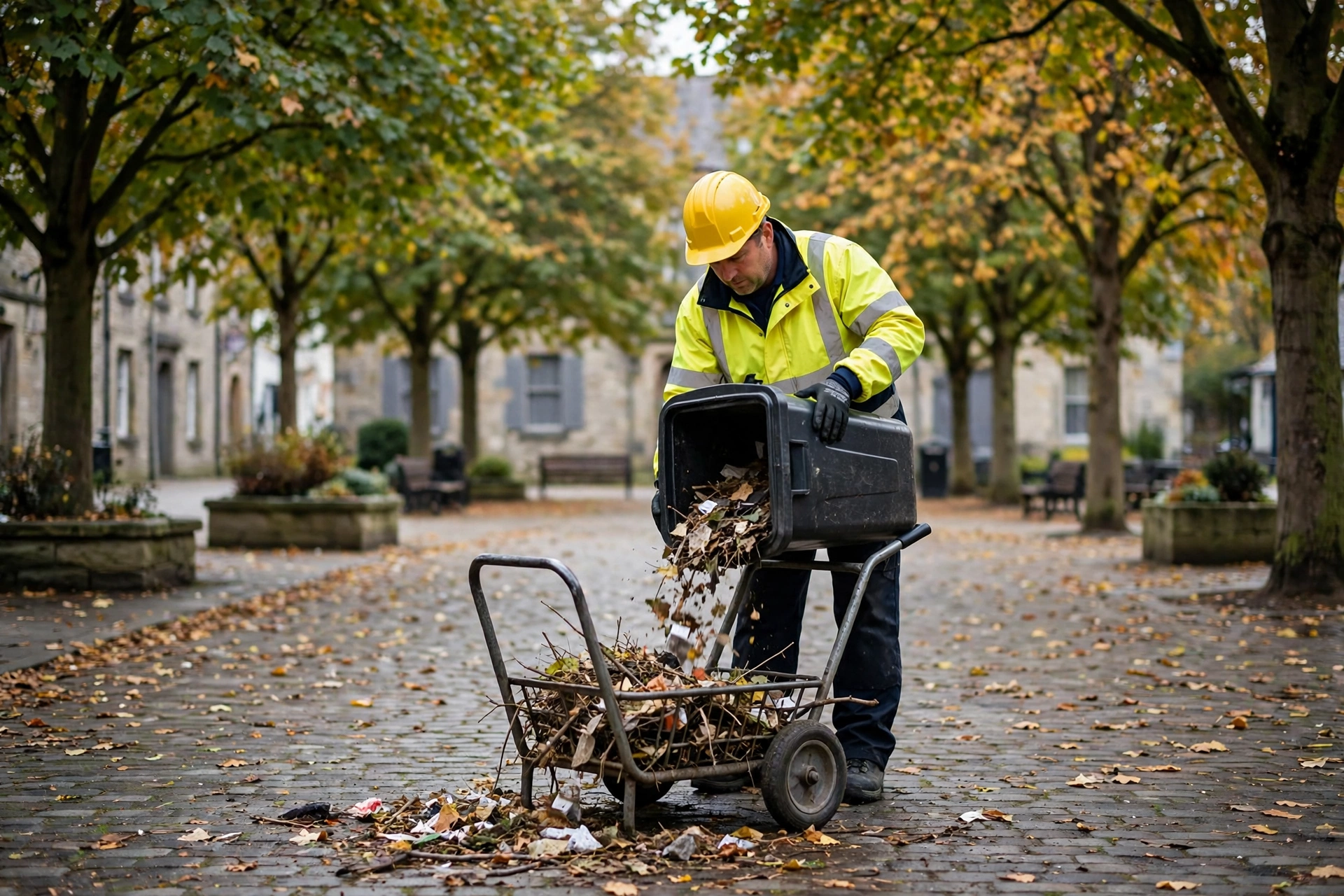
A street cleaner’s day usually starts early, before the morning rush. The route may cover a town centre, a housing estate, a park, or a stretch of road, and the cleaner works through it methodically, sweeping gutters and pavements, picking up litter by hand or with a grabber, and emptying public litter bins into a barrow or a small vehicle.
As well as routine sweeping, street cleaners deal with fallen leaves in autumn, grit and debris after bad weather, broken glass, and fly-tipped rubbish. Some use leaf blowers or small mechanical sweepers, while others work entirely by hand. The job involves a lot of walking and bending, and cleaners need to stay aware of traffic, cyclists, and pedestrians sharing the same space.
What head hazards do street cleaners face?
The biggest head hazard for a street cleaner is working close to traffic. Cleaners step into the road to sweep gutters and clear drains, putting them near passing cars, buses, and lorries. A hard hat will not stop a vehicle, but a bright-coloured helmet makes the cleaner easier to spot, and it protects against the smaller knocks that happen every day.
Other hazards include low-hanging branches, which can catch a cleaner across the head when working under trees, and objects falling from scaffolding, shop awnings, or balconies above a pavement. Broken glass and sharp debris are a risk to the hands and eyes, while a slip on wet leaves can send a cleaner falling backwards. In general terms, a hard hat spreads the force of a bump and helps turn a nasty knock into a minor one.
What type of helmet should a street cleaner wear?
A standard industrial hard hat that meets a recognised safety standard is the right choice for street cleaning. Look for the standard marking and the date of manufacture inside the shell, and pick a size that fits well. A cap-style hard hat with a short peak is popular, because it shades the eyes and keeps rain off the face without blocking the view of the road.
Some cleaners prefer a hard hat with a brim all the way around, which gives extra cover from rain and falling leaves. A bright-coloured shell, such as yellow or orange, helps drivers and cyclists spot the cleaner from a distance. Whatever style you choose, make sure it is a genuine hard hat and not a bump cap, which guards against minor bumps only and does not protect against falling objects.
How should the helmet fit for street cleaning work?
The helmet should sit level on your head, low on your forehead, with the front edge about two finger widths above your eyebrows. It should feel snug but not tight, and it should stay put when you bend over to sweep or pick up litter. Most hard hats have an adjustment dial or a sliding strap at the back, so set the fit before you start your route.
Check that the suspension inside the helmet is clean and dry before you put it on, especially after a wet shift. Do not wear a thick beanie underneath, because it changes the fit and reduces the gap between the shell and your head that absorbs impacts. A thin liner made for use under a helmet is a better choice in cold weather, and it can be washed regularly.
What other protection goes with the helmet?
A hard hat is only one part of a street cleaner’s kit. High-visibility clothing is essential, because cleaners work in and beside live traffic for most of the day. Gloves protect the hands from broken glass, sharp metal, and dirty litter, and sturdy safety boots with a good grip protect the feet on wet pavements and around drains.
Eye protection is worth considering when sweeping dry, dusty streets or clearing broken glass, and ear protection helps when using a leaf blower or a mechanical sweeper. A waterproof jacket and trousers keep the cleaner dry on wet days. Together, this simple kit lets the cleaner work safely through long outdoor shifts in any weather.
How do I look after a street cleaner helmet?
Street cleaning is dusty, muddy work, so wipe the shell and the suspension clean at the end of each shift. Use a damp cloth and mild soap, and let the helmet dry in the shade. Do not use solvents or harsh cleaners, because they can weaken the plastic shell. Check the shell for cracks, dents, or deep scratches, and check that the suspension straps are not frayed or stretched.
Replace the helmet after a hard impact, even if there is no visible damage, because the shell may have weakened in ways you cannot see. Replace it after about five years in general terms, because sunlight and everyday use wear down the materials. Some helmets include a slip layer such as MIPS to reduce rotational forces in an angled impact, which is a useful extra for any hard hat, including one worn for street cleaning.
Do street cleaners have to wear a helmet?
In general terms, a helmet is worn where the employer or the local council requires head protection for the job. Many street cleaning crews wear hard hats as standard kit, especially on routes near busy roads or building work, so follow the rules for your own round.
Can a street cleaner wear a bump cap instead of a hard hat?
A bump cap protects against minor bumps, but it is not a hard hat and does not protect against falling objects. It is not a substitute for a hard hat where there is a risk of branches, debris, or objects falling from above the pavement.
Does a street cleaner helmet help in traffic?
A bright-coloured helmet makes a cleaner easier for drivers to spot, which helps, but it is not a substitute for high-visibility clothing, good positioning, and staying alert. Always face oncoming traffic where possible and keep to the pavement side when sweeping a gutter.

Olivia
Writer at Helmet Today, covering helmet reviews, fit and riding safety.