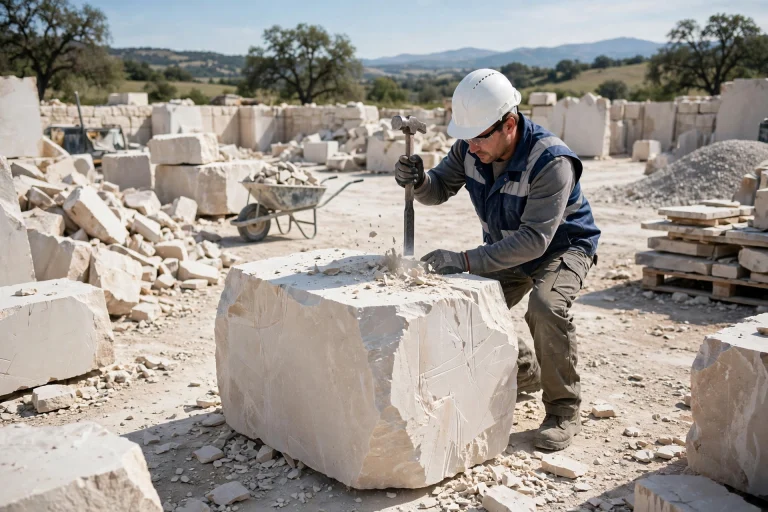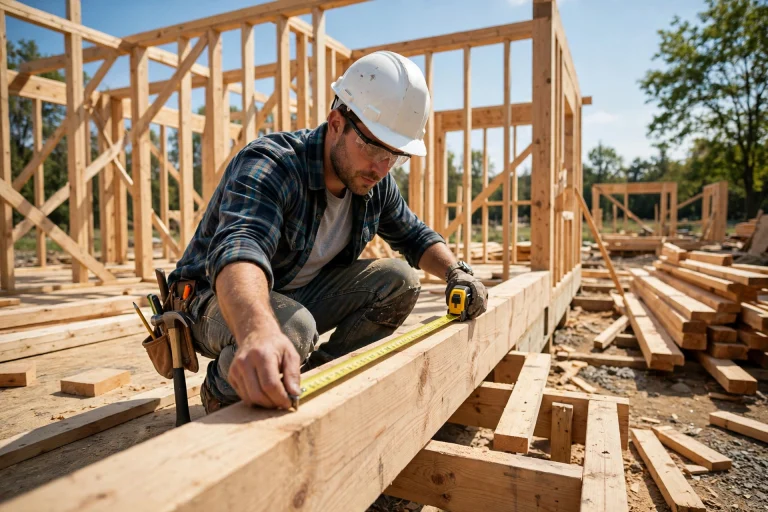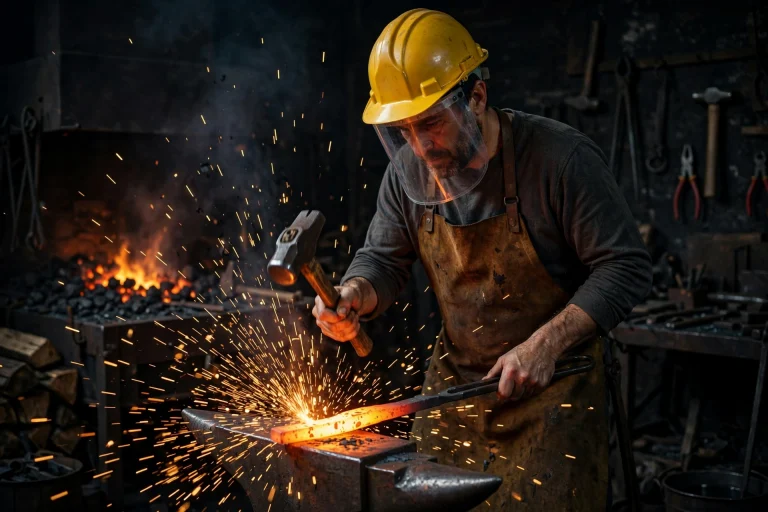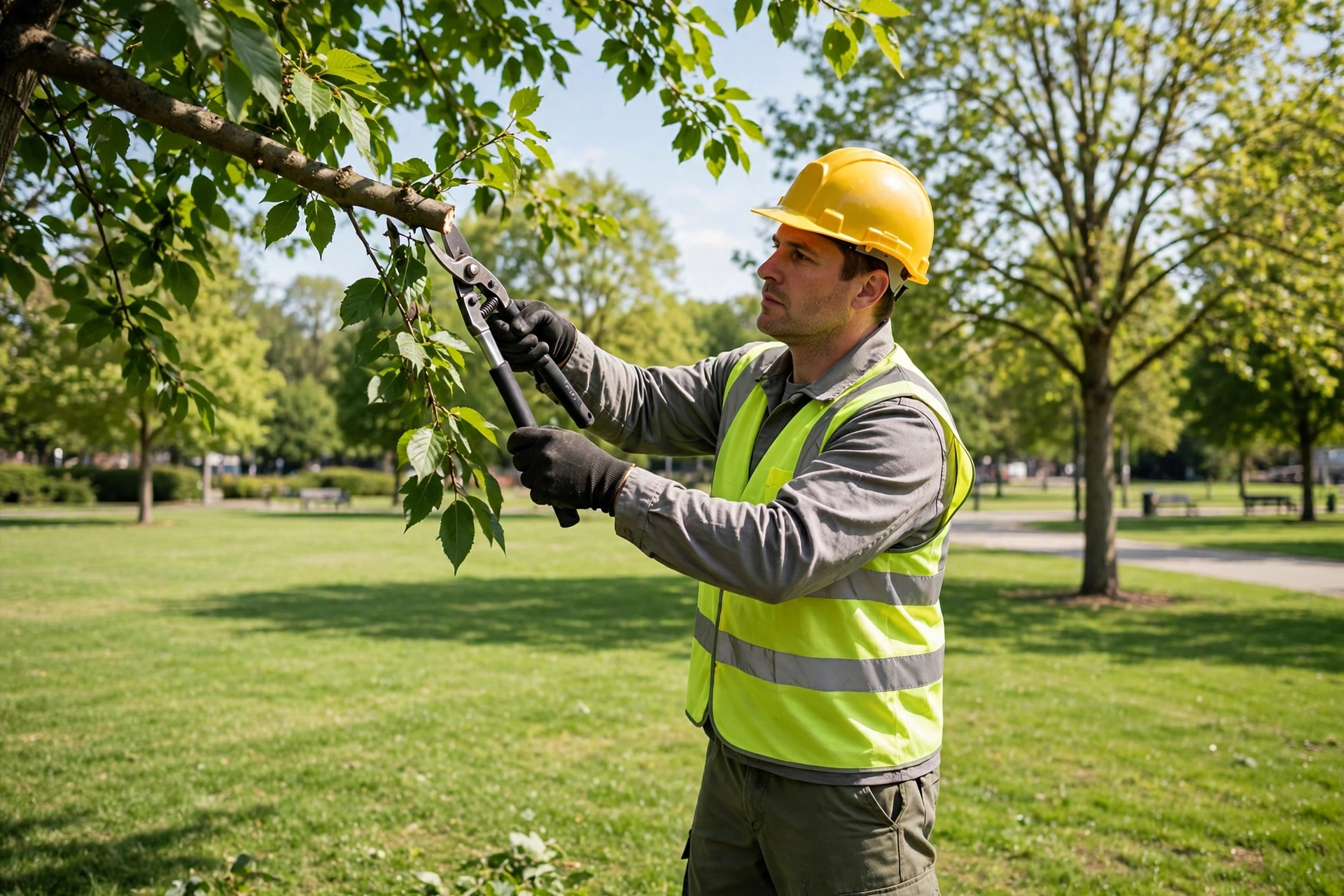
A groundskeeper helmet is a hard hat that protects a groundskeeper’s head from falling branches, flying debris, and bumps while maintaining parks, gardens, and sports grounds. Groundskeepers look after outdoor spaces, cutting grass, trimming hedges, clearing leaves, and keeping paths and pitches in good shape. Much of the work happens under trees and around machinery, so a hard hat is a sensible part of the everyday kit.
Groundskeeping covers a wide range of jobs, from mowing a village green to looking after a large park, a school playing field, or a golf course. The work changes with the seasons: leaf clearing in autumn, hedge cutting in winter, and mowing and watering in summer. A helmet protects the head through all of it, whether the risk comes from above or from a machine throwing up debris.
What does a groundskeeper do all day?
A groundskeeper’s day often starts with a walk around the site to check for fallen branches, litter, and damage from the night before. Then the main jobs begin: mowing lawns and sports pitches, strimming edges, trimming hedges, pruning shrubs, and clearing paths. In autumn, leaf clearing takes up much of the day, while in winter the work turns to pruning, repairing fences, and looking after drainage.
Groundskeepers also look after flower beds, plant new shrubs and trees, mark out sports pitches, and keep bins and seating areas tidy. They use a mix of hand tools and powered machines, from mowers and strimmers to hedge cutters and leaf blowers. The work is physical and outdoors in all weathers, and it calls for a good eye for detail as well as stamina.
What head hazards do groundskeepers face?
The most obvious head hazard is falling branches. Groundskeepers work under trees every day, pruning, clearing, and mowing, and a dead branch can come down without warning, especially in wind or after a storm. Even a small branch falling from height can cause a painful cut or a concussion, and larger limbs can cause serious injury.
Powered tools add another risk: strimmers and mowers throw up stones, sticks, and other debris at speed, and a stone flicked up by a mower can hit the head or face. Groundskeepers also work around low branches, fences, and the tail lifts of vehicles, so bumps are common. In general terms, a hard hat spreads the force of a blow and helps turn a serious injury into a minor knock.
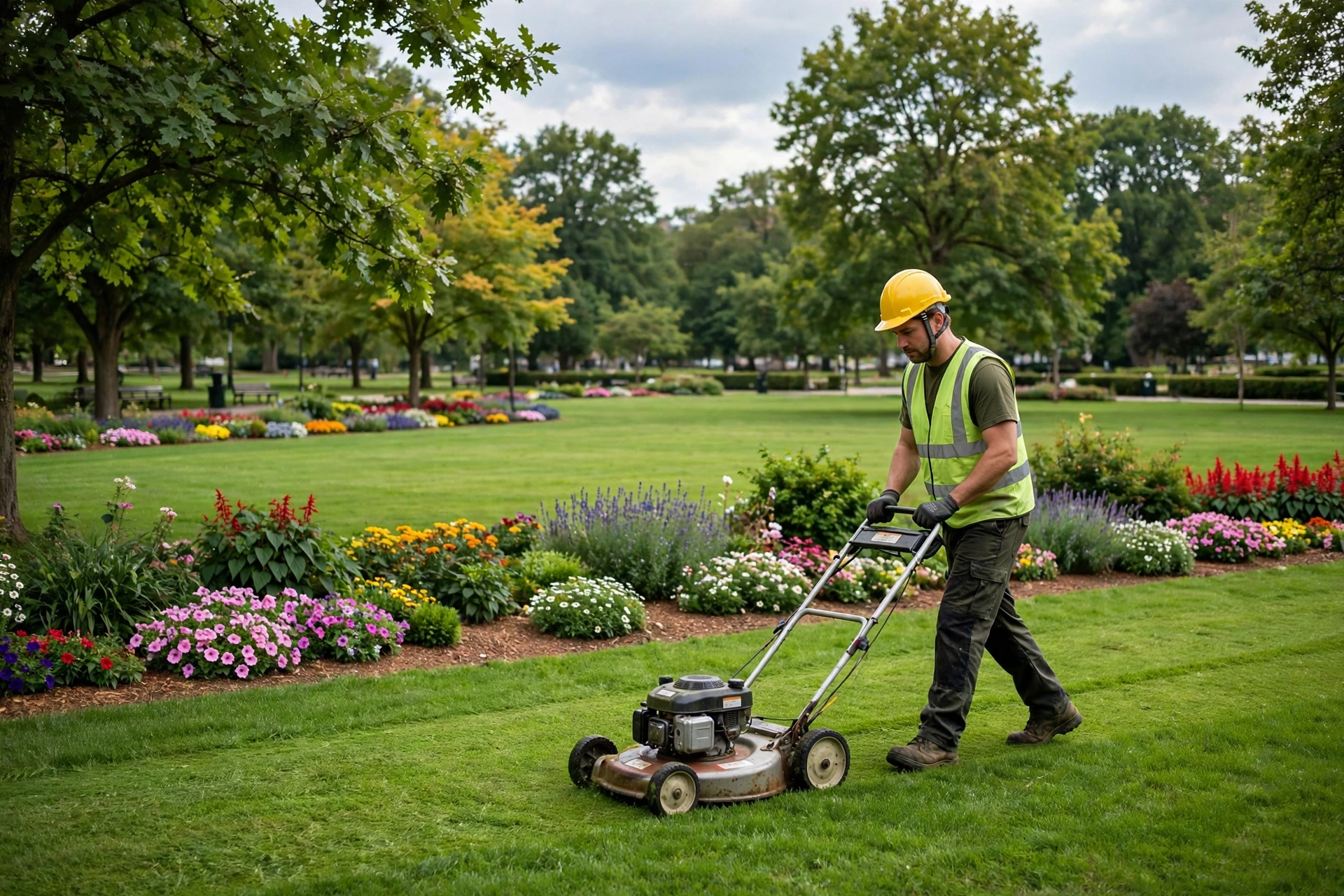
What type of helmet should a groundskeeper wear?
A standard industrial hard hat that meets a recognised safety standard is the right choice for groundskeeping. Look for the standard marking and the date of manufacture inside the shell, and choose a size that fits well. A cap-style hard hat with a short peak is popular, because it shades the eyes and keeps rain and falling leaves off the face without getting in the way when you look up into a tree.
Some groundskeepers prefer a hard hat with a brim all the way around, which gives extra cover from sun, rain, and falling debris. A bright-coloured shell, such as yellow or orange, makes the wearer easy to spot across a large site. For work with a chainsaw or a strimmer, a helmet with a built-in visor and ear defenders is often the better choice, because it protects the face and ears as well as the head.
How should the helmet fit for groundskeeping work?
The helmet should sit level on your head, low on your forehead, with the front edge about two finger widths above your eyebrows. It should feel snug but not tight, and it should stay in place when you bend over to clear leaves or look up to check a branch. Most hard hats have an adjustment dial or a sliding strap at the back, so take a moment to set the fit before you start work.
Check that the suspension inside the helmet is clean and dry before you put it on, because outdoor work leaves it damp, dusty, or full of leaves. Do not wear a thick beanie underneath, because it changes the fit and reduces the gap between the shell and your head that absorbs impacts. A thin liner made for use under a helmet is a better choice on cold mornings.
What other protection goes with the helmet?
A hard hat is only one part of a groundskeeper’s kit. Eye protection is important, because strimmers and mowers throw up stones and debris, and hedge cutting sends twigs flying. Ear protection is needed with loud machines such as mowers, blowers, and chainsaws, and gloves protect the hands from thorns, splinters, and blisters.
Sturdy safety boots with a good grip protect the feet on wet grass and slopes, and high-visibility clothing helps others spot the groundskeeper on a large site or near a road. When using a chainsaw, cut-resistant leg protection is also standard. Together, this kit lets the groundskeeper work safely through long outdoor days in any weather.
How do I look after a groundskeeper helmet?
Groundskeeping is dirty work, so wipe the shell and the suspension clean at the end of each day. Use a damp cloth and mild soap, and let the helmet dry in the shade. Do not use solvents or harsh cleaners, because they can weaken the plastic shell. Check the shell for cracks, dents, or deep scratches, and check that the suspension straps are not frayed or stretched.
Replace the helmet after a hard impact, even if there is no visible damage, because the shell may have weakened in ways you cannot see. Replace it after about five years in general terms, because sunlight and everyday use wear down the materials. Some helmets include a slip layer such as MIPS to reduce rotational forces in an angled impact, which is a useful extra for any hard hat, including one worn for groundskeeping.
Do groundskeepers have to wear a helmet?
In general terms, a helmet is worn where the employer requires head protection for the job, and most groundskeeping teams wear hard hats as standard kit, especially when working under trees or with powered tools. Follow the rules for your own site and crew.
Can a groundskeeper wear a bump cap instead of a hard hat?
A bump cap protects against minor bumps, but it is not a hard hat and does not protect against falling branches or flying debris. It is not a substitute for a hard hat where there is a risk of things falling from above or being thrown up by machinery.
Does a groundskeeper helmet help with sun and rain?
A hard hat with a peak or a full brim shades the eyes from the sun and keeps rain and falling leaves off the face, which helps on long outdoor days. It is not a substitute for sunscreen, a waterproof jacket, or drinking enough water in hot weather.

Olivia
Writer at Helmet Today, covering helmet reviews, fit and riding safety.