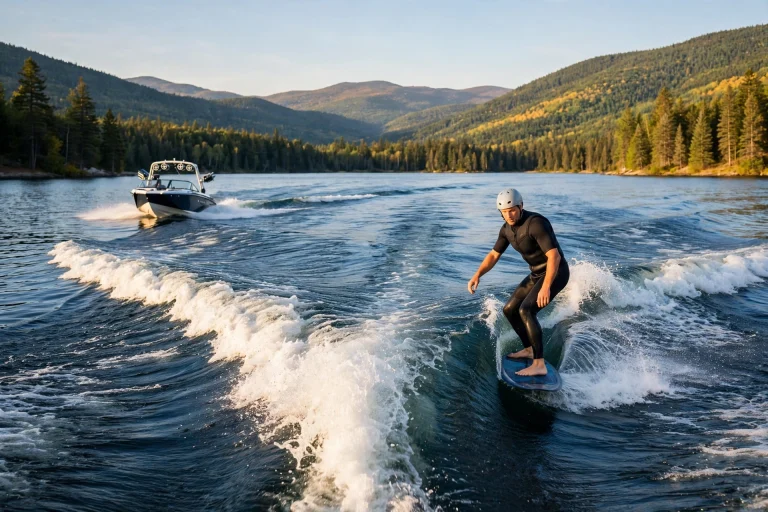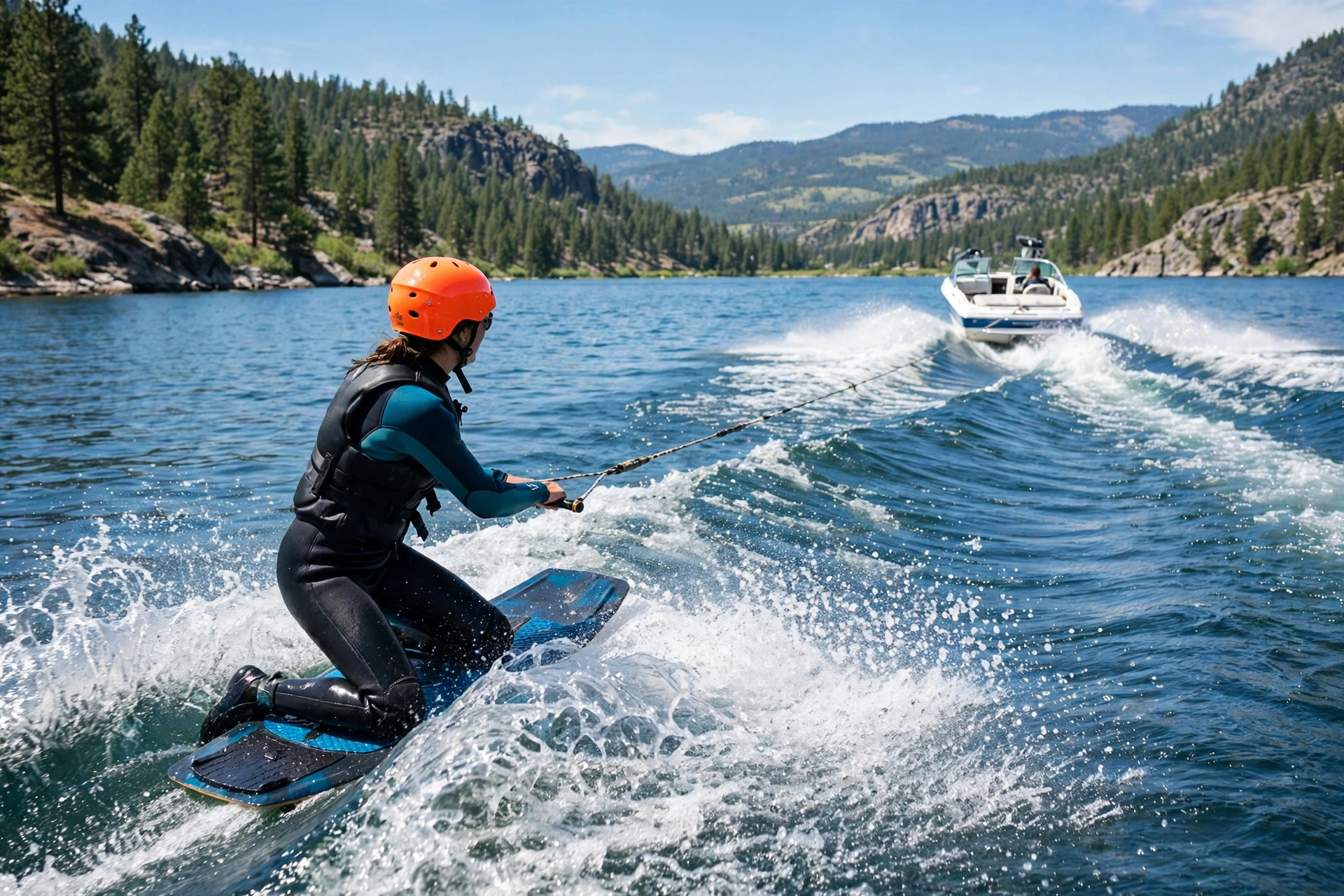
A kneeboarding helmet is a water sports helmet, worn to protect your head from the board, the water, and hard falls while kneeling on a kneeboard towed behind a boat. Kneeboarding is a towed water sport in which the rider kneels on a small board, holding a tow rope, and is pulled across the water by a boat. Falls are part of the sport, and a helmet is a simple way to protect your head when you come off at speed.
In general terms, a kneeboarding helmet is a light, water-friendly helmet with drainage and a secure strap, made to stay on in a fall and to let water out quickly. It is not the same as a bike or ski helmet, which can soak up water and drag in a fall. A proper water sports helmet is made for the job, and it is the right choice for anyone kneeboarding regularly.
What is kneeboarding?
Kneeboarding is a water sport in which the rider kneels on a short, wide board and is towed behind a boat by a rope, much like water skiing or wakeboarding. The rider steers by leaning and shifting weight, and can ride across the wake, jump the wake, and do turns and tricks. It is often a first towed sport for beginners, because kneeling is more stable than standing, and it is also a sport in its own right, with slalom and trick competitions.
The boat speed for kneeboarding is usually gentle for beginners and faster for experienced riders, and the rider sits low to the water, close to the board. That low position makes kneeboarding feel stable, but it also means the rider’s head is close to the board and the water, and a fall can bring the two together quickly. A helmet is a sensible part of the kit, especially when learning new turns or tricks.
Why wear a helmet for kneeboarding?
The main reason to wear a helmet for kneeboarding is the board itself. When you fall, the board can flip up, swing round on the rope, or come back towards you, and a knock from a hard board edge can cut or bruise your head. A helmet spreads that impact and protects your scalp, and it also guards against knocks from the tow rope handle and from the water surface at speed.
A fall onto water at speed can feel surprisingly hard, and a helmet helps with that too, by covering the head and reducing the sting of a fast impact. In general terms, a helmet does not make kneeboarding risk-free, and it does not replace a life jacket, a good driver, and safe water, but it is a useful layer of protection that costs little and weighs little.
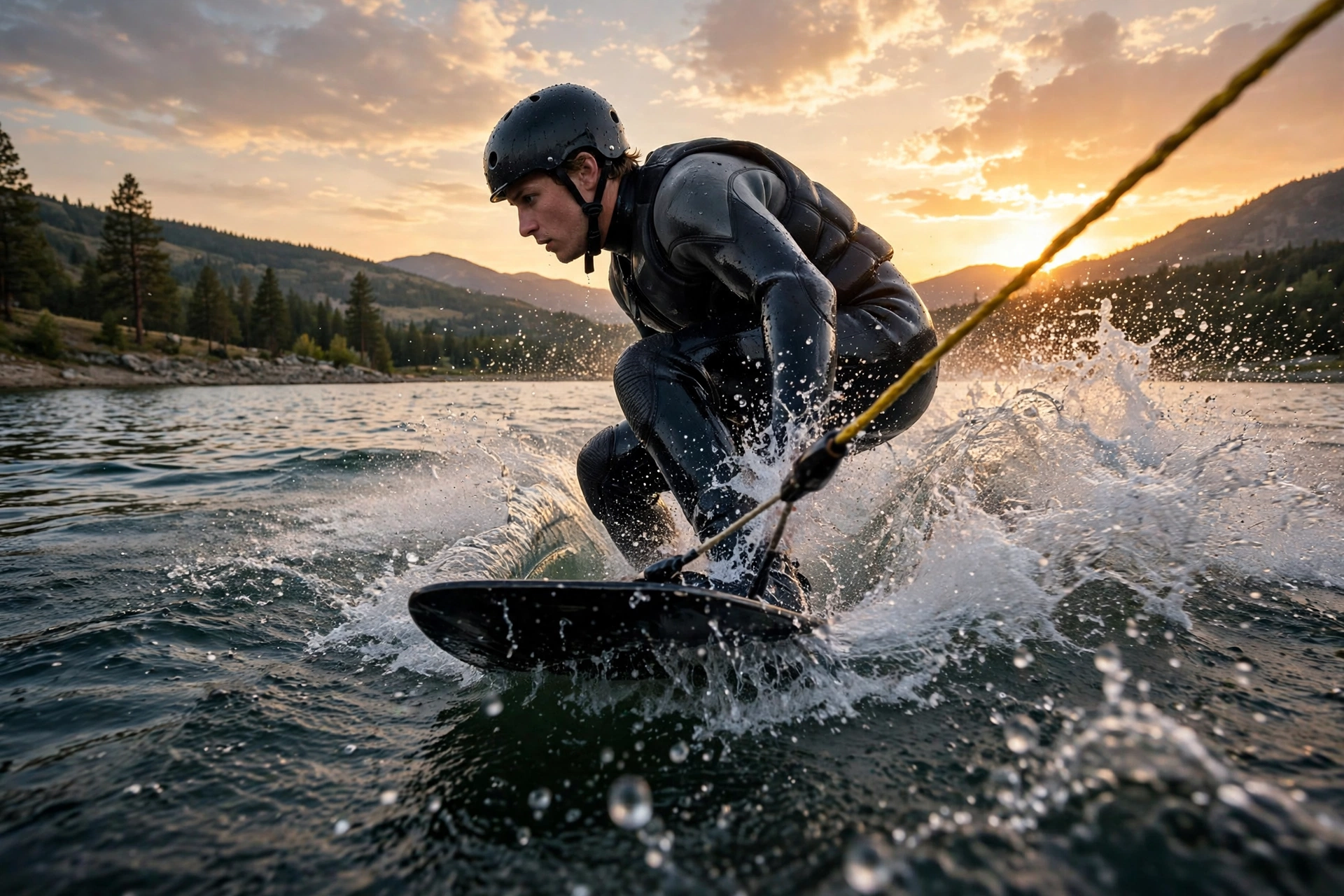
What type of helmet is best for kneeboarding?
The best helmet for kneeboarding is a water sports helmet, made with a hard shell, a water-friendly liner, and drainage holes that let water escape. It should fit snugly and fasten with a secure chin strap that will hold in a fall, and it should be light enough to wear comfortably for a long session. A helmet made for kayaking, wakeboarding, or other water sports is usually suitable, as long as it fits well. Some water helmets also include a system designed to reduce rotational forces in a fall, such as MIPS, so it is worth asking about when you choose one.
Avoid helmets made for land sports, such as cycling or skiing, for kneeboarding. They are not designed to drain, and they can become heavy and uncomfortable when soaked, or drag in the water during a fall. A water helmet is also made to resist damage from sun and water over time, so it will last longer in a boating environment. If you are unsure, ask at a water sports shop and try a few models on.
How should a kneeboarding helmet fit?
A kneeboarding helmet should fit snugly all round, without pressing painfully on your forehead or temples, and it should sit level on your head. It should not slide forward over your eyes when you lean into a turn, and it should not lift off when you fall. The chin strap should be snug, with room for only a finger or two underneath, and it should be fastened every time you get on the board.
Try the helmet on wet if you can, or at least with wet hair, since a helmet that fits when dry can feel different once it is soaked. Check that the helmet does not block your hearing, since you need to hear the driver and other boats, and that it does not rub your ears or neck. A good fit is one you forget about once you are riding, and that stays put when you fall.
How do you look after a kneeboarding helmet?
After each session, rinse the helmet in fresh water to wash out salt, lake water, and sunscreen, and let it dry naturally in the shade. Do not leave it in a hot boat or car, and do not dry it on a radiator, as heat can damage the shell and liner over time. Check the vents and drainage holes for sand or weed, and clear them out so water can escape freely.
Check the shell for cracks or dents, and the strap and buckle for wear, before each session. In general terms, a water helmet that has taken a hard knock should be replaced, even if it looks fine, because the inner liner may have been compressed. A helmet that has done its job in a fall has earned its replacement, and it is better to replace it than to rely on it again.
Can beginners wear a helmet for kneeboarding?
Beginners are the riders who benefit most from a helmet, because they fall most often while they are learning to balance, steer, and cross the wake. A helmet gives a new rider confidence to try, fall, and try again, without worrying about a knock to the head each time. Many kneeboarding schools provide helmets for beginners, and wearing one from the first session sets a good habit.
If you are teaching a child or a friend to kneeboard, make the helmet part of the kit from the start, along with a life jacket and a proper tow rope. Keep the boat speed gentle, choose calm water, and build up slowly. In general terms, a helmet is one part of safe kneeboarding, alongside a good driver, a clear stretch of water, and a rider who knows how to let go of the rope when they fall.
Do I need a helmet for kneeboarding?
It is strongly recommended, in general terms, because falls are common and the board can hit your head. A water sports helmet is light, comfortable, and made for the job, so there is little reason not to wear one.
Can I use a bike helmet for kneeboarding?
No, a bike helmet is not made for water use. It can soak up water, become heavy, and drag in a fall, so a water sports helmet with drainage is the right choice.
Should the helmet fit with a life jacket?
Yes, try them together. The helmet should sit clear of the life jacket collar, and the strap should not rub your neck when you are kneeling on the board.

Olivia
Writer at Helmet Today, covering helmet reviews, fit and riding safety.