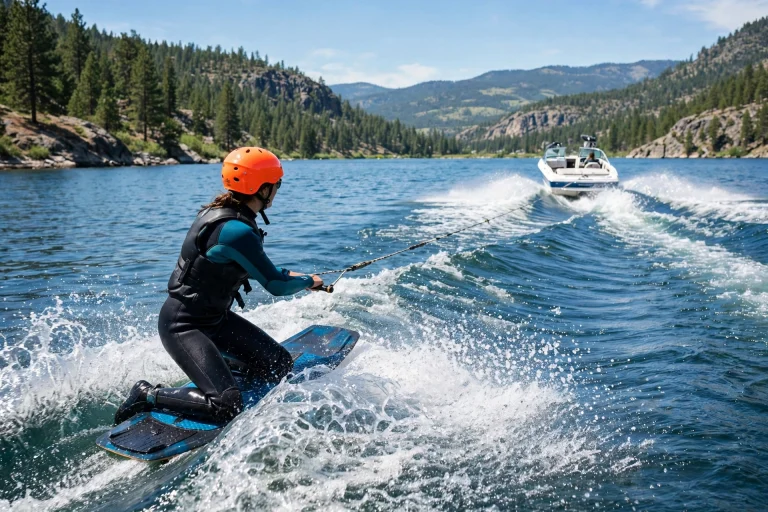
A wakesurfing helmet is a light water sports helmet, worn to protect your head from the board and the water when you fall while riding the wake behind a boat without a rope. Wakesurfing is a towed water sport in which the rider stands on a surf-style board and rides the wave, or wake, created by the boat, letting go of the rope once they are up and surfing. Falls are part of the sport, and a helmet is a sensible way to protect your head when you come off the board.
In general terms, a wakesurfing helmet is a low-profile water helmet with drainage, a secure chin strap, and a snug fit that stays on in a fall. It is lighter than many other water helmets, because wakesurfers ride close to the boat at low speed and want a helmet they can forget about. It is not a hard requirement for every rider, but it is a useful piece of kit, especially for beginners and for anyone trying new tricks.
What is wakesurfing?
Wakesurfing is a water sport in which a boat, usually a specialised wake boat with ballast, creates a large, clean wave behind it, and the rider surfs that wave on a board similar to a small surfboard. The rider starts holding a short rope, gets up on the board, and then lets go of the rope to surf the wake freely, using the wave’s energy to stay in place just behind the boat.
The rider steers by shifting weight, pumping the board, and moving up and down the face of the wave, and can do turns, cutbacks, and tricks on the wave. Because the boat moves slowly and the rider is close behind it, wakesurfing feels gentler than wakeboarding, but the board is hard, the water is not far away, and falls happen often, especially when learning or trying something new.
Do wakesurfers wear helmets?
Many wakesurfers do not wear a helmet, because the speeds are low and the falls are usually into soft water, but a growing number do, especially beginners, younger riders, and those learning tricks. The main risk is not the water itself, but the board: when you fall, the board can flip, spin, or come back towards you, and a knock from a hard board edge can cut or bruise your head.
In general terms, a helmet is a personal choice in wakesurfing, and the sport has no single rule about it. Riders who wear one usually do so because they have had a knock from the board, because they are learning a new trick, or because they simply prefer the extra protection. A light water helmet is easy to wear, and it does not get in the way of surfing the wave.
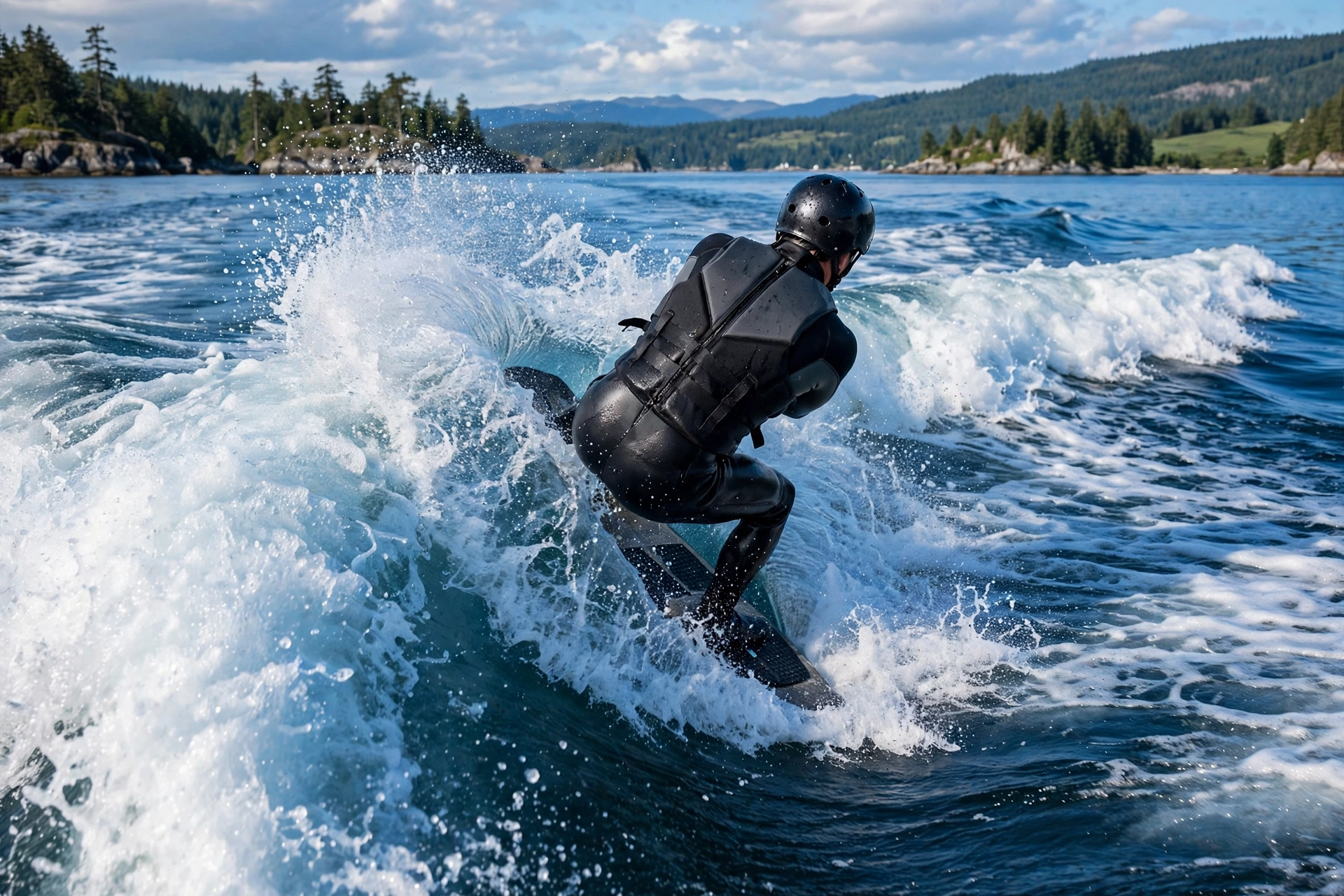
What type of helmet is best for wakesurfing?
The best helmet for wakesurfing is a light, low-profile water sports helmet, made with a hard shell, a water-friendly liner, and drainage holes. It should sit close to the head, so it does not catch the water or the wind, and it should fasten with a secure chin strap that holds in a fall. A helmet made for surfing, wakeboarding, or kayaking is usually suitable, as long as it fits well and drains properly. Some water helmets also include a system designed to reduce rotational forces in a fall, such as MIPS, so it is worth asking about when you choose one.
Avoid heavy helmets and helmets made for land sports, which can soak up water and drag when you fall. A wakesurfing helmet should be comfortable enough to wear for a long session, and it should not block your hearing, since you need to hear the driver and other riders. Try a few models on, and choose the one that feels most like it is not there at all.
How should a wakesurfing helmet fit?
A wakesurfing helmet should fit snugly all round, without pressing on your forehead or temples, and it should sit level on your head. It should not slide forward over your eyes when you crouch low on the wave, and it should not lift off when you fall backwards into the water. The chin strap should be snug, with room for only a finger or two underneath, and it should be fastened before every ride.
Check the fit with wet hair if you can, since a helmet can feel different once it is soaked. Make sure the helmet does not rub your ears or the back of your neck, and that it sits clear of any sun hat or hood you might wear. A good fit is one that stays put through a fall and a swim back to the boat, and that you can forget about while you are riding the wave.
When is a wakesurfing helmet most useful?
A wakesurfing helmet is most useful when you are learning, when you are trying new tricks, or when you are riding in a group where boards and riders are close together. Beginners fall often and in all directions, and a helmet takes the worry out of those falls. Riders learning spins, jumps, or tricks on the wave are also more likely to meet their board at speed, and a helmet helps there too.
It is also worth wearing a helmet when the water is crowded, or when you are surfing close to the boat and the swim platform. In general terms, the closer you are to hard objects, and the more new things you are trying, the more sense a helmet makes. Experienced riders on an open stretch of water may choose not to wear one, but the choice is easier when you have tried a light water helmet and found it comfortable.
How do you look after a wakesurfing helmet?
After each session, rinse the helmet in fresh water to remove lake or sea water and sunscreen, and let it dry naturally in the shade. Do not leave it in a hot boat or car, and do not dry it near a heater, as heat can damage the shell and liner. Clear sand and weed from the vents and drainage holes, so water can escape freely next time you fall.
Check the shell for cracks or dents, and the strap and buckle for wear, before each session. In general terms, a water helmet that has taken a hard knock should be replaced, even if it looks fine on the outside, because the inner liner may have been compressed. A helmet is a working piece of safety gear, and replacing it when it is worn or damaged is part of looking after yourself on the water.
Do all wakesurfers wear a helmet?
No, many do not, in general terms, because wakesurfing speeds are low and falls are usually into water. A helmet is a personal choice, and it is most popular with beginners, younger riders, and anyone learning tricks.
Can I use a wakeboarding helmet for wakesurfing?
Yes, a light water sports helmet made for wakeboarding is usually fine for wakesurfing too, as long as it fits well, drains properly, and has a secure chin strap.
Does a helmet make wakesurfing harder?
A light, well-fitting water helmet should not get in the way. If a helmet feels heavy, hot, or distracting, try a lighter, lower-profile model that fits your head better.

Olivia
Writer at Helmet Today, covering helmet reviews, fit and riding safety.