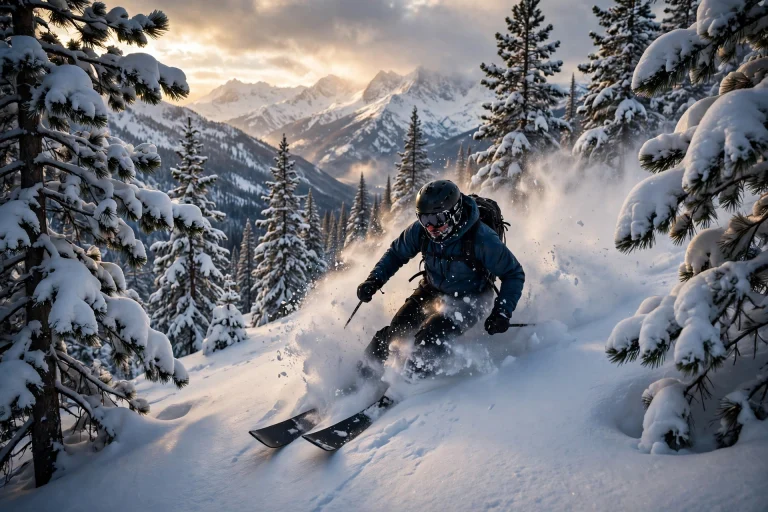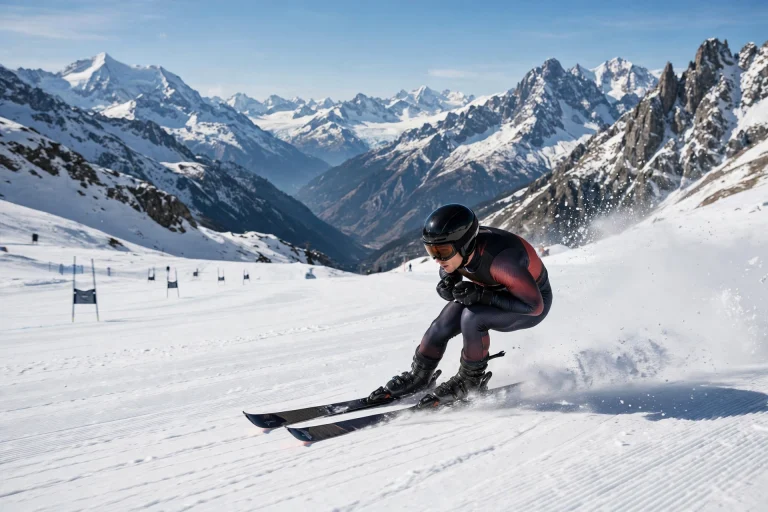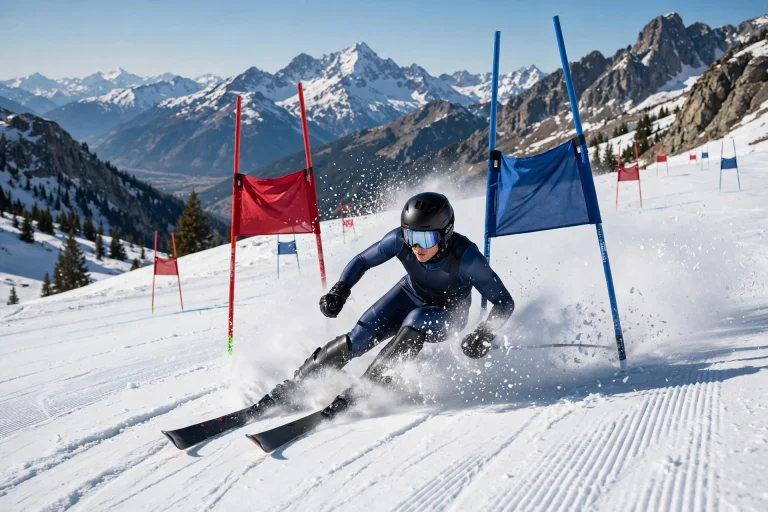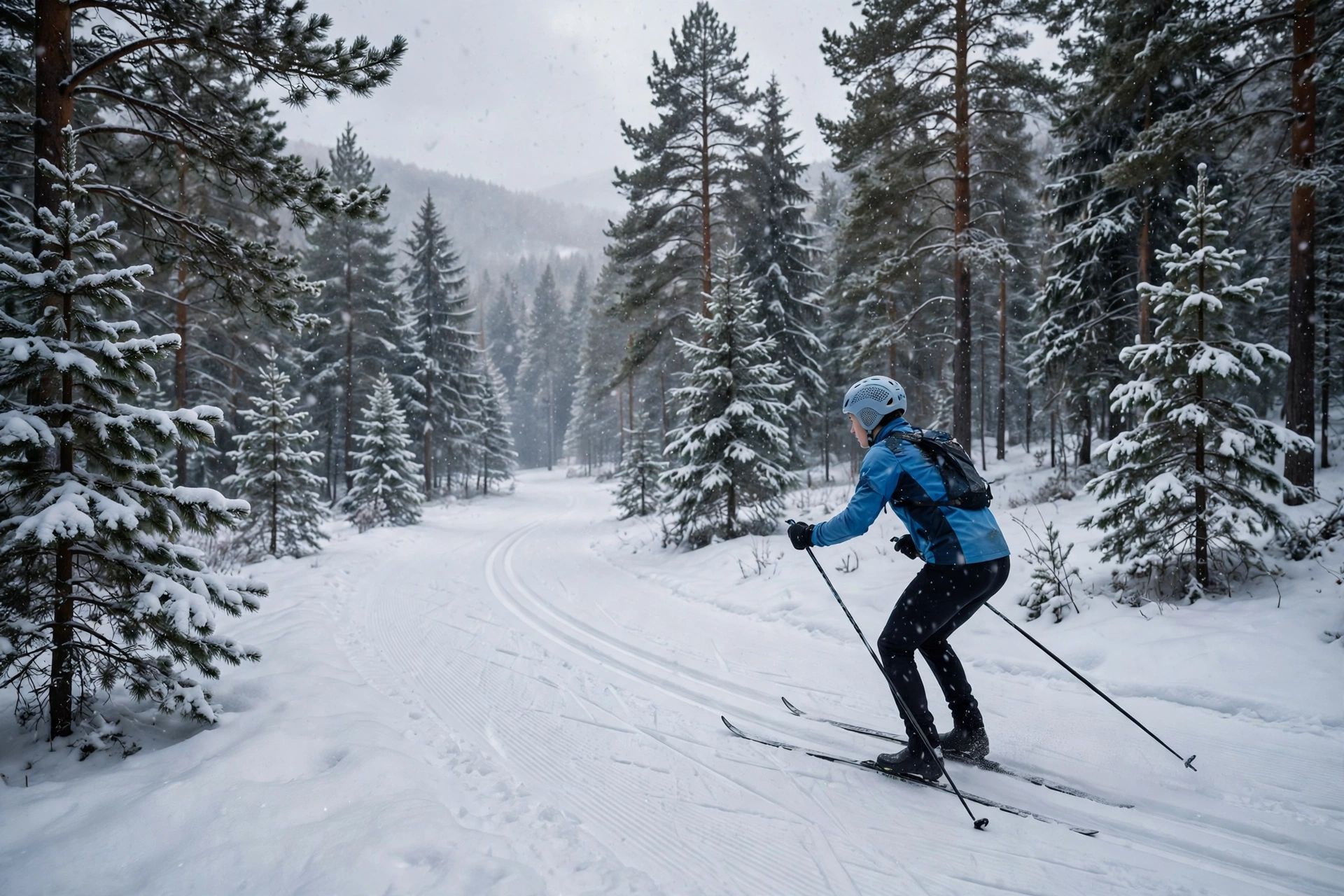
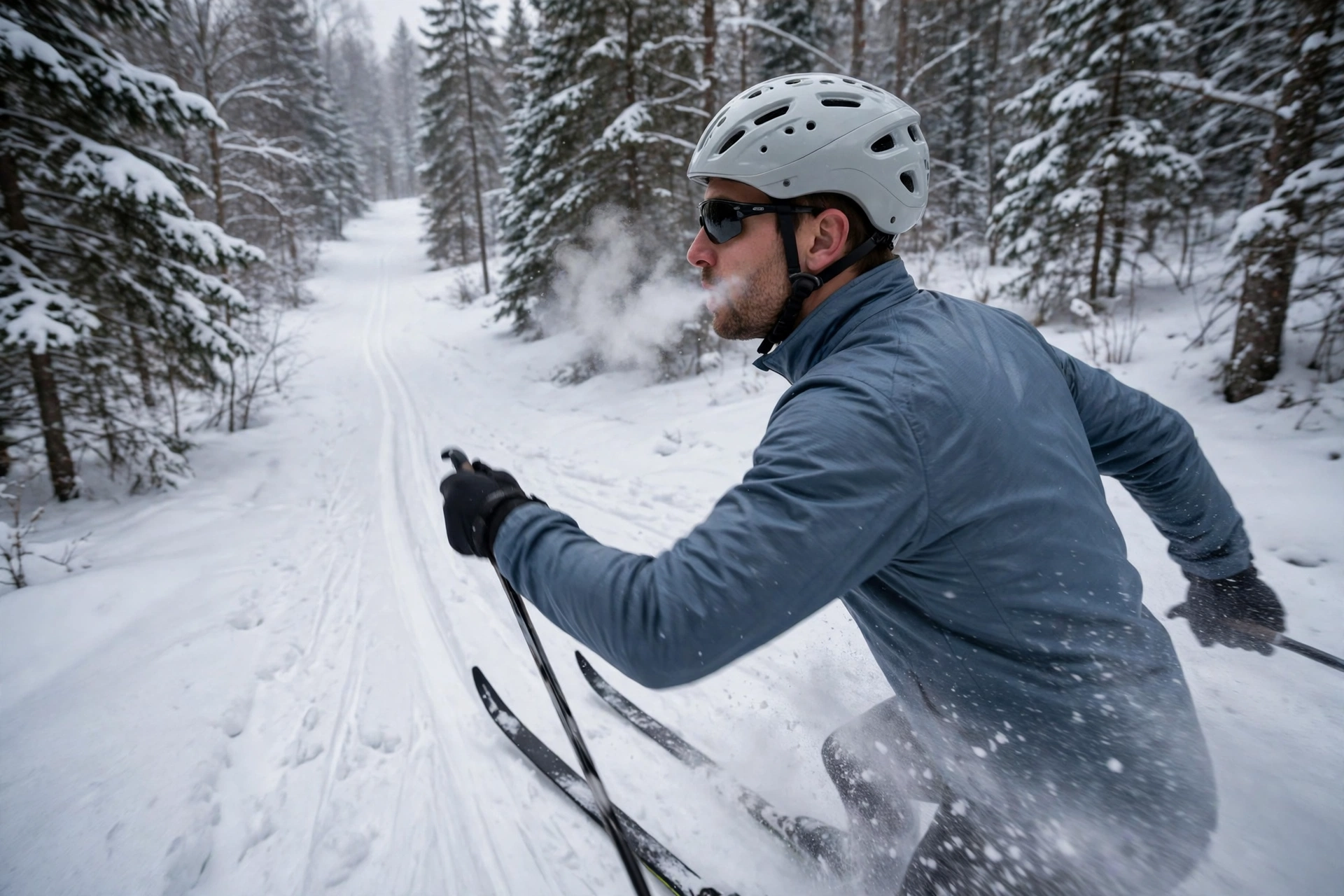
A ski helmet for cross-country skiing is a light, well-ventilated helmet, made to protect your head and keep you warm while skiing on groomed trails, without overheating you as you work hard. Cross-country skiing is a stamina sport, skied on prepared tracks through forests and open country, and the helmet needs to suit that world: light, breathable, and comfortable over a long outing, with enough warmth for cold days and enough airflow for hard climbs.
In general terms, a cross-country ski helmet is closer to a light ski helmet than to a heavy alpine race helmet, and many skiers choose one that feels more like a warm, protective hat with a shell. Some skiers wear a helmet, and some do not, especially in training, but a helmet is a sensible choice for trails with icy sections, fast descents, and other skiers around. The right one is the one you will actually wear for the whole ski.
What is cross-country skiing?
Cross-country skiing is a form of skiing in which the skier moves across snow on narrow skis, using poles, on groomed tracks or trails. There are two main techniques: classic, in which the skier moves in parallel tracks, and skate skiing, in which the skier pushes off to the side like a skater. Both are aerobic, full-body activities, and both can be done as a gentle outing or as a hard race.
The trails wind through woods and open ground, with climbs, descents, and corners, and the snow can range from soft and slow to icy and fast. Skiers share the trails with others, and faster skiers overtake slower ones, so a fall or a collision is always possible, especially on a downhill stretch. That is the context in which a helmet earns its place, even in a sport that feels calmer than alpine skiing.
Do cross-country skiers wear helmets?
Many cross-country skiers do wear a helmet, and more are doing so, especially for races, fast training, and icy trails, but it is not universal in the sport. In training, some skiers wear only a warm hat or headband, and in races the rules about helmets vary by event and by level, so it is worth checking what applies to the race you are entering. In general terms, the trend is towards helmets, and many clubs and race organisers encourage them.
The reason some skiers hesitate is heat: cross-country skiing is hard work, and a heavy helmet can feel hot and sweaty on a climb. That is why cross-country helmets are made light and well ventilated, so they protect without cooking the skier. A helmet made for the discipline is a very different thing from a heavy alpine helmet, and it is worth trying one on before deciding a helmet is not for you.
What type of helmet is best for cross-country skiing?
The best helmet for cross-country skiing is a light ski helmet with plenty of ventilation, a comfortable fit, and enough warmth for cold days. Some cross-country helmets look like a light alpine helmet, while others are closer to a hard-shell hat with a soft lining, and either can work if it fits well and is made for snow sports. What matters is that it is light, breathable, and made to protect the head in a fall on snow or ice. Some ski helmets also include a system designed to reduce rotational forces in a fall, such as MIPS, so it is worth asking about when you choose one.
Look for a helmet with vents you can open and close, so you can let heat out on a climb and keep warmth in on a cold descent. A removable lining or ear covers are useful too, since the weather on a long ski can change a great deal. Try the helmet on with the hat or headband you usually ski in, and with your sunglasses or goggles, so you know the whole setup works together.
How should a cross-country ski helmet fit?
A cross-country ski helmet should fit snugly all round, without pressing painfully on your forehead or temples, and it should sit level on your head. It should not slide forward over your eyes when you tuck low on a descent, and it should not lift off when you look up on a climb. The chin strap should be snug, with room for only a finger or two underneath, and it should be fastened for every ski.
Check the fit with your usual hat or headband underneath, since a helmet that fits on bare hair can feel tight with a warm layer added. Make sure the helmet does not block your hearing, since you need to hear other skiers calling to pass, and that it does not rub your ears or neck over a long outing. A good fit is one you forget about once you are moving, and that stays put when you fall.
How do you stay warm and cool in one helmet?
Staying warm and cool in the same helmet comes down to ventilation and layers. On a hard climb, open the vents and let the heat out, and wear a thin, moisture-wicking layer under the helmet rather than a thick hat that traps sweat. On a cold descent or a windy stretch, close the vents, pull the ear covers down, and add a thin balaclava or neck warmer to keep the cold out.
It helps to dress for the work you are doing, not just for the temperature at the start. In general terms, cross-country skiers warm up quickly, so a helmet that vents well is worth more than one that is simply warm. Try your helmet and layers on a training ski before race day, so you know how the combination feels when you are working hard and when you are standing still.
How do you look after a cross-country ski helmet?
After each ski, let the helmet dry naturally at room temperature, away from direct heat, and wipe the shell clean of snow and dirt. Do not leave it in a hot car or near a radiator, as heat can damage the materials inside. If the lining is removable, take it out and let it dry fully, and wash it when it needs it, following the maker’s care instructions.
Check the shell for cracks or dents, and the strap and buckle for wear, before each outing. In general terms, a helmet that has taken a hard knock in a fall should be replaced, even if it looks fine, because the inner liner may have been compressed. A helmet that has protected you in a fall has done its job and should not be relied on again.
Is a helmet required for cross-country ski races?
It depends on the event, in general terms, so check the race rules before you enter. Many races and clubs encourage helmets, and some require them, especially for younger skiers and for races with fast descents.
Can I use an alpine ski helmet for cross-country skiing?
You can, but it will usually feel heavier and warmer than a cross-country helmet. A light, well-ventilated helmet made for the discipline is more comfortable over a long, hard ski.
Will a helmet make me overheat on a climb?
A heavy helmet can, but a light cross-country helmet with vents you can open should not. Choose a helmet made for the sport, open the vents on climbs, and wear a thin layer underneath.

Olivia
Writer at Helmet Today, covering helmet reviews, fit and riding safety.