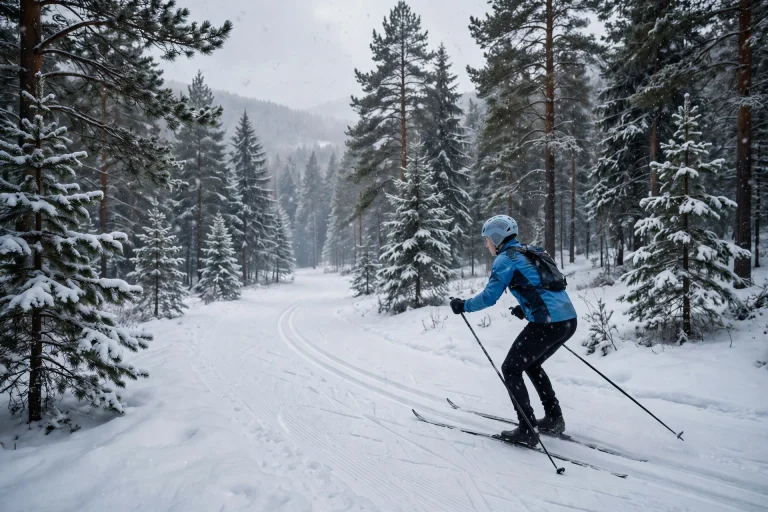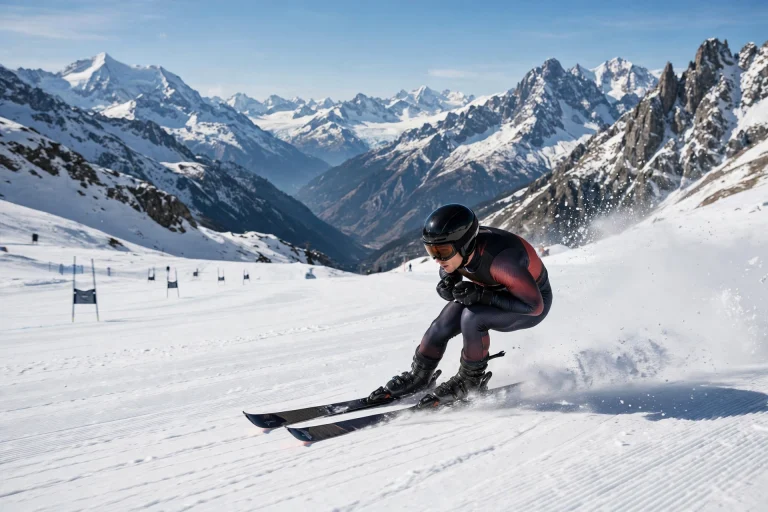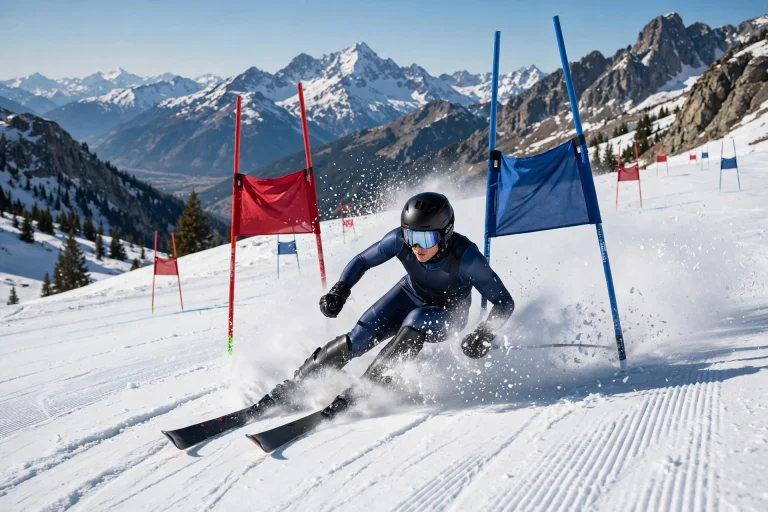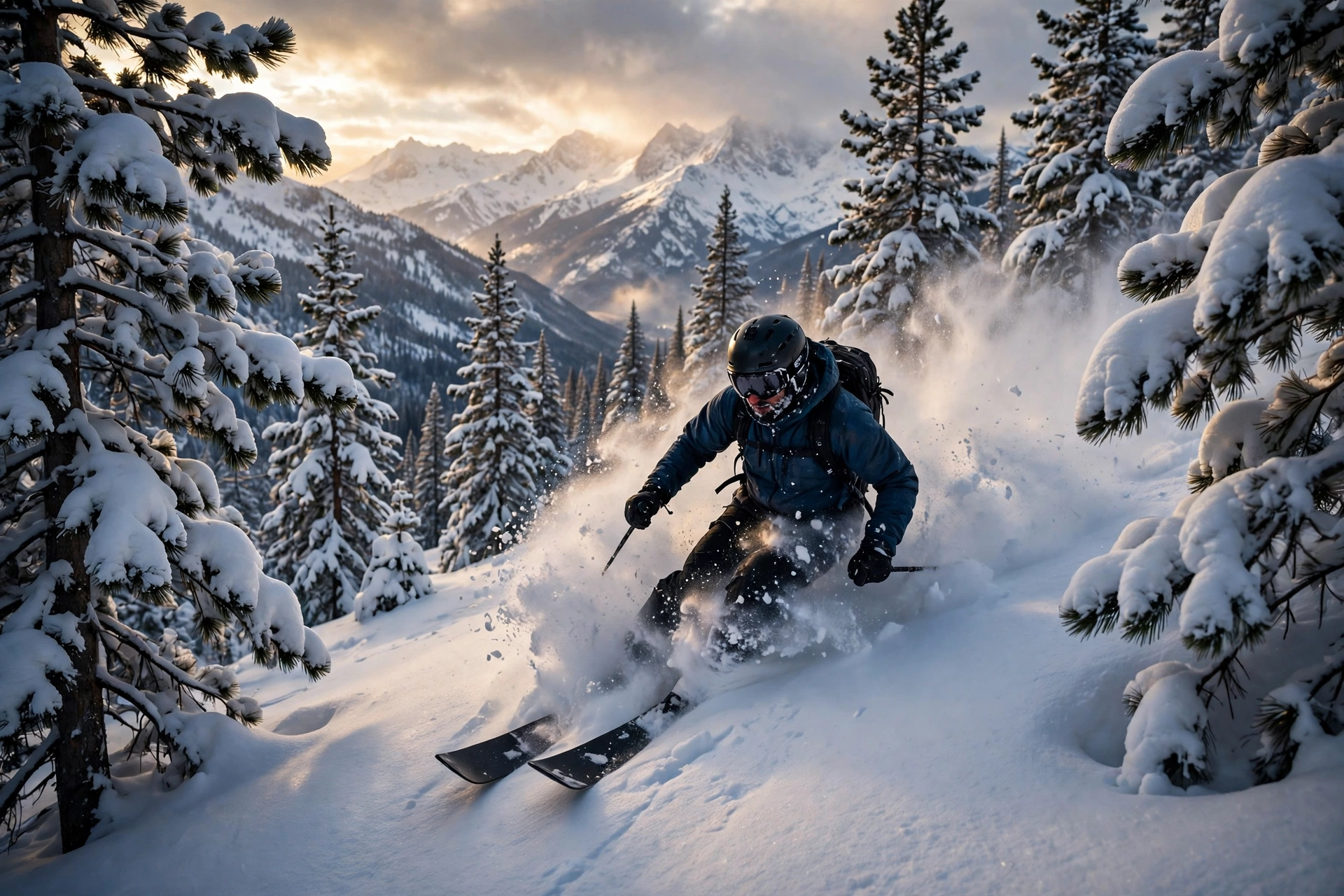
A ski helmet for off-piste skiing is a sturdy ski helmet, made to protect your head from trees, rocks, and hard falls in deep, ungroomed snow away from the prepared pistes. Off-piste skiing means skiing on natural, ungroomed snow, beyond the marked runs, where the snow is soft and deep but the hazards are hidden: tree trunks, rocks, stumps, and sudden changes in the slope. A helmet is an essential part of off-piste kit, alongside the other safety gear the terrain calls for.
In general terms, an off-piste helmet is a well-ventilated freeride-style ski helmet, with a strong shell, good coverage, and a fit made to work with goggles and, often, a backpack and avalanche safety gear. It needs to protect in a fall, stay comfortable on a long day in deep snow, and keep working when it is cold, wet, and windy. It is not a fashion item: in the backcountry, your helmet is working gear.
What is off-piste skiing?
Off-piste skiing is skiing on snow that has not been groomed or marked as a piste, usually beside the pistes, between the trees, or in open bowls reached by lift or by climbing. The snow is natural and changeable: deep powder on one slope, wind-blown crust on another, and hidden obstacles under the surface. The skiing is rewarding, with soft turns and open space, but the terrain is less predictable than a prepared run.
Skiers go off-piste with a partner or a group, with the right safety gear and the knowledge to use it, and they choose their lines carefully, watching the snow and the slope. In general terms, off-piste skiing asks more of the skier than piste skiing, in skill, judgement, and preparation, and it is not a place for a first day on skis. The helmet is one part of that preparation, and it should be in place before you leave the piste.
Why does a helmet matter more off-piste?
A helmet matters more off-piste because the hazards are harder and less predictable than on a piste. On a groomed run, a fall is usually onto smooth, prepared snow. Off-piste, a fall can bring you into contact with a tree trunk, a rock, a stump, or a hard, wind-packed surface, and those impacts can be serious. A helmet spreads the force of such a knock and protects the head from cuts and bruises as well.
Off-piste skiing also involves more speed changes, more jumps off natural features, and more time in trees, where a branch or a trunk can appear suddenly. In general terms, the helmet is there for the fall you do not expect, and off-piste skiing has more of those than piste skiing. It does not make the terrain safe on its own, but it is a basic layer of protection that every off-piste skier should wear.
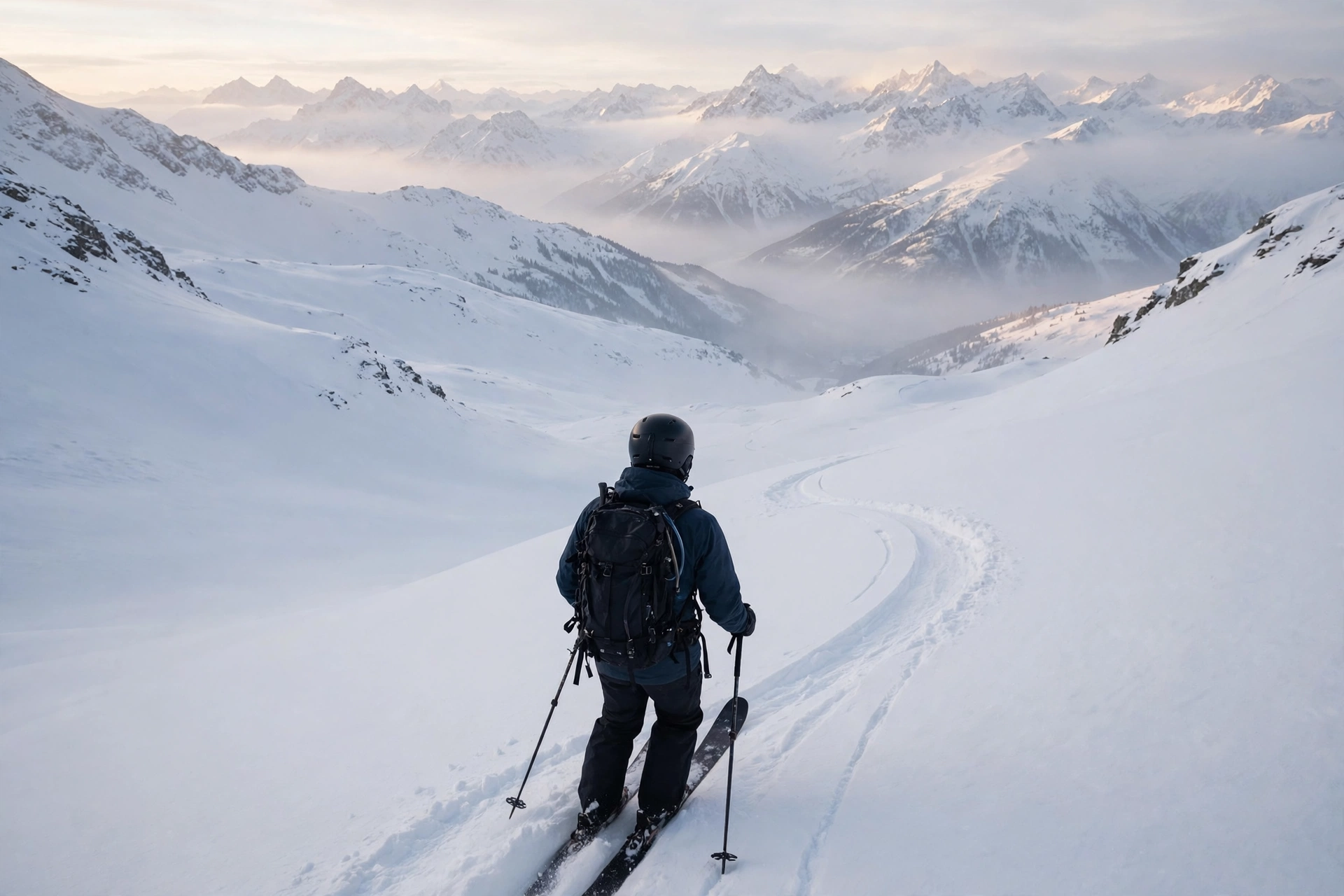
What type of helmet is best for off-piste skiing?
The best helmet for off-piste skiing is a sturdy freeride-style ski helmet, with a strong shell, good coverage over the ears and the back of the head, and plenty of ventilation that can be adjusted. It should work well with your goggles, with no gap between the two, and it should fit comfortably with any hood or balaclava you wear in bad weather. A helmet with a dial or adjustable fit at the back is useful, since it lets you fine-tune the fit with different layers.
Look for a helmet with vents you can open and close, since off-piste days swing between hard climbing, when you are hot, and cold descents, when you want the warmth kept in. A removable lining is useful too, so you can dry it properly after a day in deep snow. Some ski helmets also include a system designed to reduce rotational forces in a fall, such as MIPS, so it is worth asking about when you choose one. Try the helmet on with your goggles and your usual layers, and choose the one that feels secure and comfortable for a long day.
How should an off-piste helmet fit with goggles and a pack?
An off-piste helmet should fit snugly all round, without pressing on your forehead or temples, and it should sit level on your head, low at the front. It should work with your goggles so there is no gap between the top of the goggles and the helmet, and the goggle strap should sit comfortably over the helmet without slipping. The chin strap should be snug, with room for only a finger or two underneath.
Check the fit with your backpack on, since a pack can change how your head and neck move, and make sure the helmet does not clash with the pack straps or a hood. If you wear avalanche safety gear, check that the helmet does not get in the way of it. In general terms, the whole setup should be tried together before you head out, so there are no surprises on the mountain.
How do you look after an off-piste helmet?
After a day off-piste, let the helmet dry naturally at room temperature, away from direct heat, and wipe the shell clean of snow and dirt. Do not leave it in a hot car or near a radiator, as heat can damage the materials inside. Clear snow and ice from the vents, and make sure they move freely before your next outing.
Check the shell for cracks or dents, and the strap, buckle, and lining for wear, before each trip. In general terms, a helmet that has taken a hard knock against a tree or rock should be replaced, even if it looks fine, because the inner liner may have been compressed. A helmet that has protected you in a fall has done its job and should not be relied on again.
What else should off-piste skiers remember?
Off-piste skiers should remember that a helmet is only one part of staying safe away from the pistes. Ski with a partner, carry the safety gear your terrain and conditions call for, and make sure you know how to use it. Check the snow and weather before you go, choose lines that suit your ability and the conditions, and be ready to turn back if the snow or the weather changes.
It is also wise to ski with people who know the area, or to hire a guide if you are new to a mountain. In general terms, local knowledge, good judgement, and a conservative choice of line keep you safer than any piece of equipment on its own. Your helmet is there for the unexpected, but the best off-piste days are the ones where it never has to do its job.
Do I need a special helmet for off-piste skiing?
Yes, in general terms a sturdy freeride-style ski helmet is the right choice. It has the coverage, ventilation, and goggle fit that off-piste skiing calls for, and it is made for long days in deep snow.
Can I use my piste helmet off-piste?
You can, if it fits well and is in good condition, but a freeride helmet usually gives better coverage and ventilation for off-piste days. Try both with your goggles and layers before you decide.
Does a helmet protect against avalanches?
No, a helmet does not protect against an avalanche. It protects your head in a fall or a knock against a tree or rock, but avalanche safety depends on snow knowledge, route choice, and proper safety gear and training.

Olivia
Writer at Helmet Today, covering helmet reviews, fit and riding safety.