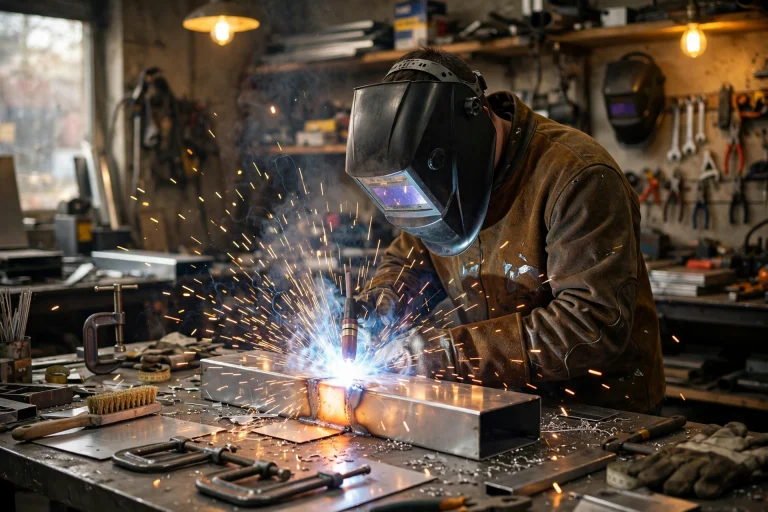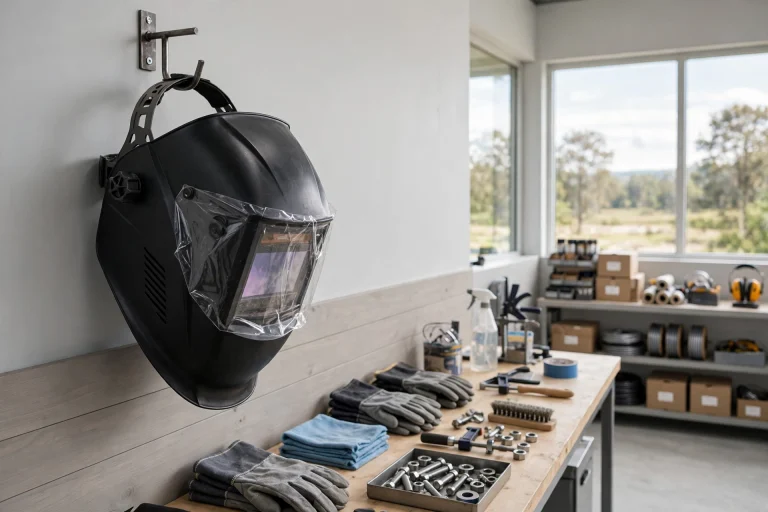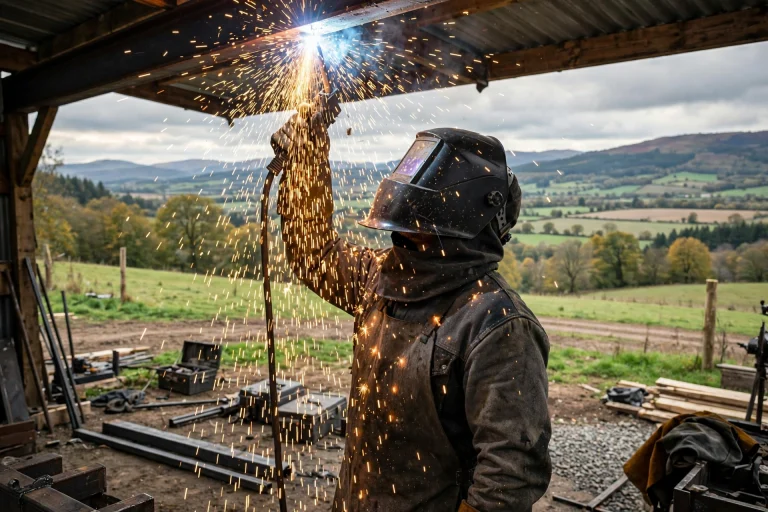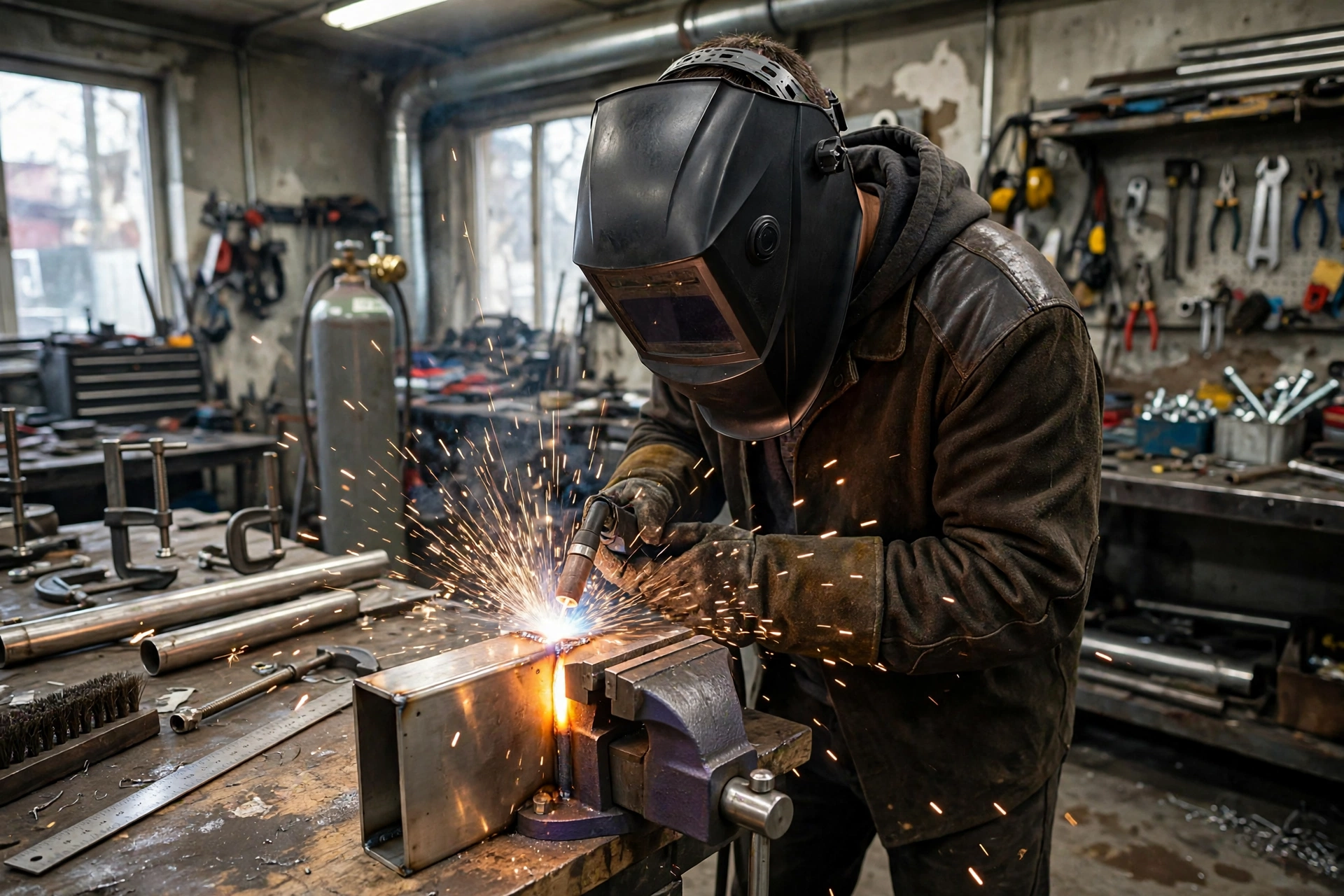
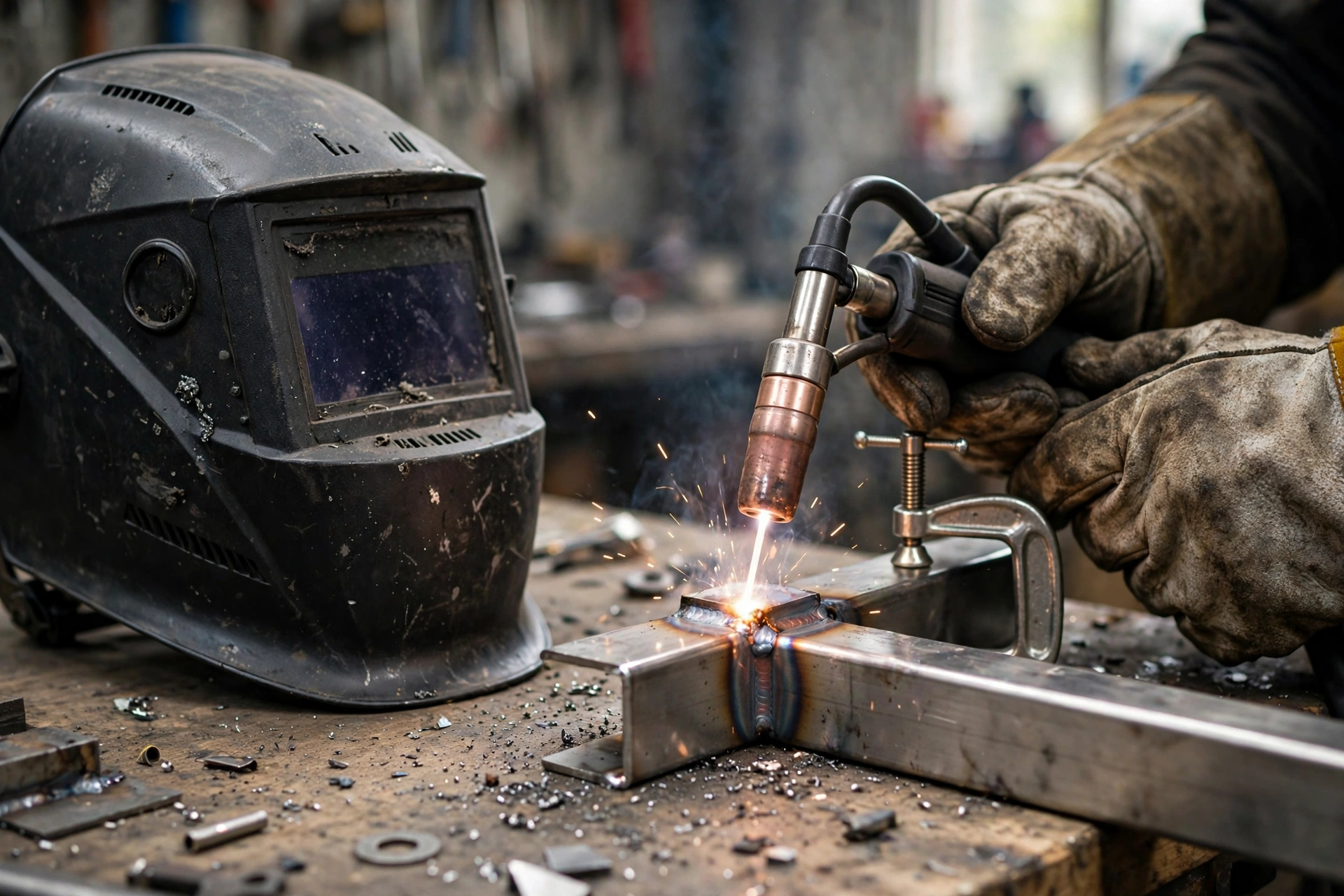
A welding helmet for stainless steel welding is a welding helmet with a lens and shade suited to the bright arc of stainless steel work, usually an auto-darkening helmet, with good coverage against sparks, heat, and ultraviolet light. Stainless steel is often welded with TIG or MIG, both of which produce a very bright arc, so the helmet needs a lens that darkens fast and far enough to protect the eyes, plus a shell that shields the face, neck, and ears from spatter and reflected light.
In general terms, the helmet itself is the same kind used for other metals — what changes is the lens setting and the way you work. Stainless steel reflects more light than mild steel, and TIG welding in particular gives a clean, intense arc with little smoke to dim it. That is why many welders choose an auto-darkening helmet for stainless work: the lens adjusts in a fraction of a second, and the shade can be set to match the process and the current being used.
What is special about welding stainless steel?
Stainless steel welding is different from mild steel mainly in the brightness and the heat of the arc, and in the way the metal behaves. TIG welding stainless steel produces a bright, focused arc and very little smoke, so the welder’s eyes get the full glare. MIG welding stainless steel produces more spatter and a brighter arc than MIG on mild steel, and stick welding stainless can throw off hot spatter that sticks to skin and clothing.
The metal also holds heat and reflects it, which is why welders working stainless often feel the heat on their face and neck more than they expect. Stainless steel can also give off fumes that need good ventilation or extraction, and the weld itself needs a clean surface and steady technique. None of this changes the basic job of the helmet — to protect the eyes, face, and head — but it does mean the lens and the coverage need to be right for the process.
What shade should you use for stainless steel welding?
The shade you need depends on the process and the welding current, not on the metal alone. In general terms, TIG welding at low current needs a lighter shade than MIG or stick at high current, and the right shade is the darkest one that still lets you see the weld pool clearly. An auto-darkening helmet lets you set the shade with a dial, which is why it is popular for stainless work, where the current can change between joints.
Do not guess the shade or use a lens that is too light for the arc. A shade that is too light lets too much ultraviolet and infrared light reach your eyes, which can cause arc eye — a painful burn to the surface of the eye that shows up hours after welding. If you are unsure which shade to use, check the maker’s guidance for your helmet, and ask a more experienced welder to check your setting before you start.
Should you use an auto-darkening helmet for stainless steel?
In general terms, yes, an auto-darkening helmet is a good choice for stainless steel welding, and it is what most welders use for TIG and MIG work on stainless. The lens stays light while you set up the joint, then darkens the moment the arc strikes, so you do not have to nod the helmet down or lift it between welds. That makes it easier to keep the torch in the right place and to see the joint clearly before you start.
Look for a helmet with a fast switching speed, a wide viewing area, and adjustable shade and sensitivity, so you can tune it to the brightness of your arc. A helmet with grind mode is useful too, because stainless work often involves grinding and finishing between welds, and grind mode stops the lens darkening from the sparks. Check that the lens is in good condition, with no scratches or cracks, and that the batteries or solar cell are working before you strike an arc.
What else should a stainless steel welding helmet cover?
A welding helmet for stainless steel should cover the whole face, the ears, and the front of the neck, because spatter and reflected light reach all of those areas. Stainless welding throws off hot spatter that can burn skin and catch in clothing, so a helmet with a shell that wraps around the sides and a bib or neck guard is worth having. Some welders also wear a leather jacket or apron and a cap under the helmet for extra protection.
The helmet should sit comfortably on the head, with the headband adjusted so the helmet stays up when raised and drops easily when you nod. A helmet that is too loose will slip, and one that is too tight will give you a headache over a long shift. Check the headband padding and the pivot points regularly, and replace worn parts before they fail. In general terms, a helmet that fits well and covers properly is as important as the lens inside it.
How do you look after a welding helmet used for stainless steel?
Look after the lens first, because a scratched or dirty lens makes the weld harder to see and the work less safe. Wipe the outside cover lens with a soft cloth, and replace the cover lens when it gets pitted by spatter or scratched. Keep a spare cover lens in your kit, because stainless welding produces fine spatter that marks the lens faster than you might expect.
Check the shell for cracks, burns, or heat damage, and check the headband and the lens housing for wear. Store the helmet somewhere dry, away from direct sun and heat, and do not leave it face down on a bench where the lens can be scratched. Some helmets include a liner or system designed to reduce rotational forces in a fall or impact, such as MIPS, which is a feature more common on other kinds of helmet, but the same idea applies here: look after the parts that protect you, and replace the helmet if the shell or the lens is damaged.
What other safety gear goes with a welding helmet?
A welding helmet protects your eyes and face, but stainless steel welding needs more than a helmet. Wear flame-resistant clothing, leather gloves, and safety boots, and use extraction or a respirator where your workplace guidance calls for it.
Keep a fire extinguisher nearby, clear the area of flammable material, and check that your gloves and clothing are free of holes before you start. Good gear works as a set, and the helmet is only one part of it.
Can you use the same helmet for stainless steel and mild steel?
Yes, in general terms the same welding helmet works for both, as long as the lens shade is set correctly for the process and current you are using. Stainless steel may need a darker shade for the same current, so check the setting each time you switch metals.
Do you need a respirator with a welding helmet for stainless steel?
Stainless steel welding can produce fumes that need ventilation or extraction, and in some settings a respirator is required. Follow your workplace guidance and the safety data for the materials you are welding, and use extraction or a respirator where it is specified.
How often should you replace the lens on a welding helmet?
Replace the outer cover lens when it is pitted, scratched, or hard to see through, and replace the main lens if it is cracked or no longer darkens properly. Check the lens before every welding session, and keep spares on hand.

Olivia
Writer at Helmet Today, covering helmet reviews, fit and riding safety.