A helmet buying guide for mountain bikers comes down to this: choose a well-fitting mountain bike helmet with good coverage at the back and sides of the head, strong ventilation, and a secure fit, matched to the kind of riding you do. Trail and cross-country riders usually want a light, well-vented helmet, while downhill and enduro riders need fuller coverage and a tougher shell. In every case, the helmet should meet a recognised cycling safety standard and fit properly, because a helmet that does not fit will not protect you well, however much it cost.
Buying a mountain bike helmet is not like buying a road helmet. Mountain biking involves low branches, falls onto rocks and roots, and long climbs where heat builds up fast, so the helmet has to handle all of that. The right choice depends on where you ride, how hard you ride, and how long you spend on the bike. This guide walks through the main choices, so you can buy once and buy well.
What type of mountain bike helmet do you need?
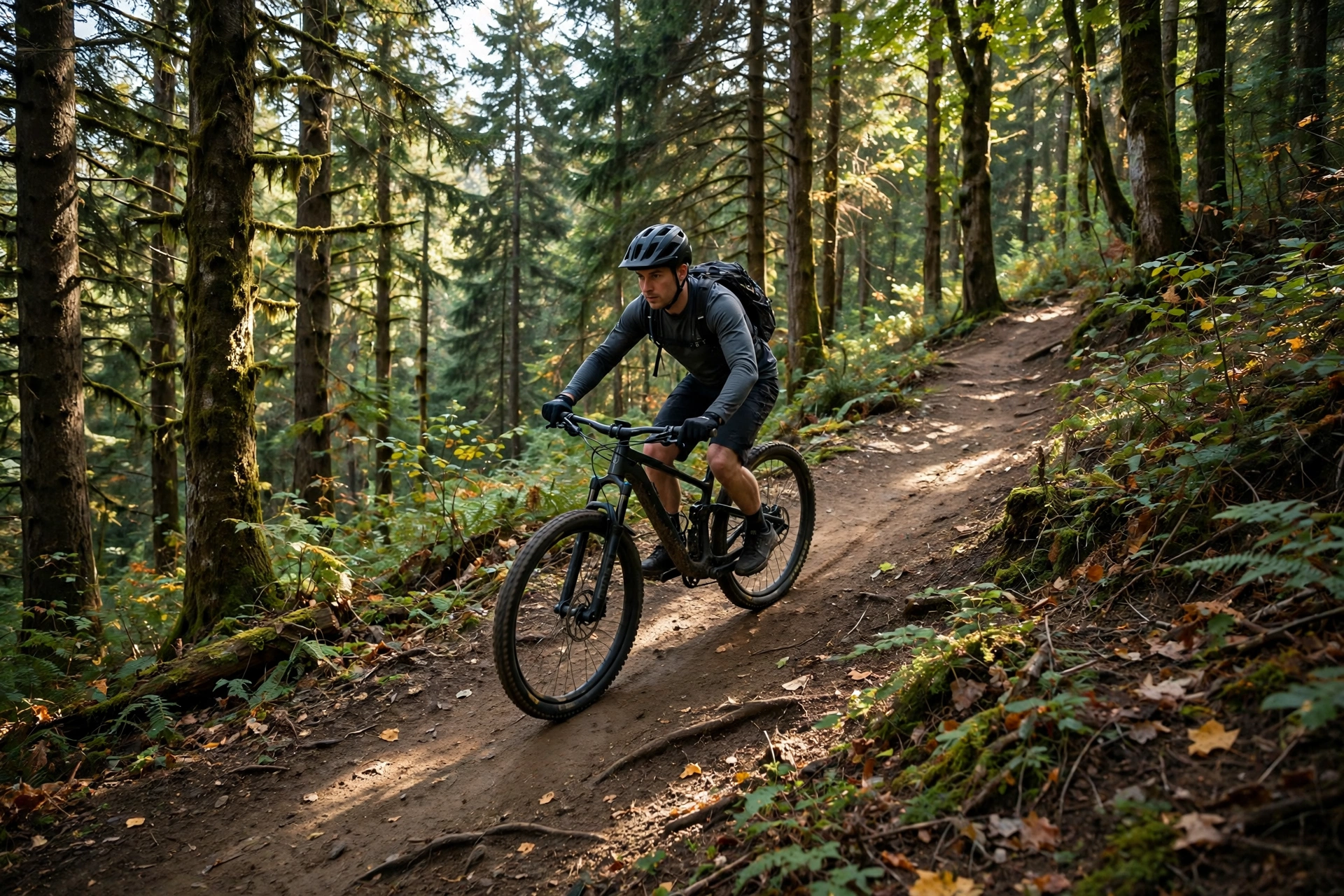
Most mountain bikers start with an open-face trail helmet, which covers the back and sides of the head more than a road helmet and has a visor to shade the eyes and deflect branches. Trail helmets are light, well ventilated, and comfortable for long rides, and they suit cross-country and general trail riding. They are the most common choice, and for most riders they are the right one.
Enduro helmets add more coverage at the back and temples and often have a removable chin bar for harder descents, while full-face downhill helmets cover the jaw and chin completely and are built for high-speed downhill riding and bike parks. In general terms, choose the lightest helmet that still covers what your riding demands: a trail helmet for cross-country and light trails, an enduro helmet for steep and technical riding, and a full-face helmet for downhill and bike park days.
How should a mountain bike helmet fit?
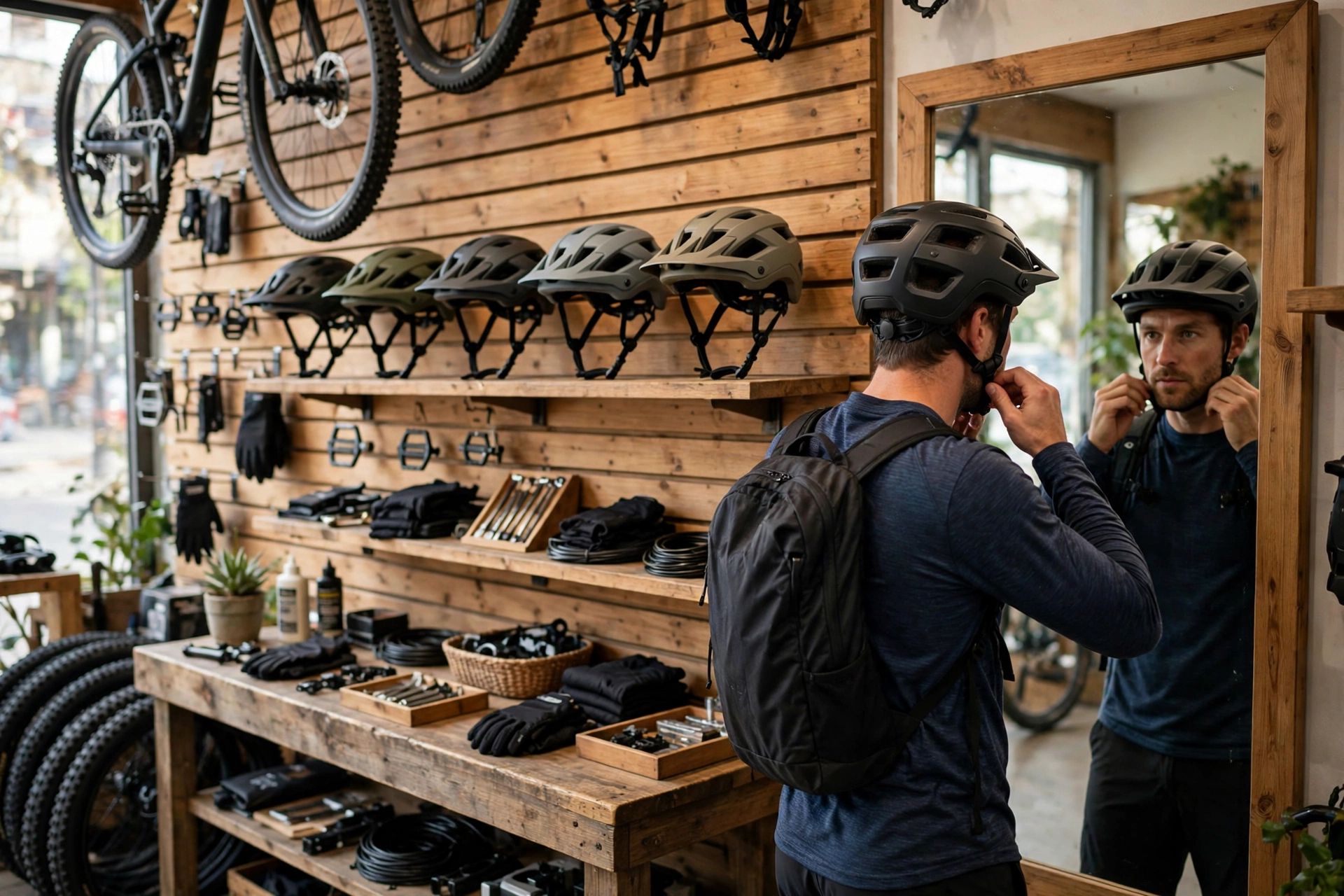
A mountain bike helmet should fit snugly all round, sitting level on the head and low enough at the front to protect the forehead. It should not tip forward over the eyes or slide back when you nod, and it should stay in place when you shake your head. The fit is best checked in the shop, wearing your hair and any glasses the way you will wear them on the trail, and with the retention system adjusted to your head.
Most mountain bike helmets have a dial or cradle at the back that tightens the fit, and the straps should form a neat V under each ear, meeting just below the earlobe. The chin strap should be snug enough that you can fit only a finger or two between the strap and your chin. Try the helmet on, walk around in it, and nod and shake your head before you buy, because a helmet that moves on your head in the shop will move far more on a rough trail.
What features matter in a mountain bike helmet?
Ventilation matters more on a mountain bike than on the road, because climbs are slow and hot, and a helmet with poor airflow will leave you soaked in sweat. Look for large vents that let air flow through, and a lining that wicks sweat and can be removed and washed. Coverage matters too: a good trail helmet extends lower at the back and sides than a road helmet, protecting the areas most likely to hit the ground in a fall.
Other features worth weighing up are a visor that adjusts or removes easily, a mount for a light or camera if you ride at night, and a retention system that can be adjusted with one hand while wearing gloves. Some helmets include a system designed to reduce rotational forces in a fall, such as MIPS, and it is worth asking about when you compare models. None of these extras replaces the basics: a sound shell, a secure strap, and a fit that stays put on rough ground.
How much should you spend on a mountain bike helmet?
In general terms, you do not need to spend the most to get a safe mountain bike helmet. Helmets at a mid-range price usually meet the same safety standards as the most expensive models, and the extra money mostly buys lighter weight, better ventilation, and a nicer retention system. What matters is the standard the helmet meets, the fit, and the condition it is in — not the price tag or the brand.
Set a budget, then try on helmets within it and pick the one that fits best. A cheaper helmet that fits perfectly protects you better than an expensive one that is the wrong size or shape for your head. Avoid second-hand helmets, because you cannot know whether one has been in a crash, and avoid helmets with no recognised safety marking. If a deal looks too good to be true, check the standard and the maker’s name before you buy.
When should you replace a mountain bike helmet?
Replace a mountain bike helmet after any crash where your head hits the ground, even if the helmet looks fine on the outside. The foam inside can compress in an impact, and a compressed liner protects less well the next time. In general terms, a helmet that has taken a hard knock has done its job and should not be relied on again.
Replace it too if the shell is cracked, the straps are frayed, or the retention system no longer holds. Age matters as well: helmets have a working life set by the maker, and materials can degrade with sun, sweat, and heat over time. Check the helmet after every ride for damage, store it away from direct sun and heat, and do not hang it by its straps, which can stretch them. When in doubt, replace it — a new helmet costs far less than a head injury.
What size mountain bike helmet do you need?
Mountain bike helmets come in sizes, usually small, medium, and large, and the right size is the one that matches the circumference of your head. Measure around your head just above the eyebrows, and compare the number with the maker’s size chart. If you fall between sizes, try both, because the shape of the helmet matters as much as the size.
A helmet that is the right size will sit level and snug without pressure points, and the retention system should fine-tune the fit rather than fix a wrong size. Do not buy a size up to grow into, and do not squeeze into a size that is too small.
Do you need a full-face helmet for trail riding?
In general terms, no. An open-face trail helmet suits most trail and cross-country riding, and a full-face helmet is best for downhill, bike parks, and steep technical riding where speeds and falls are harder.
Can you wear a road helmet for mountain biking?
You can, but a mountain bike helmet is a better choice. Road helmets have less coverage at the back and sides, and no visor, so they protect less well in the kind of falls mountain bikers have.
Should you buy a mountain bike helmet online?
It is best to try a helmet on in a shop first, so you know the size and shape that fits you. If you buy online, choose a model you have already tried, and keep the receipt so you can return it if the fit is wrong.

Olivia
Writer at Helmet Today, covering helmet reviews, fit and riding safety.