A helmet buying guide for motorcyclists comes down to this: choose a full-face motorcycle helmet that fits snugly, meets a recognised safety standard, and suits the kind of riding you do — then try it on before you buy, because fit is what makes a helmet protect you. Motorcycling puts your head at risk at higher speeds than almost any other helmet sport, so the helmet is the most important piece of gear you will buy. A good fit matters more than the brand, the colour, or the price.
Motorcycle helmets come in several styles, and the right one depends on whether you commute, tour, ride off-road, or ride a sports bike. The shell, the visor, the ventilation, and the weight all shape how the helmet feels on a long ride. This guide walks through the main choices, so you can buy a helmet that protects you well and stays comfortable for hours in the saddle.
What type of motorcycle helmet do you need?
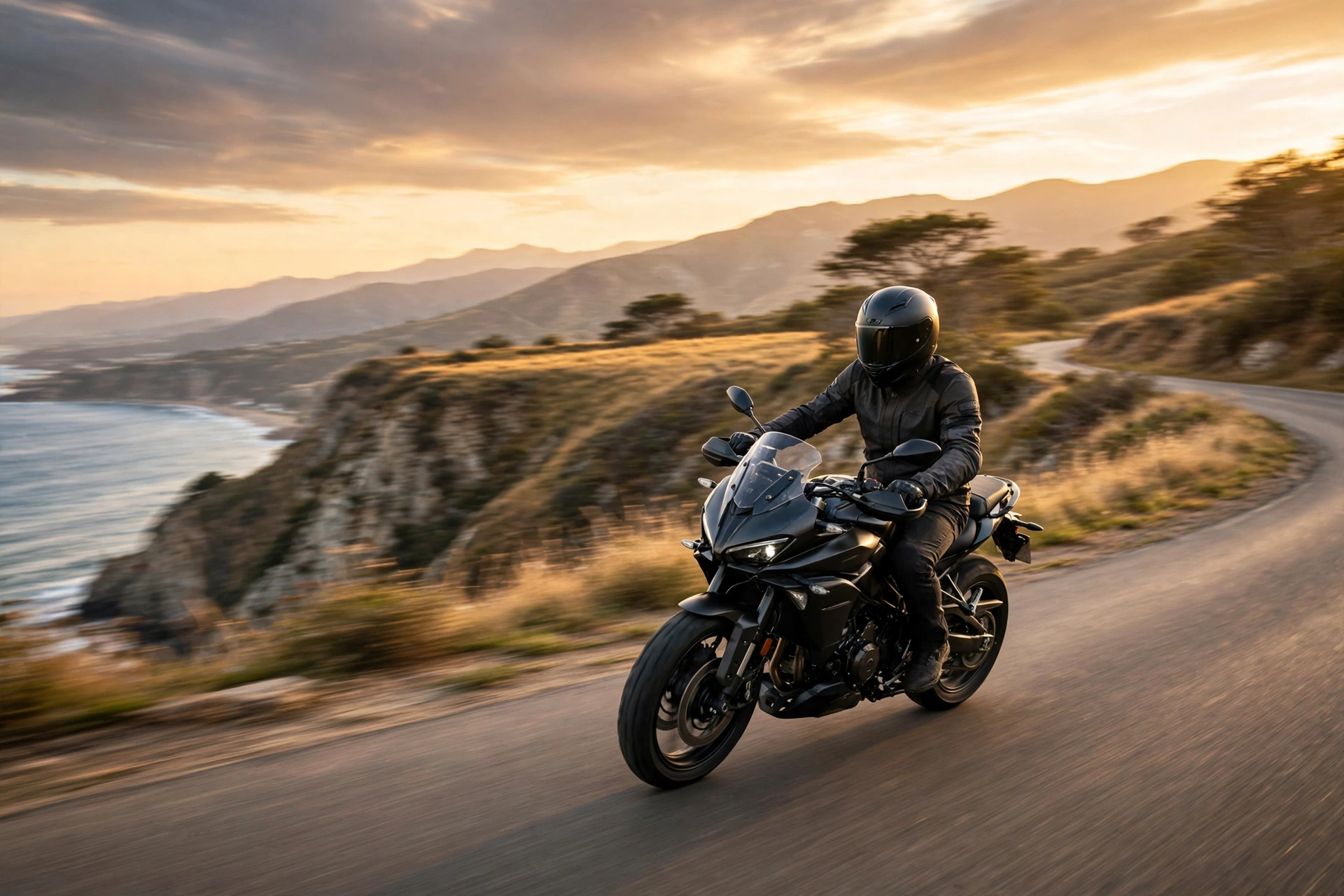
Most motorcyclists should start with a full-face helmet, which covers the whole head and jaw and gives the most protection in a crash. Full-face helmets also keep out wind, rain, and insects, which makes them the most comfortable choice for everyday riding and longer trips. They are the standard choice for commuting, touring, and sports riding.
Open-face helmets leave the face exposed and suit low-speed town riding and classic bikes, but they protect less well in a crash. Modular helmets, also called flip-up helmets, let the chin bar lift for talking or fresh air, which suits touring riders, while adventure helmets add a peak and a wider visor for mixed road and off-road riding. In general terms, choose the fullest coverage that suits your riding, and remember that a full-face helmet is the safest starting point.
How should a motorcycle helmet fit?
A motorcycle helmet should fit snugly all round, with the padding touching your head evenly and no pressure points on the forehead or temples. It should sit level, low enough at the front to protect the forehead, and it should not tip or slide when you shake your head hard. New padding feels tight at first and softens slightly with wear, so a helmet that feels loose in the shop will only get looser.
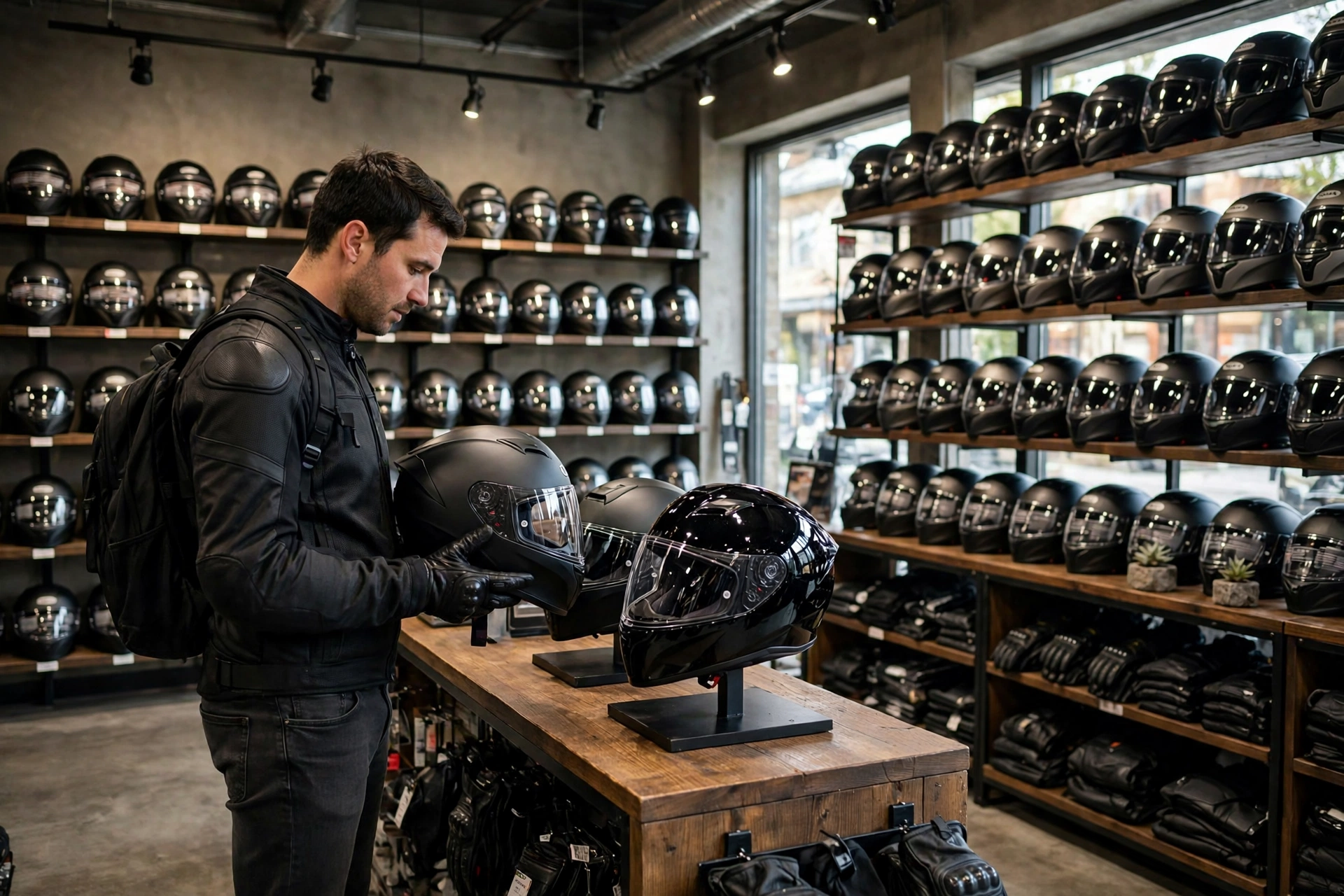
Check the fit with the chin strap fastened and the visor closed. The helmet should move your skin slightly when you try to twist it, and your cheeks should be held firmly by the cheek pads. Try the helmet on for at least ten minutes in the shop, because a pressure point that is only mildly annoying at first can become painful after an hour on the bike. If you wear glasses, try the helmet on with them, and check that the visor opens and closes smoothly with gloves on.
What features matter in a motorcycle helmet?
The visor matters a great deal on a motorcycle helmet, because you look through it for hours. Look for a visor that is clear, scratch-resistant, and easy to change, with a Pinlock insert or anti-fog treatment if you ride in cold or wet weather. A visor that fogs up is a real hazard, so check how the helmet handles fog before you buy, and keep a spare visor or insert in your kit.
Ventilation matters too, because a helmet that steams up or overheats will distract you on a long ride. Look for vents you can open and close with gloves on, and a lining that can be removed and washed. Weight matters on a long trip, and a lighter helmet puts less strain on your neck. Some helmets include a system designed to reduce rotational forces in a fall, such as MIPS, and it is worth asking about when you compare models. None of these extras replaces the basics: a sound shell, a secure strap, and a fit that stays put at speed.
How much should you spend on a motorcycle helmet?
In general terms, you do not need to spend the most to get a safe motorcycle helmet. Helmets at a mid-range price usually meet the same safety standards as the most expensive models, and the extra money mostly buys lighter weight, quieter aerodynamics, better ventilation, and a nicer lining. What matters is the standard the helmet meets, the fit, and the condition it is in — not the price tag or the brand.
Set a budget, then try on helmets within it and pick the one that fits best. A cheaper helmet that fits perfectly protects you better than an expensive one that is the wrong size or shape for your head. Avoid second-hand helmets, because you cannot know whether one has been in a crash, and avoid helmets with no recognised safety marking. If a deal looks too good to be true, check the standard and the maker’s name before you buy.
When should you replace a motorcycle helmet?
Replace a motorcycle helmet after any crash where your head hits the ground, even if the helmet looks fine on the outside. The foam inside can compress in an impact, and a compressed liner protects less well the next time. In general terms, a helmet that has taken a hard knock has done its job and should not be relied on again.
Replace it too if the shell is cracked, the visor is badly scratched, or the strap and fastening no longer hold firmly. Age matters as well: helmets have a working life set by the maker, and materials can degrade with sun, sweat, and heat over time. Check the helmet before every ride for damage, store it away from direct sun and heat, and do not hang it by its strap, which can stretch it. When in doubt, replace it — a new helmet costs far less than a head injury.
What size motorcycle helmet do you need?
Motorcycle helmets come in sizes, usually from extra small to extra large, and the right size is the one that matches the circumference of your head. Measure around your head just above the eyebrows, and compare the number with the maker’s size chart. If you fall between sizes, try both, because the shape of the helmet matters as much as the size.
A helmet that is the right size will sit level and snug without pressure points, and the padding should hold your cheeks firmly without squeezing them painfully. Do not buy a size up to grow into, and do not squeeze into a size that is too small.
Do you need a full-face helmet for motorcycling?
In general terms, yes, a full-face helmet is the safest choice for most motorcycling, and it is what most riders and instructors recommend. Open-face and modular helmets have their place, but they protect less well in a crash.
Can you wear a bicycle helmet on a motorcycle?
No, never. A bicycle helmet is not made for motorcycle speeds or impacts, and it will not protect you in a motorcycle crash. Always wear a helmet made and certified for motorcycling.
Should you buy a motorcycle helmet online?
It is best to try a helmet on in a shop first, so you know the size and shape that fits you. If you buy online, choose a model you have already tried, and keep the receipt so you can return it if the fit is wrong.

Olivia
Writer at Helmet Today, covering helmet reviews, fit and riding safety.