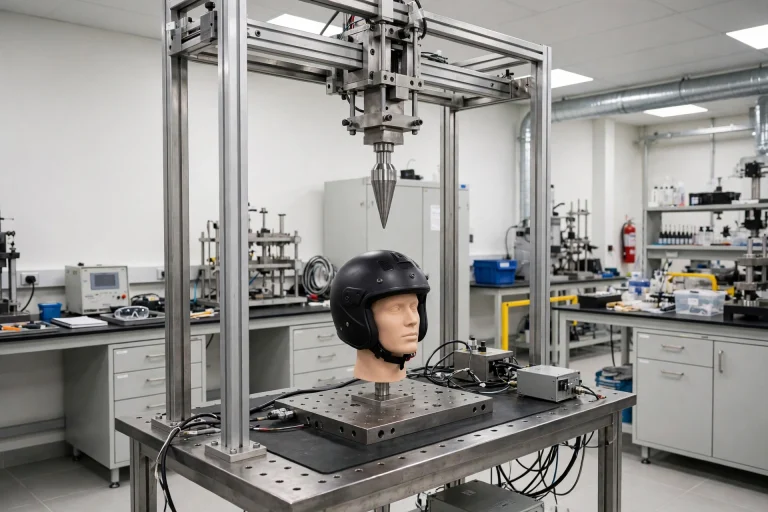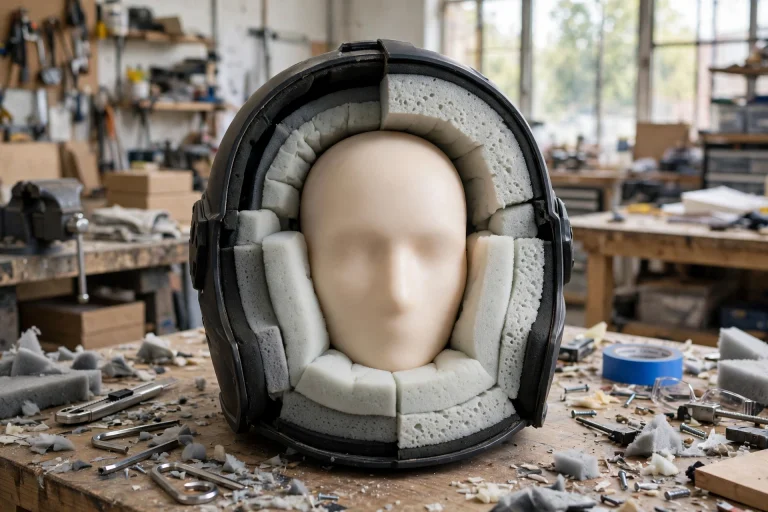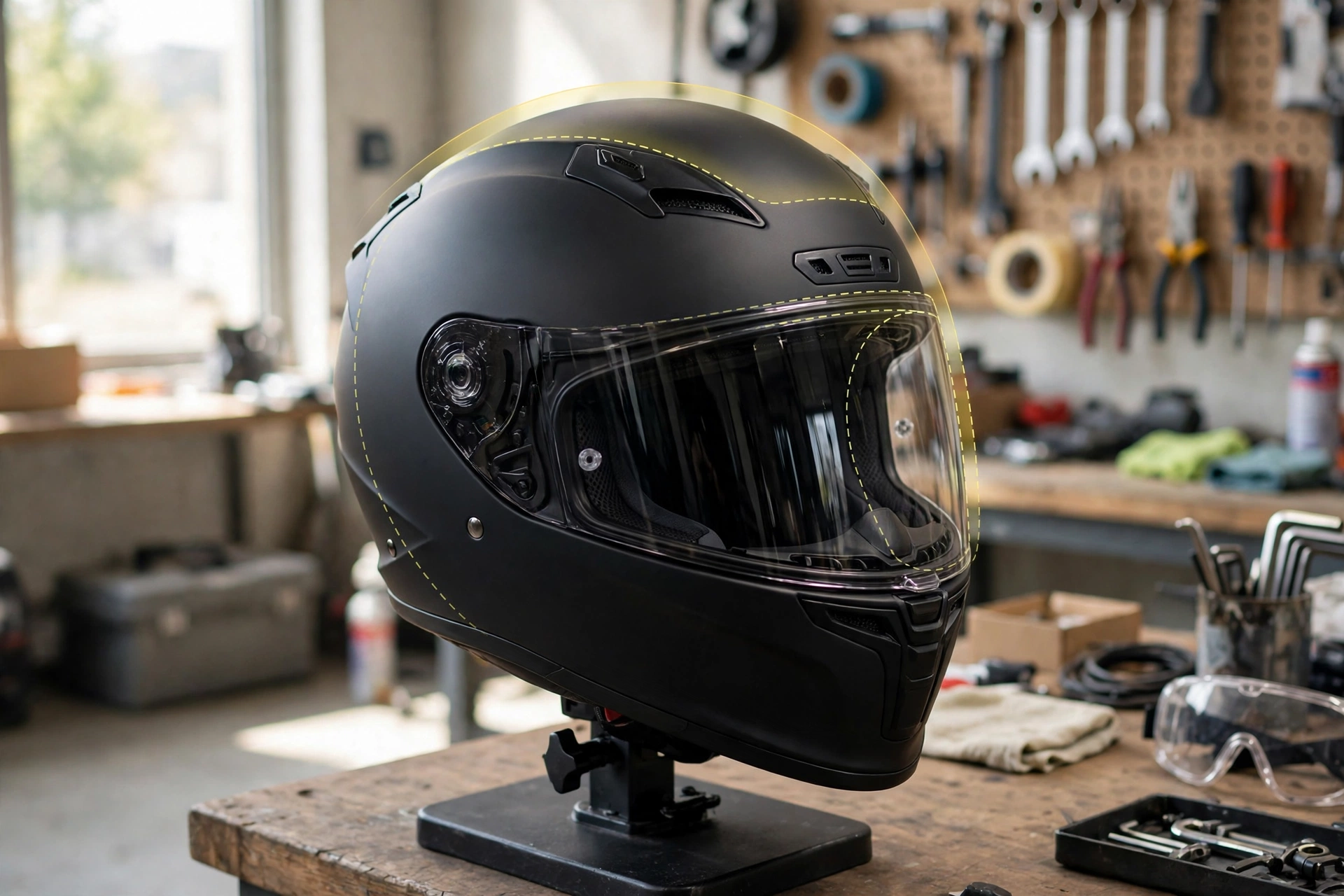
A helmet’s impact zone is the area of the helmet that takes the force of a blow when you fall or crash. Different parts of the helmet, such as the crown, the sides, the front, and the back, face different kinds of impacts, and helmet makers design each zone to handle the knocks it is most likely to receive. Knowing the impact zones helps you understand how a helmet protects you and why fit matters.
An impact zone is not a separate part you can see or remove. It is a way of talking about the helmet’s surface, dividing it into areas by the direction a blow comes from. A fall onto the top of your head hits the crown zone, a sideways fall hits the side zone, and a backward fall hits the rear zone. Each zone has its own shell shape and liner thickness, shaped by the way people usually fall.
What is an impact zone?
An impact zone is simply a region of the helmet that is likely to strike a surface in a crash. Helmet designers think in zones because the head does not hit the ground the same way every time. A cyclist who goes over the handlebars lands differently from a rider who slides off sideways, and a construction worker hit by a falling object faces yet another kind of blow.
Thinking in zones lets designers put protection where it is needed most. The crown of the helmet, for example, often has a thicker liner because top-down impacts are common and the skull is thinner there. The sides may be shaped to protect the temples, where the skull is also relatively thin. Each zone is a compromise between protection, weight, ventilation, and comfort.
Which parts of a helmet take the most hits?
In general terms, the crown and the sides of a helmet take the most hits, because most falls send the head down or sideways. The crown is the top of the helmet, and it meets the ground in a forward fall or a top-down blow. The sides cover the temples and the area above the ears, and they take the impact in a sideways fall.
The front and back zones are also important. The front protects the forehead in a face-first fall, while the back protects the base of the skull when you fall backwards. No zone is unimportant, but crash data and laboratory testing show that some areas are struck more often than others, and designers use that information to shape the helmet.
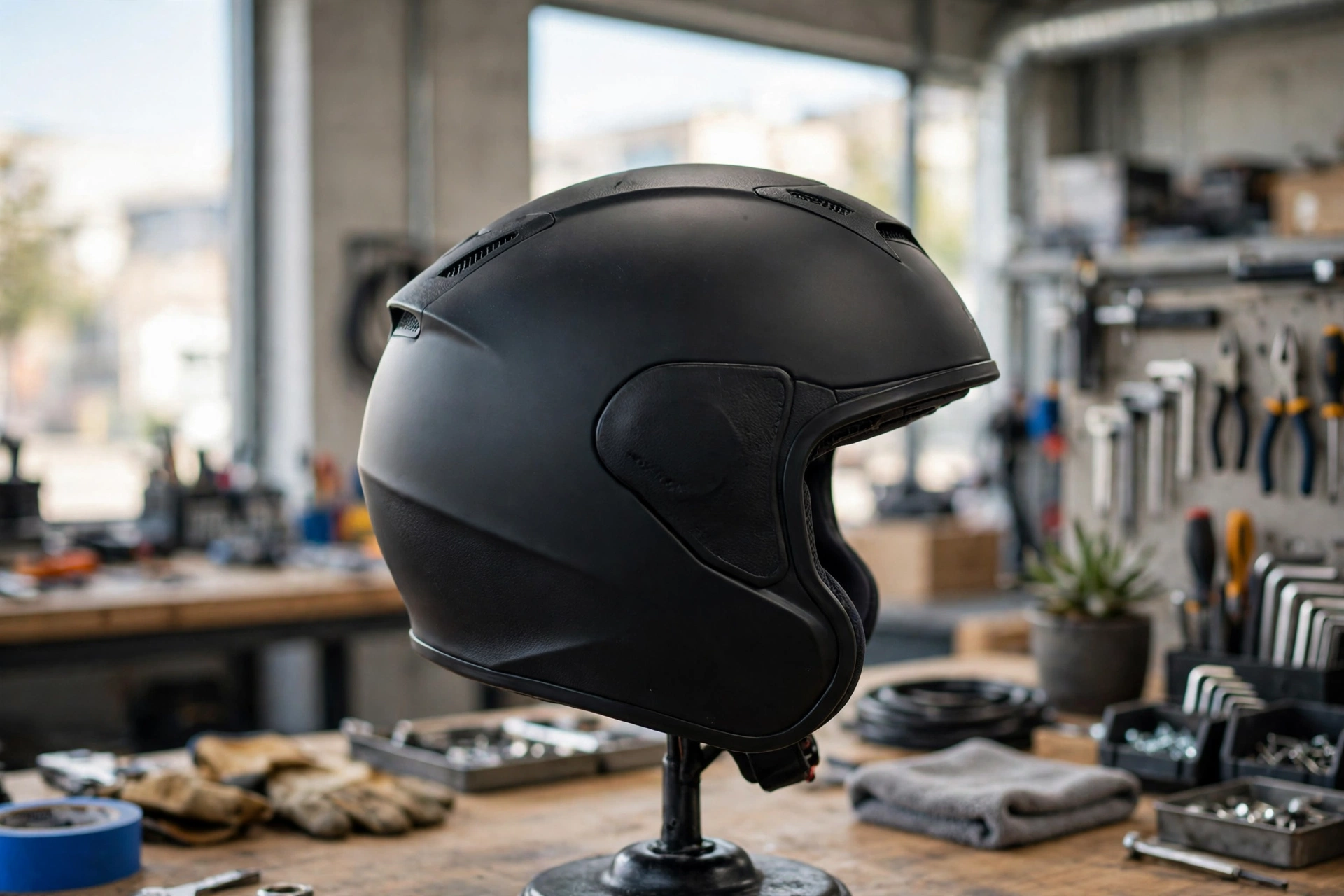
Why is the crown a key impact zone?
The crown is a key impact zone because it sits over the top of the skull, where a falling object or a top-down fall can strike with full force. When you fall from a height, or when something drops onto your head, the crown is often the first point of contact, and the force travels straight down into the head.
To handle this, the crown zone usually has a strong, smooth shell and a thick section of liner. The smooth shape helps the helmet glance off a surface instead of catching, and the thick liner gives your head more room to slow down. Ventilation in the crown zone has to be placed carefully, so the vents do not weaken the very area that needs to be strongest.
What about the sides and back of the helmet?
The sides of the helmet protect the temples, which are among the thinner parts of the skull. A sideways fall can press the helmet hard against the temple, so the side zones need a liner that crushes well and a shell that spreads the force. Many helmets extend the shell lower at the sides to cover more of the head, giving extra protection where it counts.
The back of the helmet protects the rear of the skull, which is struck in a backward fall. A fall backwards can be especially dangerous because you cannot see it coming and cannot break the fall with your hands. The rear zone is therefore built to take a solid hit, with a shell that wraps around the back of the head and a liner thick enough to cushion the blow.
How do impact zones change helmet design?
Impact zones change helmet design by deciding where the protection goes. A helmet is not a uniform shell of the same thickness all over; it is shaped zone by zone. The liner may be thicker over the crown and temples, the shell may be reinforced at the front and back, and vents are placed where they do the least harm to protection.
Some helmets also use foam of different densities in different zones, firmer where hard impacts are expected and softer where comfort matters more. Systems that reduce twisting forces, such as MIPS, work across all zones, because an angled impact can strike any part of the helmet. The result is a helmet that is not just a dome, but a map of likely impacts, with each area built for the blow it is most likely to meet.
What does this mean when you choose a helmet?
When you choose a helmet, impact zones mean you should look for coverage, not just style. A helmet that sits high on the head leaves the temples and the base of the skull exposed, which are exactly the zones that need protection in a sideways or backward fall. A helmet that sits low and level, covering the forehead, temples, and the back of the head, protects more zones at once.
Fit matters for the same reason. A helmet that shifts in a crash can move the impact zones out of place, so the blow lands on a thin part of the liner or on the edge of the shell. Try the helmet on, fasten the straps, and check that it stays level and snug when you shake your head. The right helmet is one that covers the zones you need, stays in place, and feels comfortable enough to wear every time.
Is the whole helmet one impact zone?
No. A helmet has several impact zones, such as the crown, sides, front, and back, and each is designed for the kind of blow it is most likely to receive.
Which impact zone is hit most often?
In general terms, the crown and the sides are struck most often, because most falls send the head down or sideways. The front and back zones are also important, especially in forward and backward falls.
Does a small helmet have smaller impact zones?
The zones scale with the size of the helmet, but the idea is the same at every size. A children’s helmet still protects the crown, sides, front, and back, just in a smaller shell with a liner shaped for a smaller head.

Olivia
Writer at Helmet Today, covering helmet reviews, fit and riding safety.